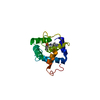
- PDB-2hzq: Crystal structure of human apolipoprotein D (ApoD) in complex wit... -
+
Open data
ID or keywords:
Loading...
-
Basic information
Entry
Database: PDB / ID: 2hzq
Title
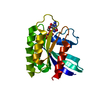
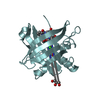
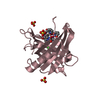
Crystal structure of human apolipoprotein D (ApoD) in complex with progesterone
Components
Apolipoprotein D
Keywords
TRANSPORT PROTEIN / lipocalin / beta barrel / bilin-binding protein
Function / homology
Function and homology information
negative regulation of lipoprotein lipid oxidation / Transport of fatty acids / negative regulation of T cell migration / peripheral nervous system axon regeneration / negative regulation of smooth muscle cell-matrix adhesion / tissue regeneration / negative regulation of focal adhesion assembly / negative regulation of monocyte chemotactic protein-1 production / negative regulation of protein import into nucleus / lipid transport ...negative regulation of lipoprotein lipid oxidation / Transport of fatty acids / negative regulation of T cell migration / peripheral nervous system axon regeneration / negative regulation of smooth muscle cell-matrix adhesion / tissue regeneration / negative regulation of focal adhesion assembly / negative regulation of monocyte chemotactic protein-1 production / negative regulation of protein import into nucleus / lipid transport / lipid carrier activity / negative regulation of platelet-derived growth factor receptor signaling pathway / cholesterol binding / response to axon injury / NR1H3 & NR1H2 regulate gene expression linked to cholesterol transport and efflux / glucose metabolic process / negative regulation of cytokine production involved in inflammatory response / lipid metabolic process / response to reactive oxygen species / negative regulation of smooth muscle cell proliferation / brain development / angiogenesis / cytosolic ribosome / neuronal cell body / dendrite / perinuclear region of cytoplasm / extracellular exosome / extracellular region Similarity search - Function
Apolipoprotein D / Apolipoprotein D, vertebrates / Lipocalin-like domain / Lipocalin, ApoD type / Lipocalin family conserved site / Lipocalin / cytosolic fatty-acid binding protein family / Lipocalin/cytosolic fatty-acid binding domain / Calycin beta-barrel core domain / Calycin / Lipocalin ...Apolipoprotein D / Apolipoprotein D, vertebrates / Lipocalin-like domain / Lipocalin, ApoD type / Lipocalin family conserved site / Lipocalin / cytosolic fatty-acid binding protein family / Lipocalin/cytosolic fatty-acid binding domain / Calycin beta-barrel core domain / Calycin / Lipocalin / Lipocalin signature. / Beta Barrel / Mainly Beta Similarity search - Domain/homology
In the structure databanks used in Yorodumi, some data are registered as the other names, "COVID-19 virus" and "2019-nCoV". Here are the details of the virus and the list of structure data.
Jan 31, 2019. EMDB accession codes are about to change! (news from PDBe EMDB page)
EMDB accession codes are about to change! (news from PDBe EMDB page)
The allocation of 4 digits for EMDB accession codes will soon come to an end. Whilst these codes will remain in use, new EMDB accession codes will include an additional digit and will expand incrementally as the available range of codes is exhausted. The current 4-digit format prefixed with “EMD-” (i.e. EMD-XXXX) will advance to a 5-digit format (i.e. EMD-XXXXX), and so on. It is currently estimated that the 4-digit codes will be depleted around Spring 2019, at which point the 5-digit format will come into force.
The EM Navigator/Yorodumi systems omit the EMD- prefix.
Related info.:Q: What is EMD? / ID/Accession-code notation in Yorodumi/EM Navigator
Yorodumi is a browser for structure data from EMDB, PDB, SASBDB, etc.
This page is also the successor to EM Navigator detail page, and also detail information page/front-end page for Omokage search.
The word "yorodu" (or yorozu) is an old Japanese word meaning "ten thousand". "mi" (miru) is to see.
Related info.:EMDB / PDB / SASBDB / Comparison of 3 databanks / Yorodumi Search / Aug 31, 2016. New EM Navigator & Yorodumi / Yorodumi Papers / Jmol/JSmol / Function and homology information / Changes in new EM Navigator and Yorodumi
 Movie
Movie Controller

 Yorodumi
 Open data
 Basic information
 Components
 Keywords
 Function and homology information
 Homo sapiens (human)
 X-RAY DIFFRACTION /
  Authors
 Citation
 Structure visualization
 Downloads & links
 Other downloads
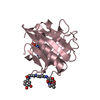
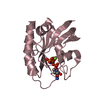
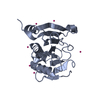
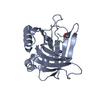

 PDBj
PDBj

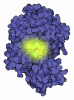
 Assembly

 Escherichia coli (E. coli) / Strain (production host): KS272 / References: UniProt: P05090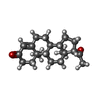
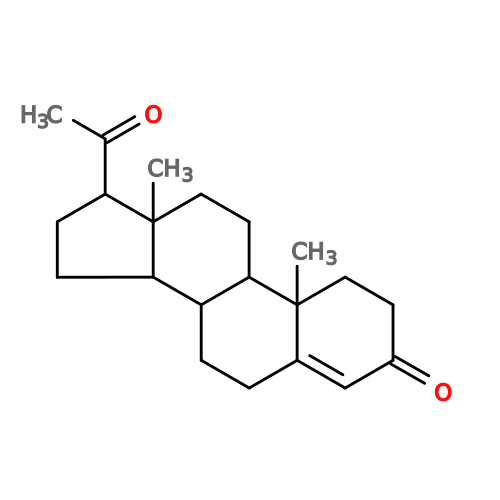 Mass: 314.462 Da / Num. of mol.: 1 / Source method: obtained synthetically / Formula: C21H30O2
 Mass: 18.015 Da / Num. of mol.: 234 / Source method: isolated from a natural source / Formula: H2O
 Sample preparation
 / Beamline: ID23-1 / Wavelength: 1.0089 Å
 Processing