- PDB-1m48: Crystal Structure of Human IL-2 Complexed with (R)-N-[2-[1-(Amino... -
+
Open data
ID or keywords:
Loading...
-
Basic information
Entry
Database: PDB / ID: 1m48
Title
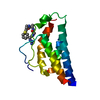
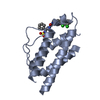
Crystal Structure of Human IL-2 Complexed with (R)-N-[2-[1-(Aminoiminomethyl)-3-piperidinyl]-1-oxoethyl]-4-(phenylethynyl)-L-phenylalanine methyl ester
Components
interleukin-2
Keywords
CYTOKINE / interleukin-2 / four-helix bundle / small molecule complex
Function / homology
Function and homology information
response to tacrolimus / kappa-type opioid receptor binding / interleukin-2 receptor binding / interleukin-2 receptor complex / glycosphingolipid binding / positive regulation of plasma cell differentiation / positive regulation of leukocyte differentiation / positive regulation of tissue remodeling / negative regulation of T-helper 17 cell differentiation / RUNX1 and FOXP3 control the development of regulatory T lymphocytes (Tregs) ...response to tacrolimus / kappa-type opioid receptor binding / interleukin-2 receptor binding / interleukin-2 receptor complex / glycosphingolipid binding / positive regulation of plasma cell differentiation / positive regulation of leukocyte differentiation / positive regulation of tissue remodeling / negative regulation of T-helper 17 cell differentiation / RUNX1 and FOXP3 control the development of regulatory T lymphocytes (Tregs) / leukocyte activation involved in immune response / interleukin-2-mediated signaling pathway / positive regulation of leukocyte proliferation / natural killer cell activation / Interleukin-2 signaling / cell surface receptor signaling pathway via STAT / negative regulation of B cell apoptotic process / positive regulation of activated T cell proliferation / kinase activator activity / positive regulation of interleukin-17 production / positive regulation of regulatory T cell differentiation / positive regulation of dendritic spine development / positive regulation of immunoglobulin production / T cell differentiation / positive regulation of B cell proliferation / Interleukin receptor SHC signaling / cell surface receptor signaling pathway via JAK-STAT / cytokine activity / growth factor activity / positive regulation of inflammatory response / phospholipase C-activating G protein-coupled receptor signaling pathway / cell-cell signaling / carbohydrate binding / positive regulation of cell growth / positive regulation of cytosolic calcium ion concentration / RAF/MAP kinase cascade / cell adhesion / response to ethanol / immune response / positive regulation of cell population proliferation / negative regulation of apoptotic process / extracellular region Similarity search - Function
In the structure databanks used in Yorodumi, some data are registered as the other names, "COVID-19 virus" and "2019-nCoV". Here are the details of the virus and the list of structure data.
Jan 31, 2019. EMDB accession codes are about to change! (news from PDBe EMDB page)
EMDB accession codes are about to change! (news from PDBe EMDB page)
The allocation of 4 digits for EMDB accession codes will soon come to an end. Whilst these codes will remain in use, new EMDB accession codes will include an additional digit and will expand incrementally as the available range of codes is exhausted. The current 4-digit format prefixed with “EMD-” (i.e. EMD-XXXX) will advance to a 5-digit format (i.e. EMD-XXXXX), and so on. It is currently estimated that the 4-digit codes will be depleted around Spring 2019, at which point the 5-digit format will come into force.
The EM Navigator/Yorodumi systems omit the EMD- prefix.
Related info.:Q: What is EMD? / ID/Accession-code notation in Yorodumi/EM Navigator
Yorodumi is a browser for structure data from EMDB, PDB, SASBDB, etc.
This page is also the successor to EM Navigator detail page, and also detail information page/front-end page for Omokage search.
The word "yorodu" (or yorozu) is an old Japanese word meaning "ten thousand". "mi" (miru) is to see.
Related info.:EMDB / PDB / SASBDB / Comparison of 3 databanks / Yorodumi Search / Aug 31, 2016. New EM Navigator & Yorodumi / Yorodumi Papers / Jmol/JSmol / Function and homology information / Changes in new EM Navigator and Yorodumi
 Movie
Movie Controller

 Yorodumi
 Open data
 Basic information
 Components
 Keywords
 Function and homology information
 Homo sapiens (human)
 X-RAY DIFFRACTION /
  Authors
 Citation
 Structure visualization
 Downloads & links
 Other downloads





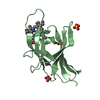
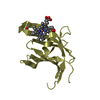
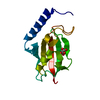
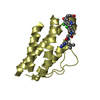
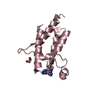
 PDBj
PDBj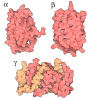
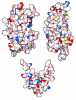
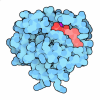
 Assembly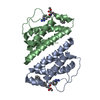

 Escherichia coli BL21 (bacteria) / Strain (production host): BL21 / References: UniProt: P60568
 Mass: 446.541 Da / Num. of mol.: 2 / Source method: obtained synthetically / Formula: C26H30N4O3
 Mass: 18.015 Da / Num. of mol.: 214 / Source method: isolated from a natural source / Formula: H2O
 Sample preparation
 Processing