National Institutes of Health/National Heart, Lung, and Blood Institute (NIH/NHLBI)
HL164560
United States
National Institutes of Health/National Institute of Arthritis and Musculoskeletal and Skin Diseases (NIH/NIAMS)
AR081941
United States
American Heart Association
26CDA1600784
United States
Citation
Journal: bioRxiv / Year: 2026 Title: The dilated cardiomyopathy E525K mutation stabilizes the cardiac myosin interacting-heads motif while activating the isolated motor domain. Authors: Ruchi Gautam / Arun Kumar Somavarapu / Kalen Z Robeson / Matthew C Childers / Michael Regnier / Jinghua Ge / Christopher M Yengo / Roger Craig / Raúl Padrón / Abstract: Mutations in β-cardiac myosin are a common cause of inherited cardiomyopathies. The dilated cardiomyopathy E525K mutation alters both thick filament regulation and motor activity, yet the structural ...Mutations in β-cardiac myosin are a common cause of inherited cardiomyopathies. The dilated cardiomyopathy E525K mutation alters both thick filament regulation and motor activity, yet the structural basis for these effects has remained unclear. Here, we combined cryo-EM and MD simulations to determine how E525K affects the conformational landscape of cardiac myosin in both its autoinhibited interacting-heads motif (IHM) and isolated myosin head states. E525K-mutated myosin exclusively adopted a single S2 conformation in IHM, in contrast to the conformational heterogeneity observed in wild-type myosin. Structural and electrostatic analyses revealed that the mutation increased positive charge density at the blocked-head (BH) - S2 (subfragment-2) interface, strengthening interactions with negatively charged residues within S2. 3D variability analysis and MD simulations of the E525K IHM demonstrated reduced S2 mobility, consistent with strengthened BH - S2 interactions, and decreased conformational flexibility, providing a structural mechanism for stabilization of the IHM state. To investigate the isolated myosin head, we determined cryo-EM structures of wild-type and E525K subfragment-1 (S1). The mutation induced local conformational rearrangements in the activation-loop and Loop 3 region, the SH3-like domain, and the essential light chain of S1, revealing structural changes that support the enhanced motor activity previously reported for isolated E525K myosin motors. These findings show that E525K stabilizes the autoinhibited IHM through electrostatic stabilization of the BH - S2 interface while inducing structural changes consistent with activation of the isolated motor domain, providing structural insights into how a single DCM mutation differentially regulates cardiac myosin S1 and IHM structure and function.
Entire : Human beta-cardiac myosin S1 motor domain carrying the E525K muta...
Entire
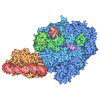
Name: Human beta-cardiac myosin S1 motor domain carrying the E525K mutation with the essential light chain in the pre-powerstroke state
Components
Complex: Human beta-cardiac myosin S1 motor domain carrying the E525K mutation with the essential light chain in the pre-powerstroke state
Complex: Myosin-7
Protein or peptide: Myosin-7,Green fluorescent protein
Complex: Myosin light chain 1/3
Protein or peptide: Myosin light chain 1/3, skeletal muscle isoform
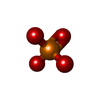
Ligand: PHOSPHATE ION
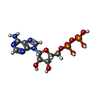
Ligand: ADENOSINE-5'-DIPHOSPHATE
-
Supramolecule #1: Human beta-cardiac myosin S1 motor domain carrying the E525K muta...
Supramolecule
Name: Human beta-cardiac myosin S1 motor domain carrying the E525K mutation with the essential light chain in the pre-powerstroke state type: complex / ID: 1 / Parent: 0 / Macromolecule list: #1-#2
In the structure databanks used in Yorodumi, some data are registered as the other names, "COVID-19 virus" and "2019-nCoV". Here are the details of the virus and the list of structure data.
Jan 31, 2019. EMDB accession codes are about to change! (news from PDBe EMDB page)
EMDB accession codes are about to change! (news from PDBe EMDB page)
The allocation of 4 digits for EMDB accession codes will soon come to an end. Whilst these codes will remain in use, new EMDB accession codes will include an additional digit and will expand incrementally as the available range of codes is exhausted. The current 4-digit format prefixed with “EMD-” (i.e. EMD-XXXX) will advance to a 5-digit format (i.e. EMD-XXXXX), and so on. It is currently estimated that the 4-digit codes will be depleted around Spring 2019, at which point the 5-digit format will come into force.
The EM Navigator/Yorodumi systems omit the EMD- prefix.
Related info.:Q: What is EMD? / ID/Accession-code notation in Yorodumi/EM Navigator
Yorodumi is a browser for structure data from EMDB, PDB, SASBDB, etc.
This page is also the successor to EM Navigator detail page, and also detail information page/front-end page for Omokage search.
The word "yorodu" (or yorozu) is an old Japanese word meaning "ten thousand". "mi" (miru) is to see.
Related info.:EMDB / PDB / SASBDB / Comparison of 3 databanks / Yorodumi Search / Aug 31, 2016. New EM Navigator & Yorodumi / Yorodumi Papers / Jmol/JSmol / Function and homology information / Changes in new EM Navigator and Yorodumi
 Movie
 Controller


 Yorodumi
 Open data

 Basic information

 Map data
 Sample
 Keywords
 Function and homology information
 Homo sapiens (human) /

 Mus musculus (house mouse) /

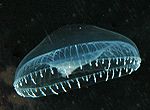 Aequorea victoria (jellyfish)
 Authors
 United States, 3 items
 Citation
 Structure visualization

 Downloads & links
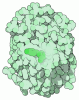
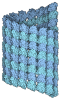
 emd_78403.png
 https://data.pdbj.org/pub/emdb/structures/EMD-78403



 Z (Sec.)
 Y (Row.)
 X (Col.)


 Sample components
 Processing
 Electron microscopy
 FIELD EMISSION GUN