[English] 日本語
Yorodumi
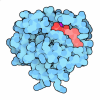
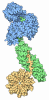
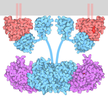
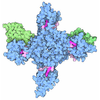
- EMDB-72912: VPS13A/Nt-CaM -

+
Open data


ID or keywords:

Loading...

-
Basic information

Entry
Database: EMDB / ID: EMD-72912
TitleVPS13A/Nt-CaM
Map data
Sample
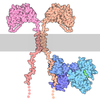
  • Complex: VPS13A/Calmodulin-XKR1 complex
    • Protein or peptide: Calmodulin-1
    • Protein or peptide: Intermembrane lipid transfer protein VPS13A
KeywordsVPS13A / Calmodulin / Complex / ER / LIPID TRANSPORT
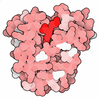
Function / homology
Function and homology information


sperm mitochondrion organization / brain-derived neurotrophic factor receptor signaling pathway / neuronal dense core vesicle lumen / lysosomal protein catabolic process / protein retention in Golgi apparatus / response to environmental enrichment / microglia differentiation / neuroinflammatory response / Golgi to endosome transport / mitochondria-associated endoplasmic reticulum membrane contact site ...sperm mitochondrion organization / brain-derived neurotrophic factor receptor signaling pathway / neuronal dense core vesicle lumen / lysosomal protein catabolic process / protein retention in Golgi apparatus / response to environmental enrichment / microglia differentiation / neuroinflammatory response / Golgi to endosome transport / mitochondria-associated endoplasmic reticulum membrane contact site / neuron projection arborization / protein targeting to vacuole / neuromuscular process controlling balance / motor behavior / long-term synaptic depression / exploration behavior / cellular response to osmotic stress / CaM pathway / Cam-PDE 1 activation / Sodium/Calcium exchangers / Calmodulin induced events / Reduction of cytosolic Ca++ levels / Activation of Ca-permeable Kainate Receptor / CREB1 phosphorylation through the activation of CaMKII/CaMKK/CaMKIV cascasde / Loss of phosphorylation of MECP2 at T308 / CREB1 phosphorylation through the activation of Adenylate Cyclase / lipid transport / PKA activation / CaMK IV-mediated phosphorylation of CREB / Glycogen breakdown (glycogenolysis) / negative regulation of ryanodine-sensitive calcium-release channel activity / Activation of RAC1 downstream of NMDARs / organelle localization by membrane tethering / CLEC7A (Dectin-1) induces NFAT activation / flagellated sperm motility / : / negative regulation of high voltage-gated calcium channel activity / autophagosome membrane docking / negative regulation of calcium ion export across plasma membrane / regulation of cardiac muscle cell action potential / presynaptic endocytosis / Synthesis of IP3 and IP4 in the cytosol / Phase 0 - rapid depolarisation / protein secretion / Negative regulation of NMDA receptor-mediated neuronal transmission / Unblocking of NMDA receptors, glutamate binding and activation / calcineurin-mediated signaling / RHO GTPases activate PAKs / social behavior / regulation of cell communication by electrical coupling involved in cardiac conduction / Ion transport by P-type ATPases / Uptake and function of anthrax toxins / protein phosphatase activator activity / regulation of ryanodine-sensitive calcium-release channel activity / Long-term potentiation / Calcineurin activates NFAT / Regulation of MECP2 expression and activity / DARPP-32 events / Smooth Muscle Contraction / catalytic complex / detection of calcium ion / regulation of cardiac muscle contraction / cellular response to interferon-beta / multicellular organism growth / adult locomotory behavior / RHO GTPases activate IQGAPs / calcium channel inhibitor activity / presynaptic cytosol / Activation of AMPK downstream of NMDARs / regulation of release of sequestered calcium ion into cytosol by sarcoplasmic reticulum / eNOS activation / Ion homeostasis / regulation of calcium-mediated signaling / Tetrahydrobiopterin (BH4) synthesis, recycling, salvage and regulation / Protein methylation / titin binding / regulation of cardiac muscle contraction by regulation of the release of sequestered calcium ion / voltage-gated potassium channel complex / FCERI mediated Ca+2 mobilization / calcium channel complex / substantia nigra development / regulation of heart rate / lipid droplet / FCGR3A-mediated IL10 synthesis / calyx of Held / Antigen activates B Cell Receptor (BCR) leading to generation of second messengers / erythrocyte differentiation / Ras activation upon Ca2+ influx through NMDA receptor / adenylate cyclase activator activity / VEGFR2 mediated vascular permeability / VEGFR2 mediated cell proliferation / protein serine/threonine kinase activator activity / regulation of cytokinesis / positive regulation of receptor signaling pathway via JAK-STAT / spindle microtubule / sarcomere / Translocation of SLC2A4 (GLUT4) to the plasma membrane / calcium channel regulator activity / myelin sheath / Transcriptional activation of mitochondrial biogenesis
Similarity search - Function
Vacuolar protein sorting-associated protein 13, VPS13 adaptor binding domain / Vacuolar protein sorting-associated protein 13 / Vacuolar protein sorting-associated protein 13-like, N-terminal domain / : / : / VPS13-like family middle region / Vacuolar-sorting associated protein 13, adaptor binding domain / Intermembrane lipid transfer protein VPS13, C-terminal / VPS13-like family N-terminal region / : ...Vacuolar protein sorting-associated protein 13, VPS13 adaptor binding domain / Vacuolar protein sorting-associated protein 13 / Vacuolar protein sorting-associated protein 13-like, N-terminal domain / : / : / VPS13-like family middle region / Vacuolar-sorting associated protein 13, adaptor binding domain / Intermembrane lipid transfer protein VPS13, C-terminal / VPS13-like family N-terminal region / : / EF-hand domain pair / EF-hand, calcium binding motif / EF-Hand 1, calcium-binding site / EF-hand calcium-binding domain. / EF-hand calcium-binding domain profile. / EF-hand domain / EF-hand domain pair
Similarity search - Domain/homology
Calmodulin-1 / Intermembrane lipid transfer protein VPS13A
Similarity search - Component
Biological speciesHomo sapiens (human)
Methodsingle particle reconstruction / cryo EM / Resolution: 3.38 Å
AuthorsHu B / Reinisch KM
Funding support United States, 1 items
OrganizationGrant numberCountry
National Institutes of Health/National Institute of General Medical Sciences (NIH/NIGMS)R35GM131715 United States
CitationJournal: Cell / Year: 2026
Title: Mechanism of lipid transfer by bridge-like protein VPS13A and the scramblase XK.
Authors: Bodan Hu / Daniel Álvarez / Cristian Rocha-Roa / Valentin Guyard / Dazhi Li / Yara Ahmed / Xinbo Wang / Pietro De Camilli / Stefano Vanni / Karin M Reinisch /
Abstract: In eukaryotes, bridge-like lipid-transfer proteins (BLTPs) are central in mediating vesicle-independent lipid transfer between organelles. BLTPs span the cytosolic space between organelles at contact ...In eukaryotes, bridge-like lipid-transfer proteins (BLTPs) are central in mediating vesicle-independent lipid transfer between organelles. BLTPs span the cytosolic space between organelles at contact sites, featuring hydrophobic channels for lipids to travel between membranes. How BLTPs cooperate with partner proteins to orchestrate lipid delivery remains a mystery. Here, we used cryo-electron microscopy to visualize a complex comprising the prototypical BLTP VPS13A and the plasma membrane-localized scramblase XK at near-atomic resolution. VPS13A interacts with XK via its pleckstrin homology domain, priming VPS13A's bridge-like lipid-transfer domain to deliver lipids directly to the cytosolic leaflet of the acceptor membrane. In molecular dynamics simulations, this arrangement allows for robust lipid transfer. Newly delivered lipids can then be equilibrated between leaflets of the membrane bilayer by the scramblase, allowing for membrane growth. Mechanistic insights regarding lipid delivery by VPS13A are directly applicable to all VPS13 proteins and, more broadly, to all BLTP family members.
History
DepositionSep 27, 2025-
Header (metadata) releaseJun 10, 2026-
Map releaseJun 10, 2026-
UpdateJul 1, 2026-
Current statusJul 1, 2026Processing site: RCSB / Status: Released

-
Structure visualization

Supplemental images

Downloads & links

-
Map

FileDownload / File: emd_72912.map.gz / Format: CCP4 / Size: 1.1 GB / Type: IMAGE STORED AS FLOATING POINT NUMBER (4 BYTES)
Projections & slices

Image control

Size
Brightness
Contrast
Others
AxesX (Sec.)Y (Row.)Z (Col.)
0.83 Å/pix.
x 672 pix.
= 559.104 Å
0.83 Å/pix.
x 672 pix.
= 559.104 Å
0.83 Å/pix.
x 672 pix.
= 559.104 Å

Surface

Projections

Slices (1/3)

Slices (1/2)

Slices (2/3)

Images are generated by Spider.

Voxel sizeX=Y=Z: 0.832 Å
Density
Contour LevelBy AUTHOR: 9.5
Minimum - Maximum-53.386932000000002 - 132.983139999999992
Average (Standard dev.)0.000000000000944 (±1.0)
SymmetrySpace group: 1
Details

EMDB XML:

Map geometry
Axis orderZYX
Origin000
Dimensions672672672
Spacing672672672
CellA=B=C: 559.104 Å
α=β=γ: 90.0 °

-
Supplemental data

-
Half map: #1

Fileemd_72912_half_map_1.map
Projections & Slices
AxesZYX

Projections

Slices (1/2)
Density Histograms

-
Half map: #2

Fileemd_72912_half_map_2.map
Projections & Slices
AxesZYX

Projections

Slices (1/2)
Density Histograms

-
Sample components

-
Entire : VPS13A/Calmodulin-XKR1 complex

EntireName: VPS13A/Calmodulin-XKR1 complex
Components
  • Complex: VPS13A/Calmodulin-XKR1 complex
    • Protein or peptide: Calmodulin-1
    • Protein or peptide: Intermembrane lipid transfer protein VPS13A

-
Supramolecule #1: VPS13A/Calmodulin-XKR1 complex

SupramoleculeName: VPS13A/Calmodulin-XKR1 complex / type: complex / ID: 1 / Parent: 0 / Macromolecule list: all
Source (natural)Organism: Homo sapiens (human)

-
Macromolecule #1: Calmodulin-1

MacromoleculeName: Calmodulin-1 / type: protein_or_peptide / ID: 1 / Number of copies: 1 / Enantiomer: LEVO
Source (natural)Organism: Homo sapiens (human)
Molecular weightTheoretical: 16.852545 KDa
Recombinant expressionOrganism: Homo sapiens (human)
SequenceString:
MADQLTEEQI AEFKEAFSLF DKDGDGTITT KELGTVMRSL GQNPTEAELQ DMINEVDADG NGTIDFPEFL TMMARKMKDT DSEEEIREA FRVFDKDGNG YISAAELRHV MTNLGEKLTD EEVDEMIREA DIDGDGQVNY EEFVQMMTAK

UniProtKB: Calmodulin-1

-
Macromolecule #2: Intermembrane lipid transfer protein VPS13A

MacromoleculeName: Intermembrane lipid transfer protein VPS13A / type: protein_or_peptide / ID: 2 / Number of copies: 1 / Enantiomer: LEVO
Source (natural)Organism: Homo sapiens (human)
Molecular weightTheoretical: 92.066148 KDa
Recombinant expressionOrganism: Homo sapiens (human)
SequenceString: MVFESVVVDV LNRFLGDYVV DLDTSQLSLG IWKGAVALKN LQIKENALSQ LDVPFKVKVG HIGNLKLIIP WKNLYTQPVE AVLEEIYLL IVPSSRIKYD PLKEEKQLME AKQQELKRIE EAKQKVVDQE QHLPEKQDTF AEKLVTQIIK NLQVKISSIH I RYEDDITN ...String:
MVFESVVVDV LNRFLGDYVV DLDTSQLSLG IWKGAVALKN LQIKENALSQ LDVPFKVKVG HIGNLKLIIP WKNLYTQPVE AVLEEIYLL IVPSSRIKYD PLKEEKQLME AKQQELKRIE EAKQKVVDQE QHLPEKQDTF AEKLVTQIIK NLQVKISSIH I RYEDDITN RDKPLSFGIS LQNLSMQTTD QYWVPCLHDE TEKLVRKLIR LDNLFAYWNV KSQMFYLSDY DNSLDDLKNG IV NENIVPE GYDFVFRPIS ANAKLVMNRR SDFDFSAPKI NLEIELHNIA IEFNKPQYFS IMELLESVDM MAQNLPYRKF KPD VPLHHH AREWWAYAIH GVLEVNVCPR LWMWSWKHIR KHRQKVKQYK ELYKKKLTSK KPPGELLVSL EELEKTLDVF NITI ARQTA EVEVKKAGYK IYKEGVKDPE DNKGWFSWLW SWSEQNTNEQ QPDVQPETLE EMLTPEEKAL LYEAIGYSET AVDPT LLKT FEALKFFVHL KSMSIVLREN HQKPELVDIV IEEFSTLIVQ RPGAQAIKFE TKIDSFHITG LPDNSEKPRL LSSLDD AMS LFQITFEINP LDETVSQRCI IEAEPLEIIY DARTVNSIVE FFRPPKEVHL AQLTAATLTK LEEFRSKTAT GLLYIIE TQ KVLDLKINLK ASYIIVPQDG IFSPTSNLLL LDLGHLKVTS KSRSELPDVK QGEANLKEIM DRAYDSFDIQ LTSVQLLY S RVGDNWREAR KLSVSTQHIL VPMHFNLELS KAMVFMDVRM PKFKIYGKLP LISLRISDKK LQGIMELIES IP

UniProtKB: Intermembrane lipid transfer protein VPS13A

-
Experimental details

-
Structure determination

Methodcryo EM
Processingsingle particle reconstruction
Aggregation stateparticle

-
Sample preparation

BufferpH: 7.4
VitrificationCryogen name: ETHANE

-
Electron microscopy

MicroscopeTFS KRIOS
Image recordingFilm or detector model: GATAN K3 (6k x 4k) / Average electron dose: 50.0 e/Å2
Electron beamAcceleration voltage: 300 kV / Electron source: FIELD EMISSION GUN
Electron opticsIllumination mode: FLOOD BEAM / Imaging mode: BRIGHT FIELD / Nominal defocus max: 2.0 µm / Nominal defocus min: 0.8 µm
Experimental equipment
Model: Titan Krios / Image courtesy: FEI Company

+
Image processing

CTF correctionSoftware - Name: cryoSPARC (ver. v4.6.2) / Software - details: Patch CTF Estimation / Type: PHASE FLIPPING AND AMPLITUDE CORRECTION
Startup modelType of model: NONE
Final reconstructionResolution.type: BY AUTHOR / Resolution: 3.38 Å / Resolution method: FSC 0.143 CUT-OFF / Software - Name: cryoSPARC (ver. v4.6.2) / Number images used: 464055
Initial angle assignmentType: MAXIMUM LIKELIHOOD / Software - Name: cryoSPARC (ver. v4.6.2) / Software - details: Ab-initio
Final angle assignmentType: MAXIMUM LIKELIHOOD / Software - Name: cryoSPARC (ver. v4.6.2)
FSC plot (resolution estimation)

+
About Yorodumi

-
News

-
Feb 9, 2022. New format data for meta-information of EMDB entries

New format data for meta-information of EMDB entries

  • Version 3 of the EMDB header file is now the official format.
  • The previous official version 1.9 will be removed from the archive.

Related info.:EMDB header

External links:wwPDB to switch to version 3 of the EMDB data model

-
Aug 12, 2020. Covid-19 info

Covid-19 info

URL: https://pdbj.org/emnavi/covid19.php

New page: Covid-19 featured information page in EM Navigator.

Related info.:Covid-19 info / Mar 5, 2020. Novel coronavirus structure data

+
Mar 5, 2020. Novel coronavirus structure data

Novel coronavirus structure data

Related info.:Yorodumi Speices / Aug 12, 2020. Covid-19 info

External links:COVID-19 featured content - PDBj / Molecule of the Month (242):Coronavirus Proteases

+
Jan 31, 2019. EMDB accession codes are about to change! (news from PDBe EMDB page)

EMDB accession codes are about to change! (news from PDBe EMDB page)

  • The allocation of 4 digits for EMDB accession codes will soon come to an end. Whilst these codes will remain in use, new EMDB accession codes will include an additional digit and will expand incrementally as the available range of codes is exhausted. The current 4-digit format prefixed with “EMD-” (i.e. EMD-XXXX) will advance to a 5-digit format (i.e. EMD-XXXXX), and so on. It is currently estimated that the 4-digit codes will be depleted around Spring 2019, at which point the 5-digit format will come into force.
  • The EM Navigator/Yorodumi systems omit the EMD- prefix.

Related info.:Q: What is EMD? / ID/Accession-code notation in Yorodumi/EM Navigator

External links:EMDB Accession Codes are Changing Soon! / Contact to PDBj

+
Jul 12, 2017. Major update of PDB

Major update of PDB

  • wwPDB released updated PDB data conforming to the new PDBx/mmCIF dictionary.
  • This is a major update changing the version number from 4 to 5, and with Remediation, in which all the entries are updated.
  • In this update, many items about electron microscopy experimental information are reorganized (e.g. em_software).
  • Now, EM Navigator and Yorodumi are based on the updated data.

External links:wwPDB Remediation / Enriched Model Files Conforming to OneDep Data Standards Now Available in the PDB FTP Archive

-
Yorodumi

Thousand views of thousand structures

  • Yorodumi is a browser for structure data from EMDB, PDB, SASBDB, etc.
  • This page is also the successor to EM Navigator detail page, and also detail information page/front-end page for Omokage search.
  • The word "yorodu" (or yorozu) is an old Japanese word meaning "ten thousand". "mi" (miru) is to see.

Related info.:EMDB / PDB / SASBDB / Comparison of 3 databanks / Yorodumi Search / Aug 31, 2016. New EM Navigator & Yorodumi / Yorodumi Papers / Jmol/JSmol / Function and homology information / Changes in new EM Navigator and Yorodumi

Read more