National Institutes of Health/National Institute of General Medical Sciences (NIH/NIGMS)
United States
Citation
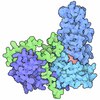
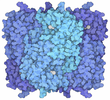
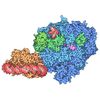
Journal: Proc Natl Acad Sci U S A / Year: 2025 Title: Neurodevelopmental disorder-linked Argonaute mutations permit delayed RISC formation and unusual shortening of miRNAs by 3'→5' trimming. Authors: Andrew Savidge / Huaqun Zhang / Vishal Annasaheb Adhav / Audrey C Kehling / GeunYoung Sim / Zhangfei Shen / Tian-Min Fu / Kotaro Nakanishi / Abstract: Mutations in Argonaute proteins (AGOs) cause Argonaute syndrome, a neurodevelopmental disorder (NDD), yet the underlying molecular mechanism remains unclear. We determined cryo-electron microscopy ...Mutations in Argonaute proteins (AGOs) cause Argonaute syndrome, a neurodevelopmental disorder (NDD), yet the underlying molecular mechanism remains unclear. We determined cryo-electron microscopy (cryo-EM) structures of wild-type (WT) AGO1 and the recurrent, severe causative ΔF180 mutant. AGO1(ΔF180) unexpectedly rearranges the hydrophobic core of the L1 domain to preserve the overall RNA-induced silencing complexes (RISC) architecture and recognize guide RNAs similarly to WT. Functionally, the mutant binds target RNAs like WT but more frequently retains passenger strands, implicating a defect in RISC assembly. Biochemical assays of ΔF180 and L190P mutants revealed normal duplex loading but impaired passenger ejection, exposing guide 3' ends to 3'→5' exonucleases and generating abnormally short ~11-nucleotide RNAs. In cells, AGO1(ΔF180), AGO1(G199S), and corresponding AGO2 mutants likewise produced truncated guides. Together, these findings support a model in which defective passenger ejection underlies the pathology of AGO-associated NDDs by rendering microRNAs bound to AGO syndrome mutants susceptible to aberrant 3' trimming.
In the structure databanks used in Yorodumi, some data are registered as the other names, "COVID-19 virus" and "2019-nCoV". Here are the details of the virus and the list of structure data.
Jan 31, 2019. EMDB accession codes are about to change! (news from PDBe EMDB page)
EMDB accession codes are about to change! (news from PDBe EMDB page)
The allocation of 4 digits for EMDB accession codes will soon come to an end. Whilst these codes will remain in use, new EMDB accession codes will include an additional digit and will expand incrementally as the available range of codes is exhausted. The current 4-digit format prefixed with “EMD-” (i.e. EMD-XXXX) will advance to a 5-digit format (i.e. EMD-XXXXX), and so on. It is currently estimated that the 4-digit codes will be depleted around Spring 2019, at which point the 5-digit format will come into force.
The EM Navigator/Yorodumi systems omit the EMD- prefix.
Related info.:Q: What is EMD? / ID/Accession-code notation in Yorodumi/EM Navigator
Yorodumi is a browser for structure data from EMDB, PDB, SASBDB, etc.
This page is also the successor to EM Navigator detail page, and also detail information page/front-end page for Omokage search.
The word "yorodu" (or yorozu) is an old Japanese word meaning "ten thousand". "mi" (miru) is to see.
Related info.:EMDB / PDB / SASBDB / Comparison of 3 databanks / Yorodumi Search / Aug 31, 2016. New EM Navigator & Yorodumi / Yorodumi Papers / Jmol/JSmol / Function and homology information / Changes in new EM Navigator and Yorodumi
 Movie
Movie Controller

 Yorodumi
 Open data
 Basic information
 Map data
 Sample
 Keywords
 Function and homology information
 Homo sapiens (human) /
  Trichoplusia ni (cabbage looper)
 Authors
 United States, 1 items
  Citation
 Structure visualization
 Downloads & links
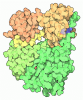
 emd_72192.png
 https://data.pdbj.org/pub/emdb/structures/EMD-72192


 Z (Sec.)
 Y (Row.)
 X (Col.)


 Sample components
 Processing
 Electron microscopy
 FIELD EMISSION GUN

