Movie
 Controller


[English] 日本語
 Yorodumi
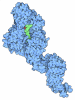
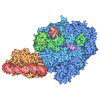
- EMDB-71625: Trident submodule from human SRCAP-nucleosome complex in the full... -
+ Open data

- Basic information
| Entry |  | |||||||||
|---|---|---|---|---|---|---|---|---|---|---|
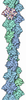
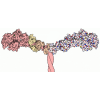
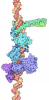
| Title | Trident submodule from human SRCAP-nucleosome complex in the fully-engaged state (focused refinement) | |||||||||
 Map data | ||||||||||
 Sample |
| |||||||||
 Keywords | Chromatin Remodeler / Snf2 family ATPase / H2A.Z / GENE REGULATION | |||||||||
| Function / homology |  Function and homology information positive regulation of telomere maintenance in response to DNA damage / regulation of DNA strand elongation / histone chaperone activity / neural retina development / Formation of the embryonic stem cell BAF (esBAF) complex / npBAF complex / brahma complex / Formation of the canonical BAF (cBAF) complex / Formation of the polybromo-BAF (pBAF) complex / Swr1 complex ...positive regulation of telomere maintenance in response to DNA damage / regulation of DNA strand elongation / histone chaperone activity / neural retina development / Formation of the embryonic stem cell BAF (esBAF) complex / npBAF complex / brahma complex / Formation of the canonical BAF (cBAF) complex / Formation of the polybromo-BAF (pBAF) complex / Swr1 complex / Formation of neuronal progenitor and neuronal BAF (npBAF and nBAF) / GBAF complex / Formation of the non-canonical BAF (ncBAF) complex / regulation of G0 to G1 transition / Ino80 complex / RSC-type complex / regulation of double-strand break repair / ATP-dependent chromatin remodeler activity / spinal cord development / positive regulation of T cell differentiation / regulation of mitotic metaphase/anaphase transition / SWI/SNF complex / regulation of nucleotide-excision repair / positive regulation of stem cell population maintenance / NuA4 histone acetyltransferase complex / regulation of chromosome organization / positive regulation of double-strand break repair / Regulation of MITF-M-dependent genes involved in pigmentation / negative regulation of cell differentiation / RUNX1 interacts with co-factors whose precise effect on RUNX1 targets is not known / regulation of DNA replication / positive regulation of myoblast differentiation / cAMP/PKA signal transduction / positive regulation of double-strand break repair via homologous recombination / regulation of G1/S transition of mitotic cell cycle / telomere maintenance / regulation of embryonic development / transcription initiation-coupled chromatin remodeling / positive regulation of cell differentiation / Regulation of endogenous retroelements by Piwi-interacting RNAs (piRNAs) / kinetochore / Hydrolases; Acting on acid anhydrides; Acting on acid anhydrides to facilitate cellular and subcellular movement / DNA Damage Recognition in GG-NER / nuclear matrix / RMTs methylate histone arginines / nervous system development / histone binding / UCH proteinases / nucleosome / HATs acetylate histones / regulation of cell cycle / nuclear body / regulation of apoptotic process / transcription coactivator activity / nuclear speck / chromatin remodeling / chromatin binding / regulation of transcription by RNA polymerase II / positive regulation of cell population proliferation / regulation of DNA-templated transcription / positive regulation of DNA-templated transcription / chromatin / negative regulation of transcription by RNA polymerase II / perinuclear region of cytoplasm / signal transduction / positive regulation of transcription by RNA polymerase II / ATP hydrolysis activity / protein-containing complex / DNA binding / nucleoplasm / ATP binding / nucleus / plasma membrane Similarity search - Function | |||||||||
| Biological species |  Homo sapiens (human) / synthetic construct (others) | |||||||||
| Method | single particle reconstruction / cryo EM / Resolution: 3.8 Å | |||||||||
 Authors | Louder RK / Park G | |||||||||
| Funding support |  United States, 1 items
| |||||||||
 Citation | Journal: Sci Adv / Year: 2026 Title: Structural mechanism of histone H2A.Z exchange by human SRCAP-CFDP1 holoenzyme. Authors: Giho Park / Carl Wu / Robert K Louder / Abstract: The conserved yeast SWR1 and human SRCAP chromatin remodeling complexes catalyze exchange of nucleosomal histone H2A for H2A.Z, but the underlying mechanism has remained obscure. Here, we show that ...The conserved yeast SWR1 and human SRCAP chromatin remodeling complexes catalyze exchange of nucleosomal histone H2A for H2A.Z, but the underlying mechanism has remained obscure. Here, we show that histone exchange by SRCAP requires the transient activator CFDP1 and resolve nine cryo-electron microscopy structures of the SRCAP-CFDP1 holoenzyme that define the stepwise exchange mechanism. CFDP1 recognizes the conformation of the fully engaged SRCAP-nucleosome complex through interactions with multiple subunits-including direct contact with the ATPase domain-and induces conformational transitions that drive extensive DNA unwrapping, eviction of the H2A-H2B dimer, and insertion of the H2A.Z-H2B dimer, all without necessarily requiring hydrolysis of bound ATP. Collectively, these findings provide unprecedented insight into the mechanism of activator- and nucleotide-driven histone exchange from nucleosomal H2A to H2A.Z. | |||||||||
| History |
|
- Structure visualization
| Supplemental images |
|---|

- Downloads & links
-EMDB archive
| Map data | emd_71625.map.gz | 4.9 MB | EMDB map data format | |
|---|---|---|---|---|
| Header (meta data) | emd-71625-v30.xmlemd-71625.xml | 29.5 KB 29.5 KB | Display Display | EMDB header |
| FSC (resolution estimation) | emd_71625_fsc.xml | 13.6 KB | Display | FSC data file |
| Images |  emd_71625.png | 71.8 KB | ||
| Masks | emd_71625_msk_1.map | 216 MB | Mask map | |
| Filedesc metadata | emd-71625.cif.gz | 9.2 KB | ||
| Others | emd_71625_half_map_1.map.gzemd_71625_half_map_2.map.gz | 171.2 MB 171.2 MB | ||
| Archive directory |  https://data.pdbj.org/pub/emdb/structures/EMD-71625ftp://data.pdbj.org/pub/emdb/structures/EMD-71625 | HTTPS FTP |
-Related structure data
| Related structure data |  9pgcMC  9ca7C  9ca8C  9ca9C  9caaC  9nfvC  9nfwC  9nfxC  9nfyC  9nfzC  9ng0C  9pgdC  9y3dC  9y3eC  9y3fC  9y3gC  9y3hC  9zlaC C: citing same article ( M: atomic model generated by this map |
|---|---|
| Similar structure data |


-Links
| EMDB pages | EMDB (EBI/PDBe) / EMDataResource |
|---|---|
| Related items in Molecule of the Month |
-Map
| File | Download / File: emd_71625.map.gz / Format: CCP4 / Size: 216 MB / Type: IMAGE STORED AS FLOATING POINT NUMBER (4 BYTES) | ||||||||||||||||||||||||||||||||||||
|---|---|---|---|---|---|---|---|---|---|---|---|---|---|---|---|---|---|---|---|---|---|---|---|---|---|---|---|---|---|---|---|---|---|---|---|---|---|
| Projections & slices | Image control
Images are generated by Spider. | ||||||||||||||||||||||||||||||||||||
| Voxel size | X=Y=Z: 1.025 Å | ||||||||||||||||||||||||||||||||||||
| Density |
| ||||||||||||||||||||||||||||||||||||
| Symmetry | Space group: 1 | ||||||||||||||||||||||||||||||||||||
| Details | EMDB XML:
|
 Z (Sec.)
 Y (Row.)
 X (Col.)


-Supplemental data
-Mask #1
| File | emd_71625_msk_1.map | ||||||||||||
|---|---|---|---|---|---|---|---|---|---|---|---|---|---|
| Projections & Slices |
| ||||||||||||
| Density Histograms |


-Half map: #1
| File | emd_71625_half_map_1.map | ||||||||||||
|---|---|---|---|---|---|---|---|---|---|---|---|---|---|
| Projections & Slices |
| ||||||||||||
| Density Histograms |


-Half map: #2
| File | emd_71625_half_map_2.map | ||||||||||||
|---|---|---|---|---|---|---|---|---|---|---|---|---|---|
| Projections & Slices |
| ||||||||||||
| Density Histograms |


- Sample components
-Entire : SRCAP-nucleosome complex
| Entire | Name: SRCAP-nucleosome complex |
|---|---|
| Components |
|
-Supramolecule #1: SRCAP-nucleosome complex
| Supramolecule | Name: SRCAP-nucleosome complex / type: complex / ID: 1 / Parent: 0 / Macromolecule list: #1-#5 Details: Endogenous purified SRCAP bound to 106N32 nucleosome |
|---|
-Supramolecule #2: Endogenous human SRCAP complex
| Supramolecule | Name: Endogenous human SRCAP complex / type: complex / ID: 2 / Parent: 1 / Macromolecule list: #1-#3 |
|---|---|
| Source (natural) | Organism: Homo sapiens (human) / Strain: K-562 / Organ: BLOOD / Tissue: BONE MARROW / Organelle: NUCLEUS / Location in cell: NUCLEOPLASM |
-Macromolecule #1: Helicase SRCAP
| Macromolecule | Name: Helicase SRCAP / type: protein_or_peptide / ID: 1 / Number of copies: 1 / Enantiomer: LEVO EC number: Hydrolases; Acting on acid anhydrides; Acting on acid anhydrides to facilitate cellular and subcellular movement |
|---|---|
| Source (natural) | Organism: Homo sapiens (human) / Organ: BLOOD / Tissue: BONE MARROW |
| Molecular weight | Theoretical: 343.91525 KDa |
| Sequence | String: MQSSPSPAHP QLPVLQTQMV SDGMTGSNPV SPASSSSPAS SGAGGISPQH IAQDSSLDGP PGPPDGATVP LEGFSLSQAA DLANKGPKW EKSHAEIAEQ AKHEAEIETR IAELRKEGFW SLKRLPKVPE PPRPKGHWDY LCEEMQWLSA DFAQERRWKR G VARKVVRM ...String: MQSSPSPAHP QLPVLQTQMV SDGMTGSNPV SPASSSSPAS SGAGGISPQH IAQDSSLDGP PGPPDGATVP LEGFSLSQAA DLANKGPKW EKSHAEIAEQ AKHEAEIETR IAELRKEGFW SLKRLPKVPE PPRPKGHWDY LCEEMQWLSA DFAQERRWKR G VARKVVRM VIRHHEEQRQ KEERARREEQ AKLRRIASTM AKDVRQFWSN VEKVVQFKQQ SRLEEKRKKA LDLHLDFIVG QT EKYSDLL SQSLNQPLTS SKAGSSPCLG SSSAASSPPP PASRLDDEDG DFQPQEDEEE DDEETIEVEE QQEGNDAEAQ RRE IELLRR EGELPLEELL RSLPPQLLEG PSSPSQTPSS HDSDTRDGPE EGAEEEPPQV LEIKPPPSAV TQRNKQPWHP DEDD EEFTA NEEEAEDEED TIAAEEQLEG EVDHAMELSE LAREGELSME ELLQQYAGAY APGSGSSEDE DEDEVDANSS DCEPE GPVE AEEPPQEDSS SQSDSVEDRS EDEEDEHSEE EETSGSSASE ESESEESEDA QSQSQADEEE EDDDFGVEYL LARDEE QSE ADAGSGPPTP GPTTLGPKKE ITDIAAAAES LQPKGYTLAT TQVKTPIPLL LRGQLREYQH IGLDWLVTMY EKKLNGI LA DEMGLGKTIQ TISLLAHLAC EKGNWGPHLI IVPTSVMLNW EMELKRWCPS FKILTYYGAQ KERKLKRQGW TKPNAFHV C ITSYKLVLQD HQAFRRKNWR YLILDEAQNI KNFKSQRWQS LLNFNSQRRL LLTGTPLQNS LMELWSLMHF LMPHVFQSH REFKEWFSNP LTGMIEGSQE YNEGLVKRLH KVLRPFLLRR VKVDVEKQMP KKYEHVIRCR LSKRQRCLYD DFMAQTTTKE TLATGHFMS VINILMQLRK VCNHPNLFDP RPVTSPFITP GICFSTASLV LRATDVHPLQ RIDMGRFDLI GLEGRVSRYE A DTFLPRHR LSRRVLLEVA TAPDPPPRPK PVKMKVNRML QPVPKQEGRT VVVVNNPRAP LGPVPVRPPP GPELSAQPTP GP VPQVLPA SLMVSASPAG PPLIPASRPP GPVLLPPLQP NSGSLPQVLP SPLGVLSGTS RPPTPTLSLK PTPPAPVRLS PAP PPGSSS LLKPLTVPPG YTFPPAAATT TSTTTATATT TAVPAPTPAP QRLILSPDMQ ARLPSGEVVS IGQLASLAQR PVAN AGGSK PLTFQIQGNK LTLTGAQVRQ LAVGQPRPLQ RNVVHLVSAG GQHHLISQPA HVALIQAVAP TPGPTPVSVL PSSTP STTP APTGLSLPLA ANQVPPTMVN NTGVVKIVVR QAPRDGLTPV PPLAPAPRPP SSGLPAVLNP RPTLTPGRLP TPTLGT ARA PMPTPTLVRP LLKLVHSPSP EVSASAPGAA PLTISSPLHV PSSLPGPASS PMPIPNSSPL ASPVSSTVSV PLSSSLP IS VPTTLPAPAS APLTIPISAP LTVSASGPAL LTSVTPPLAP VVPAAPGPPS LAPSGASPSA SALTLGLATA PSLSSSQT P GHPLLLAPTS SHVPGLNSTV APACSPVLVP ASALASPFPS APNPAPAQAS LLAPASSASQ ALATPLAPMA APQTAILAP SPAPPLAPLP VLAPSPGAAP VLASSQTPVP VMAPSSTPGT SLASASPVPA PTPVLAPSST QTMLPAPVPS PLPSPASTQT LALAPALAP TLGGSSPSQT LSLGTGNPQG PFPTQTLSLT PASSLVPTPA QTLSLAPGPP LGPTQTLSLA PAPPLAPASP V GPAPAHTL TLAPASSSAS LLAPASVQTL TLSPAPVPTL GPAAAQTLAL APASTQSPAS QASSLVVSAS GAAPLPVTMV SR LPVSKDE PDTLTLRSGP PSPPSTATSF GGPRPRRQPP PPPRSPFYLD SLEEKRKRQR SERLERIFQL SEAHGALAPV YGT EVLDFC TLPQPVASPI GPRSPGPSHP TFWTYTEAAH RAVLFPQQRL DQLSEIIERF IFVMPPVEAP PPSLHACHPP PWLA PRQAA FQEQLASELW PRARPLHRIV CNMRTQFPDL RLIQYDCGKL QTLAVLLRQL KAEGHRVLIF TQMTRMLDVL EQFLT YHGH LYLRLDGSTR VEQRQALMER FNADKRIFCF ILSTRSGGVG VNLTGADTVV FYDSDWNPTM DAQAQDRCHR IGQTRD VHI YRLISERTVE ENILKKANQK RMLGDMAIEG GNFTTAYFKQ QTIRELFDMP LEEPSSSSVP SAPEEEEETV ASKQTHI LE QALCRAEDEE DIRAATQAKA EQVAELAEFN ENDGFPAGEG EEAGRPGAED EEMSRAEQEI AALVEQLTPI ERYAMKFL E ASLEEVSREE LKQAEEQVEA ARKDLDQAKE EVFRLPQEEE EGPGAGDESS CGTGGGTHRR SKKAKAPERP GTRVSERLR GARAETQGAN HTPVISAHQT RSTTTPPRCS PARERVPRPA PRPRPTPASA PAAIPALVPV PVSAPVPISA PNPITILPVH ILPSPPPPS QIPPCSSPAC TPPPACTPPP AHTPPPAQTC LVTPSSPLLL GPPSVPISAS VTNLPLGLRP EAELCAQALA S PESLELAS VASSETSSLS LVPPKDLLPV AVEILPVSEK NLSLTPSAPS LTLEAGSIPN GQEQEAPDSA EGTTLTVLPE GE ELPLCVS ESNGLELPPS AASDEPLQEP LEADRTSEEL TEAKTPTSSP EKPQELVTAE VAAPSTSSSA TSSPEGPSPA RPP RRRTSA DVEIRGQGTG RPGQPPGPKV LRKLPGRLVT VVEEKELVRR RRQQRGAAST LVPGVSETSA SPGSPSVRSM SGPE SSPPI GGPCEAAPSS SLPTPPQQPF IARRHIELGV TGGGSPENGD GALLAITPPA VKRRRGRPPK KNRSPADAGR GVDEA PSST LKGKTNGADP VPGPETLIVA DPVLEPQLIP GPQPLGPQPV HRPNPLLSPV EKRRRGRPPK ARDLPIPGTI SSAGDG NSE SRTQPPPHPS PLTPLPPLLV CPTATVANTV TTVTISTSPP KRKRGRPPKN PPSPRPSQLP VLDRDSTSVL ESCGLGR RR QPQGQGESEG SSSDEDGSRP LTRLARLRLE AEGMRGRKSG GSMVVAVIQD DLDLADSGPG GLELTPPVVS LTPKLRST R LRPGSLVPPL ETEKLPRKRA GAPVGGSPGL AKRGRLQPPS PLGPEGSVEE SEAEASGEEE EGDGTPRRRP GPRRLVGTT NQGDQRILRS SAPPSLAGPA VSHRGRKAKT UniProtKB: Chromatin remodeling protein SRCAP |
-Macromolecule #2: Vacuolar protein sorting-associated protein 72 homolog
| Macromolecule | Name: Vacuolar protein sorting-associated protein 72 homolog type: protein_or_peptide / ID: 2 / Number of copies: 1 / Enantiomer: LEVO |
|---|---|
| Source (natural) | Organism: Homo sapiens (human) / Organ: BLOOD / Tissue: BONE MARROW |
| Molecular weight | Theoretical: 40.658363 KDa |
| Sequence | String: MSLAGGRAPR KTAGNRLSGL LEAEEEDEFY QTTYGGFTEE SGDDEYQGDQ SDTEDEVDSD FDIDEGDEPS SDGEAEEPRR KRRVVTKAY KEPLKSLRPR KVNTPAGSSQ KAREEKALLP LELQDDGSDS RKSMRQSTAE HTRQTFLRVQ ERQGQSRRRK G PHCERPLT ...String: MSLAGGRAPR KTAGNRLSGL LEAEEEDEFY QTTYGGFTEE SGDDEYQGDQ SDTEDEVDSD FDIDEGDEPS SDGEAEEPRR KRRVVTKAY KEPLKSLRPR KVNTPAGSSQ KAREEKALLP LELQDDGSDS RKSMRQSTAE HTRQTFLRVQ ERQGQSRRRK G PHCERPLT QEELLREAKI TEELNLRSLE TYERLEADKK KQVHKKRKCP GPIITYHSVT VPLVGEPGPK EENVDIEGLD PA PSVSALT PHAGTGPVNP PARCSRTFIT FSDDATFEEW FPQGRPPKVP VREVCPVTHR PALYRDPVTD IPYATARAFK IIR EAYKKY ITAHGLPPTA SALGPGPPPP EPLPGSGPRA LRQKIVIK UniProtKB: Vacuolar protein sorting-associated protein 72 homolog |
-Macromolecule #3: Actin-like protein 6A
| Macromolecule | Name: Actin-like protein 6A / type: protein_or_peptide / ID: 3 / Number of copies: 1 / Enantiomer: LEVO |
|---|---|
| Source (natural) | Organism: Homo sapiens (human) / Organ: BLOOD / Tissue: BONE MARROW |
| Molecular weight | Theoretical: 47.509812 KDa |
| Sequence | String: MSGGVYGGDE VGALVFDIGS YTVRAGYAGE DCPKVDFPTA IGMVVERDDG STLMEIDGDK GKQGGPTYYI DTNALRVPRE NMEAISPLK NGMVEDWDSF QAILDHTYKM HVKSEASLHP VLMSEAPWNT RAKREKLTEL MFEHYNIPAF FLCKTAVLTA F ANGRSTGL ...String: MSGGVYGGDE VGALVFDIGS YTVRAGYAGE DCPKVDFPTA IGMVVERDDG STLMEIDGDK GKQGGPTYYI DTNALRVPRE NMEAISPLK NGMVEDWDSF QAILDHTYKM HVKSEASLHP VLMSEAPWNT RAKREKLTEL MFEHYNIPAF FLCKTAVLTA F ANGRSTGL ILDSGATHTT AIPVHDGYVL QQGIVKSPLA GDFITMQCRE LFQEMNIELV PPYMIASKEA VREGSPANWK RK EKLPQVT RSWHNYMCNC VIQDFQASVL QVSDSTYDEQ VAAQMPTVHY EFPNGYNCDF GAERLKIPEG LFDPSNVKGL SGN TMLGVS HVVTTSVGMC DIDIRPGLYG SVIVAGGNTL IQSFTDRLNR ELSQKTPPSM RLKLIANNTT VERRFSSWIG GSIL ASLGT FQQMWISKQE YEEGGKQCVE RKCP UniProtKB: Actin-like protein 6A |
-Macromolecule #4: DNA
| Macromolecule | Name: DNA / type: dna / ID: 4 / Number of copies: 1 / Classification: DNA |
|---|---|
| Source (natural) | Organism: synthetic construct (others) |
| Molecular weight | Theoretical: 87.851664 KDa |
| Sequence | String: (DA)(DT)(DC)(DG)(DA)(DA)(DG)(DG)(DG)(DC) (DG)(DC)(DC)(DT)(DA)(DT)(DA)(DT)(DA)(DA) (DG)(DG)(DG)(DG)(DG)(DT)(DG)(DG)(DG) (DG)(DG)(DC)(DG)(DC)(DG)(DT)(DT)(DC)(DG) (DT) (DC)(DC)(DT)(DC)(DC)(DC) ...String: (DA)(DT)(DC)(DG)(DA)(DA)(DG)(DG)(DG)(DC) (DG)(DC)(DC)(DT)(DA)(DT)(DA)(DT)(DA)(DA) (DG)(DG)(DG)(DG)(DG)(DT)(DG)(DG)(DG) (DG)(DG)(DC)(DG)(DC)(DG)(DT)(DT)(DC)(DG) (DT) (DC)(DC)(DT)(DC)(DC)(DC)(DT)(DC) (DT)(DC)(DC)(DT)(DC)(DG)(DC)(DG)(DG)(DC) (DG)(DC) (DG)(DA)(DG)(DT)(DT)(DT)(DC) (DA)(DG)(DG)(DC)(DA)(DG)(DC)(DG)(DC)(DT) (DG)(DC)(DG) (DT)(DC)(DC)(DT)(DG)(DC) (DT)(DG)(DC)(DG)(DC)(DA)(DC)(DG)(DT)(DG) (DG)(DG)(DA)(DA) (DG)(DC)(DC)(DC)(DT) (DG)(DC)(DT)(DG)(DG)(DA)(DG)(DA)(DA)(DT) (DC)(DC)(DC)(DG)(DG) (DT)(DG)(DC)(DG) (DC)(DA)(DG)(DG)(DC)(DC)(DG)(DC)(DT)(DC) (DA)(DA)(DT)(DT)(DG)(DG) (DT)(DC)(DG) (DT)(DA)(DG)(DA)(DC)(DA)(DG)(DC)(DT)(DC) (DT)(DA)(DG)(DC)(DA)(DC)(DC) (DG)(DC) (DT)(DT)(DA)(DA)(DA)(DC)(DG)(DC)(DA)(DG) (DC)(DT)(DA)(DC)(DG)(DC)(DG)(DC) (DT) (DG)(DT)(DC)(DC)(DC)(DC)(DC)(DG)(DC)(DG) (DT)(DT)(DT)(DT)(DA)(DA)(DC)(DC)(DG) (DC)(DC)(DA)(DA)(DG)(DG)(DG)(DG)(DA)(DT) (DT)(DA)(DC)(DT)(DC)(DC)(DC)(DT)(DA)(DG) (DT)(DC)(DT)(DC)(DC)(DA)(DG)(DG)(DC) (DA)(DG)(DC)(DT)(DG)(DT)(DC)(DA)(DG)(DA) (DT) (DA)(DT)(DG)(DT)(DA)(DC)(DA)(DT) (DC)(DC)(DT)(DG)(DT)(DG)(DA)(DT)(DC)(DC) (DC)(DC) (DG)(DG)(DG)(DT)(DA)(DC)(DC) (DG)(DA)(DG)(DC)(DT)(DC)(DG)(DA)(DA)(DT) (DT)(DC)(DA) (DC)(DT)(DG)(DG)(DC) |
-Macromolecule #5: DNA
| Macromolecule | Name: DNA / type: dna / ID: 5 / Number of copies: 1 / Classification: DNA |
|---|---|
| Source (natural) | Organism: synthetic construct (others) |
| Molecular weight | Theoretical: 88.19093 KDa |
| Sequence | String: (DG)(DC)(DC)(DA)(DG)(DT)(DG)(DA)(DA)(DT) (DT)(DC)(DG)(DA)(DG)(DC)(DT)(DC)(DG)(DG) (DT)(DA)(DC)(DC)(DC)(DG)(DG)(DG)(DG) (DA)(DT)(DC)(DA)(DC)(DA)(DG)(DG)(DA)(DT) (DG) (DT)(DA)(DC)(DA)(DT)(DA) ...String: (DG)(DC)(DC)(DA)(DG)(DT)(DG)(DA)(DA)(DT) (DT)(DC)(DG)(DA)(DG)(DC)(DT)(DC)(DG)(DG) (DT)(DA)(DC)(DC)(DC)(DG)(DG)(DG)(DG) (DA)(DT)(DC)(DA)(DC)(DA)(DG)(DG)(DA)(DT) (DG) (DT)(DA)(DC)(DA)(DT)(DA)(DT)(DC) (DT)(DG)(DA)(DC)(DA)(DG)(DC)(DT)(DG)(DC) (DC)(DT) (DG)(DG)(DA)(DG)(DA)(DC)(DT) (DA)(DG)(DG)(DG)(DA)(DG)(DT)(DA)(DA)(DT) (DC)(DC)(DC) (DC)(DT)(DT)(DG)(DG)(DC) (DG)(DG)(DT)(DT)(DA)(DA)(DA)(DA)(DC)(DG) (DC)(DG)(DG)(DG) (DG)(DG)(DA)(DC)(DA) (DG)(DC)(DG)(DC)(DG)(DT)(DA)(DG)(DC)(DT) (DG)(DC)(DG)(DT)(DT) (DT)(DA)(DA)(DG) (DC)(DG)(DG)(DT)(DG)(DC)(DT)(DA)(DG)(DA) (DG)(DC)(DT)(DG)(DT)(DC) (DT)(DA)(DC) (DG)(DA)(DC)(DC)(DA)(DA)(DT)(DT)(DG)(DA) (DG)(DC)(DG)(DG)(DC)(DC)(DT) (DG)(DC) (DG)(DC)(DA)(DC)(DC)(DG)(DG)(DG)(DA)(DT) (DT)(DC)(DT)(DC)(DC)(DA)(DG)(DC) (DA) (DG)(DG)(DG)(DC)(DT)(DT)(DC)(DC)(DC)(DA) (DC)(DG)(DT)(DG)(DC)(DG)(DC)(DA)(DG) (DC)(DA)(DG)(DG)(DA)(DC)(DG)(DC)(DA)(DG) (DC)(DG)(DC)(DT)(DG)(DC)(DC)(DT)(DG)(DA) (DA)(DA)(DC)(DT)(DC)(DG)(DC)(DG)(DC) (DC)(DG)(DC)(DG)(DA)(DG)(DG)(DA)(DG)(DA) (DG) (DG)(DG)(DA)(DG)(DG)(DA)(DC)(DG) (DA)(DA)(DC)(DG)(DC)(DG)(DC)(DC)(DC)(DC) (DC)(DA) (DC)(DC)(DC)(DC)(DC)(DT)(DT) (DA)(DT)(DA)(DT)(DA)(DG)(DG)(DC)(DG)(DC) (DC)(DC)(DT) (DT)(DC)(DG)(DA)(DT) |
-Macromolecule #6: PHOSPHOTHIOPHOSPHORIC ACID-ADENYLATE ESTER
| Macromolecule | Name: PHOSPHOTHIOPHOSPHORIC ACID-ADENYLATE ESTER / type: ligand / ID: 6 / Number of copies: 2 / Formula: AGS |
|---|---|
| Molecular weight | Theoretical: 523.247 Da |
| Chemical component information | 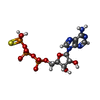 ChemComp-AGS: |
-Macromolecule #7: MAGNESIUM ION
| Macromolecule | Name: MAGNESIUM ION / type: ligand / ID: 7 / Number of copies: 2 / Formula: MG |
|---|---|
| Molecular weight | Theoretical: 24.305 Da |
-Experimental details
-Structure determination
| Method | cryo EM |
|---|---|
 Processing | single particle reconstruction |
| Aggregation state | particle |
-Sample preparation
| Buffer | pH: 7.6 |
|---|---|
| Vitrification | Cryogen name: ETHANE |
- Electron microscopy
| Microscope | TFS KRIOS |
|---|---|
| Image recording | Film or detector model: GATAN K3 (6k x 4k) / Average electron dose: 50.0 e/Å2 |
| Electron beam | Acceleration voltage: 300 kV / Electron source:  FIELD EMISSION GUN |
| Electron optics | Illumination mode: FLOOD BEAM / Imaging mode: BRIGHT FIELD / Nominal defocus max: 1.6 µm / Nominal defocus min: 0.8 µm |
| Experimental equipment |  Model: Titan Krios / Image courtesy: FEI Company |