[English] 日本語
Yorodumi
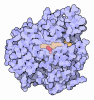
- EMDB-71131: A2AR-BRIL in complex with ZM241385 -

+
Open data


ID or keywords:

Loading...

-
Basic information

Entry
Database: EMDB / ID: EMD-71131
TitleA2AR-BRIL in complex with ZM241385
Map data
Sample
  • Complex: A2AR-BRIL + ZM241385
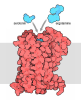
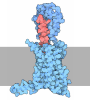
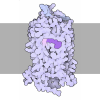
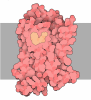
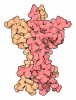
    • Protein or peptide: Adenosine receptor A2a,Soluble cytochrome b562
  • Ligand: Lauryl Maltose Neopentyl Glycol
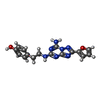
  • Ligand: 4-{2-[(7-amino-2-furan-2-yl[1,2,4]triazolo[1,5-a][1,3,5]triazin-5-yl)amino]ethyl}phenol
KeywordsMEMBRANE PROTEIN
Function / homology
Function and homology information


regulation of norepinephrine secretion / positive regulation of acetylcholine secretion, neurotransmission / negative regulation of alpha-beta T cell activation / positive regulation of circadian sleep/wake cycle, sleep / Adenosine P1 receptors / G protein-coupled adenosine receptor activity / response to purine-containing compound / G protein-coupled adenosine receptor signaling pathway / NGF-independant TRKA activation / Surfactant metabolism ...regulation of norepinephrine secretion / positive regulation of acetylcholine secretion, neurotransmission / negative regulation of alpha-beta T cell activation / positive regulation of circadian sleep/wake cycle, sleep / Adenosine P1 receptors / G protein-coupled adenosine receptor activity / response to purine-containing compound / G protein-coupled adenosine receptor signaling pathway / NGF-independant TRKA activation / Surfactant metabolism / sensory perception / positive regulation of urine volume / synaptic transmission, dopaminergic / type 5 metabotropic glutamate receptor binding / negative regulation of vascular permeability / synaptic transmission, cholinergic / positive regulation of glutamate secretion / intermediate filament / presynaptic active zone / response to caffeine / blood circulation / eating behavior / inhibitory postsynaptic potential / alpha-actinin binding / regulation of calcium ion transport / asymmetric synapse / axolemma / membrane depolarization / phagocytosis / cellular defense response / prepulse inhibition / positive regulation of synaptic transmission, glutamatergic / neuron projection morphogenesis / presynaptic modulation of chemical synaptic transmission / astrocyte activation / response to amphetamine / central nervous system development / positive regulation of long-term synaptic potentiation / positive regulation of synaptic transmission, GABAergic / positive regulation of protein secretion / positive regulation of apoptotic signaling pathway / regulation of mitochondrial membrane potential / excitatory postsynaptic potential / synaptic transmission, glutamatergic / apoptotic signaling pathway / locomotory behavior / electron transport chain / negative regulation of inflammatory response / adenylate cyclase-modulating G protein-coupled receptor signaling pathway / vasodilation / adenylate cyclase-activating G protein-coupled receptor signaling pathway / blood coagulation / cell-cell signaling / presynaptic membrane / G alpha (s) signalling events / phospholipase C-activating G protein-coupled receptor signaling pathway / negative regulation of neuron apoptotic process / postsynaptic membrane / calmodulin binding / electron transfer activity / periplasmic space / positive regulation of ERK1 and ERK2 cascade / iron ion binding / response to xenobiotic stimulus / inflammatory response / negative regulation of cell population proliferation / neuronal cell body / heme binding / apoptotic process / dendrite / lipid binding / regulation of DNA-templated transcription / protein-containing complex binding / glutamatergic synapse / enzyme binding / identical protein binding / membrane / plasma membrane
Similarity search - Function
Adenosine A2A receptor / Adenosine receptor / Cytochrome b562 / Cytochrome b562 / Cytochrome c/b562 / Serpentine type 7TM GPCR chemoreceptor Srsx / G-protein coupled receptors family 1 signature. / G protein-coupled receptor, rhodopsin-like / GPCR, rhodopsin-like, 7TM / G-protein coupled receptors family 1 profile. / 7 transmembrane receptor (rhodopsin family)
Similarity search - Domain/homology
Soluble cytochrome b562 / Adenosine receptor A2a
Similarity search - Component
Biological speciesHomo sapiens (human)
Methodsingle particle reconstruction / cryo EM / Resolution: 3.15 Å
AuthorsRao P / Rathinaswamy M / Chan M / Paredes AG / Patel C / Wranik BJ / Powell J / Eaton D / Hicks KJ / Mafi A / Hao Q
Funding support United States, 1 items
OrganizationGrant numberCountry
Not funded United States
CitationJournal: Commun Chem / Year: 2025
Title: Systematic metabolite screening identifies functional regulators of the adenosine A2A receptor.
Authors: Prashant Rao / Manoj Rathinaswamy / Michelle Chan / Andrea Guzmán Paredes / Chirag Patel / Bernd J Wranik / Jonathan Powell / Dan Eaton / Jared Rutter / Kevin G Hicks / Amirhossein Mafi / Qi Hao /
Abstract: The adenosine A2A receptor (A2AR) is a Class A G protein-coupled receptor (GPCR) that regulates inflammation, glucose metabolism, and energy homeostasis in metabolically active tissues. While the ...The adenosine A2A receptor (A2AR) is a Class A G protein-coupled receptor (GPCR) that regulates inflammation, glucose metabolism, and energy homeostasis in metabolically active tissues. While the effects of small-molecule ligands and protein interactions with A2AR have been extensively studied, the regulatory influence of endogenous metabolites remains unexplored. To address this gap, we employed the Mass spectrometry Integrated with equilibrium Dialysis for the discovery of Allostery Systematically (MIDAS) platform to screen a library of human metabolites for interactions with A2AR. This approach identified 180 metabolites that interact with A2AR, including allosteric and orthosteric modulators. We characterized the mechanisms of three metabolites previously unreported to interact with A2AR: prostaglandin D2, an allosteric antagonist that fully inhibits receptor signaling, and two orthosteric agonists, S-adenosyl-L-homocysteine and 2'-deoxyadenosine, that fully activate A2AR. Overall, these findings highlight the potential of the MIDAS platform to uncover previously unrecognized metabolite-GPCR interactions for research and therapeutic applications.
History
DepositionJun 10, 2025-
Header (metadata) releaseDec 24, 2025-
Map releaseDec 24, 2025-
UpdateDec 24, 2025-
Current statusDec 24, 2025Processing site: RCSB / Status: Released

-
Structure visualization

Supplemental images

Downloads & links

-
Map

FileDownload / File: emd_71131.map.gz / Format: CCP4 / Size: 64 MB / Type: IMAGE STORED AS FLOATING POINT NUMBER (4 BYTES)
Projections & slices

Image control

Size
Brightness
Contrast
Others
AxesZ (Sec.)Y (Row.)X (Col.)
0.81 Å/pix.
x 256 pix.
= 206.848 Å
0.81 Å/pix.
x 256 pix.
= 206.848 Å
0.81 Å/pix.
x 256 pix.
= 206.848 Å

Surface

Projections

Slices (1/3)

Slices (1/2)

Slices (2/3)

Images are generated by Spider.

Voxel sizeX=Y=Z: 0.808 Å
Density
Contour LevelBy AUTHOR: 0.00781
Minimum - Maximum-0.14468294 - 0.22402185
Average (Standard dev.)0.0001981741 (±0.003098963)
SymmetrySpace group: 1
Details

EMDB XML:

Map geometry
Axis orderXYZ
Origin000
Dimensions256256256
Spacing256256256
CellA=B=C: 206.848 Å
α=β=γ: 90.0 °

-
Supplemental data

-
Additional map: #1

Fileemd_71131_additional_1.map
Projections & Slices
AxesZYX

Projections

Slices (1/2)
Density Histograms

-
Half map: #1

Fileemd_71131_half_map_1.map
Projections & Slices
AxesZYX

Projections

Slices (1/2)
Density Histograms

-
Half map: #2

Fileemd_71131_half_map_2.map
Projections & Slices
AxesZYX

Projections

Slices (1/2)
Density Histograms

-
Sample components

-
Entire : A2AR-BRIL + ZM241385

EntireName: A2AR-BRIL + ZM241385
Components
  • Complex: A2AR-BRIL + ZM241385
    • Protein or peptide: Adenosine receptor A2a,Soluble cytochrome b562
  • Ligand: Lauryl Maltose Neopentyl Glycol
  • Ligand: 4-{2-[(7-amino-2-furan-2-yl[1,2,4]triazolo[1,5-a][1,3,5]triazin-5-yl)amino]ethyl}phenol

-
Supramolecule #1: A2AR-BRIL + ZM241385

SupramoleculeName: A2AR-BRIL + ZM241385 / type: complex / ID: 1 / Parent: 0 / Macromolecule list: #1
Source (natural)Organism: Homo sapiens (human)

-
Macromolecule #1: Adenosine receptor A2a,Soluble cytochrome b562

MacromoleculeName: Adenosine receptor A2a,Soluble cytochrome b562 / type: protein_or_peptide / ID: 1 / Number of copies: 1 / Enantiomer: LEVO
Source (natural)Organism: Homo sapiens (human)
Molecular weightTheoretical: 47.803668 KDa
Recombinant expressionOrganism: Spodoptera frugiperda (fall armyworm)
SequenceString: DYKDDDDKMP IMGSSVYITV ELAIAVLAIL GNVLVCWAVW LNSNLQNVTN YFVVSLAAAD ILVGVLAIPF AITISTGFCA ACHGCLFIA CFVLVLAQSS IFSLLAIAID RYIAIAIPLR YNGLVTGTRA AGIIAICWVL SFAIGLTPML GWNNCGQPKE G KAHSQGCG ...String:
DYKDDDDKMP IMGSSVYITV ELAIAVLAIL GNVLVCWAVW LNSNLQNVTN YFVVSLAAAD ILVGVLAIPF AITISTGFCA ACHGCLFIA CFVLVLAQSS IFSLLAIAID RYIAIAIPLR YNGLVTGTRA AGIIAICWVL SFAIGLTPML GWNNCGQPKE G KAHSQGCG EGQVACLFED VVPMNYMVYF NFFACVLVPL LLMLGVYLRI FAAARRQLKA DLEDNWETLN DNLKVIEKAD NA AQVKDAL TKMRAAALDA QKATPPKLED KSPDSPEMKD FRHGFDILVG QIDDALKLAN EGKVKEAQAA AEQLKTTRNA YIQ KYLARS TLQKEVHAAK SAAIIAGLFA LCWLPLHIIN CFTFFCPDCS HAPLWLMYLA IVLAHTNSVV NPFIYAYRIR EFRQ TFRKI IRSHVLRQQE PFKAAHHHHH HHHHH

UniProtKB: Adenosine receptor A2a, Soluble cytochrome b562, Adenosine receptor A2a

-
Macromolecule #2: Lauryl Maltose Neopentyl Glycol

MacromoleculeName: Lauryl Maltose Neopentyl Glycol / type: ligand / ID: 2 / Number of copies: 1 / Formula: LMN
Molecular weightTheoretical: 1.005188 KDa
Chemical component information

ChemComp-AV0:
Lauryl Maltose Neopentyl Glycol

-
Macromolecule #3: 4-{2-[(7-amino-2-furan-2-yl[1,2,4]triazolo[1,5-a][1,3,5]triazin-5...

MacromoleculeName: 4-{2-[(7-amino-2-furan-2-yl[1,2,4]triazolo[1,5-a][1,3,5]triazin-5-yl)amino]ethyl}phenol
type: ligand / ID: 3 / Number of copies: 1 / Formula: ZMA
Molecular weightTheoretical: 337.336 Da
Chemical component information

ChemComp-ZMA:
4-{2-[(7-amino-2-furan-2-yl[1,2,4]triazolo[1,5-a][1,3,5]triazin-5-yl)amino]ethyl}phenol

-
Experimental details

-
Structure determination

Methodcryo EM
Processingsingle particle reconstruction
Aggregation stateparticle

-
Sample preparation

BufferpH: 7.5
VitrificationCryogen name: ETHANE

-
Electron microscopy

MicroscopeTFS KRIOS
Image recordingFilm or detector model: FEI FALCON IV (4k x 4k) / Average electron dose: 50.0 e/Å2
Electron beamAcceleration voltage: 300 kV / Electron source: FIELD EMISSION GUN
Electron opticsIllumination mode: OTHER / Imaging mode: BRIGHT FIELD / Nominal defocus max: 2.0 µm / Nominal defocus min: 1.0 µm
Experimental equipment
Model: Titan Krios / Image courtesy: FEI Company

+
Image processing

CTF correctionType: PHASE FLIPPING AND AMPLITUDE CORRECTION
Startup modelType of model: PDB ENTRY
PDB model - PDB ID:
Final reconstructionResolution.type: BY AUTHOR / Resolution: 3.15 Å / Resolution method: FSC 0.143 CUT-OFF / Software - Name: RELION / Number images used: 489705
Initial angle assignmentType: MAXIMUM LIKELIHOOD
Final angle assignmentType: MAXIMUM LIKELIHOOD
FSC plot (resolution estimation)

+
About Yorodumi

-
News

-
Feb 9, 2022. New format data for meta-information of EMDB entries

New format data for meta-information of EMDB entries

  • Version 3 of the EMDB header file is now the official format.
  • The previous official version 1.9 will be removed from the archive.

Related info.:EMDB header

External links:wwPDB to switch to version 3 of the EMDB data model

-
Aug 12, 2020. Covid-19 info

Covid-19 info

URL: https://pdbj.org/emnavi/covid19.php

New page: Covid-19 featured information page in EM Navigator.

Related info.:Covid-19 info / Mar 5, 2020. Novel coronavirus structure data

+
Mar 5, 2020. Novel coronavirus structure data

Novel coronavirus structure data

Related info.:Yorodumi Speices / Aug 12, 2020. Covid-19 info

External links:COVID-19 featured content - PDBj / Molecule of the Month (242):Coronavirus Proteases

+
Jan 31, 2019. EMDB accession codes are about to change! (news from PDBe EMDB page)

EMDB accession codes are about to change! (news from PDBe EMDB page)

  • The allocation of 4 digits for EMDB accession codes will soon come to an end. Whilst these codes will remain in use, new EMDB accession codes will include an additional digit and will expand incrementally as the available range of codes is exhausted. The current 4-digit format prefixed with “EMD-” (i.e. EMD-XXXX) will advance to a 5-digit format (i.e. EMD-XXXXX), and so on. It is currently estimated that the 4-digit codes will be depleted around Spring 2019, at which point the 5-digit format will come into force.
  • The EM Navigator/Yorodumi systems omit the EMD- prefix.

Related info.:Q: What is EMD? / ID/Accession-code notation in Yorodumi/EM Navigator

External links:EMDB Accession Codes are Changing Soon! / Contact to PDBj

+
Jul 12, 2017. Major update of PDB

Major update of PDB

  • wwPDB released updated PDB data conforming to the new PDBx/mmCIF dictionary.
  • This is a major update changing the version number from 4 to 5, and with Remediation, in which all the entries are updated.
  • In this update, many items about electron microscopy experimental information are reorganized (e.g. em_software).
  • Now, EM Navigator and Yorodumi are based on the updated data.

External links:wwPDB Remediation / Enriched Model Files Conforming to OneDep Data Standards Now Available in the PDB FTP Archive

-
Yorodumi

Thousand views of thousand structures

  • Yorodumi is a browser for structure data from EMDB, PDB, SASBDB, etc.
  • This page is also the successor to EM Navigator detail page, and also detail information page/front-end page for Omokage search.
  • The word "yorodu" (or yorozu) is an old Japanese word meaning "ten thousand". "mi" (miru) is to see.

Related info.:EMDB / PDB / SASBDB / Comparison of 3 databanks / Yorodumi Search / Aug 31, 2016. New EM Navigator & Yorodumi / Yorodumi Papers / Jmol/JSmol / Function and homology information / Changes in new EM Navigator and Yorodumi

Read more