 Movie
Movie Controller


+ Open data

- Basic information
| Entry | Database: PDB / ID: 9p1s | ||||||||||||||||||||||||
|---|---|---|---|---|---|---|---|---|---|---|---|---|---|---|---|---|---|---|---|---|---|---|---|---|---|
| Title | A2AR-BRIL in complex with ZM241385 and PGD2 | ||||||||||||||||||||||||
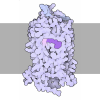
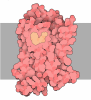
 Components Components | Adenosine receptor A2a,Soluble cytochrome b562 | ||||||||||||||||||||||||
 Keywords Keywords | MEMBRANE PROTEIN | ||||||||||||||||||||||||
| Function / homology |  Function and homology information Function and homology informationregulation of norepinephrine secretion / positive regulation of circadian sleep/wake cycle, sleep / Adenosine P1 receptors / positive regulation of acetylcholine secretion, neurotransmission / G protein-coupled adenosine receptor activity / response to purine-containing compound / G protein-coupled adenosine receptor signaling pathway / NGF-independant TRKA activation / Surfactant metabolism / type 5 metabotropic glutamate receptor binding ...regulation of norepinephrine secretion / positive regulation of circadian sleep/wake cycle, sleep / Adenosine P1 receptors / positive regulation of acetylcholine secretion, neurotransmission / G protein-coupled adenosine receptor activity / response to purine-containing compound / G protein-coupled adenosine receptor signaling pathway / NGF-independant TRKA activation / Surfactant metabolism / type 5 metabotropic glutamate receptor binding / negative regulation of vascular permeability / positive regulation of urine volume / blood circulation / response to caffeine / presynaptic active zone / intermediate filament / sensory perception / eating behavior / positive regulation of glutamate secretion / synaptic transmission, cholinergic / regulation of calcium ion transport / alpha-actinin binding / phagocytosis / synaptic transmission, dopaminergic / membrane depolarization / asymmetric synapse / prepulse inhibition / cellular defense response / axolemma / positive regulation of synaptic transmission, glutamatergic / astrocyte activation / presynaptic modulation of chemical synaptic transmission / neuron projection morphogenesis / regulation of mitochondrial membrane potential / locomotory behavior / excitatory postsynaptic potential / positive regulation of protein secretion / central nervous system development / positive regulation of long-term synaptic potentiation / synaptic transmission, glutamatergic / electron transport chain / vasodilation / blood coagulation / adenylate cyclase-modulating G protein-coupled receptor signaling pathway / phospholipase C-activating G protein-coupled receptor signaling pathway / cell-cell signaling / negative regulation of neuron apoptotic process / adenylate cyclase-activating G protein-coupled receptor signaling pathway / presynaptic membrane / calmodulin binding / G alpha (s) signalling events / positive regulation of ERK1 and ERK2 cascade / electron transfer activity / periplasmic space / postsynaptic membrane / inflammatory response / response to xenobiotic stimulus / apoptotic process / iron ion binding / negative regulation of cell population proliferation / lipid binding / neuronal cell body / heme binding / regulation of DNA-templated transcription / dendrite / protein-containing complex binding / glutamatergic synapse / enzyme binding / membrane / identical protein binding / plasma membrane Similarity search - Function | ||||||||||||||||||||||||
| Biological species |  Homo sapiens (human) Homo sapiens (human) | ||||||||||||||||||||||||
| Method | ELECTRON MICROSCOPY / single particle reconstruction / cryo EM / Resolution: 3.34 Å | ||||||||||||||||||||||||
 Authors Authors | Rao, P. / Rathinaswamy, M. / Chan, M. / Paredes, A.G. / Patel, C. / Wranik, B.J. / Powell, J. / Eaton, D. / Hicks, K.J. / Mafi, A. / Hao, Q. | ||||||||||||||||||||||||
| Funding support |  United States, 1items United States, 1items
| ||||||||||||||||||||||||
 Citation Citation | Journal: Commun Chem / Year: 2025 Title: Systematic metabolite screening identifies functional regulators of the adenosine A2A receptor. Authors: Prashant Rao / Manoj Rathinaswamy / Michelle Chan / Andrea Guzmán Paredes / Chirag Patel / Bernd J Wranik / Jonathan Powell / Dan Eaton / Jared Rutter / Kevin G Hicks / Amirhossein Mafi / Qi Hao / Abstract: The adenosine A2A receptor (A2AR) is a Class A G protein-coupled receptor (GPCR) that regulates inflammation, glucose metabolism, and energy homeostasis in metabolically active tissues. While the ...The adenosine A2A receptor (A2AR) is a Class A G protein-coupled receptor (GPCR) that regulates inflammation, glucose metabolism, and energy homeostasis in metabolically active tissues. While the effects of small-molecule ligands and protein interactions with A2AR have been extensively studied, the regulatory influence of endogenous metabolites remains unexplored. To address this gap, we employed the Mass spectrometry Integrated with equilibrium Dialysis for the discovery of Allostery Systematically (MIDAS) platform to screen a library of human metabolites for interactions with A2AR. This approach identified 180 metabolites that interact with A2AR, including allosteric and orthosteric modulators. We characterized the mechanisms of three metabolites previously unreported to interact with A2AR: prostaglandin D2, an allosteric antagonist that fully inhibits receptor signaling, and two orthosteric agonists, S-adenosyl-L-homocysteine and 2'-deoxyadenosine, that fully activate A2AR. Overall, these findings highlight the potential of the MIDAS platform to uncover previously unrecognized metabolite-GPCR interactions for research and therapeutic applications. | ||||||||||||||||||||||||
| History |
|
- Structure visualization
| Structure viewer | Molecule: MolmilJmol/JSmol |
|---|
- Downloads & links
-Download
| PDBx/mmCIF format | 9p1s.cif.gz | 67.7 KB | Display | PDBx/mmCIF format |
|---|---|---|---|---|
| PDB format | pdb9p1s.ent.gz | 44.3 KB | Display | PDB format |
| PDBx/mmJSON format | 9p1s.json.gz | Tree view | PDBx/mmJSON format | |
| Others |  Other downloads Other downloads |
-Validation report
| Arichive directory | https://data.pdbj.org/pub/pdb/validation_reports/p1/9p1sftp://data.pdbj.org/pub/pdb/validation_reports/p1/9p1s | HTTPS FTP |
|---|
-Related structure data
| Related structure data |  71130MC  9p1tC M: map data used to model this data C: citing same article ( |
|---|---|
| Similar structure data |

-Links
 PDBj
PDBj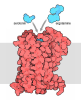
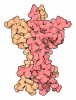
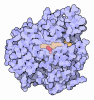
- Assembly
| Deposited unit | 
|
|---|---|
| 1 |
|
-Components
| #1: Protein | Mass: 47803.668 Da / Num. of mol.: 1 Source method: isolated from a genetically manipulated source Source: (gene. exp.) Homo sapiens (human) / Gene: ADORA2A, ADORA2, cybC / Production host:   Spodoptera frugiperda (fall armyworm) / References: UniProt: P29274, UniProt: P0ABE7 Spodoptera frugiperda (fall armyworm) / References: UniProt: P29274, UniProt: P0ABE7 |
|---|---|
| #2: Chemical | ChemComp-LMN / 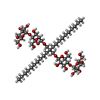 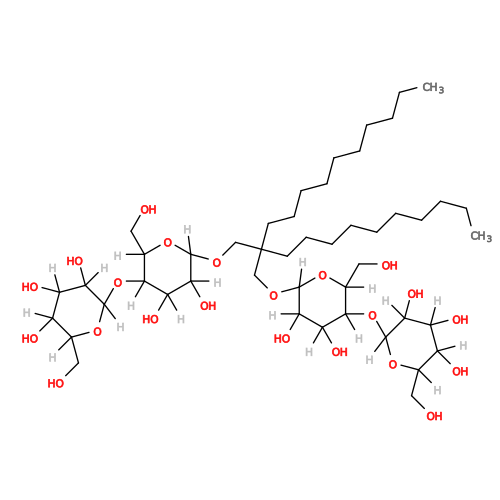 Mass: 1005.188 Da / Num. of mol.: 1 / Source method: obtained synthetically / Formula: C47H88O22 / Comment: detergent*YM Mass: 1005.188 Da / Num. of mol.: 1 / Source method: obtained synthetically / Formula: C47H88O22 / Comment: detergent*YM |
| #3: Chemical | ChemComp-ZMA / 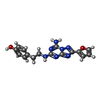 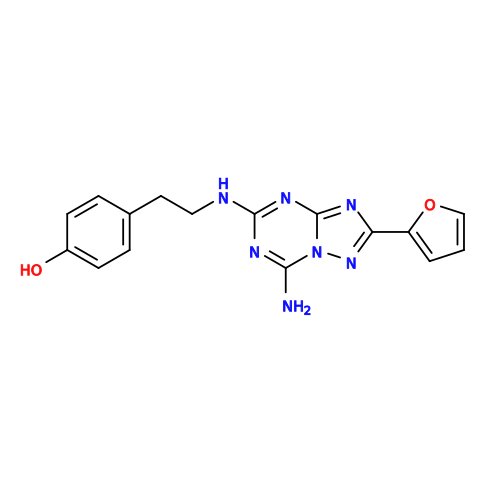 Mass: 337.336 Da / Num. of mol.: 1 / Source method: obtained synthetically / Formula: C16H15N7O2 / Comment: antagonist*YM Mass: 337.336 Da / Num. of mol.: 1 / Source method: obtained synthetically / Formula: C16H15N7O2 / Comment: antagonist*YM |
| Has ligand of interest | N |
| Has protein modification | Y |
-Experimental details
-Experiment
| Experiment | Method: ELECTRON MICROSCOPY |
|---|---|
| EM experiment | Aggregation state: PARTICLE / 3D reconstruction method: single particle reconstruction |
- Sample preparation
| Component | Name: A2AR-BRIL + ZM241385 + PGD2 / Type: COMPLEX / Entity ID: #1 / Source: RECOMBINANT |
|---|---|
| Molecular weight | Experimental value: NO |
| Source (natural) | Organism: Homo sapiens (human) |
| Source (recombinant) | Organism: Spodoptera frugiperda (fall armyworm) |
| Buffer solution | pH: 7.5 |
| Specimen | Embedding applied: NO / Shadowing applied: NO / Staining applied: NO / Vitrification applied: YES |
| Vitrification | Cryogen name: ETHANE |
- Electron microscopy imaging
| Experimental equipment |  Model: Titan Krios / Image courtesy: FEI Company |
|---|---|
| Microscopy | Model: TFS KRIOS |
| Electron gun | Electron source:  FIELD EMISSION GUN / Accelerating voltage: 300 kV / Illumination mode: OTHER FIELD EMISSION GUN / Accelerating voltage: 300 kV / Illumination mode: OTHER |
| Electron lens | Mode: BRIGHT FIELD / Nominal defocus max: 2000 nm / Nominal defocus min: 1000 nm |
| Image recording | Electron dose: 50 e/Å2 / Film or detector model: FEI FALCON IV (4k x 4k) |
- Processing
| EM software |
| ||||||||||||||||||||||||
|---|---|---|---|---|---|---|---|---|---|---|---|---|---|---|---|---|---|---|---|---|---|---|---|---|---|
| CTF correction | Type: PHASE FLIPPING AND AMPLITUDE CORRECTION | ||||||||||||||||||||||||
| 3D reconstruction | Resolution: 3.34 Å / Resolution method: FSC 0.143 CUT-OFF / Num. of particles: 315882 / Symmetry type: POINT | ||||||||||||||||||||||||
| Refinement | Highest resolution: 3.34 Å Stereochemistry target values: REAL-SPACE (WEIGHTED MAP SUM AT ATOM CENTERS) | ||||||||||||||||||||||||
| Refine LS restraints |
|
