response to indole-3-methanol / caspase-9 / response to G1 DNA damage checkpoint signaling / caspase complex / regulation of apoptotic DNA fragmentation / Formation of apoptosome / apoptosome / cytochrome complex / leukocyte apoptotic process / glial cell apoptotic process ...response to indole-3-methanol / caspase-9 / response to G1 DNA damage checkpoint signaling / caspase complex / regulation of apoptotic DNA fragmentation / Formation of apoptosome / apoptosome / cytochrome complex / leukocyte apoptotic process / glial cell apoptotic process / response to cobalt ion / cysteine-type endopeptidase activator activity / Caspase activation via Dependence Receptors in the absence of ligand / Activation of caspases through apoptosome-mediated cleavage / SMAC (DIABLO) binds to IAPs / SMAC(DIABLO)-mediated dissociation of IAP:caspase complexes / Regulation of the apoptosome activity / epithelial cell apoptotic process / fibroblast apoptotic process / AKT phosphorylates targets in the cytosol / mitochondrial electron transport, cytochrome c to oxygen / platelet formation / response to anesthetic / cysteine-type endopeptidase activator activity involved in apoptotic process / mitochondrial electron transport, ubiquinol to cytochrome c / TP53 Regulates Transcription of Caspase Activators and Caspases / Constitutive Signaling by AKT1 E17K in Cancer / forebrain development / Transcriptional Regulation by E2F6 / intrinsic apoptotic signaling pathway in response to endoplasmic reticulum stress / cellular response to dexamethasone stimulus / positive regulation of execution phase of apoptosis / cellular response to transforming growth factor beta stimulus / response to UV / signal transduction in response to DNA damage / cardiac muscle cell apoptotic process / heat shock protein binding / response to nutrient / intrinsic apoptotic signaling pathway / response to ischemia / positive regulation of apoptotic signaling pathway / apoptotic signaling pathway / kidney development / neural tube closure / protein maturation / NOD1/2 Signaling Pathway / protein processing / ADP binding / mitochondrial intermembrane space / enzyme activator activity / intrinsic apoptotic signaling pathway in response to DNA damage / cellular response to UV / response to estradiol / peptidase activity / nervous system development / positive regulation of neuron apoptotic process / neuron apoptotic process / secretory granule lumen / regulation of apoptotic process / response to lipopolysaccharide / ficolin-1-rich granule lumen / response to ethanol / response to hypoxia / cell differentiation / electron transfer activity / positive regulation of apoptotic process / cysteine-type endopeptidase activity / nucleotide binding / apoptotic process / heme binding / DNA damage response / Neutrophil degranulation / lipid binding / protein kinase binding / protein-containing complex / mitochondrion / proteolysis / extracellular exosome / extracellular region / ATP binding / metal ion binding / identical protein binding / nucleus / cytoplasm / cytosol 類似検索 - 分子機能
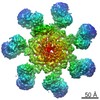
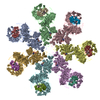
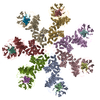
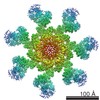
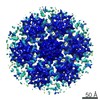
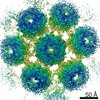
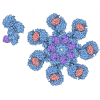
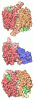
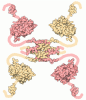
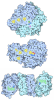
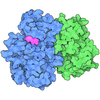
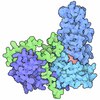
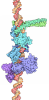
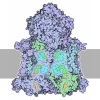
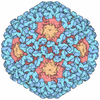
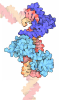
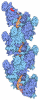
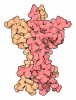
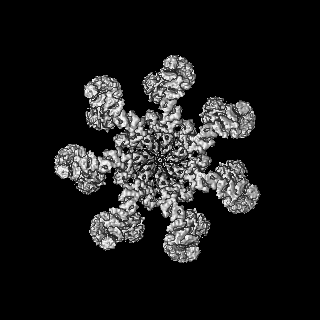
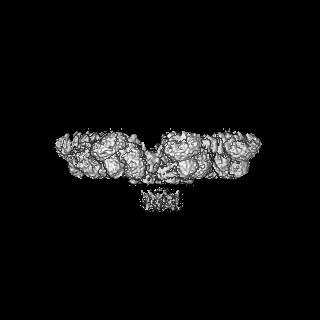
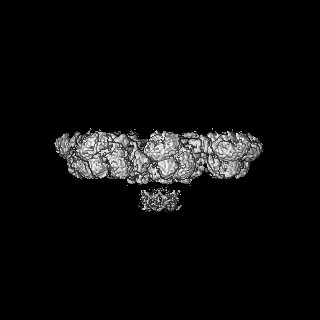
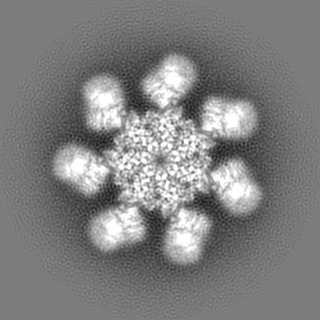
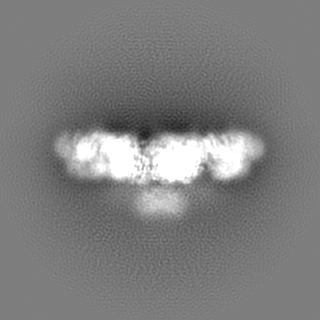
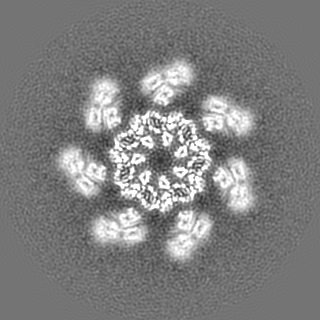
ジャーナル: Proc Natl Acad Sci U S A / 年: 2017 タイトル: Mechanistic insights into caspase-9 activation by the structure of the apoptosome holoenzyme. 著者: Yini Li / Mengying Zhou / Qi Hu / Xiao-Chen Bai / Weiyun Huang / Sjors H W Scheres / Yigong Shi / 要旨: Mammalian intrinsic apoptosis requires activation of the initiator caspase-9, which then cleaves and activates the effector caspases to execute cell killing. The heptameric Apaf-1 apoptosome is ...Mammalian intrinsic apoptosis requires activation of the initiator caspase-9, which then cleaves and activates the effector caspases to execute cell killing. The heptameric Apaf-1 apoptosome is indispensable for caspase-9 activation by together forming a holoenzyme. The molecular mechanism of caspase-9 activation remains largely enigmatic. Here, we report the cryoelectron microscopy (cryo-EM) structure of an apoptotic holoenzyme and structure-guided biochemical analyses. The caspase recruitment domains (CARDs) of Apaf-1 and caspase-9 assemble in two different ways: a 4:4 complex docks onto the central hub of the apoptosome, and a 2:1 complex binds the periphery of the central hub. The interface between the CARD complex and the central hub is required for caspase-9 activation within the holoenzyme. Unexpectedly, the CARD of free caspase-9 strongly inhibits its proteolytic activity. These structural and biochemical findings demonstrate that the apoptosome activates caspase-9 at least in part through sequestration of the inhibitory CARD domain.
 ムービー
ムービー コントローラー


 データを開く
 基本情報
基本情報 マップデータ
 試料
試料 キーワード
キーワード 機能・相同性情報
 Homo sapiens (ヒト) /
 Equus caballus (ウマ)
 データ登録者
 中国,
中国,  英国, 3件
  引用
引用 構造の表示
構造の表示
 ダウンロードとリンク
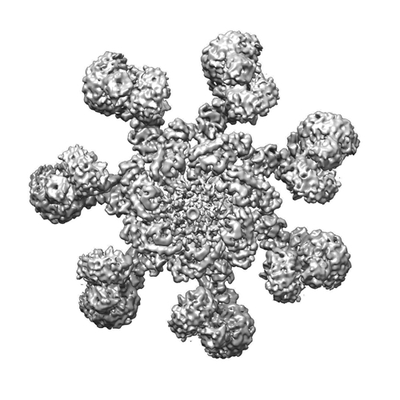 emd_6690.png
 http://ftp.pdbj.org/pub/emdb/structures/EMD-6690
 Z (Sec.)
 Y (Row.)
 X (Col.)





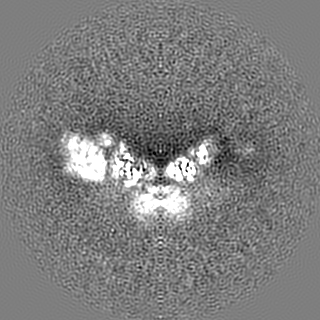

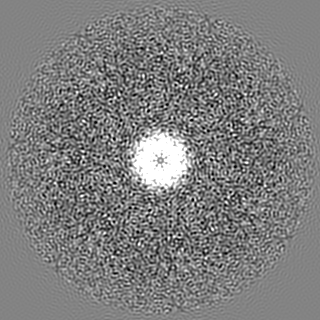
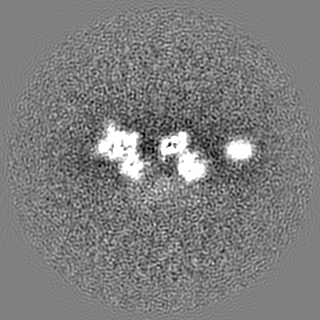
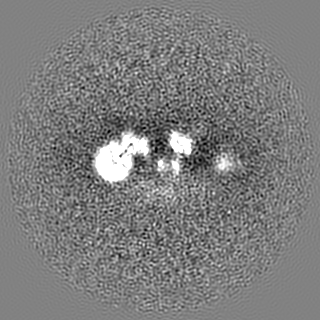
 試料の構成要素
 解析
解析 電子顕微鏡法
 FIELD EMISSION GUN