 Movie
Movie Controller

[English] 日本語
 Yorodumi
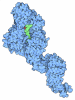
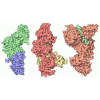
- EMDB-66350: Cryo-EM structure of the full-length GPR15L bound GPR15-Gi complex -
+ Open data

- Basic information
| Entry |  | |||||||||
|---|---|---|---|---|---|---|---|---|---|---|
| Title | Cryo-EM structure of the full-length GPR15L bound GPR15-Gi complex | |||||||||
 Map data Map data | ||||||||||
 Sample Sample |
| |||||||||
 Keywords Keywords | GPCR / GPR15L / GPR15 / MEMBRANE PROTEIN/IMMUNE SYSTEM / MEMBRANE PROTEIN-IMMUNE SYSTEM complex | |||||||||
| Function / homology |  Function and homology information Function and homology informationlymphocyte chemotaxis / regulation of keratinocyte proliferation / regulation of T cell migration / negative regulation of cell cycle G1/S phase transition / negative regulation of cell division / negative regulation of adenylate cyclase activity / T cell homeostasis / chemokine activity / GTP metabolic process / positive regulation of macroautophagy ...lymphocyte chemotaxis / regulation of keratinocyte proliferation / regulation of T cell migration / negative regulation of cell cycle G1/S phase transition / negative regulation of cell division / negative regulation of adenylate cyclase activity / T cell homeostasis / chemokine activity / GTP metabolic process / positive regulation of macroautophagy / defense response to fungus / coreceptor activity / T cell migration / Adenylate cyclase inhibitory pathway / mast cell degranulation / G protein-coupled receptor binding / G protein-coupled receptor activity / G-protein beta/gamma-subunit complex binding / adenylate cyclase-inhibiting G protein-coupled receptor signaling pathway / adenylate cyclase-modulating G protein-coupled receptor signaling pathway / Olfactory Signaling Pathway / Activation of the phototransduction cascade / G protein-coupled acetylcholine receptor signaling pathway / G beta:gamma signalling through PLC beta / Presynaptic function of Kainate receptors / Thromboxane signalling through TP receptor / Activation of G protein gated Potassium channels / Inhibition of voltage gated Ca2+ channels via Gbeta/gamma subunits / G-protein activation / Glucagon signaling in metabolic regulation / G beta:gamma signalling through CDC42 / Prostacyclin signalling through prostacyclin receptor / Synthesis, secretion, and inactivation of Glucagon-like Peptide-1 (GLP-1) / GDP binding / photoreceptor disc membrane / G beta:gamma signalling through BTK / ADP signalling through P2Y purinoceptor 12 / Sensory perception of sweet, bitter, and umami (glutamate) taste / Glucagon-type ligand receptors / Adrenaline,noradrenaline inhibits insulin secretion / Vasopressin regulates renal water homeostasis via Aquaporins / G alpha (z) signalling events / Glucagon-like Peptide-1 (GLP1) regulates insulin secretion / cellular response to catecholamine stimulus / ADP signalling through P2Y purinoceptor 1 / G beta:gamma signalling through PI3Kgamma / ADORA2B mediated anti-inflammatory cytokines production / adenylate cyclase-activating dopamine receptor signaling pathway / cellular response to prostaglandin E stimulus / Cooperation of PDCL (PhLP1) and TRiC/CCT in G-protein beta folding / GPER1 signaling / heterotrimeric G-protein complex / Inactivation, recovery and regulation of the phototransduction cascade / G alpha (12/13) signalling events / angiogenesis / G-protein beta-subunit binding / extracellular vesicle / Thrombin signalling through proteinase activated receptors (PARs) / virus receptor activity / signaling receptor complex adaptor activity / ciliary basal body / GTPase binding / midbody / Ca2+ pathway / High laminar flow shear stress activates signaling by PIEZO1 and PECAM1:CDH5:KDR in endothelial cells / G alpha (i) signalling events / G alpha (s) signalling events / G alpha (q) signalling events / Ras protein signal transduction / Extra-nuclear estrogen signaling / endosome / defense response to Gram-positive bacterium / G protein-coupled receptor signaling pathway / receptor ligand activity / cell division / lysosomal membrane / centrosome / GTPase activity / symbiont entry into host cell / synapse / GTP binding / protein-containing complex binding / Golgi apparatus / signal transduction / : / extracellular exosome / extracellular region / membrane / metal ion binding / plasma membrane / cytosol / cytoplasm Similarity search - Function | |||||||||
| Biological species |  Homo sapiens (human) / Homo sapiens (human) /   Mus musculus (house mouse) Mus musculus (house mouse) | |||||||||
| Method | single particle reconstruction / cryo EM / Resolution: 3.3 Å | |||||||||
 Authors Authors | Han S / Wu B / Zhao Q | |||||||||
| Funding support |  China, 1 items China, 1 items
| |||||||||
 Citation Citation | Journal: iScience / Year: 2025 Title: Molecular insights into ligand recognition and receptor activation of GPR15. Authors: Shutian Chen / Xuteng Han / Yuxia Zhang / Limin Ma / Cuiying Yi / Xiaojing Chu / Qiuxiang Tan / Shuo Han / Qiang Zhao / Beili Wu / Abstract: In response to the chemokine-like peptide GPR15L, G protein-coupled receptor 15 (GPR15) is crucial for immune cell trafficking and inflammatory diseases. However, understanding of its physiology and ...In response to the chemokine-like peptide GPR15L, G protein-coupled receptor 15 (GPR15) is crucial for immune cell trafficking and inflammatory diseases. However, understanding of its physiology and pathology is hindered by lack of molecular details of the interaction between GPR15 and the full-length GPR15L. Here, we report the structure of GPR15 bound to the full-length GPR15L and G protein. Combined with mutagenesis data, this structure reveals key interactions that define ligand recognition and a subpocket that governs GPR15L selectivity and receptor activation. Molecular dynamics simulations suggest that sulfation modifications in the N-terminal region of GPR15 may play a role in stabilizing the binding between GPR15 and the core region of GPR15L. Furthermore, molecular docking of some potential small-molecule antagonists suggests a conserved molecular pattern of these ligands inhibiting receptor activation. These findings provide essential insight into functional modulation of GPR15 and would facilitate development of therapeutic strategies for treatment of inflammation and immune diseases. | |||||||||
| History |
|
- Structure visualization
| Supplemental images |
|---|

- Downloads & links
-EMDB archive
| Map data | emd_66350.map.gz | 59.5 MB | EMDB map data format | |
|---|---|---|---|---|
| Header (meta data) | emd-66350-v30.xmlemd-66350.xml | 18.5 KB 18.5 KB | Display Display | EMDB header |
| Images |  emd_66350.png emd_66350.png | 81.8 KB | ||
| Filedesc metadata | emd-66350.cif.gz | 6.8 KB | ||
| Archive directory |  https://data.pdbj.org/pub/emdb/structures/EMD-66350ftp://data.pdbj.org/pub/emdb/structures/EMD-66350 https://data.pdbj.org/pub/emdb/structures/EMD-66350ftp://data.pdbj.org/pub/emdb/structures/EMD-66350 | HTTPS FTP |
-Related structure data
| Related structure data |  9wxmMC C: citing same article ( M: atomic model generated by this map |
|---|---|
| Similar structure data |


-Links
| EMDB pages | EMDB (EBI/PDBe) / EMDataResource |
|---|---|
| Related items in Molecule of the Month |
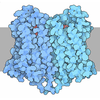
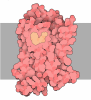
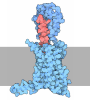

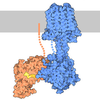



-Map
| File | Download / File: emd_66350.map.gz / Format: CCP4 / Size: 64 MB / Type: IMAGE STORED AS FLOATING POINT NUMBER (4 BYTES) | ||||||||||||||||||||||||||||||||||||
|---|---|---|---|---|---|---|---|---|---|---|---|---|---|---|---|---|---|---|---|---|---|---|---|---|---|---|---|---|---|---|---|---|---|---|---|---|---|
| Projections & slices | Image control
Images are generated by Spider. | ||||||||||||||||||||||||||||||||||||
| Voxel size | X=Y=Z: 1.071 Å | ||||||||||||||||||||||||||||||||||||
| Density |
| ||||||||||||||||||||||||||||||||||||
| Symmetry | Space group: 1 | ||||||||||||||||||||||||||||||||||||
| Details | EMDB XML:
|
 Z (Sec.)
 Y (Row.)
 X (Col.)


-Supplemental data
- Sample components
-Entire : GPR15L bound GPR15-Gi complex
| Entire | Name: GPR15L bound GPR15-Gi complex |
|---|---|
| Components |
|
-Supramolecule #1: GPR15L bound GPR15-Gi complex
| Supramolecule | Name: GPR15L bound GPR15-Gi complex / type: complex / ID: 1 / Parent: 0 / Macromolecule list: all |
|---|---|
| Source (natural) | Organism: Homo sapiens (human) |
-Macromolecule #1: Protein GPR15LG
| Macromolecule | Name: Protein GPR15LG / type: protein_or_peptide / ID: 1 / Number of copies: 1 / Enantiomer: LEVO |
|---|---|
| Source (natural) | Organism: Homo sapiens (human) |
| Molecular weight | Theoretical: 6.591857 KDa |
| Recombinant expression | Organism:   Spodoptera frugiperda (fall armyworm) Spodoptera frugiperda (fall armyworm) |
| Sequence | String: GKRRPAKAWS GRRTRLCCHR VPSPNSTNLK GHHVRLCKPC KLEPEPRLWV VPGALPQV UniProtKB: Protein GPR15LG |
-Macromolecule #2: G-protein coupled receptor 15
| Macromolecule | Name: G-protein coupled receptor 15 / type: protein_or_peptide / ID: 2 / Number of copies: 1 / Enantiomer: LEVO |
|---|---|
| Source (natural) | Organism: Homo sapiens (human) |
| Molecular weight | Theoretical: 42.638719 KDa |
| Recombinant expression | Organism: Spodoptera frugiperda (fall armyworm) |
| Sequence | String: GAPMDPEETS VYLDYYYATS PNSDIRETHS HVPYTSVFLP VFYTAVFLTG VLGNLVLMGA LHFKPGSRRL IDIFIINLAA SDFIFLVTL PLWVDKEASL GLWRTGSFLC KGSSYMISVN MHCSVLLLTC MSVDRYLAIV WPVVSRKFRR TDCAYVVCAS I WFISCLLG ...String: GAPMDPEETS VYLDYYYATS PNSDIRETHS HVPYTSVFLP VFYTAVFLTG VLGNLVLMGA LHFKPGSRRL IDIFIINLAA SDFIFLVTL PLWVDKEASL GLWRTGSFLC KGSSYMISVN MHCSVLLLTC MSVDRYLAIV WPVVSRKFRR TDCAYVVCAS I WFISCLLG LPTLLSRELT LIDDKPYCAE KKATPIKLIW SLVALIFTFF VPLLSIVTCY CCIARKLCAH YQQSGKHNKK LK KSIKIIF IVVAAFLVSW LPFNTFKFLA IVSGLRQEHY LPSAILQLGM EVSGPLAFAN SCVNPFIYYI FDSYIRRAIV HCL CPCLKN YDFGSSTEFL EVLFQGPWSH PQFEKGGGSG GGSGGSAWSH PQFEKDYKDD DDK UniProtKB: G protein-coupled receptor 15 |
-Macromolecule #3: Guanine nucleotide-binding protein G(i) subunit alpha-3
| Macromolecule | Name: Guanine nucleotide-binding protein G(i) subunit alpha-3 type: protein_or_peptide / ID: 3 / Number of copies: 1 / Enantiomer: LEVO |
|---|---|
| Source (natural) | Organism: Homo sapiens (human) |
| Molecular weight | Theoretical: 40.617246 KDa |
| Recombinant expression | Organism: Spodoptera frugiperda (fall armyworm) |
| Sequence | String: MGCTLSAEDK AAVERSKMID RNLREDGEKA AKEVKLLLLG AGESGKCTIV KQMKIIHEDG YSEDECKQYK VVVYSNTIQS IIAIIRAMG RLKIDFGEAA RADDARQLFV LAGSAEEGVM TPELAGVIKR LWRDGGVQAC FSRSREYQLN DSASYYLNDL D RISQSNYI ...String: MGCTLSAEDK AAVERSKMID RNLREDGEKA AKEVKLLLLG AGESGKCTIV KQMKIIHEDG YSEDECKQYK VVVYSNTIQS IIAIIRAMG RLKIDFGEAA RADDARQLFV LAGSAEEGVM TPELAGVIKR LWRDGGVQAC FSRSREYQLN DSASYYLNDL D RISQSNYI PTQQDVLRTR VKTTGIVETH FTFKDLYFKM FDVTAQRSER KKWIHCFEGV TAIIFCVALS DYDLVLAEDE EM NRMHASM KLFDSICNNK WFTETSIILF LNKKDLFEEK IKRSPLTICY PEYTGSNTYE EAAAYIQCQF EDLNRRKDTK EIY THFTCS TDTKNVQFVF DAVTDVIIKN NLKECGLY UniProtKB: Guanine nucleotide-binding protein G(i) subunit alpha-3 |
-Macromolecule #4: Guanine nucleotide-binding protein G(I)/G(S)/G(T) subunit beta-1
| Macromolecule | Name: Guanine nucleotide-binding protein G(I)/G(S)/G(T) subunit beta-1 type: protein_or_peptide / ID: 4 / Number of copies: 1 / Enantiomer: LEVO |
|---|---|
| Source (natural) | Organism: Homo sapiens (human) |
| Molecular weight | Theoretical: 38.744371 KDa |
| Recombinant expression | Organism: Spodoptera frugiperda (fall armyworm) |
| Sequence | String: MHHHHHHGSL LQSELDQLRQ EAEQLKNQIR DARKACADAT LSQITNNIDP VGRIQMRTRR TLRGHLAKIY AMHWGTDSRL LVSASQDGK LIIWDSYTTN KVHAIPLRSS WVMTCAYAPS GNYVACGGLD NICSIYNLKT REGNVRVSRE LAGHTGYLSC C RFLDDNQI ...String: MHHHHHHGSL LQSELDQLRQ EAEQLKNQIR DARKACADAT LSQITNNIDP VGRIQMRTRR TLRGHLAKIY AMHWGTDSRL LVSASQDGK LIIWDSYTTN KVHAIPLRSS WVMTCAYAPS GNYVACGGLD NICSIYNLKT REGNVRVSRE LAGHTGYLSC C RFLDDNQI VTSSGDTTCA LWDIETGQQT TTFTGHTGDV MSLSLAPDTR LFVSGACDAS AKLWDVREGM CRQTFTGHES DI NAICFFP NGNAFATGSD DATCRLFDLR ADQELMTYSH DNIICGITSV SFSKSGRLLL AGYDDFNCNV WDALKADRAG VLA GHDNRV SCLGVTDDGM AVATGSWDSF LKIWN UniProtKB: Guanine nucleotide-binding protein G(I)/G(S)/G(T) subunit beta-1 |
-Macromolecule #5: Guanine nucleotide-binding protein G(I)/G(S)/G(O) subunit gamma-2
| Macromolecule | Name: Guanine nucleotide-binding protein G(I)/G(S)/G(O) subunit gamma-2 type: protein_or_peptide / ID: 5 / Number of copies: 1 / Enantiomer: LEVO |
|---|---|
| Source (natural) | Organism: Homo sapiens (human) |
| Molecular weight | Theoretical: 7.861143 KDa |
| Recombinant expression | Organism: Spodoptera frugiperda (fall armyworm) |
| Sequence | String: MASNNTASIA QARKLVEQLK MEANIDRIKV SKAAADLMAY CEAHAKEDPL LTPVPASENP FREKKFFCAI L UniProtKB: Guanine nucleotide-binding protein G(I)/G(S)/G(O) subunit gamma-2 |
-Macromolecule #6: scFv16
| Macromolecule | Name: scFv16 / type: protein_or_peptide / ID: 6 / Number of copies: 1 / Enantiomer: LEVO |
|---|---|
| Source (natural) | Organism: Mus musculus (house mouse) |
| Molecular weight | Theoretical: 28.668922 KDa |
| Recombinant expression | Organism:   Escherichia coli (E. coli) Escherichia coli (E. coli) |
| Sequence | String: DVQLVESGGG LVQPGGSRKL SCSASGFAFS SFGMHWVRQA PEKGLEWVAY ISSGSGTIYY ADTVKGRFTI SRDDPKNTLF LQMTSLRSE DTAMYYCVRS IYYYGSSPFD FWGQGTTLTV SSGGGGSGGG GSGGGGSDIV MTQATSSVPV TPGESVSISC R SSKSLLHS ...String: DVQLVESGGG LVQPGGSRKL SCSASGFAFS SFGMHWVRQA PEKGLEWVAY ISSGSGTIYY ADTVKGRFTI SRDDPKNTLF LQMTSLRSE DTAMYYCVRS IYYYGSSPFD FWGQGTTLTV SSGGGGSGGG GSGGGGSDIV MTQATSSVPV TPGESVSISC R SSKSLLHS NGNTYLYWFL QRPGQSPQLL IYRMSNLASG VPDRFSGSGS GTAFTLTISR LEAEDVGVYY CMQHLEYPLT FG AGTKLEL KAAALEVLFQ GPHHHHHHHH |
-Experimental details
-Structure determination
| Method | cryo EM |
|---|---|
 Processing Processing | single particle reconstruction |
| Aggregation state | particle |
-Sample preparation
| Buffer | pH: 7.5 |
|---|---|
| Vitrification | Cryogen name: ETHANE |
- Electron microscopy
| Microscope | TFS KRIOS |
|---|---|
| Image recording | Film or detector model: GATAN K3 BIOQUANTUM (6k x 4k) / Average electron dose: 70.0 e/Å2 |
| Electron beam | Acceleration voltage: 300 kV / Electron source:  FIELD EMISSION GUN FIELD EMISSION GUN |
| Electron optics | Illumination mode: FLOOD BEAM / Imaging mode: BRIGHT FIELD / Nominal defocus max: 1.5 µm / Nominal defocus min: 0.8 µm |
| Experimental equipment |  Model: Titan Krios / Image courtesy: FEI Company |
