 Movie
Movie Controller


+ Open data

- Basic information
| Entry |  | |||||||||
|---|---|---|---|---|---|---|---|---|---|---|
| Title | Cryo-EM structure of DAMGO-muOR-Gz-scFv16 complex | |||||||||
 Map data Map data | ||||||||||
 Sample Sample |
| |||||||||
 Keywords Keywords | G-protein-coupled receptors / mu-opioid receptor / single particle / Cryo-EM / MEMBRANE PROTEIN | |||||||||
| Function / homology |  Function and homology information Function and homology informationOpioid Signalling / beta-endorphin receptor activity / morphine receptor activity / negative regulation of Wnt protein secretion / G protein-coupled opioid receptor signaling pathway / negative regulation of nitric oxide biosynthetic process / adenylate cyclase-inhibiting G protein-coupled acetylcholine receptor signaling pathway / behavioral response to ethanol / positive regulation of neurogenesis / regulation of NMDA receptor activity ...Opioid Signalling / beta-endorphin receptor activity / morphine receptor activity / negative regulation of Wnt protein secretion / G protein-coupled opioid receptor signaling pathway / negative regulation of nitric oxide biosynthetic process / adenylate cyclase-inhibiting G protein-coupled acetylcholine receptor signaling pathway / behavioral response to ethanol / positive regulation of neurogenesis / regulation of NMDA receptor activity / neuropeptide binding / sensory perception / negative regulation of cytosolic calcium ion concentration / regulation of cellular response to stress / transmission of nerve impulse / G-protein alpha-subunit binding / G protein-coupled receptor signaling pathway, coupled to cyclic nucleotide second messenger / MECP2 regulates neuronal receptors and channels / voltage-gated calcium channel activity / sensory perception of pain / presynaptic modulation of chemical synaptic transmission / Peptide ligand-binding receptors / neuropeptide signaling pathway / GABA-ergic synapse / G protein-coupled receptor activity / adenylate cyclase-inhibiting G protein-coupled receptor signaling pathway / Olfactory Signaling Pathway / phospholipase C-activating G protein-coupled receptor signaling pathway / Activation of the phototransduction cascade / G protein-coupled acetylcholine receptor signaling pathway / G beta:gamma signalling through PLC beta / Presynaptic function of Kainate receptors / Thromboxane signalling through TP receptor / Activation of G protein gated Potassium channels / Inhibition of voltage gated Ca2+ channels via Gbeta/gamma subunits / G-protein activation / Glucagon signaling in metabolic regulation / G beta:gamma signalling through CDC42 / Prostacyclin signalling through prostacyclin receptor / Synthesis, secretion, and inactivation of Glucagon-like Peptide-1 (GLP-1) / photoreceptor disc membrane / G beta:gamma signalling through BTK / ADP signalling through P2Y purinoceptor 12 / Sensory perception of sweet, bitter, and umami (glutamate) taste / Glucagon-type ligand receptors / Adrenaline,noradrenaline inhibits insulin secretion / Vasopressin regulates renal water homeostasis via Aquaporins / G alpha (z) signalling events / Glucagon-like Peptide-1 (GLP1) regulates insulin secretion / ADP signalling through P2Y purinoceptor 1 / cellular response to catecholamine stimulus / G beta:gamma signalling through PI3Kgamma / ADORA2B mediated anti-inflammatory cytokines production / adenylate cyclase-activating dopamine receptor signaling pathway / cellular response to prostaglandin E stimulus / Cooperation of PDCL (PhLP1) and TRiC/CCT in G-protein beta folding / GPER1 signaling / presynapse / heterotrimeric G-protein complex / G alpha (12/13) signalling events / Inactivation, recovery and regulation of the phototransduction cascade / G-protein beta-subunit binding / extracellular vesicle / Thrombin signalling through proteinase activated receptors (PARs) / signaling receptor complex adaptor activity / Interleukin-4 and Interleukin-13 signaling / GTPase binding / Ca2+ pathway / High laminar flow shear stress activates signaling by PIEZO1 and PECAM1:CDH5:KDR in endothelial cells / G alpha (i) signalling events / G alpha (s) signalling events / G alpha (q) signalling events / perikaryon / Ras protein signal transduction / positive regulation of ERK1 and ERK2 cascade / neuron projection / endosome / Extra-nuclear estrogen signaling / G protein-coupled receptor signaling pathway / negative regulation of cell population proliferation / axon / lysosomal membrane / GTPase activity / dendrite / synapse / protein-containing complex binding / Golgi apparatus / signal transduction / endoplasmic reticulum / extracellular exosome / membrane / plasma membrane / cytosol / cytoplasm Similarity search - Function | |||||||||
| Biological species |  Homo sapiens (human) / Homo sapiens (human) /  Oplophorus gracilirostris (arthropod) / synthetic construct (others) Oplophorus gracilirostris (arthropod) / synthetic construct (others) | |||||||||
| Method | single particle reconstruction / cryo EM / Resolution: 2.8 Å | |||||||||
 Authors Authors | Zhang H / Wang X / Xi K / Shen Q / Xue J / Zhu Y / Yang G / Zhang Y | |||||||||
| Funding support | 1 items
| |||||||||
 Citation Citation | Journal: Cell Res / Year: 2025 Title: The molecular basis of μ-opioid receptor signaling plasticity. Authors: Huibing Zhang / Xueting Wang / Kun Xi / Qingya Shen / Jianheng Xue / Yanqing Zhu / Shao-Kun Zang / Tianqiang Yu / Dan-Dan Shen / Jia Guo / Li-Nan Chen / Su-Yu Ji / Jiao Qin / Yingjun Dong / ...Authors: Huibing Zhang / Xueting Wang / Kun Xi / Qingya Shen / Jianheng Xue / Yanqing Zhu / Shao-Kun Zang / Tianqiang Yu / Dan-Dan Shen / Jia Guo / Li-Nan Chen / Su-Yu Ji / Jiao Qin / Yingjun Dong / Mingming Zhao / Ming Yang / Haijing Wu / Guoli Yang / Yan Zhang /  Abstract: Activation of the μ-opioid receptor (μOR) alleviates pain but also elicits adverse effects through diverse G proteins and β-arrestins. The structural details of μOR complexes with G and β- ...Activation of the μ-opioid receptor (μOR) alleviates pain but also elicits adverse effects through diverse G proteins and β-arrestins. The structural details of μOR complexes with G and β-arrestins have not been determined, impeding a comprehensive understanding of μOR signaling plasticity. Here, we present the cryo-EM structures of the μOR-G and μOR-βarr1 complexes, revealing selective conformational preferences of μOR when engaged with specific downstream signaling transducers. Integrated receptor pharmacology, including high-resolution structural analysis, cell signaling assays, and molecular dynamics simulations, demonstrated that transmembrane helix 1 (TM1) acts as an allosteric regulator of μOR signaling bias through differential stabilization of the G-, G-, and βarr1-bound states. Mechanistically, outward TM1 displacement confers structural flexibility that promotes G protein recruitment, whereas inward TM1 retraction facilitates βarr1 recruitment by stabilizing the intracellular binding pocket through coordinated interactions with TM2, TM7, and helix8. Structural comparisons between the G-, G-, and βarr1-bound complexes identified a TM1-fusion pocket with significant implications for downstream signaling regulation. Overall, we demonstrate that the conformational and thermodynamic heterogeneity of TM1 allosterically drives the downstream signaling specificity and plasticity of μOR, thereby expanding the understanding of μOR signal transduction mechanisms and providing new avenues for the rational design of analgesics. | |||||||||
| History |
|
- Structure visualization
| Supplemental images |
|---|

- Downloads & links
-EMDB archive
| Map data | emd_66205.map.gz | 40.1 MB | EMDB map data format | |
|---|---|---|---|---|
| Header (meta data) | emd-66205-v30.xmlemd-66205.xml | 22.4 KB 22.4 KB | Display Display | EMDB header |
| Images |  emd_66205.png emd_66205.png | 63.2 KB | ||
| Filedesc metadata | emd-66205.cif.gz | 7 KB | ||
| Others | emd_66205_half_map_1.map.gzemd_66205_half_map_2.map.gz | 33.1 MB 33.2 MB | ||
| Archive directory |  https://data.pdbj.org/pub/emdb/structures/EMD-66205ftp://data.pdbj.org/pub/emdb/structures/EMD-66205 https://data.pdbj.org/pub/emdb/structures/EMD-66205ftp://data.pdbj.org/pub/emdb/structures/EMD-66205 | HTTPS FTP |
-Related structure data
| Related structure data |  9wstMC  9wsvC  9wswC  9wsxC M: atomic model generated by this map C: citing same article ( |
|---|---|
| Similar structure data |


-Links
| EMDB pages | EMDB (EBI/PDBe) / EMDataResource |
|---|---|
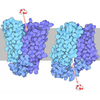
| Related items in Molecule of the Month |
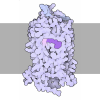
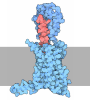
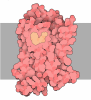

-Map
| File | Download / File: emd_66205.map.gz / Format: CCP4 / Size: 42.9 MB / Type: IMAGE STORED AS FLOATING POINT NUMBER (4 BYTES) | ||||||||||||||||||||||||||||||||||||
|---|---|---|---|---|---|---|---|---|---|---|---|---|---|---|---|---|---|---|---|---|---|---|---|---|---|---|---|---|---|---|---|---|---|---|---|---|---|
| Projections & slices | Image control
Images are generated by Spider. | ||||||||||||||||||||||||||||||||||||
| Voxel size | X=Y=Z: 0.93 Å | ||||||||||||||||||||||||||||||||||||
| Density |
| ||||||||||||||||||||||||||||||||||||
| Symmetry | Space group: 1 | ||||||||||||||||||||||||||||||||||||
| Details | EMDB XML:
|
 Z (Sec.)
 Y (Row.)
 X (Col.)


-Supplemental data
-Half map: #2
| File | emd_66205_half_map_1.map | ||||||||||||
|---|---|---|---|---|---|---|---|---|---|---|---|---|---|
| Projections & Slices |
| ||||||||||||
| Density Histograms |


-Half map: #1
| File | emd_66205_half_map_2.map | ||||||||||||
|---|---|---|---|---|---|---|---|---|---|---|---|---|---|
| Projections & Slices |
| ||||||||||||
| Density Histograms |


- Sample components
-Entire : Complex of DAMGO bound MOR-Gz protein
| Entire | Name: Complex of DAMGO bound MOR-Gz protein |
|---|---|
| Components |
|
-Supramolecule #1: Complex of DAMGO bound MOR-Gz protein
| Supramolecule | Name: Complex of DAMGO bound MOR-Gz protein / type: complex / ID: 1 / Parent: 0 / Macromolecule list: #1-#4 |
|---|---|
| Source (natural) | Organism: Homo sapiens (human) |
-Macromolecule #1: Engineered guanine nucleotide-binding protein G(z) subunit alpha
| Macromolecule | Name: Engineered guanine nucleotide-binding protein G(z) subunit alpha type: protein_or_peptide / ID: 1 / Number of copies: 1 / Enantiomer: LEVO |
|---|---|
| Source (natural) | Organism: Homo sapiens (human) |
| Molecular weight | Theoretical: 40.699516 KDa |
| Recombinant expression | Organism:  Spodoptera frugiperda (fall armyworm) Spodoptera frugiperda (fall armyworm) |
| Sequence | String: MGCTLSAEDK AAVERSKMID RNLREDGEKQ RREIKLLLLG TSNSGKNTIV KQMKIIHSGG FNLEACKEYK PLIIYNAIDS LTRIIRALA ALRIDFHNPD RAYDAVQLFA LTGPAESKGE ITPELLGVMR RLWADPGAQA CFSRSSEYHL EDNAAYYLND L ERIAAADY ...String: MGCTLSAEDK AAVERSKMID RNLREDGEKQ RREIKLLLLG TSNSGKNTIV KQMKIIHSGG FNLEACKEYK PLIIYNAIDS LTRIIRALA ALRIDFHNPD RAYDAVQLFA LTGPAESKGE ITPELLGVMR RLWADPGAQA CFSRSSEYHL EDNAAYYLND L ERIAAADY IPTVEDILRS RDMTTGIVEN KFTFKELTFK MVDVGAQRSE RKKWIHCFEG VTAIIFCVEL SGYDLKLYED NQ TSRMAAS LKLFDSICNN KWFIDTSLIL FLNKKDLLAE KIRRIPLTIC FPEYKGQNTY EEAAVYIQRQ FEDLNRNKET KEI YSHFTC STDTSNIQFV FDAVTDVIIQ NNLKYIGLC |
-Macromolecule #2: Guanine nucleotide-binding protein G(I)/G(S)/G(T) subunit beta-1
| Macromolecule | Name: Guanine nucleotide-binding protein G(I)/G(S)/G(T) subunit beta-1 type: protein_or_peptide / ID: 2 / Number of copies: 1 / Enantiomer: LEVO |
|---|---|
| Source (natural) | Organism: Homo sapiens (human) |
| Molecular weight | Theoretical: 40.039648 KDa |
| Recombinant expression | Organism: Spodoptera frugiperda (fall armyworm) |
| Sequence | String: GPGSSGSELD QLRQEAEQLK NQIRDARKAC ADATLSQITN NIDPVGRIQM RTRRTLRGHL AKIYAMHWGT DSRLLVSASQ DGKLIIWDS YTTNKVHAIP LRSSWVMTCA YAPSGNYVAC GGLDNICSIY NLKTREGNVR VSRELAGHTG YLSCCRFLDD N QIVTSSGD ...String: GPGSSGSELD QLRQEAEQLK NQIRDARKAC ADATLSQITN NIDPVGRIQM RTRRTLRGHL AKIYAMHWGT DSRLLVSASQ DGKLIIWDS YTTNKVHAIP LRSSWVMTCA YAPSGNYVAC GGLDNICSIY NLKTREGNVR VSRELAGHTG YLSCCRFLDD N QIVTSSGD TTCALWDIET GQQTTTFTGH TGDVMSLSLA PDTRLFVSGA CDASAKLWDV REGMCRQTFT GHESDINAIC FF PNGNAFA TGSDDATCRL FDLRADQELM TYSHDNIICG ITSVSFSKSG RLLLAGYDDF NCNVWDALKA DRAGVLAGHD NRV SCLGVT DDGMAVATGS WDSFLKIWNG SSGGGGSGGG GSSGVSGWRL FKKIS UniProtKB: Guanine nucleotide-binding protein G(I)/G(S)/G(T) subunit beta-1 |
-Macromolecule #3: Guanine nucleotide-binding protein G(I)/G(S)/G(O) subunit gamma-2
| Macromolecule | Name: Guanine nucleotide-binding protein G(I)/G(S)/G(O) subunit gamma-2 type: protein_or_peptide / ID: 3 / Number of copies: 1 / Enantiomer: LEVO |
|---|---|
| Source (natural) | Organism: Homo sapiens (human) |
| Molecular weight | Theoretical: 7.861143 KDa |
| Recombinant expression | Organism: Spodoptera frugiperda (fall armyworm) |
| Sequence | String: MASNNTASIA QARKLVEQLK MEANIDRIKV SKAAADLMAY CEAHAKEDPL LTPVPASENP FREKKFFCAI L UniProtKB: Guanine nucleotide-binding protein G(I)/G(S)/G(O) subunit gamma-2 |
-Macromolecule #4: Mu-type opioid receptor,LgBiT
| Macromolecule | Name: Mu-type opioid receptor,LgBiT / type: protein_or_peptide / ID: 4 / Number of copies: 1 / Enantiomer: LEVO |
|---|---|
| Source (natural) | Organism: Oplophorus gracilirostris (arthropod) |
| Molecular weight | Theoretical: 64.018785 KDa |
| Recombinant expression | Organism: Spodoptera frugiperda (fall armyworm) |
| Sequence | String: DYKDDDDKGP GNISDCSDPL APASCSPAPS PGSWLNLSHV DGNQSDPCGP NRTGLGGSHS LCPQTGSPSM VTAITIMALY SIVCVVGLF GNFLVMYVIV RYTKMKTATN IYIFNLALAD ALATSTLPFQ SVNYLMGTWP FGNILCKIVI SIDYYNMFTS I FTLCTMSV ...String: DYKDDDDKGP GNISDCSDPL APASCSPAPS PGSWLNLSHV DGNQSDPCGP NRTGLGGSHS LCPQTGSPSM VTAITIMALY SIVCVVGLF GNFLVMYVIV RYTKMKTATN IYIFNLALAD ALATSTLPFQ SVNYLMGTWP FGNILCKIVI SIDYYNMFTS I FTLCTMSV DRYIAVCHPV KALDFRTPRN AKIVNVCNWI LSSAIGLPVM FMATTKYRQG SIDCTLTFSH PTWYWENLLK IC VFIFAFI MPVLIITVCY GLMILRLKSV RMLSGSKEKD RNLRRITRMV LVVVAVFIVC WTPIHIYVII KALITIPETT FQT VSWHFC IALGYTNSCL NPVLYAFLDE NFKRCFREFC IPTSSTIEQQ NSARIRQNTR EHPSTANTVD RTNHQLENLE AETA PLPGG SSGVFTLEDF VGDWEQTAAY NLDQVLEQGG VSSLLQNLAV SVTPIQRIVR SGENALKIDI HVIIPYEGLS ADQMA QIEE VFKVVYPVDD HHFKVILPYG TLVIDGVTPN MLNYFGRPYE GIAVFDGKKI TVTGTLWNGN KIIDERLITP DGSMLF RVT INSGGSLEVL FQ UniProtKB: Mu-type opioid receptor |
-Macromolecule #5: DAMGO
| Macromolecule | Name: DAMGO / type: protein_or_peptide / ID: 5 / Number of copies: 1 / Enantiomer: LEVO |
|---|---|
| Source (natural) | Organism: synthetic construct (others) |
| Molecular weight | Theoretical: 513.587 Da |
| Sequence | String: Y(DAL)G(MEA)(ETA) |
-Macromolecule #6: water
| Macromolecule | Name: water / type: ligand / ID: 6 / Number of copies: 1 / Formula: HOH |
|---|---|
| Molecular weight | Theoretical: 18.015 Da |
| Chemical component information |  ChemComp-HOH: |
-Experimental details
-Structure determination
| Method | cryo EM |
|---|---|
 Processing Processing | single particle reconstruction |
| Aggregation state | particle |
-Sample preparation
| Buffer | pH: 7.4 |
|---|---|
| Vitrification | Cryogen name: ETHANE |
- Electron microscopy
| Microscope | TFS KRIOS |
|---|---|
| Image recording | Film or detector model: FEI FALCON IV (4k x 4k) / Average electron dose: 52.0 e/Å2 |
| Electron beam | Acceleration voltage: 300 kV / Electron source:  FIELD EMISSION GUN FIELD EMISSION GUN |
| Electron optics | Illumination mode: FLOOD BEAM / Imaging mode: BRIGHT FIELD / Nominal defocus max: 2.0 µm / Nominal defocus min: 0.6 µm |
| Experimental equipment |  Model: Titan Krios / Image courtesy: FEI Company |
