National Natural Science Foundation of China (NSFC)
中国
引用
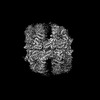
ジャーナル: Mol Cell / 年: 2026 タイトル: PDCD5 promotes substrate release from the TRiC complex in cilia and flagella. 著者: Huafang Wei / Qianqian Song / Liying Wang / Qiong Deng / Bingbing Wu / Yinghong Chen / Tingting Han / Yueshuai Guo / Zuyang Li / Fucheng Dong / Shuang Ma / Qiaoyu Zhao / Xiangyi Shi / Chen ...著者: Huafang Wei / Qianqian Song / Liying Wang / Qiong Deng / Bingbing Wu / Yinghong Chen / Tingting Han / Yueshuai Guo / Zuyang Li / Fucheng Dong / Shuang Ma / Qiaoyu Zhao / Xiangyi Shi / Chen Pan / Wanying Jiang / Xiaofei Liu / Yingyu Chen / Renjie Jiao / Li Yuan / Chao Liu / Xuejiang Guo / Yao Cong / Wei Li / 要旨: Approximately 10% of eukaryotic proteins are folded by the TRiC/CCT complex (TCP1-ring complex, also called CCT for cytosolic chaperonin containing TCP1), and only open-state TRiC can bind with ...Approximately 10% of eukaryotic proteins are folded by the TRiC/CCT complex (TCP1-ring complex, also called CCT for cytosolic chaperonin containing TCP1), and only open-state TRiC can bind with programmed cell death 5 (PDCD5). However, the physiological role of the PDCD5-TRiC interaction remains elusive. Here, we show that PDCD5 is required for flagellum biogenesis and ciliogenesis and present the PDCD5-TRiC structures in their open states at near-atomic resolution. Mechanically, we find that PDCD5 promotes substrates release by competing with PhLP2A to interact with TRiC, and the depletion of PDCD5 traps flagellum- and cilium-associated proteins within TRiC, finally leading to malformed flagella of spermatids and cilia in mouse ciliated cells. Moreover, we demonstrate that the function of PDCD5 in flagellum biogenesis and ciliogenesis depends on the interaction with TRiC by its C terminus. These findings identify PDCD5 as a TRiC regulator to promote a subset of proteins release.
 ムービー
ムービー コントローラー


 データを開く
 基本情報
基本情報
 マップデータ
 試料
試料 キーワード
キーワード
 Mus musculus (ハツカネズミ)
 データ登録者
 中国, 1件
  引用
引用 構造の表示
構造の表示
 ダウンロードとリンク
 EMDBマップデータ形式
 emd_64365.png
 http://ftp.pdbj.org/pub/emdb/structures/EMD-64365


 Z (Sec.)
 Y (Row.)
 X (Col.)


 試料の構成要素
 解析
解析 電子顕微鏡法
 FIELD EMISSION GUN