National Natural Science Foundation of China (NSFC)
China
Citation
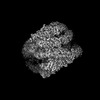
Journal: Mol Cell / Year: 2026 Title: PDCD5 promotes substrate release from the TRiC complex in cilia and flagella. Authors: Huafang Wei / Qianqian Song / Liying Wang / Qiong Deng / Bingbing Wu / Yinghong Chen / Tingting Han / Yueshuai Guo / Zuyang Li / Fucheng Dong / Shuang Ma / Qiaoyu Zhao / Xiangyi Shi / Chen ...Authors: Huafang Wei / Qianqian Song / Liying Wang / Qiong Deng / Bingbing Wu / Yinghong Chen / Tingting Han / Yueshuai Guo / Zuyang Li / Fucheng Dong / Shuang Ma / Qiaoyu Zhao / Xiangyi Shi / Chen Pan / Wanying Jiang / Xiaofei Liu / Yingyu Chen / Renjie Jiao / Li Yuan / Chao Liu / Xuejiang Guo / Yao Cong / Wei Li / Abstract: Approximately 10% of eukaryotic proteins are folded by the TRiC/CCT complex (TCP1-ring complex, also called CCT for cytosolic chaperonin containing TCP1), and only open-state TRiC can bind with ...Approximately 10% of eukaryotic proteins are folded by the TRiC/CCT complex (TCP1-ring complex, also called CCT for cytosolic chaperonin containing TCP1), and only open-state TRiC can bind with programmed cell death 5 (PDCD5). However, the physiological role of the PDCD5-TRiC interaction remains elusive. Here, we show that PDCD5 is required for flagellum biogenesis and ciliogenesis and present the PDCD5-TRiC structures in their open states at near-atomic resolution. Mechanically, we find that PDCD5 promotes substrates release by competing with PhLP2A to interact with TRiC, and the depletion of PDCD5 traps flagellum- and cilium-associated proteins within TRiC, finally leading to malformed flagella of spermatids and cilia in mouse ciliated cells. Moreover, we demonstrate that the function of PDCD5 in flagellum biogenesis and ciliogenesis depends on the interaction with TRiC by its C terminus. These findings identify PDCD5 as a TRiC regulator to promote a subset of proteins release.
In the structure databanks used in Yorodumi, some data are registered as the other names, "COVID-19 virus" and "2019-nCoV". Here are the details of the virus and the list of structure data.
Jan 31, 2019. EMDB accession codes are about to change! (news from PDBe EMDB page)
EMDB accession codes are about to change! (news from PDBe EMDB page)
The allocation of 4 digits for EMDB accession codes will soon come to an end. Whilst these codes will remain in use, new EMDB accession codes will include an additional digit and will expand incrementally as the available range of codes is exhausted. The current 4-digit format prefixed with “EMD-” (i.e. EMD-XXXX) will advance to a 5-digit format (i.e. EMD-XXXXX), and so on. It is currently estimated that the 4-digit codes will be depleted around Spring 2019, at which point the 5-digit format will come into force.
The EM Navigator/Yorodumi systems omit the EMD- prefix.
Related info.:Q: What is EMD? / ID/Accession-code notation in Yorodumi/EM Navigator
Yorodumi is a browser for structure data from EMDB, PDB, SASBDB, etc.
This page is also the successor to EM Navigator detail page, and also detail information page/front-end page for Omokage search.
The word "yorodu" (or yorozu) is an old Japanese word meaning "ten thousand". "mi" (miru) is to see.
Related info.:EMDB / PDB / SASBDB / Comparison of 3 databanks / Yorodumi Search / Aug 31, 2016. New EM Navigator & Yorodumi / Yorodumi Papers / Jmol/JSmol / Function and homology information / Changes in new EM Navigator and Yorodumi
 Movie
Movie Controller


 Open data
 Basic information
 Map data
 Sample
 Keywords
 Mus musculus (house mouse)
 Authors
 China, 1 items
  Citation
 Structure visualization
 Downloads & links
 EMDB map data format
 emd_66412.png
 http://ftp.pdbj.org/pub/emdb/structures/EMD-66412


 Z (Sec.)
 Y (Row.)
 X (Col.)


 Sample components
 Processing
 Electron microscopy
 FIELD EMISSION GUN