Movie
 Controller


[English] 日本語
 Yorodumi
- EMDB-57385: Structure of MKLN1-RANBP9-TWA1 CTLH subcomplex bound to ZMYND19 s... -
+ Open data

- Basic information
| Entry |  | |||||||||
|---|---|---|---|---|---|---|---|---|---|---|
| Title | Structure of MKLN1-RANBP9-TWA1 CTLH subcomplex bound to ZMYND19 substrate | |||||||||
 Map data | ||||||||||
 Sample |
| |||||||||
 Keywords | complex / LIGASE | |||||||||
| Function / homology |  Function and homology information postsynaptic specialization membrane of symmetric synapse / postsynaptic endosome membrane / neurotransmitter receptor transport postsynaptic membrane to endosome / L1CAM interactions / GID complex / regulation of receptor internalization / positive regulation of amyloid precursor protein catabolic process / microtubule nucleation / microtubule associated complex / cell-matrix adhesion ...postsynaptic specialization membrane of symmetric synapse / postsynaptic endosome membrane / neurotransmitter receptor transport postsynaptic membrane to endosome / L1CAM interactions / GID complex / regulation of receptor internalization / positive regulation of amyloid precursor protein catabolic process / microtubule nucleation / microtubule associated complex / cell-matrix adhesion / MET activates RAS signaling / cytoskeleton organization / ruffle / ubiquitin ligase complex / Regulation of pyruvate metabolism / regulation of cell shape / negative regulation of ERK1 and ERK2 cascade / GABA-ergic synapse / cell junction / small GTPase binding / positive regulation of canonical Wnt signaling pathway / actin cytoskeleton organization / RAF/MAP kinase cascade / protein-containing complex assembly / cell cortex / proteasome-mediated ubiquitin-dependent protein catabolic process / nuclear body / postsynapse / protein-macromolecule adaptor activity / positive regulation of cell population proliferation / synapse / signal transduction / enzyme binding / protein homodimerization activity / nucleoplasm / membrane / identical protein binding / nucleus / plasma membrane / cytosol / cytoplasm Similarity search - Function | |||||||||
| Biological species |  Homo sapiens (human) | |||||||||
| Method | single particle reconstruction / cryo EM / Resolution: 3.5 Å | |||||||||
 Authors | Sepic S / Du J / Schulman BA | |||||||||
| Funding support |  Germany, 1 items
| |||||||||
 Citation | Journal: Nat Commun / Year: 2026 Title: Multimodal substrate recruitment enables CTLH E3 ligase to target acetylated N-, C-, and internal degrons. Authors: Sara Sepic / Karthik V Gottemukkala / Jiale Du / Samuel A Maiwald / Jakub Chrustowicz / Eleftheria C Papadopoulou / Luca J Stier / Susanne von Gronau / Brenda A Schulman / Abstract: The GID/CTLH family of E3 ubiquitin ligases employs several substrate receptor subunits that recruit distinct degrons, but the substrate recognition mechanisms of the CTLH assembly have largely ...The GID/CTLH family of E3 ubiquitin ligases employs several substrate receptor subunits that recruit distinct degrons, but the substrate recognition mechanisms of the CTLH assembly have largely remained elusive. Here, we reconstitute CTLH-dependent ubiquitylation of three biochemically distinct substrates - MKLN1 itself, ZMYND19, and FAM72A-recruited UNG2, and determine cryo-EM structures of each substrate bound to MKLN1. The structures reveal how MKLN1's discoidin and Kelch β-propeller domains engage substrates through multivalent contacts. MKLN1 recruits itself through discoidin-Kelch interactions between MKLN1 dimers, forming an assembly that competes with other substrates. ZMYND19 and FAM72A each bind to MKLN1 through loops engaging the discoidin trench domain while their C-terminal Arg residues engage the MKLN1 Kelch central channel, identifying MKLN1 as an Arg/C-degron receptor. The acetylated N-terminus of UNG2 is positioned within a Y-shaped tunnel of FAM72A, defining an adaptor-mediated Ac/N-degron recognition mechanism. Thus, our data reveal how combinatorial deployment of MKLN1 discoidin and Kelch domains enable a single receptor subunit to recognize a diverse substrate repertoire, adding to a complex picture of degron recognition across the GID/CTLH family. | |||||||||
| History |
|
- Structure visualization
| Supplemental images |
|---|

- Downloads & links
-EMDB archive
| Map data | emd_57385.map.gz | 184.4 MB | EMDB map data format | |
|---|---|---|---|---|
| Header (meta data) | emd-57385-v30.xmlemd-57385.xml | 23.9 KB 23.9 KB | Display Display | EMDB header |
| FSC (resolution estimation) | emd_57385_fsc.xml | 14.4 KB | Display | FSC data file |
| Images |  emd_57385.png | 24.8 KB | ||
| Masks | emd_57385_msk_1.map | 216 MB | Mask map | |
| Filedesc metadata | emd-57385.cif.gz | 7 KB | ||
| Others | emd_57385_additional_1.map.gzemd_57385_half_map_1.map.gzemd_57385_half_map_2.map.gz | 110.7 MB 200.3 MB 200.3 MB | ||
| Archive directory |  https://data.pdbj.org/pub/emdb/structures/EMD-57385ftp://data.pdbj.org/pub/emdb/structures/EMD-57385 | HTTPS FTP |
-Related structure data
| Related structure data |  29ugMC  29ueC  29uiC  31tmC C: citing same article ( M: atomic model generated by this map |
|---|---|
| Similar structure data |


-Links
| EMDB pages | EMDB (EBI/PDBe) / EMDataResource |
|---|---|
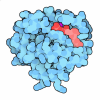
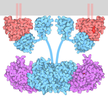
| Related items in Molecule of the Month |
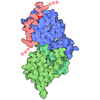
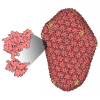
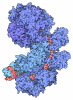
-Map
| File | Download / File: emd_57385.map.gz / Format: CCP4 / Size: 216 MB / Type: IMAGE STORED AS FLOATING POINT NUMBER (4 BYTES) | ||||||||||||||||||||||||||||||||||||
|---|---|---|---|---|---|---|---|---|---|---|---|---|---|---|---|---|---|---|---|---|---|---|---|---|---|---|---|---|---|---|---|---|---|---|---|---|---|
| Projections & slices | Image control
Images are generated by Spider. | ||||||||||||||||||||||||||||||||||||
| Voxel size | X=Y=Z: 0.8222 Å | ||||||||||||||||||||||||||||||||||||
| Density |
| ||||||||||||||||||||||||||||||||||||
| Symmetry | Space group: 1 | ||||||||||||||||||||||||||||||||||||
| Details | EMDB XML:
|
 Z (Sec.)
 Y (Row.)
 X (Col.)


-Supplemental data
-Mask #1
| File | emd_57385_msk_1.map | ||||||||||||
|---|---|---|---|---|---|---|---|---|---|---|---|---|---|
| Projections & Slices |
| ||||||||||||
| Density Histograms |


-Additional map: #1
| File | emd_57385_additional_1.map | ||||||||||||
|---|---|---|---|---|---|---|---|---|---|---|---|---|---|
| Projections & Slices |
| ||||||||||||
| Density Histograms |


-Half map: #2
| File | emd_57385_half_map_1.map | ||||||||||||
|---|---|---|---|---|---|---|---|---|---|---|---|---|---|
| Projections & Slices |
| ||||||||||||
| Density Histograms |


-Half map: #1
| File | emd_57385_half_map_2.map | ||||||||||||
|---|---|---|---|---|---|---|---|---|---|---|---|---|---|
| Projections & Slices |
| ||||||||||||
| Density Histograms |


- Sample components
-Entire : Map of MKLN1-RANBP9-TWA1 CTLH subcomplex bound to ZMYND19 substrate
| Entire | Name: Map of MKLN1-RANBP9-TWA1 CTLH subcomplex bound to ZMYND19 substrate |
|---|---|
| Components |
|
-Supramolecule #1: Map of MKLN1-RANBP9-TWA1 CTLH subcomplex bound to ZMYND19 substrate
| Supramolecule | Name: Map of MKLN1-RANBP9-TWA1 CTLH subcomplex bound to ZMYND19 substrate type: complex / ID: 1 / Parent: 0 / Macromolecule list: #3, #2, #1, #4 |
|---|---|
| Source (natural) | Organism: Homo sapiens (human) |
-Macromolecule #1: Zinc finger MYND domain-containing protein 19
| Macromolecule | Name: Zinc finger MYND domain-containing protein 19 / type: protein_or_peptide / ID: 1 / Number of copies: 2 / Enantiomer: LEVO |
|---|---|
| Source (natural) | Organism: Homo sapiens (human) |
| Molecular weight | Theoretical: 26.470838 KDa |
| Recombinant expression | Organism:  Trichoplusia ni (cabbage looper) |
| Sequence | String: MTDFKLGIVR LGRVAGKTKY TLIDEQDIPL VESYSFEARM EVDADGNGAK IFAYAFDKNR GRGSGRLLHE LLWERHRGGV APGFQVVHL NAVTVDNRLD NLQLVPWGWR PKAEETSSKQ REQSLYWLAI QQLPTDPIEE QFPVLNVTRY YNANGDVVEE E ENSCTYYE ...String: MTDFKLGIVR LGRVAGKTKY TLIDEQDIPL VESYSFEARM EVDADGNGAK IFAYAFDKNR GRGSGRLLHE LLWERHRGGV APGFQVVHL NAVTVDNRLD NLQLVPWGWR PKAEETSSKQ REQSLYWLAI QQLPTDPIEE QFPVLNVTRY YNANGDVVEE E ENSCTYYE CHYPPCTVIE KQLREFNICG RCQVARYCGS QCQQKDWPAH KKHCRERKRP FQHELEPER UniProtKB: Zinc finger MYND domain-containing protein 19 |
-Macromolecule #2: Muskelin
| Macromolecule | Name: Muskelin / type: protein_or_peptide / ID: 2 / Number of copies: 2 / Enantiomer: LEVO |
|---|---|
| Source (natural) | Organism: Homo sapiens (human) |
| Molecular weight | Theoretical: 84.877742 KDa |
| Recombinant expression | Organism: Trichoplusia ni (cabbage looper) |
| Sequence | String: MAAGGAVAAA PECRLLPYAL HKWSSFSSTY LPENILVDKP NDQSSRWSSE SNYPPQYLIL KLERPAIVQN ITFGKYEKTH VCNLKKFKV FGGMNEENMT ELLSSGLKND YNKETFTLKH KIDEQMFPCR FIKIVPLLSW GPSFNFSIWY VELSGIDDPD I VQPCLNWY ...String: MAAGGAVAAA PECRLLPYAL HKWSSFSSTY LPENILVDKP NDQSSRWSSE SNYPPQYLIL KLERPAIVQN ITFGKYEKTH VCNLKKFKV FGGMNEENMT ELLSSGLKND YNKETFTLKH KIDEQMFPCR FIKIVPLLSW GPSFNFSIWY VELSGIDDPD I VQPCLNWY SKYREQEAIR LCLKHFRQHN YTEAFESLQK KTKIALEHPM LTDIHDKLVL KGDFDACEEL IEKAVNDGLF NQ YISQQEY KPRWSQIIPK STKGDGEDNR PGMRGGHQMV IDVQTETVYL FGGWDGTQDL ADFWAYSVKE NQWTCISRDT EKE NGPSAR SCHKMCIDIQ RRQIYTLGRY LDSSVRNSKS LKSDFYRYDI DTNTWMLLSE DTAADGGPKL VFDHQMCMDS EKHM IYTFG GRILTCNGSV DDSRASEPQF SGLFAFNCQC QTWKLLREDS CNAGPEDIQS RIGHCMLFHS KNRCLYVFGG QRSKT YLND FFSYDVDSDH VDIISDGTKK DSGMVPMTGF TQRATIDPEL NEIHVLSGLS KDKEKREENV RNSFWIYDIV RNSWSC VYK NDQAAKDNPT KSLQEEEPCP RFAHQLVYDE LHKVHYLFGG NPGKSCSPKM RLDDFWSLKL CRPSKDYLLR HCKYLIR KH RFEEKAQVDP LSALKYLQND LYITVDHSDP EETKEFQLLA SALFKSGSDF TALGFSDVDH TYAQRTQLFD TLVNFFPD S MTPPKGNLVD LITL UniProtKB: Muskelin |
-Macromolecule #3: Ran-binding protein 9
| Macromolecule | Name: Ran-binding protein 9 / type: protein_or_peptide / ID: 3 / Number of copies: 1 / Enantiomer: LEVO |
|---|---|
| Source (natural) | Organism: Homo sapiens (human) |
| Molecular weight | Theoretical: 77.927062 KDa |
| Recombinant expression | Organism: Trichoplusia ni (cabbage looper) |
| Sequence | String: MSGQPPPPPP QQQQQQQQLS PPPPAALAPV SGVVLPAPPA VSAGSSPAGS PGGGAGGEGL GAAAAALLLH PPPPPPPATA APPPPPPPP PPPASAAAPA SGPPAPPGLA AGPGPAGGAP TPALVAGSSA AAPFPHGDSA LNEQEKELQR RLKRLYPAVD E QETPLPRS ...String: MSGQPPPPPP QQQQQQQQLS PPPPAALAPV SGVVLPAPPA VSAGSSPAGS PGGGAGGEGL GAAAAALLLH PPPPPPPATA APPPPPPPP PPPASAAAPA SGPPAPPGLA AGPGPAGGAP TPALVAGSSA AAPFPHGDSA LNEQEKELQR RLKRLYPAVD E QETPLPRS WSPKDKFSYI GLSQNNLRVH YKGHGKTPKD AASVRATHPI PAACGIYYFE VKIVSKGRDG YMGIGLSAQG VN MNRLPGW DKHSYGYHGD DGHSFCSSGT GQPYGPTFTT GDVIGCCVNL INNTCFYTKN GHSLGIAFTD LPPNLYPTVG LQT PGEVVD ANFGQHPFVF DIEDYMREWR TKIQAQIDRF PIGDREGEWQ TMIQKMVSSY LVHHGYCATA EAFARSTDQT VLEE LASIK NRQRIQKLVL AGRMGEAIET TQQLYPSLLE RNPNLLFTLK VRQFIEMVNG TDSEVRCLGG RSPKSQDSYP VSPRP FSSP SMSPSHGMNI HNLASGKGST AHFSGFESCS NGVISNKAHQ SYCHSNKHQS SNLNVPELNS INMSRSQQVN NFTSND VDM ETDHYSNGVG ETSSNGFLNG SSKHDHEMED CDTEMEVDSS QLRRQLCGGS QAAIERMIHF GRELQAMSEQ LRRDCGK NT ANKKMLKDAF SLLAYSDPWN SPVGNQLDPI QREPVCSALN SAILETHNLP KQPPLALAMG QATQCLGLMA RSGIGSCA F ATVEDYLH UniProtKB: Ran-binding protein 9 |
-Macromolecule #4: Glucose-induced degradation protein 8 homolog
| Macromolecule | Name: Glucose-induced degradation protein 8 homolog / type: protein_or_peptide / ID: 4 / Number of copies: 1 / Enantiomer: LEVO |
|---|---|
| Source (natural) | Organism: Homo sapiens (human) |
| Molecular weight | Theoretical: 30.796715 KDa |
| Recombinant expression | Organism: Trichoplusia ni (cabbage looper) |
| Sequence | String: MSYAEKPDEI TKDEWMEKLN NLHVQRADMN RLIMNYLVTE GFKEAAEKFR MESGIEPSVD LETLDERIKI REMILKGQIQ EAIALINSL HPELLDTNRY LYFHLQQQHL IELIRQRETE AALEFAQTQL AEQGEESREC LTEMERTLAL LAFDSPEESP F GDLLHTMQ ...String: MSYAEKPDEI TKDEWMEKLN NLHVQRADMN RLIMNYLVTE GFKEAAEKFR MESGIEPSVD LETLDERIKI REMILKGQIQ EAIALINSL HPELLDTNRY LYFHLQQQHL IELIRQRETE AALEFAQTQL AEQGEESREC LTEMERTLAL LAFDSPEESP F GDLLHTMQ RQKVWSEVNQ AVLDYENRES TPKLAKLLKL LLWAQNELDQ KKVKYPKMTD LSKGVIEEPK SDENLYFQSG WS HPQFEKG GGSGGGSGGS AWSHPQFEK UniProtKB: Glucose-induced degradation protein 8 homolog |
-Macromolecule #5: ZINC ION
| Macromolecule | Name: ZINC ION / type: ligand / ID: 5 / Number of copies: 2 / Formula: ZN |
|---|---|
| Molecular weight | Theoretical: 65.409 Da |
-Experimental details
-Structure determination
| Method | cryo EM |
|---|---|
 Processing | single particle reconstruction |
| Aggregation state | particle |
-Sample preparation
| Buffer | pH: 7.5 |
|---|---|
| Vitrification | Cryogen name: ETHANE-PROPANE |
- Electron microscopy
| Microscope | TFS KRIOS |
|---|---|
| Image recording | Film or detector model: GATAN K3 BIOQUANTUM (6k x 4k) / Average electron dose: 60.0 e/Å2 |
| Electron beam | Acceleration voltage: 300 kV / Electron source:  FIELD EMISSION GUN |
| Electron optics | Illumination mode: FLOOD BEAM / Imaging mode: BRIGHT FIELD / Nominal defocus max: 2.6 µm / Nominal defocus min: 1.0 µm |
| Sample stage | Cooling holder cryogen: NITROGEN |
| Experimental equipment | 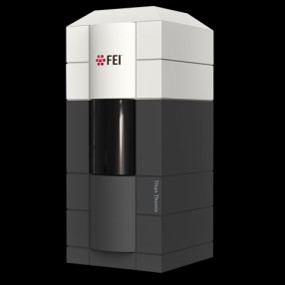 Model: Titan Krios / Image courtesy: FEI Company |