Movie
 Controller


[English] 日本語
 Yorodumi
- EMDB-56909: Focus refined map of ZMYND19 bound to discoidin domain of substra... -
+ Open data

- Basic information
| Entry |  | |||||||||
|---|---|---|---|---|---|---|---|---|---|---|
| Title | Focus refined map of ZMYND19 bound to discoidin domain of substrate receptor MKLN1 | |||||||||
 Map data | ||||||||||
 Sample |
| |||||||||
 Keywords | complex / LIGASE | |||||||||
| Biological species |  Homo sapiens (human) | |||||||||
| Method | single particle reconstruction / cryo EM / Resolution: 3.23 Å | |||||||||
 Authors | Sepic S / Chrustowicz J / Du J / Schulman BA | |||||||||
| Funding support |  Germany, 1 items
| |||||||||
 Citation | Journal: Nat Commun / Year: 2026 Title: Multimodal substrate recruitment enables CTLH E3 ligase to target acetylated N-, C-, and internal degrons. Authors: Sara Sepic / Karthik V Gottemukkala / Jiale Du / Samuel A Maiwald / Jakub Chrustowicz / Eleftheria C Papadopoulou / Luca J Stier / Susanne von Gronau / Brenda A Schulman / Abstract: The GID/CTLH family of E3 ubiquitin ligases employs several substrate receptor subunits that recruit distinct degrons, but the substrate recognition mechanisms of the CTLH assembly have largely ...The GID/CTLH family of E3 ubiquitin ligases employs several substrate receptor subunits that recruit distinct degrons, but the substrate recognition mechanisms of the CTLH assembly have largely remained elusive. Here, we reconstitute CTLH-dependent ubiquitylation of three biochemically distinct substrates - MKLN1 itself, ZMYND19, and FAM72A-recruited UNG2, and determine cryo-EM structures of each substrate bound to MKLN1. The structures reveal how MKLN1's discoidin and Kelch β-propeller domains engage substrates through multivalent contacts. MKLN1 recruits itself through discoidin-Kelch interactions between MKLN1 dimers, forming an assembly that competes with other substrates. ZMYND19 and FAM72A each bind to MKLN1 through loops engaging the discoidin trench domain while their C-terminal Arg residues engage the MKLN1 Kelch central channel, identifying MKLN1 as an Arg/C-degron receptor. The acetylated N-terminus of UNG2 is positioned within a Y-shaped tunnel of FAM72A, defining an adaptor-mediated Ac/N-degron recognition mechanism. Thus, our data reveal how combinatorial deployment of MKLN1 discoidin and Kelch domains enable a single receptor subunit to recognize a diverse substrate repertoire, adding to a complex picture of degron recognition across the GID/CTLH family. | |||||||||
| History |
|
- Structure visualization
| Supplemental images |
|---|

- Downloads & links
-EMDB archive
| Map data | emd_56909.map.gz | 111.1 MB |  EMDB map data format | |
|---|---|---|---|---|
| Header (meta data) | emd-56909-v30.xmlemd-56909.xml | 14.8 KB 14.8 KB | Display Display | EMDB header |
| FSC (resolution estimation) | emd_56909_fsc.xml | 14.4 KB | Display | FSC data file |
| Images |  emd_56909.png | 34.4 KB | ||
| Masks | emd_56909_msk_1.map | 216 MB | Mask map | |
| Filedesc metadata | emd-56909.cif.gz | 4.1 KB | ||
| Others | emd_56909_additional_1.map.gzemd_56909_half_map_1.map.gzemd_56909_half_map_2.map.gz | 179.6 MB 200.1 MB 200.1 MB | ||
| Archive directory |  https://data.pdbj.org/pub/emdb/structures/EMD-56909ftp://data.pdbj.org/pub/emdb/structures/EMD-56909 | HTTPS FTP |
-Related structure data


-Links
| EMDB pages | EMDB (EBI/PDBe) / EMDataResource |
|---|
-Map
| File | Download / File: emd_56909.map.gz / Format: CCP4 / Size: 216 MB / Type: IMAGE STORED AS FLOATING POINT NUMBER (4 BYTES) | ||||||||||||||||||||||||||||||||||||
|---|---|---|---|---|---|---|---|---|---|---|---|---|---|---|---|---|---|---|---|---|---|---|---|---|---|---|---|---|---|---|---|---|---|---|---|---|---|
| Projections & slices | Image control
Images are generated by Spider. | ||||||||||||||||||||||||||||||||||||
| Voxel size | X=Y=Z: 0.8222 Å | ||||||||||||||||||||||||||||||||||||
| Density |
| ||||||||||||||||||||||||||||||||||||
| Symmetry | Space group: 1 | ||||||||||||||||||||||||||||||||||||
| Details | EMDB XML:
|
 Z (Sec.)
 Y (Row.)
 X (Col.)


-Supplemental data
-Mask #1
| File | emd_56909_msk_1.map | ||||||||||||
|---|---|---|---|---|---|---|---|---|---|---|---|---|---|
| Projections & Slices |
| ||||||||||||
| Density Histograms |


-Additional map: #1
| File | emd_56909_additional_1.map | ||||||||||||
|---|---|---|---|---|---|---|---|---|---|---|---|---|---|
| Projections & Slices |
| ||||||||||||
| Density Histograms |


-Half map: #1
| File | emd_56909_half_map_1.map | ||||||||||||
|---|---|---|---|---|---|---|---|---|---|---|---|---|---|
| Projections & Slices |
| ||||||||||||
| Density Histograms |


-Half map: #2
| File | emd_56909_half_map_2.map | ||||||||||||
|---|---|---|---|---|---|---|---|---|---|---|---|---|---|
| Projections & Slices |
| ||||||||||||
| Density Histograms |


- Sample components
-Entire : Focus refined map of ZMYND19 bound to discoidin domain of substra...
| Entire | Name: Focus refined map of ZMYND19 bound to discoidin domain of substrate receptor MKLN1 |
|---|---|
| Components |
|
-Supramolecule #1: Focus refined map of ZMYND19 bound to discoidin domain of substra...
| Supramolecule | Name: Focus refined map of ZMYND19 bound to discoidin domain of substrate receptor MKLN1 type: complex / ID: 1 / Parent: 0 |
|---|---|
| Source (natural) | Organism: Homo sapiens (human) |
-Experimental details
-Structure determination
| Method | cryo EM |
|---|---|
 Processing | single particle reconstruction |
| Aggregation state | particle |
-Sample preparation
| Buffer | pH: 7.5 |
|---|---|
| Vitrification | Cryogen name: ETHANE-PROPANE |
- Electron microscopy
| Microscope | TFS KRIOS |
|---|---|
| Image recording | Film or detector model: GATAN K3 BIOQUANTUM (6k x 4k) / Average electron dose: 60.0 e/Å2 |
| Electron beam | Acceleration voltage: 300 kV / Electron source:  FIELD EMISSION GUN |
| Electron optics | Illumination mode: FLOOD BEAM / Imaging mode: BRIGHT FIELD / Nominal defocus max: 2.6 µm / Nominal defocus min: 1.0 µm |
| Sample stage | Cooling holder cryogen: NITROGEN |
| Experimental equipment | 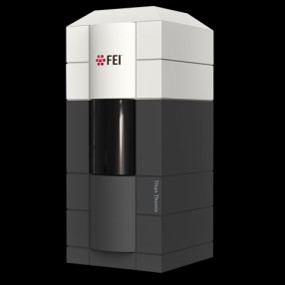 Model: Titan Krios / Image courtesy: FEI Company |