 Movie
Movie Controller

[English] 日本語
 Yorodumi
- EMDB-55803: cryo-EM structure of dephosphorylated mTOR complex 2, overall ref... -
+ Open data

- Basic information
| Entry |  | |||||||||
|---|---|---|---|---|---|---|---|---|---|---|
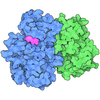
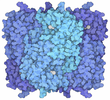
| Title | cryo-EM structure of dephosphorylated mTOR complex 2, overall refinement | |||||||||
 Map data Map data | ||||||||||
 Sample Sample |
| |||||||||
 Keywords Keywords | Kinase / Complex / Signaling protein / TRANSFERASE | |||||||||
| Function / homology |  Function and homology information Function and homology informationcardiac cell development / positive regulation of SCF-dependent proteasomal ubiquitin-dependent catabolic process / RNA polymerase III type 2 promoter sequence-specific DNA binding / T-helper 1 cell lineage commitment / RNA polymerase III type 1 promoter sequence-specific DNA binding / positive regulation of cytoplasmic translational initiation / regulation of locomotor rhythm / positive regulation of pentose-phosphate shunt / positive regulation of wound healing, spreading of epidermal cells / regulation of phosphatidylinositol 3-kinase/protein kinase B signal transduction ...cardiac cell development / positive regulation of SCF-dependent proteasomal ubiquitin-dependent catabolic process / RNA polymerase III type 2 promoter sequence-specific DNA binding / T-helper 1 cell lineage commitment / RNA polymerase III type 1 promoter sequence-specific DNA binding / positive regulation of cytoplasmic translational initiation / regulation of locomotor rhythm / positive regulation of pentose-phosphate shunt / positive regulation of wound healing, spreading of epidermal cells / regulation of phosphatidylinositol 3-kinase/protein kinase B signal transduction / TORC2 complex / cellular response to leucine starvation / TFIIIC-class transcription factor complex binding / regulation of lysosome organization / TORC1 complex / regulation of cellular response to oxidative stress / negative regulation of lysosome organization / regulation of osteoclast differentiation / RNA polymerase III type 3 promoter sequence-specific DNA binding / positive regulation of keratinocyte migration / positive regulation of transcription of nucleolar large rRNA by RNA polymerase I / negative regulation of Ras protein signal transduction / Energy dependent regulation of mTOR by LKB1-AMPK / cellular response to nutrient / cellular response to L-leucine / regulation of autophagosome assembly / phosphatidic acid binding / Amino acids regulate mTORC1 / embryo development ending in birth or egg hatching / Dengue virus modulates apoptosis / cellular response to methionine / phosphatidylinositol-3,4-bisphosphate binding / TORC2 signaling / TORC1 signaling / cellular response to osmotic stress / MTOR signalling / inositol hexakisphosphate binding / anoikis / negative regulation of protein localization to nucleus / positive regulation of ubiquitin-dependent protein catabolic process / regulation of cell size / phosphatidylinositol-3,5-bisphosphate binding / lipid biosynthetic process / negative regulation of macroautophagy / Macroautophagy / Constitutive Signaling by AKT1 E17K in Cancer / behavioral response to pain / positive regulation of transcription by RNA polymerase III / positive regulation of protein kinase activity / phosphatidylinositol-3,4,5-trisphosphate binding / response to amino acid / neuronal action potential / TOR signaling / mTORC1-mediated signalling / HSF1-dependent transactivation / positive regulation of translational initiation / CD28 dependent PI3K/Akt signaling / positive regulation of TOR signaling / enzyme-substrate adaptor activity / positive regulation of lipid biosynthetic process / positive regulation of epithelial to mesenchymal transition / T cell costimulation / vascular endothelial cell response to laminar fluid shear stress / cellular response to nutrient levels / regulation of cellular response to heat / 'de novo' pyrimidine nucleobase biosynthetic process / regulation of macroautophagy / cytoskeleton organization / positive regulation of endothelial cell proliferation / negative regulation of insulin receptor signaling pathway / phagocytic vesicle / phosphatidylinositol-4,5-bisphosphate binding / endomembrane system / substantia nigra development / positive regulation of glycolytic process / protein serine/threonine kinase activator activity / negative regulation of autophagy / cellular response to amino acid starvation / regulation of actin cytoskeleton organization / cellular response to amino acid stimulus / cellular response to starvation / Regulation of PTEN gene transcription / regulation of signal transduction by p53 class mediator / phosphatidylinositol 3-kinase/protein kinase B signal transduction / VEGFR2 mediated vascular permeability / non-specific protein-tyrosine kinase / TP53 Regulates Metabolic Genes / regulation of cell growth / non-membrane spanning protein tyrosine kinase activity / positive regulation of translation / phosphoprotein binding / response to nutrient levels / PML body / regulation of circadian rhythm / small GTPase binding / actin cytoskeleton organization / cellular response to insulin stimulus / Regulation of TP53 Degradation / late endosome / PIP3 activates AKT signaling Similarity search - Function | |||||||||
| Biological species |  Homo sapiens (human) Homo sapiens (human) | |||||||||
| Method | single particle reconstruction / cryo EM / Resolution: 3.3 Å | |||||||||
 Authors Authors | Hay IM / Anandapadamanaban M / Williams RL | |||||||||
| Funding support |  United Kingdom, 2 items United Kingdom, 2 items
| |||||||||
 Citation Citation | Journal: Biorxiv / Year: 2026 Title: Structural basis for a phosphoinositide-driven mTORC2-AKT positive feedback loop Authors: Hay IM / Bourguet M / Ahsan B / Perisic O / Anandapadamanaban M / Williams RL | |||||||||
| History |
|
- Structure visualization
| Supplemental images |
|---|

- Downloads & links
-EMDB archive
| Map data | emd_55803.map.gz | 467.7 MB | EMDB map data format | |
|---|---|---|---|---|
| Header (meta data) | emd-55803-v30.xmlemd-55803.xml | 25.8 KB 25.8 KB | Display Display | EMDB header |
| Images |  emd_55803.png emd_55803.png | 147.1 KB | ||
| Filedesc metadata | emd-55803.cif.gz | 9.7 KB | ||
| Others | emd_55803_additional_1.map.gz | 463.8 MB | ||
| Archive directory |  https://data.pdbj.org/pub/emdb/structures/EMD-55803ftp://data.pdbj.org/pub/emdb/structures/EMD-55803 https://data.pdbj.org/pub/emdb/structures/EMD-55803ftp://data.pdbj.org/pub/emdb/structures/EMD-55803 | HTTPS FTP |
-Related structure data
| Related structure data |  9tdsMC  9t7jC  9t92C  9t93C  9t94C  9tdtC  9tpwC  55725 55726 55727 M: atomic model generated by this map C: citing same article ( |
|---|---|
| Similar structure data |


-Links
| EMDB pages | EMDB (EBI/PDBe) / EMDataResource |
|---|---|
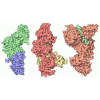
| Related items in Molecule of the Month |

-Map
| File | Download / File: emd_55803.map.gz / Format: CCP4 / Size: 512 MB / Type: IMAGE STORED AS FLOATING POINT NUMBER (4 BYTES) | ||||||||||||||||||||||||||||||||||||
|---|---|---|---|---|---|---|---|---|---|---|---|---|---|---|---|---|---|---|---|---|---|---|---|---|---|---|---|---|---|---|---|---|---|---|---|---|---|
| Projections & slices | Image control
Images are generated by Spider. | ||||||||||||||||||||||||||||||||||||
| Voxel size | X=Y=Z: 0.955 Å | ||||||||||||||||||||||||||||||||||||
| Density |
| ||||||||||||||||||||||||||||||||||||
| Symmetry | Space group: 1 | ||||||||||||||||||||||||||||||||||||
| Details | EMDB XML:
|
 Z (Sec.)
 Y (Row.)
 X (Col.)


-Supplemental data
-Additional map: #1
| File | emd_55803_additional_1.map | ||||||||||||
|---|---|---|---|---|---|---|---|---|---|---|---|---|---|
| Projections & Slices |
| ||||||||||||
| Density Histograms |


- Sample components
-Entire : mTOR complex 2, dephosphorylated
| Entire | Name: mTOR complex 2, dephosphorylated |
|---|---|
| Components |
|
-Supramolecule #1: mTOR complex 2, dephosphorylated
| Supramolecule | Name: mTOR complex 2, dephosphorylated / type: complex / ID: 1 / Parent: 0 / Macromolecule list: #1-#4 Details: mTOR complex 2 dephosphorylated in vitro with lambda protein phosphatase |
|---|---|
| Source (natural) | Organism: Homo sapiens (human) |
| Molecular weight | Theoretical: 580 KDa |
-Macromolecule #1: Serine/threonine-protein kinase mTOR
| Macromolecule | Name: Serine/threonine-protein kinase mTOR / type: protein_or_peptide / ID: 1 / Number of copies: 2 / Enantiomer: LEVO / EC number: non-specific serine/threonine protein kinase |
|---|---|
| Source (natural) | Organism: Homo sapiens (human) |
| Molecular weight | Theoretical: 293.557656 KDa |
| Recombinant expression | Organism: Homo sapiens (human) |
| Sequence | String: MASWSHPQFE KGGGARGGSG GGSWSHPQFE KGENLYFQGG TMLGTGPAAA TTAATTSSNV SVLQQFASGL KSRNEETRAK AAKELQHYV TMELREMSQE ESTRFYDQLN HHIFELVSSS DANERKGGIL AIASLIGVEG GNATRIGRFA NYLRNLLPSN D PVVMEMAS ...String: MASWSHPQFE KGGGARGGSG GGSWSHPQFE KGENLYFQGG TMLGTGPAAA TTAATTSSNV SVLQQFASGL KSRNEETRAK AAKELQHYV TMELREMSQE ESTRFYDQLN HHIFELVSSS DANERKGGIL AIASLIGVEG GNATRIGRFA NYLRNLLPSN D PVVMEMAS KAIGRLAMAG DTFTAEYVEF EVKRALEWLG ADRNEGRRHA AVLVLRELAI SVPTFFFQQV QPFFDNIFVA VW DPKQAIR EGAVAALRAC LILTTQREPK EMQKPQWYRH TFEEAEKGFD ETLAKEKGMN RDDRIHGALL ILNELVRISS MEG ERLREE MEEITQQQLV HDKYCKDLMG FGTKPRHITP FTSFQAVQPQ QSNALVGLLG YSSHQGLMGF GTSPSPAKST LVES RCCRD LMEEKFDQVC QWVLKCRNSK NSLIQMTILN LLPRLAAFRP SAFTDTQYLQ DTMNHVLSCV KKEKERTAAF QALGL LSVA VRSEFKVYLP RVLDIIRAAL PPKDFAHKRQ KAMQVDATVF TCISMLARAM GPGIQQDIKE LLEPMLAVGL SPALTA VLY DLSRQIPQLK KDIQDGLLKM LSLVLMHKPL RHPGMPKGLA HQLASPGLTT LPEASDVGSI TLALRTLGSF EFEGHSL TQ FVRHCADHFL NSEHKEIRME AARTCSRLLT PSIHLISGHA HVVSQTAVQV VADVLSKLLV VGITDPDPDI RYCVLASL D ERFDAHLAQA ENLQALFVAL NDQVFEIREL AICTVGRLSS MNPAFVMPFL RKMLIQILTE LEHSGIGRIK EQSARMLGH LVSNAPRLIR PYMEPILKAL ILKLKDPDPD PNPGVINNVL ATIGELAQVS GLEMRKWVDE LFIIIMDMLQ DSSLLAKRQV ALWTLGQLV ASTGYVVEPY RKYPTLLEVL LNFLKTEQNQ GTRREAIRVL GLLGALDPYK HKVNIGMIDQ SRDASAVSLS E SKSSQDSS DYSTSEMLVN MGNLPLDEFY PAVSMVALMR IFRDQSLSHH HTMVVQAITF IFKSLGLKCV QFLPQVMPTF LN VIRVCDG AIREFLFQQL GMLVSFVKSH IRPYMDEIVT LMREFWVMNT SIQSTIILLI EQIVVALGGE FKLYLPQLIP HML RVFMHD NSPGRIVSIK LLAAIQLFGA NLDDYLHLLL PPIVKLFDAP EAPLPSRKAA LETVDRLTES LDFTDYASRI IHPI VRTLD QSPELRSTAM DTLSSLVFQL GKKYQIFIPM VNKVLVRHRI NHQRYDVLIC RIVKGYTLAD EEEDPLIYQH RMLRS GQGD ALASGPVETG PMKKLHVSTI NLQKAWGAAR RVSKDDWLEW LRRLSLELLK DSSSPSLRSC WALAQAYNPM ARDLFN AAF VSCWSELNED QQDELIRSIE LALTSQDIAE VTQTLLNLAE FMEHSDKGPL PLRDDNGIVL LGERAAKCRA YAKALHY KE LEFQKGPTPA ILESLISINN KLQQPEAAAG VLEYAMKHFG ELEIQATWYE KLHEWEDALV AYDKKMDTNK DDPELMLG R MRCLEALGEW GQLHQQCCEK WTLVNDETQA KMARMAAAAA WGLGQWDSME EYTCMIPRDT HDGAFYRAVL ALHQDLFSL AQQCIDKARD LLDAELTAMA GESYSRAYGA MVSCHMLSEL EEVIQYKLVP ERREIIRQIW WERLQGCQRI VEDWQKILMV RSLVVSPHE DMRTWLKYAS LCGKSGRLAL AHKTLVLLLG VDPSRQLDHP LPTVHPQVTY AYMKNMWKSA RKIDAFQHMQ H FVQTMQQQ AQHAIATEDQ QHKQELHKLM ARCFLKLGEW QLNLQGINES TIPKVLQYYS AATEHDRSWY KAWHAWAVMN FE AVLHYKH QNQARDEKKK LRHASGANIT NATTAATTAA TATTTASTEG SNSESEAEST ENSPTPSPLQ KKVTEDLSKT LLM YTVPAV QGFFRSISLS RGNNLQDTLR VLTLWFDYGH WPDVNEALVE GVKAIQIDTW LQVIPQLIAR IDTPRPLVGR LIHQ LLTDI GRYHPQALIY PLTVASKSTT TARHNAANKI LKNMCEHSNT LVQQAMMVSE ELIRVAILWH EMWHEGLEEA SRLYF GERN VKGMFEVLEP LHAMMERGPQ TLKETSFNQA YGRDLMEAQE WCRKYMKSGN VKDLTQAWDL YYHVFRRISK QLPQLT SLE LQYVSPKLLM CRDLELAVPG TYDPNQPIIR IQSIAPSLQV ITSKQRPRKL TLMGSNGHEF VFLLKGHEDL RQDERVM QL FGLVNTLLAN DPTSLRKNLS IQRYAVIPLS TNSGLIGWVP HCDTLHALIR DYREKKKILL NIEHRIMLRM APDYDHLT L MQKVEVFEHA VNNTAGDDLA KLLWLKSPSS EVWFDRRTNY TRSLAVMSMV GYILGLGDRH PSNLMLDRLS GKILHIDFG DCFEVAMTRE KFPEKIPFRL TRMLTNAMEV TGLDGNYRIT CHTVMEVLRE HKDSVMAVLE AFVYDPLLNW RLMDTNTKGN KRSRTRTDS YSAGQSVEIL DGVELGEPAH KKTGTTVPES IHSFIGDGLV KPEALNKKAI QIINRVRDKL TGRDFSHDDT L DVPTQVEL LIKQATSHEN LCQCYIGWCP FW UniProtKB: Serine/threonine-protein kinase mTOR |
-Macromolecule #2: Target of rapamycin complex subunit LST8
| Macromolecule | Name: Target of rapamycin complex subunit LST8 / type: protein_or_peptide / ID: 2 / Number of copies: 2 / Enantiomer: LEVO |
|---|---|
| Source (natural) | Organism: Homo sapiens (human) |
| Molecular weight | Theoretical: 35.91009 KDa |
| Recombinant expression | Organism: Homo sapiens (human) |
| Sequence | String: MNTSPGTVGS DPVILATAGY DHTVRFWQAH SGICTRTVQH QDSQVNALEV TPDRSMIAAA GYQHIRMYDL NSNNPNPIIS YDGVNKNIA SVGFHEDGRW MYTGGEDCTA RIWDLRSRNL QCQRIFQVNA PINCVCLHPN QAELIVGDQS GAIHIWDLKT D HNEQLIPE ...String: MNTSPGTVGS DPVILATAGY DHTVRFWQAH SGICTRTVQH QDSQVNALEV TPDRSMIAAA GYQHIRMYDL NSNNPNPIIS YDGVNKNIA SVGFHEDGRW MYTGGEDCTA RIWDLRSRNL QCQRIFQVNA PINCVCLHPN QAELIVGDQS GAIHIWDLKT D HNEQLIPE PEVSITSAHI DPDASYMAAV NSTGNCYVWN LTGGIGDEVT QLIPKTKIPA HTRYALQCRF SPDSTLLATC SA DQTCKIW RTSNFSLMTE LSIKSGNPGE SSRGWMWGCA FSGDSQYIVT ASSDNLARLW CVETGEIKRE YGGHQKAVVC LAF NDSVLG UniProtKB: Target of rapamycin complex subunit LST8 |
-Macromolecule #3: Rapamycin-insensitive companion of mTOR
| Macromolecule | Name: Rapamycin-insensitive companion of mTOR / type: protein_or_peptide / ID: 3 / Number of copies: 2 / Enantiomer: LEVO |
|---|---|
| Source (natural) | Organism: Homo sapiens (human) |
| Molecular weight | Theoretical: 195.552031 KDa |
| Recombinant expression | Organism: Homo sapiens (human) |
| Sequence | String: MADYKDHDGD YKDHDIDYKD DDDKGTMAAI GRGRSLKNLR VRGRNDSGEE NVPLDLTREP SDNLREILQN VARLQGVSNM RKLGHLNNF TKLLCDIGHS EEKLGFHYED IIICLRLALL NEAKEVRAAG LRALRYLIQD SSILQKVLKL KVDYLIARCI D IQQSNEVE ...String: MADYKDHDGD YKDHDIDYKD DDDKGTMAAI GRGRSLKNLR VRGRNDSGEE NVPLDLTREP SDNLREILQN VARLQGVSNM RKLGHLNNF TKLLCDIGHS EEKLGFHYED IIICLRLALL NEAKEVRAAG LRALRYLIQD SSILQKVLKL KVDYLIARCI D IQQSNEVE RTQALRLVRK MITVNASLFP SSVTNSLIAV GNDGLQERDR MVRACIAIIC ELALQNPEVV ALRGGLNTIL KN VIDCQLS RINEALITTI LHLLNHPKTR QYVRADVELE RILAPYTDFH YRHSPDTAEG QLKEDREARF LASKMGIIAT FRS WAGIIN LCKPGNSGIQ SLIGVLCIPN MEIRRGLLEV LYDIFRLPLP VVTEEFIEAL LSVDPGRFQD SWRLSDGFVA AEAK TILPH RARSRPDLMD NYLALILSAF IRNGLLEGLV EVITNSDDHI SVRATILLGE LLHMANTILP HSHSHHLHCL PTLMN MAAS FDIPKEKRLR ASAALNCLKR FHEMKKRGPK PYSLHLDHII QKAIATHQKR DQYLRVQKDI FILKDTEEAL LINLRD SQV LQHKENLEWN WNLIGTILKW PNVNLRNYKD EQLHRFVRRL LYFYKPSSKL YANLDLDFAK AKQLTVVGCQ FTEFLLE SE EDGQGYLEDL VKDIVQWLNA SSGMKPERSL QNNGLLTTLS QHYFLFIGTL SCHPHGVKML EKCSVFQCLL NLCSLKNQ D HLLKLTVSSL DYSRDGLARV ILSKILTAAT DACRLYATKH LRVLLRANVE FFNNWGIELL VTQLHDKNKT ISSEALDIL DEACEDKANL HALIQMKPAL SHLGDKGLLL LLRFLSIPKG FSYLNERGYV AKQLEKWHRE YNSKYVDLIE EQLNEALTTY RKPVDGDNY VRRSNQRLQR PHVYLPIHLY GQLVHHKTGC HLLEVQNIIT ELCRNVRTPD LDKWEEIKKL KASLWALGNI G SSNWGLNL LQEENVIPDI LKLAKQCEVL SIRGTCVYVL GLIAKTKQGC DILKCHNWDA VRHSRKHLWP VVPDDVEQLC NE LSSIPST LSLNSESTSS RHNSESESVP SSMFILEDDR FGSSSTSTFF LDINEDTEPT FYDRSGPIKD KNSFPFFASS KLV KNRILN SLTLPNKKHR SSSDPKGGKL SSESKTSNRR IRTLTEPSVD FNHSDDFTPI STVQKTLQLE TSFMGNKHIE DTGS TPSIG ENDLKFTKNF GTENHRENTS RERLVVESST SSHMKIRSQS FNTDTTTSGI SSMSSSPSRE TVGVDATTMD TDCGS MSTV VSTKTIKTSH YLTPQSNHLS LSKSNSVSLV PPGSSHTLPR RAQSLKAPSI ATIKSLADCN FSYTSSRDAF GYATLK RLQ QQRMHPSLSH SEALASPAKD VLFTDTITMK ANSFESRLTP SRFMKALSYA SLDKEDLLSP INQNTLQRSS SVRSMVS SA TYGGSDDYIG LALPVDINDI FQVKDIPYFQ TKNIPPHDDR GARAFAHDAG GLPSGTGGLV KNSFHLLRQQ MSLTEIMN S IHSDASLFLE STEDTGLQEH TDDNCLYCVC IEILGFQPSN QLSAICSHSD FQDIPYSDWC EQTIHNPLEV VPSKFSGIS GCSDGVSQEG SASSTKSTEL LLGVKTIPDD TPMCRILLRK EVLRLVINLS SSVSTKCHET GLLTIKEKYP QTFDDICLYS EVSHLLSHC TFRLPCRRFI QELFQDVQFL QMHEEAEAVL ATPPKQPIVD TSAES UniProtKB: Rapamycin-insensitive companion of mTOR |
-Macromolecule #4: Target of rapamycin complex 2 subunit MAPKAP1
| Macromolecule | Name: Target of rapamycin complex 2 subunit MAPKAP1 / type: protein_or_peptide / ID: 4 / Number of copies: 2 / Enantiomer: LEVO |
|---|---|
| Source (natural) | Organism: Homo sapiens (human) |
| Molecular weight | Theoretical: 59.101582 KDa |
| Recombinant expression | Organism: Homo sapiens (human) |
| Sequence | String: (ACE)AFLDNPTII LAHIRQSHVT SDDTGMCEMV LIDHDVDLEK IHPPSMPGDS GSEIQGSNGE TQGYVYAQSV DITSSW DFG IRRRSNTAQR LERLRKERQN QIKCKNIQWK ERNSKQSAQE LKSLFEKKSL KEKPPISGKQ SILSVRLEQC PLQLNNP FN EYSKFDGKGH ...String: (ACE)AFLDNPTII LAHIRQSHVT SDDTGMCEMV LIDHDVDLEK IHPPSMPGDS GSEIQGSNGE TQGYVYAQSV DITSSW DFG IRRRSNTAQR LERLRKERQN QIKCKNIQWK ERNSKQSAQE LKSLFEKKSL KEKPPISGKQ SILSVRLEQC PLQLNNP FN EYSKFDGKGH VGTTATKKID VYLPLHSSQD RLLPMTVVTM ASARVQDLIG LICWQYTSEG REPKLNDNVS AYCLHIAE D DGEVDTDFPP LDSNEPIHKF GFSTLALVEK YSSPGLTSKE SLFVRINAAH GFSLIQVDNT KVTMKEILLK AVKRRKGSQ KVSGPQYRLE KQSEPNVAVD LDSTLESQSA WEFCLVRENS SRADGVFEED SQIDIATVQD MLSSHHYKSF KVSMIHRLRF TTDVQLGIS GDKVEIDPVT NQKASTKFWI KQKPISIDSD LLCACDLAEE KSPSHAIFKL TYLSNHDYKH LYFESDAATV N EIVLKVNY ILESRASTAR ADYFAQKQRK LNRRTSFSFQ KEKKSGQQ UniProtKB: Target of rapamycin complex 2 subunit MAPKAP1 |
-Macromolecule #5: INOSITOL HEXAKISPHOSPHATE
| Macromolecule | Name: INOSITOL HEXAKISPHOSPHATE / type: ligand / ID: 5 / Number of copies: 2 / Formula: IHP |
|---|---|
| Molecular weight | Theoretical: 660.035 Da |
| Chemical component information | 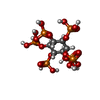 ChemComp-IHP: |
-Macromolecule #6: ZINC ION
| Macromolecule | Name: ZINC ION / type: ligand / ID: 6 / Number of copies: 2 / Formula: ZN |
|---|---|
| Molecular weight | Theoretical: 65.409 Da |
-Experimental details
-Structure determination
| Method | cryo EM |
|---|---|
 Processing Processing | single particle reconstruction |
| Aggregation state | particle |
-Sample preparation
| Concentration | 0.9 mg/mL | ||||||||
|---|---|---|---|---|---|---|---|---|---|
| Buffer | pH: 7.5 Component:
| ||||||||
| Vitrification | Cryogen name: ETHANE / Chamber humidity: 100 % / Chamber temperature: 287 K / Instrument: FEI VITROBOT MARK IV |
- Electron microscopy
| Microscope | TFS KRIOS |
|---|---|
| Specialist optics | Energy filter - Name: TFS Selectris X / Energy filter - Slit width: 10 eV |
| Image recording | Film or detector model: TFS FALCON 4i (4k x 4k) / Average electron dose: 50.0 e/Å2 |
| Electron beam | Acceleration voltage: 300 kV / Electron source:  FIELD EMISSION GUN FIELD EMISSION GUN |
| Electron optics | Illumination mode: FLOOD BEAM / Imaging mode: BRIGHT FIELD / Cs: 2.7 mm / Nominal defocus max: 2.8000000000000003 µm / Nominal defocus min: 1.0 µm / Nominal magnification: 130000 |
| Sample stage | Specimen holder model: FEI TITAN KRIOS AUTOGRID HOLDER / Cooling holder cryogen: NITROGEN |
| Experimental equipment |  Model: Titan Krios / Image courtesy: FEI Company |
