[English] 日本語
Yorodumi
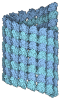
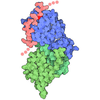
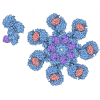
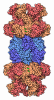
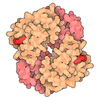
- EMDB-55606: Complex linking two repeat units of a cytoplasmic lattice filament -

+
Open data


ID or keywords:

Loading...

-
Basic information

Entry
Database: EMDB / ID: EMD-55606
TitleComplex linking two repeat units of a cytoplasmic lattice filament
Map data
Sample
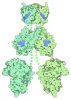
  • Complex: Complex of a F-box/WD repeat-containing protein-SKP1 complex bound to NLRP14 and UHRF1
    • Protein or peptide: x 11 types
KeywordsUbiquitination / Complex / Filament / UNKNOWN FUNCTION
Function / homology
Function and homology information


regulation of translation by machinery localization / cytoplasm organization / ooplasm / Prolactin receptor signaling / embryonic process involved in female pregnancy / subcortical maternal complex / establishment of organelle localization / Microtubule-dependent trafficking of connexons from Golgi to the plasma membrane / Cargo trafficking to the periciliary membrane / Sealing of the nuclear envelope (NE) by ESCRT-III ...regulation of translation by machinery localization / cytoplasm organization / ooplasm / Prolactin receptor signaling / embryonic process involved in female pregnancy / subcortical maternal complex / establishment of organelle localization / Microtubule-dependent trafficking of connexons from Golgi to the plasma membrane / Cargo trafficking to the periciliary membrane / Sealing of the nuclear envelope (NE) by ESCRT-III / Chromatin modifying enzymes / protein storage / structural constituent of cytoplasmic lattice / cytoplasmic lattice / cortical granule exocytosis / establishment or maintenance of apical/basal cell polarity / endoplasmic reticulum localization / Carboxyterminal post-translational modifications of tubulin / Intraflagellar transport / COPI-independent Golgi-to-ER retrograde traffic / SCF-beta-TrCP mediated degradation of Emi1 / HSP90 chaperone cycle for steroid hormone receptors (SHR) in the presence of ligand / Regulation of BACH1 activity / SCF(Skp2)-mediated degradation of p27/p21 / COPI-mediated anterograde transport / spermatogonial cell division / MAP3K8 (TPL2)-dependent MAPK1/3 activation / Regulation of RUNX2 expression and activity / Kinesins / Degradation of GLI1 by the proteasome / GSK3B-mediated proteasomal degradation of PD-L1(CD274) / Cyclin D associated events in G1 / FBXL7 down-regulates AURKA during mitotic entry and in early mitosis / cortical granule / Orc1 removal from chromatin / GSK3B and BTRC:CUL1-mediated-degradation of NFE2L2 / Dectin-1 mediated noncanonical NF-kB signaling / NIK-->noncanonical NF-kB signaling / PKR-mediated signaling / Aggrephagy / fertilization / regulation of establishment of protein localization / RHO GTPases activate IQGAPs / Mitotic Prometaphase / EML4 and NUDC in mitotic spindle formation / Degradation of beta-catenin by the destruction complex / COPI-dependent Golgi-to-ER retrograde traffic / Resolution of Sister Chromatid Cohesion / Activation of NF-kappaB in B cells / Iron uptake and transport / embryonic cleavage / The role of GTSE1 in G2/M progression after G2 checkpoint / apical cortex / positive regulation of meiotic nuclear division / Recycling pathway of L1 / positive regulation of embryonic development / regulation of RNA stability / intermediate filament cytoskeleton / CLEC7A (Dectin-1) signaling / FCERI mediated NF-kB activation / Interleukin-1 signaling / axonemal microtubule / F-box domain binding / Hedgehog 'off' state / RHO GTPases Activate Formins / Loss of Nlp from mitotic centrosomes / Recruitment of mitotic centrosome proteins and complexes / Loss of proteins required for interphase microtubule organization from the centrosome / Downstream TCR signaling / Separation of Sister Chromatids / Anchoring of the basal body to the plasma membrane / Recruitment of NuMA to mitotic centrosomes / AURKA Activation by TPX2 / GLI3 is processed to GLI3R by the proteasome / embryonic pattern specification / Regulation of PLK1 Activity at G2/M Transition / Ubiquitin-Mediated Degradation of Phosphorylated Cdc25A / Neddylation / PcG protein complex / MHC class II antigen presentation / gap junction / establishment of spindle localization / mitochondrion localization / maintenance of protein location in nucleus / positive regulation of epithelial cell apoptotic process / Cul7-RING ubiquitin ligase complex / Antigen processing: Ubiquitination & Proteasome degradation / positive regulation of dendrite development / positive regulation of neurogenesis / ubiquitin ligase activator activity / epigenetic programming in the zygotic pronuclei / mitotic spindle assembly checkpoint signaling / tubulin complex / SCF ubiquitin ligase complex / intercellular bridge / SCF-dependent proteasomal ubiquitin-dependent protein catabolic process / flagellated sperm motility / exocytosis / negative regulation of protein phosphorylation / positive regulation of double-strand break repair
Similarity search - Function
Zinc finger BED domain-containing protein 2/3 / BED zinc finger / KH-like RNA-binding domain / : / KH-like RNA-binding domain / Groucho/transducin-like enhancer / Protein-arginine deiminase / Protein-arginine deiminase, C-terminal / Protein-arginine deiminase (PAD), N-terminal / Protein-arginine deiminase (PAD), central domain ...Zinc finger BED domain-containing protein 2/3 / BED zinc finger / KH-like RNA-binding domain / : / KH-like RNA-binding domain / Groucho/transducin-like enhancer / Protein-arginine deiminase / Protein-arginine deiminase, C-terminal / Protein-arginine deiminase (PAD), N-terminal / Protein-arginine deiminase (PAD), central domain / Protein-arginine deiminase, central domain superfamily / PAD, N-terminal domain superfamily / Protein-arginine deiminase (PAD) / Protein-arginine deiminase (PAD) N-terminal domain / Protein-arginine deiminase (PAD) middle domain / : / NACHT, LRR and PYD domains-containing protein, helical domain HD2 / NLRC4 helical domain HD2 / NOD2, winged helix domain / NOD2 winged helix domain / NACHT nucleoside triphosphatase / NACHT domain / NACHT-NTPase domain profile. / DAPIN domain / PAAD/DAPIN/Pyrin domain / PAAD/DAPIN/Pyrin domain / SKP1 component, dimerisation / S-phase kinase-associated protein 1 / SKP1-like, dimerisation domain superfamily / Skp1 family, dimerisation domain / Leucine rich repeat, ribonuclease inhibitor type / Leucine Rich repeat / K Homology domain, type 1 superfamily / S-phase kinase-associated protein 1-like / SKP1 component, POZ domain / Skp1 family, tetramerisation domain / Found in Skp1 protein family / Alpha tubulin / Tubulin-beta mRNA autoregulation signal. / Beta tubulin, autoregulation binding site / Beta tubulin / Death-like domain superfamily / Tubulin / Tubulin, C-terminal / Tubulin C-terminal domain / Tubulin, conserved site / Tubulin subunits alpha, beta, and gamma signature. / Zinc finger C2H2 superfamily / SKP1/BTB/POZ domain superfamily / Tubulin/FtsZ family, C-terminal domain / Tubulin/FtsZ-like, C-terminal domain / Tubulin/FtsZ, C-terminal / Tubulin/FtsZ, 2-layer sandwich domain / Tubulin/FtsZ family, GTPase domain / Tubulin/FtsZ family, GTPase domain / Tubulin/FtsZ, GTPase domain / Cupredoxin / Tubulin/FtsZ, GTPase domain superfamily / Leucine-rich repeat / Leucine-rich repeat domain superfamily / Trp-Asp (WD) repeats signature. / Trp-Asp (WD) repeats profile. / Trp-Asp (WD) repeats circular profile. / WD40 repeats / WD40 repeat / WD40-repeat-containing domain superfamily / WD40/YVTN repeat-like-containing domain superfamily / P-loop containing nucleoside triphosphate hydrolase
Similarity search - Domain/homology
NLR family, pyrin domain containing 4F / Tubulin beta-4B chain / Tubulin alpha-1C chain / Inactive protein-arginine deiminase type-6 / Oocyte-expressed protein homolog / KH domain-containing protein 3 / Zinc finger BED domain-containing protein 3 / NACHT, LRR and PYD domains-containing protein 5 / S-phase kinase-associated protein 1 / Transducin-like enhancer protein 6
Similarity search - Component
Biological speciesMus musculus (house mouse)
Methodsubtomogram averaging / cryo EM / Resolution: 5.3 Å
AuthorsSingh K / Harasimov K / Carter AP
Funding support United Kingdom, European Union, 3 items
OrganizationGrant numberCountry
Medical Research Council (MRC, United Kingdom)MC_UP_A025_1011 United Kingdom
European Molecular Biology Organization (EMBO)ALTF 426-2023European Union
Wellcome Trust221856/Z/20/Z United Kingdom
CitationJournal: EMBO J / Year: 2026
Title: In-situ cryo-ET of mouse embryos reveals cytoplasmic lattices contain ubiquitin-charged E2-E3 ligase assemblies.
Authors: Kashish Singh / Katarina Harasimov / Kathy K Niakan / Andrew P Carter /
Abstract: Cytoplasmic lattices (CPLs) are filamentous assemblies essential for mammalian embryonic development. They are known to regulate organelle organization, spindle assembly, and protein homeostasis, but ...Cytoplasmic lattices (CPLs) are filamentous assemblies essential for mammalian embryonic development. They are known to regulate organelle organization, spindle assembly, and protein homeostasis, but their molecular functions remain unclear. Here, we develop a strategy combining cryo-focused ion beam milling and cryo-electron tomography to resolve macromolecular complexes directly in mammalian embryos. Using this approach, we determine the in situ structure of cytoplasmic lattices within 6/8-cell mouse embryos at ~4.7 Å resolution. CPL filaments are built from multiple copies of at least fourteen proteins arranged into a ~4.5 MDa repeating unit. The repeat contains a central cavity that is open at the back and lined with multiple FBXW-SKP1 complexes and three modules, each containing the E2 ubiquitin-conjugating enzyme UBE2D and the E3 ligase UHRF1. We resolve two CPL states: one is consistent with a ubiquitin-charged UBE2D, where ubiquitin is held in an open, inactive conformation by binding the scaffold protein PADI6; the second lacks discernible ubiquitin density and shows structural changes compatible with ubiquitin becoming available for transfer. Our findings support a model in which CPLs function as large ubiquitin ligase assemblies during early embryonic development.
History
DepositionNov 6, 2025-
Header (metadata) releaseAug 12, 2026-
Map releaseAug 12, 2026-
UpdateAug 26, 2026-
Current statusAug 26, 2026Processing site: PDBe / Status: Released

-
Structure visualization

Supplemental images

Downloads & links

-
Map

FileDownload / File: emd_55606.map.gz / Format: CCP4 / Size: 178 MB / Type: IMAGE STORED AS FLOATING POINT NUMBER (4 BYTES)
Projections & slices

Image control

Size
Brightness
Contrast
Others
AxesZ (Sec.)Y (Row.)X (Col.)
1.19 Å/pix.
x 360 pix.
= 426.6 Å
1.19 Å/pix.
x 360 pix.
= 426.6 Å
1.19 Å/pix.
x 360 pix.
= 426.6 Å

Surface

Projections

Slices (1/3)

Slices (1/2)

Slices (2/3)

Images are generated by Spider.

Voxel sizeX=Y=Z: 1.185 Å
Density
Contour LevelBy AUTHOR: 0.035
Minimum - Maximum-0.090519264 - 0.18370858
Average (Standard dev.)-0.00000000000003 (±0.010304413)
SymmetrySpace group: 1
Details

EMDB XML:

Map geometry
Axis orderXYZ
Origin000
Dimensions360360360
Spacing360360360
CellA=B=C: 426.59998 Å
α=β=γ: 90.0 °

-
Supplemental data

-
Additional map: unsharpened map

Fileemd_55606_additional_1.map
Annotationunsharpened map
Projections & Slices
AxesZYX

Projections

Slices (1/2)
Density Histograms

-
Half map: #2

Fileemd_55606_half_map_1.map
Projections & Slices
AxesZYX

Projections

Slices (1/2)
Density Histograms

-
Half map: #1

Fileemd_55606_half_map_2.map
Projections & Slices
AxesZYX

Projections

Slices (1/2)
Density Histograms

-
Sample components

+
Entire : Complex of a F-box/WD repeat-containing protein-SKP1 complex boun...

EntireName: Complex of a F-box/WD repeat-containing protein-SKP1 complex bound to NLRP14 and UHRF1
Components
  • Complex: Complex of a F-box/WD repeat-containing protein-SKP1 complex bound to NLRP14 and UHRF1
    • Protein or peptide: F-box/WD repeat-containing protein
    • Protein or peptide: Inactive protein-arginine deiminase type-6
    • Protein or peptide: Oocyte-expressed protein homolog
    • Protein or peptide: KH domain-containing protein 3
    • Protein or peptide: Tubulin alpha-1C chain
    • Protein or peptide: Tubulin beta-4B chain
    • Protein or peptide: S-phase kinase-associated protein 1
    • Protein or peptide: NLR family, pyrin domain containing 4F
    • Protein or peptide: Zinc finger BED domain-containing protein 3
    • Protein or peptide: NACHT, LRR and PYD domains-containing protein 5
    • Protein or peptide: Transducin-like enhancer protein 6

+
Supramolecule #1: Complex of a F-box/WD repeat-containing protein-SKP1 complex boun...

SupramoleculeName: Complex of a F-box/WD repeat-containing protein-SKP1 complex bound to NLRP14 and UHRF1
type: complex / ID: 1 / Parent: 0 / Macromolecule list: all
Source (natural)Organism: Mus musculus (house mouse)

+
Macromolecule #1: F-box/WD repeat-containing protein

MacromoleculeName: F-box/WD repeat-containing protein / type: protein_or_peptide / ID: 1 / Number of copies: 4 / Enantiomer: LEVO
Source (natural)Organism: Mus musculus (house mouse)
Molecular weightTheoretical: 39.676895 KDa
SequenceString: (UNK)(UNK)(UNK)(UNK)(UNK)(UNK)(UNK)(UNK)(UNK)(UNK) (UNK)(UNK)(UNK)(UNK)(UNK)(UNK) (UNK)(UNK)(UNK) (UNK)(UNK)(UNK)(UNK)(UNK)(UNK)(UNK)(UNK)(UNK)(UNK) (UNK)(UNK)(UNK) (UNK)(UNK)(UNK)(UNK)(UNK) ...String:
(UNK)(UNK)(UNK)(UNK)(UNK)(UNK)(UNK)(UNK)(UNK)(UNK) (UNK)(UNK)(UNK)(UNK)(UNK)(UNK) (UNK)(UNK)(UNK) (UNK)(UNK)(UNK)(UNK)(UNK)(UNK)(UNK)(UNK)(UNK)(UNK) (UNK)(UNK)(UNK) (UNK)(UNK)(UNK)(UNK)(UNK)(UNK) (UNK)(UNK)(UNK)(UNK)(UNK)(UNK)(UNK)(UNK)(UNK)(UNK) (UNK)(UNK)(UNK)(UNK)(UNK)(UNK)(UNK)(UNK)(UNK) (UNK)(UNK)(UNK)(UNK)(UNK)(UNK)(UNK) (UNK)(UNK) (UNK)(UNK)(UNK)(UNK)(UNK)(UNK)(UNK)(UNK)(UNK)(UNK) (UNK)(UNK)(UNK)(UNK) (UNK)(UNK)(UNK)(UNK)(UNK) (UNK)(UNK)(UNK)(UNK)(UNK)(UNK)(UNK)(UNK)(UNK)(UNK) (UNK) (UNK)(UNK)(UNK)(UNK)(UNK)(UNK)(UNK)(UNK) (UNK)(UNK)(UNK)(UNK)(UNK)(UNK)(UNK)(UNK) (UNK) (UNK)(UNK)(UNK)(UNK)(UNK)(UNK)(UNK)(UNK)(UNK)(UNK) (UNK)(UNK)(UNK)(UNK)(UNK) (UNK)(UNK)(UNK)(UNK) (UNK)(UNK)(UNK)(UNK)(UNK)(UNK)(UNK)(UNK)(UNK)(UNK) (UNK)(UNK) (UNK)(UNK)(UNK)(UNK)(UNK)(UNK)(UNK) (UNK)(UNK)(UNK)(UNK)(UNK)(UNK)(UNK)(UNK)(UNK) (UNK)(UNK)(UNK)(UNK)(UNK)(UNK)(UNK)(UNK)(UNK)(UNK) (UNK)(UNK)(UNK)(UNK)(UNK)(UNK) (UNK)(UNK)(UNK) (UNK)(UNK)(UNK)(UNK)(UNK)(UNK)(UNK)(UNK)(UNK)(UNK) (UNK)(UNK)(UNK) (UNK)(UNK)(UNK)(UNK)(UNK)(UNK) (UNK)(UNK)(UNK)(UNK)(UNK)(UNK)(UNK)(UNK)(UNK)(UNK) (UNK)(UNK)(UNK)(UNK)(UNK)(UNK)(UNK)(UNK)(UNK) (UNK)(UNK)(UNK)(UNK)(UNK)(UNK)(UNK) (UNK)(UNK) (UNK)(UNK)(UNK)(UNK)(UNK)(UNK)(UNK)(UNK)(UNK)(UNK) (UNK)(UNK)(UNK)(UNK) (UNK)(UNK)(UNK)(UNK)(UNK) (UNK)(UNK)(UNK)(UNK)(UNK)(UNK)(UNK)(UNK)(UNK)(UNK) (UNK) (UNK)(UNK)(UNK)(UNK)(UNK)(UNK)(UNK)(UNK) (UNK)(UNK)(UNK)(UNK)(UNK)(UNK)(UNK)(UNK) (UNK) (UNK)(UNK)(UNK)(UNK)(UNK)(UNK)(UNK)(UNK)(UNK)(UNK) (UNK)(UNK)(UNK)(UNK)(UNK) (UNK)(UNK)(UNK)(UNK) (UNK)(UNK)(UNK)(UNK)(UNK)(UNK)(UNK)(UNK)(UNK)(UNK) (UNK)(UNK) (UNK)(UNK)(UNK)(UNK)(UNK)(UNK)(UNK) (UNK)(UNK)(UNK)(UNK)(UNK)(UNK)(UNK)(UNK)(UNK) (UNK)(UNK)(UNK)(UNK)(UNK)(UNK)(UNK)(UNK)(UNK)(UNK) (UNK)(UNK)(UNK)(UNK)(UNK)(UNK) (UNK)(UNK)(UNK) (UNK)(UNK)(UNK)(UNK)(UNK)(UNK)(UNK)(UNK)(UNK)(UNK) (UNK)(UNK)(UNK) (UNK)(UNK)(UNK)(UNK)(UNK)(UNK) (UNK)(UNK)(UNK)(UNK)(UNK)(UNK)(UNK)(UNK)(UNK)(UNK) (UNK)(UNK)(UNK)(UNK)(UNK)(UNK)(UNK)(UNK)(UNK) (UNK)(UNK)(UNK)(UNK)(UNK)(UNK)(UNK) (UNK)(UNK) (UNK)(UNK)(UNK)(UNK)(UNK)(UNK)(UNK)(UNK)(UNK)(UNK) (UNK)(UNK)(UNK)(UNK) (UNK)(UNK)(UNK)(UNK)(UNK) (UNK)(UNK)(UNK)(UNK)(UNK)(UNK)(UNK)(UNK)(UNK)(UNK) (UNK) (UNK)(UNK)(UNK)(UNK)(UNK)(UNK)(UNK)(UNK) (UNK)(UNK)(UNK)(UNK)(UNK)(UNK)(UNK)(UNK) (UNK) (UNK)(UNK)(UNK)(UNK)(UNK)(UNK)(UNK)(UNK)(UNK)(UNK) (UNK)(UNK)(UNK)(UNK)(UNK) (UNK)(UNK)(UNK)(UNK) (UNK)(UNK)(UNK)(UNK)(UNK)(UNK)(UNK)(UNK)(UNK)(UNK) (UNK)(UNK) (UNK)(UNK)

+
Macromolecule #2: Inactive protein-arginine deiminase type-6

MacromoleculeName: Inactive protein-arginine deiminase type-6 / type: protein_or_peptide / ID: 2 / Number of copies: 8 / Enantiomer: LEVO
Source (natural)Organism: Mus musculus (house mouse)
Molecular weightTheoretical: 76.854109 KDa
SequenceString: MSFQNSLSLS LVNPTHALCM VGMEITLDIS KCAPDKCKSF TIRGSPRILI HISSSVIAGK EDTVVWRSMN HPTVALVRMV APSPTVDED KVLVSYFCPD QEVPTATAVL FLTGIEISLE ADIYRDGQLD MPSDKQAKKK WMWGMNGWGA ILLVNCSPNA V GQPDEQSF ...String:
MSFQNSLSLS LVNPTHALCM VGMEITLDIS KCAPDKCKSF TIRGSPRILI HISSSVIAGK EDTVVWRSMN HPTVALVRMV APSPTVDED KVLVSYFCPD QEVPTATAVL FLTGIEISLE ADIYRDGQLD MPSDKQAKKK WMWGMNGWGA ILLVNCSPNA V GQPDEQSF QEGPREIQNL SQMNVTVEGP TSILQNYQLI LHTSEEEAKK TRVYWSQRGS SAYELVVGPN KPVYLLPTFE NR RKEAFYV EATEFPSPSF SGLISLSLSL VEKAHDECIP EIPLYKDTVM FRVAPYIFMP STQMPLEVYL CRELQLQGFV DSV TKLSEK SKVQVVKVYE DPNRQSKWLQ DEMAFCYTQA PHKTVSLILD TPRVSKLEDF PMKYTLTPGS GYLIRQTEDH RVAS LDSIG NLMVSPPVKA QGKDYPLGRV LIGGSFYPSS EGRDMNKGLR EFVYAQQVQA PVELFSDWLM TGHMDQFMCF VPTND KNND QKDFRLLLAS PSACFELFEQ KQKEGYGNVT LFEDIGAEQL LSNGRESKTI SQILADKSFR EQNTYVEKCI SLNRTL LKT ELGLEDKDII LIPQLFCLEQ LTNVPSNQQS TKLFARPYFP DMLQIIVLGK NLGIPKPFGP KINGTCCLEE KVCGLLE PL GLKCTFIDDF DCYLANIGDV CASAIINRVP FAFKWWKMTP

UniProtKB: Inactive protein-arginine deiminase type-6

+
Macromolecule #3: Oocyte-expressed protein homolog

MacromoleculeName: Oocyte-expressed protein homolog / type: protein_or_peptide / ID: 3 / Number of copies: 4 / Enantiomer: LEVO
Source (natural)Organism: Mus musculus (house mouse)
Molecular weightTheoretical: 18.481295 KDa
SequenceString:
MASHTADADA KPDSDSQKLL NVLPVSLRLR TRPWWFPIQE VSNPLVLYME AWVAERVIGT DQAEISEIEW MCQALLTVDS VNSGNLAEI TIFGQPSAQT RMKNILLNMA AWHKENELQR AVKVKEVEEF LKIRASSILS KLSKKGLKLA GFPLPLEGRE T QMES

UniProtKB: Oocyte-expressed protein homolog

+
Macromolecule #4: KH domain-containing protein 3

MacromoleculeName: KH domain-containing protein 3 / type: protein_or_peptide / ID: 4 / Number of copies: 2 / Enantiomer: LEVO
Source (natural)Organism: Mus musculus (house mouse)
Molecular weightTheoretical: 48.055301 KDa
SequenceString: MASLKRFQTL VPLDHKQGTL FEIIGEPKLP KWFHVECLED PKRLYVEPRL LEIMFGKDGE HIPHLESMLH TLIHVNVWGP ERRAEIWIF GPPPFRRDVD RMLTDLAHYC RMKLMEIEAL EAGVERRRMA AHKAATQPAP VKVREAAPRP ASVKVPETAT Q PAPVKVRE ...String:
MASLKRFQTL VPLDHKQGTL FEIIGEPKLP KWFHVECLED PKRLYVEPRL LEIMFGKDGE HIPHLESMLH TLIHVNVWGP ERRAEIWIF GPPPFRRDVD RMLTDLAHYC RMKLMEIEAL EAGVERRRMA AHKAATQPAP VKVREAAPRP ASVKVPETAT Q PAPVKVRE AAPQPAPVQE VREAAPQQAS VQEEVREAAT EQAPVQEVRE AATEQAPVQE VSEAATEQAP VQEVNEAATE QA SVQAVRE AATRPAPGKV RKAATQPAPV QVCQEATQLA PVKVREAATQ PASGKVREAA TQLAPVKVRK AATQLAPVKV HEA ATQPAP GKVSDAATQS ASVQVREAAT QLSPVEATDT SQLAQVKADE AFAQHTSGEA HQVANGQSPI EVCETATGQH SLDV SRALS QKCPEVFEWE TQSCLDGSYV IVQPPRDAWE SFIIL

UniProtKB: KH domain-containing protein 3

+
Macromolecule #5: Tubulin alpha-1C chain

MacromoleculeName: Tubulin alpha-1C chain / type: protein_or_peptide / ID: 5 / Number of copies: 2 / Enantiomer: LEVO
EC number: Hydrolases; Acting on acid anhydrides; Acting on GTP to facilitate cellular and subcellular movement
Source (natural)Organism: Mus musculus (house mouse)
Molecular weightTheoretical: 49.962172 KDa
SequenceString: MRECISIHVG QAGVQIGNAC WELYCLEHGI QPDGQMPSDK TIGGGDDSFN TFFSETGAGK HVPRAVFVDL EPTVIDEVRT GTYRQLFHP EQLITGKEDA ANNYARGHYT IGKEIIDLVL DRIRKLADQC TGLQGFLVFH SFGGGTGSGF TSLLMERLSV D YGKKSKLE ...String:
MRECISIHVG QAGVQIGNAC WELYCLEHGI QPDGQMPSDK TIGGGDDSFN TFFSETGAGK HVPRAVFVDL EPTVIDEVRT GTYRQLFHP EQLITGKEDA ANNYARGHYT IGKEIIDLVL DRIRKLADQC TGLQGFLVFH SFGGGTGSGF TSLLMERLSV D YGKKSKLE FSIYPAPQVS TAVVEPYNSI LTTHTTLEHS DCAFMVDNEA IYDICRRNLD IERPTYTNLN RLISQIVSSI TA SLRFDGA LNVDLTEFQT NLVPYPRIHF PLATYAPVIS AEKAYHEQLT VAEITNACFE PANQMVKCDP RHGKYMACCL LYR GDVVPK DVNAAIATIK TKRTIQFVDW CPTGFKVGIN YQPPTVVPGG DLAKVQRAVC MLSNTTAIAE AWARLDHKFD LMYA KRAFV HWYVGEGMEE GEFSEAREDM AALEKDYEEV GADSAEGDDE GEEY

UniProtKB: Tubulin alpha-1C chain

+
Macromolecule #6: Tubulin beta-4B chain

MacromoleculeName: Tubulin beta-4B chain / type: protein_or_peptide / ID: 6 / Number of copies: 2 / Enantiomer: LEVO
Source (natural)Organism: Mus musculus (house mouse)
Molecular weightTheoretical: 49.877824 KDa
SequenceString: MREIVHLQAG QCGNQIGAKF WEVISDEHGI DPTGTYHGDS DLQLERINVY YNEATGGKYV PRAVLVDLEP GTMDSVRSGP FGQIFRPDN FVFGQSGAGN NWAKGHYTEG AELVDSVLDV VRKEAESCDC LQGFQLTHSL GGGTGSGMGT LLISKIREEY P DRIMNTFS ...String:
MREIVHLQAG QCGNQIGAKF WEVISDEHGI DPTGTYHGDS DLQLERINVY YNEATGGKYV PRAVLVDLEP GTMDSVRSGP FGQIFRPDN FVFGQSGAGN NWAKGHYTEG AELVDSVLDV VRKEAESCDC LQGFQLTHSL GGGTGSGMGT LLISKIREEY P DRIMNTFS VVPSPKVSDT VVEPYNATLS VHQLVENTDE TYCIDNEALY DICFRTLKLT TPTYGDLNHL VSATMSGVTT CL RFPGQLN ADLRKLAVNM VPFPRLHFFM PGFAPLTSRG SQQYRALTVP ELTQQMFDAK NMMAACDPRH GRYLTVAAVF RGR MSMKEV DEQMLNVQNK NSSYFVEWIP NNVKTAVCDI PPRGLKMSAT FIGNSTAIQE LFKRISEQFT AMFRRKAFLH WYTG EGMDE MEFTEAESNM NDLVSEYQQY QDATAEEEGE FEEEAEEEVA

UniProtKB: Tubulin beta-4B chain

+
Macromolecule #7: S-phase kinase-associated protein 1

MacromoleculeName: S-phase kinase-associated protein 1 / type: protein_or_peptide / ID: 7 / Number of copies: 4 / Enantiomer: LEVO
Source (natural)Organism: Mus musculus (house mouse)
Molecular weightTheoretical: 18.693992 KDa
SequenceString:
MPTIKLQSSD GEIFEVDVEI AKQSVTIKTM LEDLGMDDEG DDDPVPLPNV NAAILKKVIQ WCTHHKDDPP PPEDDENKEK RTDDIPVWD QEFLKVDQGT LFELILAANY LDIKGLLDVT CKTVANMIKG KTPEEIRKTF NIKNDFTEEE EAQVRKENQW C EEK

UniProtKB: S-phase kinase-associated protein 1

+
Macromolecule #8: NLR family, pyrin domain containing 4F

MacromoleculeName: NLR family, pyrin domain containing 4F / type: protein_or_peptide / ID: 8 / Number of copies: 2 / Enantiomer: LEVO
Source (natural)Organism: Mus musculus (house mouse)
Molecular weightTheoretical: 108.001281 KDa
SequenceString: MASFISDFGL IWYLRELNKK EFMKFKDFLI QEILELKLKQ VSSTKVKKAS REDLANLLLK CGENQAWDMT FRILQKINRK DLTERATGA IVGNPNLYRD HLKKKLTHDC PKKFNVRIQD FIKETFIQND YDAFENLLIS KGTERKPHMV FLKGMAGVGK T LMLKNLML ...String:
MASFISDFGL IWYLRELNKK EFMKFKDFLI QEILELKLKQ VSSTKVKKAS REDLANLLLK CGENQAWDMT FRILQKINRK DLTERATGA IVGNPNLYRD HLKKKLTHDC PKKFNVRIQD FIKETFIQND YDAFENLLIS KGTERKPHMV FLKGMAGVGK T LMLKNLML AWSKGLVFQN KFSYAFYFCC QDVKQLKTAS LAELISREWP SPSAPIEEIL SQPEKLLFII DSLEGMEWDL TK QESELCD DCMEKQPVST LLSSLLRRKM LPESSLLLST TPETFEKMED RIQCTDVKTA TAFDERSMKI YFHRLFQDRK RAQ EAFSLV RENKQLFTIC QVPLLCWMVA TCLKEEIEKG GDPVSLCRRT TSLYTTHIFS LFIPQSAQYP SKKSQDQLQG LCSL AAEGM WTDTFVFGKE ALRRNGIFDS DIPTLLDIGM LGKIREFENS YIFLHPSVQE VCAAIFYMLK RHVEHPSQDV KNIET VLFM FLKKVKTQWI FLGCFIFGLL QKSEQEKLGV FFGHRLSKNI HHKLYQCLET LSGNAELQEQ IDGMRLFSCL FEMEDE AFL VKAMNCMQQI NFVAKNYSDF IVAAYCLKHC STLKKLSFST ENVLNEGDQS YMEELLICWN NMCSVFVRSK DIQELRI KD TNFNEPAIRV LYESLKYPSF TLNKLVANNV SFGDNHVLFE LIQNSSLQYL DLSCSFLSHN EVKLLCDILN QAECNIEK L MIAHCKLSPD DCKIFGSILM SSKSLKVLNL ASNNLNQGIS SLCKALCHPH CTLEYLVLSN CSLSEQCWDY LSEVLRQNK TLSHLDISSN DLKDEGLKIL CRSLILPYCV LESLCLSCCG ITERGCQDLA EVLKNNQNLK YLHVSYNKLK DTGVMLLCDA IKHPNCHLK DLQLEACEIT DASNEELCYA FMQCETLQTL NLMGNAFEVS RMVFFPRF

UniProtKB: NLR family, pyrin domain containing 4F

+
Macromolecule #9: Zinc finger BED domain-containing protein 3

MacromoleculeName: Zinc finger BED domain-containing protein 3 / type: protein_or_peptide / ID: 9 / Number of copies: 4 / Enantiomer: LEVO
Source (natural)Organism: Mus musculus (house mouse)
Molecular weightTheoretical: 25.643373 KDa
SequenceString: MKSKKPLKIT MEDSRRLNDP AEQGGLCPAP VGPSYSEAWG YFHLDPAQPR HRMMSAWATC RLCGLQVGGL PNFQMWTRAL CQHLSDVHL PELKKSAAPS SPTTMPCPPP PSPTMAAEGD WARLLEQMGE LAMRGSQREL ELERREAALM QAELELERKR Q ALKQEAQS ...String:
MKSKKPLKIT MEDSRRLNDP AEQGGLCPAP VGPSYSEAWG YFHLDPAQPR HRMMSAWATC RLCGLQVGGL PNFQMWTRAL CQHLSDVHL PELKKSAAPS SPTTMPCPPP PSPTMAAEGD WARLLEQMGE LAMRGSQREL ELERREAALM QAELELERKR Q ALKQEAQS VEQERHQLQV EREALSKWIK KQSPGAQVPE PPSPLPLLPK EDPDIHDNNS DNDMVTKVLL

UniProtKB: Zinc finger BED domain-containing protein 3

+
Macromolecule #10: NACHT, LRR and PYD domains-containing protein 5

MacromoleculeName: NACHT, LRR and PYD domains-containing protein 5 / type: protein_or_peptide / ID: 10 / Number of copies: 4 / Enantiomer: LEVO
Source (natural)Organism: Mus musculus (house mouse)
Molecular weightTheoretical: 131.468547 KDa
SequenceString: MGPPEKESKA ILKARGLEEE QKSERKMTSP ENDSKSIQKD QGPEQEQTSE STMGPPEKES KAILKARGLE EEQKSERKMT SPENDSKSI QKDQGPEQEQ TSESTMGPPE KDSKAILKAR GLEEEQKSES TMSPSENVSR AILKDSGSEE VEQASERKMT S PENDSKSI ...String:
MGPPEKESKA ILKARGLEEE QKSERKMTSP ENDSKSIQKD QGPEQEQTSE STMGPPEKES KAILKARGLE EEQKSERKMT SPENDSKSI QKDQGPEQEQ TSESTMGPPE KDSKAILKAR GLEEEQKSES TMSPSENVSR AILKDSGSEE VEQASERKMT S PENDSKSI QKDQGPEQEQ TSETLQSKEE DEVTEADKDN GGDLQDYKAH VIAKFDTSVD LHYDSPEMKL LSDAFKPYQK TF QPHTIIL HGRPGVGKSA LARSIVLGWA QGKLFQKMSF VIFFSVREIK WTEKSSLAQL IAKECPDSWD LVTKIMSQPE RLL FVIDGL DDMDSVLQHD DMTLSRDWKD EQPIYILMYS LLRKALLPQS FLIITTRNTG LEKLKSMVVS PLYILVEGLS ASRR SQLVL ENISNESDRI QVFHSLIENH QLFDQCQAPS VCSLVCEALQ LQKKLGKRCT LPCQTLTGLY ATLVFHQLTL KRPSQ SALS QEEQITLVGL CMMAAEGVWT MRSVFYDDDL KNYSLKESEI LALFHMNILL QVGHNSEQCY VFSHLSLQDF FAALYY VLE GLEEWNQHFC FIENQRSIME VKRTDDTRLL GMKRFLFGLM NKDILKTLEV LFEYPVIPTV EQKLQHWVSL IAQQVNG TS PMDTLDAFYC LFESQDEEFV GGALKRFQEV WLLINQKMDL KVSSYCLKHC QNLKAIRVDI RDLLSVDNTL ELCPVVTV Q ETQCKPLLME WWGNFCSVLG SLRNLKELDL GDSILSQRAM KILCLELRNQ SCRIQKLTFK SAEVVSGLKH LWKLLFSNQ NLKYLNLGNT PMKDDDMKLA CEALKHPKCS VETLRLDSCE LTIIGYEMIS TLLISTTRLK CLSLAKNRVG VKSMISLGNA LSSSMCLLQ KLILDNCGLT PASCHLLVSA LFSNQNLTHL CLSNNSLGTE GVQQLCQFLR NPECALQRLI LNHCNIVDDA Y GFLAMRLA NNTKLTHLSL TMNPVGDGAM KLLCEALKEP TCYLQELELV DCQLTQNCCE DLACMITTTK HLKSLDLGNN AL GDKGVIT LCEGLKQSSS SLRRLGLGAC KLTSNCCEAL SLAISCNPHL NSLNLVKNDF STSGMLKLCS AFQCPVSNLG IIG LWKQEY YARVRRQLEE VEFVKPHVVI DGDWYASDED DRNWWKN

UniProtKB: NACHT, LRR and PYD domains-containing protein 5

+
Macromolecule #11: Transducin-like enhancer protein 6

MacromoleculeName: Transducin-like enhancer protein 6 / type: protein_or_peptide / ID: 11 / Number of copies: 4 / Enantiomer: LEVO
Source (natural)Organism: Mus musculus (house mouse)
Molecular weightTheoretical: 65.187332 KDa
SequenceString: MTSHRQSSDT FGGILPSTLS SRYLSIVNQL PEEFSSVVSE MMVHLENIFS LAENFFQAIE RFSRTPDLLE RNKMSIGVGA EGDSWPCHV SHEAPMGSAQ TTENSAKEED KQVPESAALQ HPKFKSTPGP QLPTRRRFLS ESDELQDPQP VWDAEPQFCQ G FLIQGLWE ...String:
MTSHRQSSDT FGGILPSTLS SRYLSIVNQL PEEFSSVVSE MMVHLENIFS LAENFFQAIE RFSRTPDLLE RNKMSIGVGA EGDSWPCHV SHEAPMGSAQ TTENSAKEED KQVPESAALQ HPKFKSTPGP QLPTRRRFLS ESDELQDPQP VWDAEPQFCQ G FLIQGLWE LFMDSRQKNQ QEHGGEDSSQ ESKDSGLCDF KPEPQPRHRN SLSDSADPFL IKSPSALLDY YQEDVSRPQP ET QESSGRA DKFLKPLSWG SEVLESSCNQ PSTALWQLER FTVPQALQKV RVLKHQELLL VVAVSSFTRH VFTCSQSGIK VWN LVNQVA EDRDPESHLK CSVQDNKVYL RTCLLSSNSR TLFAGGYNLP GVIVWDLAAP SLYEKCQLPC EGLSCQALAN TKEN MALAG FTDGTVRIWD LRTQEIVRNL KGPTNSARNL VVKDDNIWTG GLDACLRCWD LRMAKVSLEH LFQSQIMSLA HSPTE DWLL LGLANGQHCL FNSRKRDQVL TVDTKDNTIL GLKFSPNGKW WASVGMGNFI TVHSMPTGAK LFQVPEVGPV RCFDMT ENG RLIITGSRDC ASVYHIKY

UniProtKB: Transducin-like enhancer protein 6

-
Experimental details

-
Structure determination

Methodcryo EM
Processingsubtomogram averaging
Aggregation statefilament

-
Sample preparation

BufferpH: 7.5
VitrificationCryogen name: ETHANE

-
Electron microscopy

MicroscopeTFS KRIOS
Image recordingFilm or detector model: TFS FALCON 4i (4k x 4k) / Average electron dose: 3.5 e/Å2
Electron beamAcceleration voltage: 300 kV / Electron source: FIELD EMISSION GUN
Electron opticsIllumination mode: FLOOD BEAM / Imaging mode: BRIGHT FIELD / Nominal defocus max: 4.0 µm / Nominal defocus min: 1.0 µm
Experimental equipment
Model: Titan Krios / Image courtesy: FEI Company

+
Image processing

Final reconstructionApplied symmetry - Point group: C1 (asymmetric) / Resolution.type: BY AUTHOR / Resolution: 5.3 Å / Resolution method: FSC 0.143 CUT-OFF / Software - Name: RELION (ver. 5.1) / Number subtomograms used: 184196
ExtractionNumber tomograms: 1153 / Number images used: 268774 / Software - Name: RELION (ver. 5.1)
CTF correctionType: PHASE FLIPPING AND AMPLITUDE CORRECTION
Final angle assignmentType: MAXIMUM LIKELIHOOD
FSC plot (resolution estimation)

+
About Yorodumi

-
News

-
Feb 9, 2022. New format data for meta-information of EMDB entries

New format data for meta-information of EMDB entries

  • Version 3 of the EMDB header file is now the official format.
  • The previous official version 1.9 will be removed from the archive.

Related info.:EMDB header

External links:wwPDB to switch to version 3 of the EMDB data model

-
Aug 12, 2020. Covid-19 info

Covid-19 info

URL: https://pdbj.org/emnavi/covid19.php

New page: Covid-19 featured information page in EM Navigator.

Related info.:Covid-19 info / Mar 5, 2020. Novel coronavirus structure data

+
Mar 5, 2020. Novel coronavirus structure data

Novel coronavirus structure data

Related info.:Yorodumi Speices / Aug 12, 2020. Covid-19 info

External links:COVID-19 featured content - PDBj / Molecule of the Month (242):Coronavirus Proteases

+
Jan 31, 2019. EMDB accession codes are about to change! (news from PDBe EMDB page)

EMDB accession codes are about to change! (news from PDBe EMDB page)

  • The allocation of 4 digits for EMDB accession codes will soon come to an end. Whilst these codes will remain in use, new EMDB accession codes will include an additional digit and will expand incrementally as the available range of codes is exhausted. The current 4-digit format prefixed with “EMD-” (i.e. EMD-XXXX) will advance to a 5-digit format (i.e. EMD-XXXXX), and so on. It is currently estimated that the 4-digit codes will be depleted around Spring 2019, at which point the 5-digit format will come into force.
  • The EM Navigator/Yorodumi systems omit the EMD- prefix.

Related info.:Q: What is EMD? / ID/Accession-code notation in Yorodumi/EM Navigator

External links:EMDB Accession Codes are Changing Soon! / Contact to PDBj

+
Jul 12, 2017. Major update of PDB

Major update of PDB

  • wwPDB released updated PDB data conforming to the new PDBx/mmCIF dictionary.
  • This is a major update changing the version number from 4 to 5, and with Remediation, in which all the entries are updated.
  • In this update, many items about electron microscopy experimental information are reorganized (e.g. em_software).
  • Now, EM Navigator and Yorodumi are based on the updated data.

External links:wwPDB Remediation / Enriched Model Files Conforming to OneDep Data Standards Now Available in the PDB FTP Archive

-
Yorodumi

Thousand views of thousand structures

  • Yorodumi is a browser for structure data from EMDB, PDB, SASBDB, etc.
  • This page is also the successor to EM Navigator detail page, and also detail information page/front-end page for Omokage search.
  • The word "yorodu" (or yorozu) is an old Japanese word meaning "ten thousand". "mi" (miru) is to see.

Related info.:EMDB / PDB / SASBDB / Comparison of 3 databanks / Yorodumi Search / Aug 31, 2016. New EM Navigator & Yorodumi / Yorodumi Papers / Jmol/JSmol / Function and homology information / Changes in new EM Navigator and Yorodumi

Read more