Movie
Movie Controller


+ Open data

- Basic information
| Entry |  | |||||||||
|---|---|---|---|---|---|---|---|---|---|---|
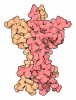
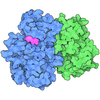
| Title | CryoEM structure of PI3Kalpha | |||||||||
 Map data Map data | ||||||||||
 Sample Sample |
| |||||||||
 Keywords Keywords | PI3Kalapha / isoform selective / structure-based drug design. / CYTOSOLIC PROTEIN | |||||||||
| Function / homology |  Function and homology information Function and homology informationperinuclear endoplasmic reticulum membrane / regulation of toll-like receptor 4 signaling pathway / response to muscle inactivity / 1-phosphatidylinositol-3-kinase regulator activity / T follicular helper cell differentiation / phosphatidylinositol 3-kinase activator activity / positive regulation of endoplasmic reticulum unfolded protein response / phosphatidylinositol kinase activity / regulation of actin filament organization / phosphatidylinositol 3-kinase regulator activity ...perinuclear endoplasmic reticulum membrane / regulation of toll-like receptor 4 signaling pathway / response to muscle inactivity / 1-phosphatidylinositol-3-kinase regulator activity / T follicular helper cell differentiation / phosphatidylinositol 3-kinase activator activity / positive regulation of endoplasmic reticulum unfolded protein response / phosphatidylinositol kinase activity / regulation of actin filament organization / phosphatidylinositol 3-kinase regulator activity / response to butyrate / negative regulation of actin filament depolymerization / IRS-mediated signalling / phosphatidylinositol 3-kinase regulatory subunit binding / interleukin-18-mediated signaling pathway / PI3K events in ERBB4 signaling / neurotrophin TRKA receptor binding / positive regulation of focal adhesion disassembly / response to L-leucine / cellular response to hydrostatic pressure / cis-Golgi network / Activated NTRK2 signals through PI3K / transmembrane receptor protein tyrosine kinase adaptor activity / ErbB-3 class receptor binding / negative regulation of stress fiber assembly / Activated NTRK3 signals through PI3K / phosphatidylinositol 3-kinase complex, class IB / phosphatidylinositol 3-kinase complex / Co-stimulation by ICOS / TORC2 signaling / positive regulation of protein localization to membrane / Signaling by cytosolic FGFR1 fusion mutants / RHOD GTPase cycle / vasculature development / positive regulation of filopodium assembly / Nephrin family interactions / RHOF GTPase cycle / Signaling by LTK in cancer / 1-phosphatidylinositol-4-phosphate 3-kinase activity / Signaling by LTK / kinase activator activity / anoikis / RND1 GTPase cycle / RND2 GTPase cycle / phosphatidylinositol 3-kinase complex, class IA / MET activates PI3K/AKT signaling / RND3 GTPase cycle / PI3K/AKT activation / phosphatidylinositol-4,5-bisphosphate 3-kinase / 1-phosphatidylinositol-4,5-bisphosphate 3-kinase activity / growth hormone receptor signaling pathway / relaxation of cardiac muscle / natural killer cell mediated cytotoxicity / insulin binding / phosphatidylinositol 3-kinase / Signaling by ALK / phosphatidylinositol-3-phosphate biosynthetic process / cardiac muscle cell contraction / RHOV GTPase cycle / RHOB GTPase cycle / vascular endothelial growth factor signaling pathway / GP1b-IX-V activation signalling / 1-phosphatidylinositol-3-kinase activity / Erythropoietin activates Phosphoinositide-3-kinase (PI3K) / PI-3K cascade:FGFR3 / response to dexamethasone / PI-3K cascade:FGFR2 / PI-3K cascade:FGFR4 / PI-3K cascade:FGFR1 / RHOC GTPase cycle / RHOJ GTPase cycle / phosphatidylinositol phosphate biosynthetic process / Synthesis of PIPs at the plasma membrane / positive regulation of protein kinase activity / RHOU GTPase cycle / response to muscle stretch / phosphatidylinositol-mediated signaling / RET signaling / CDC42 GTPase cycle / T cell differentiation / negative regulation of anoikis / Interleukin-3, Interleukin-5 and GM-CSF signaling / PI3K events in ERBB2 signaling / RHOG GTPase cycle / insulin receptor substrate binding / PI3K Cascade / Role of LAT2/NTAL/LAB on calcium mobilization / RAC3 GTPase cycle / RHOA GTPase cycle / RAC2 GTPase cycle / Interleukin receptor SHC signaling / intercalated disc / Role of phospholipids in phagocytosis / CD28 dependent PI3K/Akt signaling / GAB1 signalosome / endothelial cell migration / enzyme-substrate adaptor activity / substrate adhesion-dependent cell spreading / protein kinase activator activity / negative regulation of macroautophagy Similarity search - Function | |||||||||
| Biological species |  Homo sapiens (human) Homo sapiens (human) | |||||||||
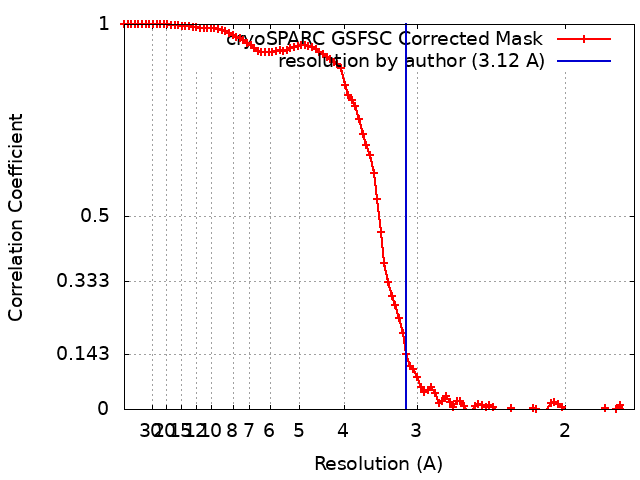
| Method | single particle reconstruction / cryo EM / Resolution: 3.12 Å | |||||||||
 Authors Authors | Valverde R / Shi H / Holliday M / Sun M | |||||||||
| Funding support | 1 items
| |||||||||
 Citation Citation | Journal: Cancer Discov / Year: 2024 Title: Discovery and Clinical Proof-of-Concept of RLY-2608, a First-in-Class Mutant-Selective Allosteric PI3Kα Inhibitor That Decouples Antitumor Activity from Hyperinsulinemia. Authors: Andreas Varkaris / Ermira Pazolli / Hakan Gunaydin / Qi Wang / Levi Pierce / Alessandro A Boezio / Artemisa Bulku / Lucian DiPietro / Cary Fridrich / Adam Frost / Fabrizio Giordanetto / ...Authors: Andreas Varkaris / Ermira Pazolli / Hakan Gunaydin / Qi Wang / Levi Pierce / Alessandro A Boezio / Artemisa Bulku / Lucian DiPietro / Cary Fridrich / Adam Frost / Fabrizio Giordanetto / Erika P Hamilton / Katherine Harris / Michael Holliday / Tamieka L Hunter / Amanda Iskandar / Yongli Ji / Alexandre Larivée / Jonathan R LaRochelle / André Lescarbeau / Fabien Llambi / Brenda Lormil / Mary M Mader / Brenton G Mar / Iain Martin / Thomas H McLean / Klaus Michelsen / Yakov Pechersky / Erika Puente-Poushnejad / Kevin Raynor / Dipali Rogala / Ramin Samadani / Alison M Schram / Kelley Shortsleeves / Sweta Swaminathan / Shahein Tajmir / Gege Tan / Yong Tang / Roberto Valverde / Bryan Wehrenberg / Jeremy Wilbur / Bret R Williams / Hongtao Zeng / Hanmo Zhang / W Patrick Walters / Beni B Wolf / David E Shaw / Donald A Bergstrom / James Watters / James S Fraser / Pascal D Fortin / D Randal Kipp /   Abstract: PIK3CA (PI3Kα) is a lipid kinase commonly mutated in cancer, including ∼40% of hormone receptor-positive breast cancer. The most frequently observed mutants occur in the kinase and helical domains. ...PIK3CA (PI3Kα) is a lipid kinase commonly mutated in cancer, including ∼40% of hormone receptor-positive breast cancer. The most frequently observed mutants occur in the kinase and helical domains. Orthosteric PI3Kα inhibitors suffer from poor selectivity leading to undesirable side effects, most prominently hyperglycemia due to inhibition of wild-type (WT) PI3Kα. Here, we used molecular dynamics simulations and cryo-electron microscopy to identify an allosteric network that provides an explanation for how mutations favor PI3Kα activation. A DNA-encoded library screen leveraging electron microscopy-optimized constructs, differential enrichment, and an orthosteric-blocking compound led to the identification of RLY-2608, a first-in-class allosteric mutant-selective inhibitor of PI3Kα. RLY-2608 inhibited tumor growth in PIK3CA-mutant xenograft models with minimal impact on insulin, a marker of dysregulated glucose homeostasis. RLY-2608 elicited objective tumor responses in two patients diagnosed with advanced hormone receptor-positive breast cancer with kinase or helical domain PIK3CA mutations, with no observed WT PI3Kα-related toxicities. SIGNIFICANCE: Treatments for PIK3CA-mutant cancers are limited by toxicities associated with the inhibition of WT PI3Kα. Molecular dynamics, cryo-electron microscopy, and DNA-encoded libraries were ...SIGNIFICANCE: Treatments for PIK3CA-mutant cancers are limited by toxicities associated with the inhibition of WT PI3Kα. Molecular dynamics, cryo-electron microscopy, and DNA-encoded libraries were used to develop RLY-2608, a first-in-class inhibitor that demonstrates mutant selectivity in patients. This marks the advance of clinical mutant-selective inhibition that overcomes limitations of orthosteric PI3Kα inhibitors. See related commentary by Gong and Vanhaesebroeck, p. 204 . See related article by Varkaris et al., p. 227 . This article is featured in Selected Articles from This Issue, p. 201. | |||||||||
| History |
|
- Structure visualization
| Supplemental images |
|---|

- Downloads & links
-EMDB archive
| Map data | emd_41617.map.gz | 3.6 MB | EMDB map data format | |
|---|---|---|---|---|
| Header (meta data) | emd-41617-v30.xmlemd-41617.xml | 28.6 KB 28.6 KB | Display Display | EMDB header |
| FSC (resolution estimation) | emd_41617_fsc.xml | 9.5 KB | Display | FSC data file |
| Images |  emd_41617.png emd_41617.png | 69.8 KB | ||
| Filedesc metadata | emd-41617.cif.gz | 8.3 KB | ||
| Others | emd_41617_additional_1.map.gzemd_41617_half_map_1.map.gzemd_41617_half_map_2.map.gz | 81.7 MB 84.5 MB 84.5 MB | ||
| Archive directory |  https://data.pdbj.org/pub/emdb/structures/EMD-41617ftp://data.pdbj.org/pub/emdb/structures/EMD-41617 https://data.pdbj.org/pub/emdb/structures/EMD-41617ftp://data.pdbj.org/pub/emdb/structures/EMD-41617 | HTTPS FTP |
-Related structure data
| Related structure data | 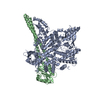 8tu6MC 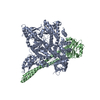 8ts7C  8ts8C  8ts9C 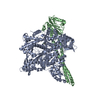 8tsaC 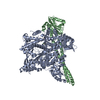 8tsbC  8tscC 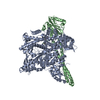 8tsdC M: atomic model generated by this map C: citing same article ( |
|---|---|
| Similar structure data |
-Links
| EMDB pages | EMDB (EBI/PDBe) / EMDataResource |
|---|---|
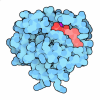
| Related items in Molecule of the Month |


-Map
| File | Download / File: emd_41617.map.gz / Format: CCP4 / Size: 91.1 MB / Type: IMAGE STORED AS FLOATING POINT NUMBER (4 BYTES) | ||||||||||||||||||||||||||||||||||||
|---|---|---|---|---|---|---|---|---|---|---|---|---|---|---|---|---|---|---|---|---|---|---|---|---|---|---|---|---|---|---|---|---|---|---|---|---|---|
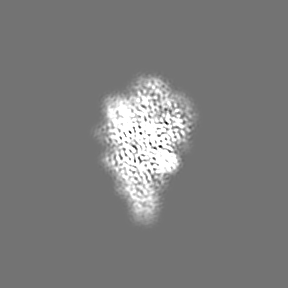
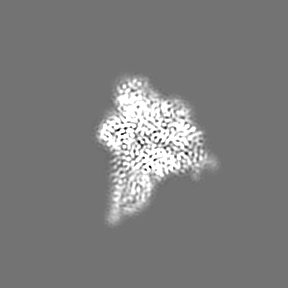
| Projections & slices | Image control
Images are generated by Spider. | ||||||||||||||||||||||||||||||||||||
| Voxel size | X=Y=Z: 0.819 Å | ||||||||||||||||||||||||||||||||||||
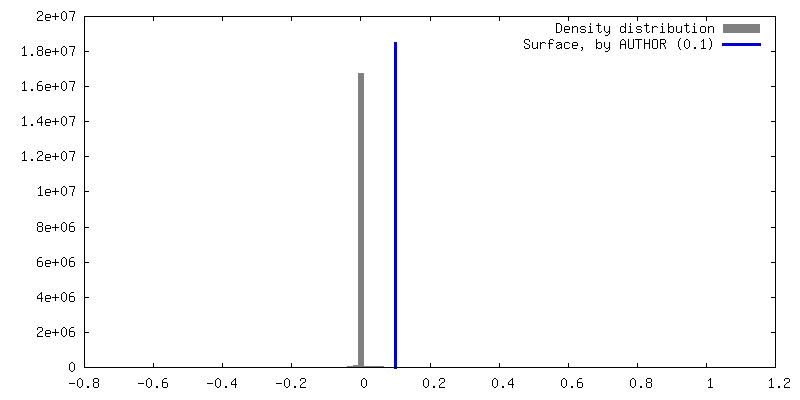
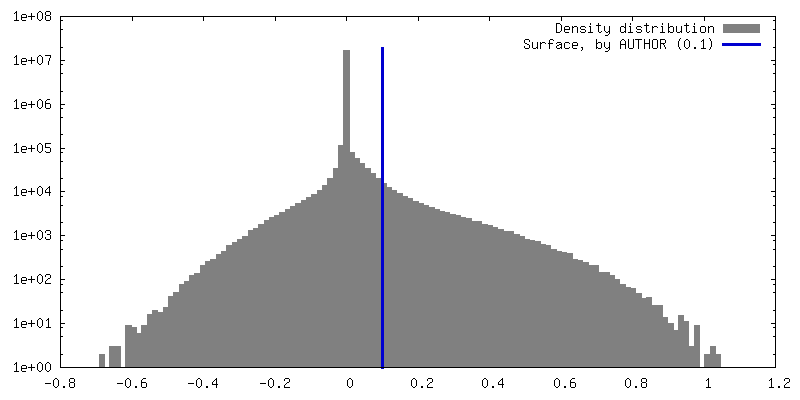
| Density |
| ||||||||||||||||||||||||||||||||||||
| Symmetry | Space group: 1 | ||||||||||||||||||||||||||||||||||||
| Details | EMDB XML:
|
 Z (Sec.)
 Y (Row.)
 X (Col.)
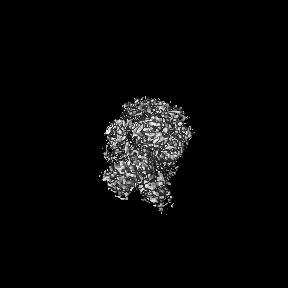
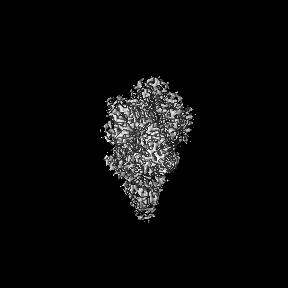
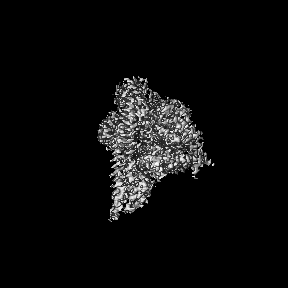

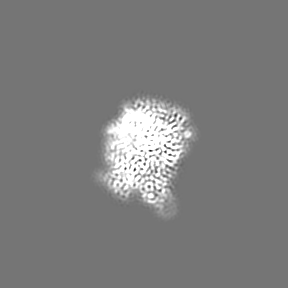




-Supplemental data
-Additional map: #1
| File | emd_41617_additional_1.map | ||||||||||||
|---|---|---|---|---|---|---|---|---|---|---|---|---|---|
| Projections & Slices |
| ||||||||||||
| Density Histograms |


-Half map: #2
| File | emd_41617_half_map_1.map | ||||||||||||
|---|---|---|---|---|---|---|---|---|---|---|---|---|---|
| Projections & Slices |
| ||||||||||||
| Density Histograms |


-Half map: #1
| File | emd_41617_half_map_2.map | ||||||||||||
|---|---|---|---|---|---|---|---|---|---|---|---|---|---|
| Projections & Slices |
| ||||||||||||
| Density Histograms |


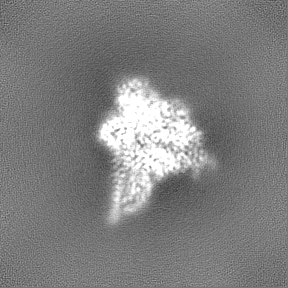


- Sample components
-Entire : PI3Kalpha
| Entire | Name: PI3Kalpha |
|---|---|
| Components |
|
-Supramolecule #1: PI3Kalpha
| Supramolecule | Name: PI3Kalpha / type: complex / ID: 1 / Parent: 0 / Macromolecule list: all |
|---|---|
| Source (natural) | Organism: Homo sapiens (human) |
| Molecular weight | Theoretical: 850 KDa |
-Supramolecule #2: p110
| Supramolecule | Name: p110 / type: complex / ID: 2 / Parent: 1 / Macromolecule list: #1 |
|---|---|
| Source (natural) | Organism: Homo sapiens (human) |
-Supramolecule #3: p85
| Supramolecule | Name: p85 / type: complex / ID: 3 / Parent: 1 / Macromolecule list: #2 |
|---|---|
| Source (natural) | Organism: Homo sapiens (human) |
-Macromolecule #1: Phosphatidylinositol 4,5-bisphosphate 3-kinase catalytic subunit ...
| Macromolecule | Name: Phosphatidylinositol 4,5-bisphosphate 3-kinase catalytic subunit alpha isoform type: protein_or_peptide / ID: 1 / Number of copies: 1 / Enantiomer: LEVO |
|---|---|
| Source (natural) | Organism: Homo sapiens (human) |
| Molecular weight | Theoretical: 126.301992 KDa |
| Recombinant expression | Organism: Homo sapiens (human) |
| Sequence | String: MHHHHHHGSL EVLFQGPPPR PSSGELWGIH LMPPRILVEC LLPNGMIVTL ECLREATLIT IKHELFKEAR KYPLHQLLQD ESSYIFVSV TQEAEREEFF DETRRLCDLR LFQPFLKVIE PVGNREEKIL NREIGFAIGM PVCEFDMVKD PEVQDFRRNI L NVCKEAVD ...String: MHHHHHHGSL EVLFQGPPPR PSSGELWGIH LMPPRILVEC LLPNGMIVTL ECLREATLIT IKHELFKEAR KYPLHQLLQD ESSYIFVSV TQEAEREEFF DETRRLCDLR LFQPFLKVIE PVGNREEKIL NREIGFAIGM PVCEFDMVKD PEVQDFRRNI L NVCKEAVD LRDLNSPHSR AMYVYPPNVE SSPELPKHIY NKLDKGQIIV VIWVIVSPNN DKQKYTLKIN HDCVPEQVIA EA IRKKTRS MLLSSEQLKL CVLEYQGKYI LKVCGCDEYF LEKYPLSQYK YIRSCIMLGR MPNLMLMAKE SLYSQLPMDC FTM PSYSRR ISTATPYMNG ETSTKSLWVI NSALRIKILC ATYVNVNIRD IDKIYVRTGI YHGGEPLCDN VNTQRVPCSN PRWN EWLNY DIYIPDLPRA ARLCLSICSV KGRKGAKEEH CPLAWGNINL FDYTDTLVSG KMALNLWPVP HGLEDLLNPI GVTGS NPNK ETPCLELEFD WFSSVVKFPD MSVIEEHANW SVSREAGFSY SHAGLSNRLA RDNELRENDK EQLKAISTRD PLSEIT EQE KDFLWSHRHY CVTIPEILPK LLLSVKWNSR DEVAQMYCLV KDWPPIKPEQ AMELLDCNYP DPMVRGFAVR CLEKYLT DD KLSQYLIQLV QVLKYEQYLD NLLVRFLLKK ALTNQRIGHF FFWHLKSEMH NKTVSQRFGL LLESYCRACG MYLKHLNR Q VEAMEKLINL TDILKQEKKD ETQKVQMKFL VEQMRRPDFM DALQGFLSPL NPAHQLGNLR LEECRIMSSA KRPLWLNWE NPDIMSELLF QNNEIIFKNG DDLRQDMLTL QIIRIMENIW QNQGLDLRML PYGCLSIGDC VGLIEVVRNS HTIMQIQCKG GLKGALQFN SHTLHQWLKD KNKGEIYDAA IDLFTRSCAG YCVATFILGI GDRHNSNIMV KDDGQLFHID FGHFLDHKKK K FGYKRERV PFVLTQDFLI VISKGAQECT KTREFERFQE MCYKAYLAIR QHANLFINLF SMMLGSGMPE LQSFDDIAYI RK TLALDKT EQEALEYFMK QMNDAHHGGW TTKMDWIFHT IKQHALN UniProtKB: Phosphatidylinositol 4,5-bisphosphate 3-kinase catalytic subunit alpha isoform |
-Macromolecule #2: Phosphatidylinositol 3-kinase regulatory subunit alpha
| Macromolecule | Name: Phosphatidylinositol 3-kinase regulatory subunit alpha type: protein_or_peptide / ID: 2 / Number of copies: 1 / Enantiomer: LEVO |
|---|---|
| Source (natural) | Organism: Homo sapiens (human) |
| Molecular weight | Theoretical: 83.710281 KDa |
| Recombinant expression | Organism: Homo sapiens (human) |
| Sequence | String: MSAEGYQYRA LYDYKKEREE DIDLHLGDIL TVNKGSLVAL GFSDGQEARP EEIGWLNGYN ETTGERGDFP GTYVEYIGRK KISPPTPKP RPPRPLPVAP GSSKTEADVE QQALTLPDLA EQFAPPDIAP PLLIKLVEAI EKKGLECSTL YRTQSSSNLA E LRQLLDCD ...String: MSAEGYQYRA LYDYKKEREE DIDLHLGDIL TVNKGSLVAL GFSDGQEARP EEIGWLNGYN ETTGERGDFP GTYVEYIGRK KISPPTPKP RPPRPLPVAP GSSKTEADVE QQALTLPDLA EQFAPPDIAP PLLIKLVEAI EKKGLECSTL YRTQSSSNLA E LRQLLDCD TPSVDLEMID VHVLADAFKR YLLDLPNPVI PAAVYSEMIS LAPEVQSSEE YIQLLKKLIR SPSIPHQYWL TL QYLLKHF FKLSQTSSKN LLNARVLSEI FSPMLFRFSA ASSDNTENLI KVIEILISTE WNERQPAPAL PPKPPKPTTV ANN GMNNNM SLQDAEWYWG DISREEVNEK LRDTADGTFL VRDASTKMHG DYTLTLRKGG NNKLIKIFHR DGKYGFSDPL TFSS VVELI NHYRNESLAQ YNPKLDVKLL YPVSKYQQDQ VVKEDNIEAV GKKLHEYNTQ FQEKSREYDR LYEEYTRTSQ EIQMK RTAI EAFNETIKIF EEQCQTQERY SKEYIEKFKR EGNEKEIQRI MHNYDKLKSR ISEIIDSRRR LEEDLKKQAA EYREID KRM NSIKPDLIQL RKTRDQYLMW LTQKGVRQKK LNEWLGNENT EDQYSLVEDD EDLPHHDEKT WNVGSSNRNK AENLLRG KR DGTFLVRESS KQGCYACSVV VDGEVKHCVI NKTATGYGFA EPYNLYSSLK ELVLHYQHTS LVQHNDSLNV TLAYPVYA Q QRR UniProtKB: Phosphatidylinositol 3-kinase regulatory subunit alpha |
-Experimental details
-Structure determination
| Method | cryo EM |
|---|---|
 Processing Processing | single particle reconstruction |
| Aggregation state | particle |
-Sample preparation
| Concentration | 0.35 mg/mL |
|---|---|
| Buffer | pH: 7.5 |
| Grid | Model: UltrAuFoil R1.2/1.3 / Material: GOLD / Mesh: 300 / Support film - Material: GOLD / Support film - topology: HOLEY / Support film - Film thickness: 50 / Pretreatment - Type: GLOW DISCHARGE / Pretreatment - Time: 90 sec. |
| Vitrification | Cryogen name: ETHANE |
| Details | The sample was purified as a heterodimer and was monodisperse. |
- Electron microscopy
| Microscope | FEI TITAN KRIOS |
|---|---|
| Specialist optics | Energy filter - Name: GIF Bioquantum / Energy filter - Slit width: 20 eV |
| Image recording | #0 - Image recording ID: 1 / #0 - Film or detector model: GATAN K3 (6k x 4k) / #0 - Detector mode: COUNTING / #0 - Number grids imaged: 3 / #0 - Number real images: 6866 / #0 - Average exposure time: 2.68 sec. / #0 - Average electron dose: 60.0 e/Å2 #0 - Details: Grids were prepared with 0.02% CTAB. Images were collected in movie mode at 23 frames per second. #1 - Image recording ID: 2 / #1 - Film or detector model: GATAN K3 (6k x 4k) / #1 - Number grids imaged: 1 / #1 - Number real images: 2058 / #1 - Average exposure time: 2.68 sec. / #1 - Average electron dose: 60.0 e/Å2 #1 - Details: Images were collected in movie mode at 23 frames per second. |
| Electron beam | Acceleration voltage: 300 kV / Electron source:  FIELD EMISSION GUN FIELD EMISSION GUN |
| Electron optics | C2 aperture diameter: 100.0 µm / Illumination mode: FLOOD BEAM / Imaging mode: BRIGHT FIELD / Cs: 2.7 mm / Nominal defocus max: 2.0 µm / Nominal defocus min: 1.0 µm / Nominal magnification: 105000 |
| Sample stage | Specimen holder model: FEI TITAN KRIOS AUTOGRID HOLDER / Cooling holder cryogen: NITROGEN |
| Experimental equipment |  Model: Titan Krios / Image courtesy: FEI Company |