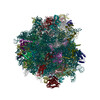
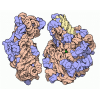
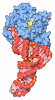
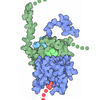
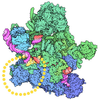
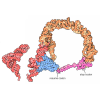
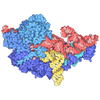
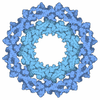
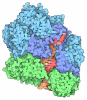
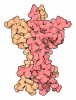
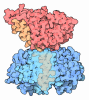
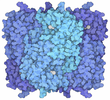
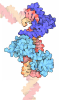
- EMDB-37991: Dormant Ribosome with eIF5A,eEF2 and SERBP1 -
+
Open data
ID or keywords:
Loading...
-
Basic information
Entry
Database: EMDB / ID: EMD-37991
Title
Dormant Ribosome with eIF5A,eEF2 and SERBP1
Map data
Sample
Complex: Dormant Ribosome
Keywords
Ribosome / eEF2 / eIF5A
Function / homology
Function and homology information
Synthesis of diphthamide-EEF2 / translation at postsynapse / PML body organization / Hypusine synthesis from eIF5A-lysine / annulate lamellae / glial cell proliferation / skeletal muscle cell differentiation / positive regulation of translational elongation / ribosome hibernation / translation elongation factor binding ...Synthesis of diphthamide-EEF2 / translation at postsynapse / PML body organization / Hypusine synthesis from eIF5A-lysine / annulate lamellae / glial cell proliferation / skeletal muscle cell differentiation / positive regulation of translational elongation / ribosome hibernation / translation elongation factor binding / response to folic acid / SUMO binding / male meiosis I / translation at presynapse / positive regulation of cytoplasmic translation / response to insecticide / regulation of translation involved in cellular response to UV / eukaryotic 80S initiation complex / ribosomal protein import into nucleus / negative regulation of endoplasmic reticulum unfolded protein response / regulation of G1 to G0 transition / positive regulation of intrinsic apoptotic signaling pathway in response to DNA damage by p53 class mediator / oxidized pyrimidine DNA binding / response to TNF agonist / positive regulation of base-excision repair / protein-DNA complex disassembly / positive regulation of intrinsic apoptotic signaling pathway in response to DNA damage / positive regulation of respiratory burst involved in inflammatory response / positive regulation of gastrulation / regulation of adenylate cyclase-activating G protein-coupled receptor signaling pathway / protein tyrosine kinase inhibitor activity / G1 to G0 transition / IRE1-RACK1-PP2A complex / positive regulation of Golgi to plasma membrane protein transport / TNFR1-mediated ceramide production / negative regulation of formation of translation preinitiation complex / positive regulation of ubiquitin-protein transferase activity / GAIT complex / nucleolus organization / positive regulation of DNA-templated transcription initiation / negative regulation of RNA splicing / negative regulation of DNA repair / TORC2 complex binding / positive regulation of DNA damage response, signal transduction by p53 class mediator / erythrocyte homeostasis / supercoiled DNA binding / regulation of establishment of cell polarity / cysteine-type endopeptidase activator activity involved in apoptotic process / oxidized purine DNA binding / NF-kappaB complex / cytoplasmic translational initiation / rRNA modification in the nucleus and cytosol / negative regulation of intrinsic apoptotic signaling pathway in response to hydrogen peroxide / negative regulation of phagocytosis / negative regulation of bicellular tight junction assembly / ubiquitin-like protein conjugating enzyme binding / Uptake and function of diphtheria toxin / cytoplasmic side of rough endoplasmic reticulum membrane / Formation of the ternary complex, and subsequently, the 43S complex / laminin receptor activity / lncRNA binding / negative regulation of myoblast fusion / ion channel inhibitor activity / positive regulation of mitochondrial depolarization / protein kinase A binding / Ribosomal scanning and start codon recognition / Translation initiation complex formation / negative regulation of Wnt signaling pathway / fibroblast growth factor binding / Protein hydroxylation / TOR signaling / negative regulation of translational frameshifting / BH3 domain binding / iron-sulfur cluster binding / monocyte chemotaxis / PELO:HBS1L and ABCE1 dissociate a ribosome on a non-stop mRNA / nuclear pore / mTORC1-mediated signalling / gastrulation / SARS-CoV-1 modulates host translation machinery / regulation of cell division / protein localization to nucleus / positive regulation of GTPase activity / translational elongation / Peptide chain elongation / cellular response to ethanol / protein targeting / Selenocysteine synthesis / Formation of a pool of free 40S subunits / negative regulation of protein binding / positive regulation of intrinsic apoptotic signaling pathway by p53 class mediator / protein serine/threonine kinase inhibitor activity / negative regulation of respiratory burst involved in inflammatory response / U6 snRNA binding / Eukaryotic Translation Termination / Dengue Virus Attachment and Entry / negative regulation of ubiquitin-dependent protein catabolic process / ubiquitin ligase inhibitor activity / SRP-dependent cotranslational protein targeting to membrane / Response of EIF2AK4 (GCN2) to amino acid deficiency Similarity search - Function
Intracellular hyaluronan-binding protein 4, N-terminal domain / Intracellular hyaluronan-binding protein 4 N-terminal / Translation elongation factor, IF5A, hypusine site / Eukaryotic initiation factor 5A hypusine signature. / Eukaryotic elongation factor 5A hypusine, DNA-binding OB fold / Hyaluronan / mRNA binding family / : / Translation initiation factor 5A-like, N-terminal / Translation elongation factor, IF5A C-terminal / Eukaryotic elongation factor 5A hypusine, DNA-binding OB fold ...Intracellular hyaluronan-binding protein 4, N-terminal domain / Intracellular hyaluronan-binding protein 4 N-terminal / Translation elongation factor, IF5A, hypusine site / Eukaryotic initiation factor 5A hypusine signature. / Eukaryotic elongation factor 5A hypusine, DNA-binding OB fold / Hyaluronan / mRNA binding family / : / Translation initiation factor 5A-like, N-terminal / Translation elongation factor, IF5A C-terminal / Eukaryotic elongation factor 5A hypusine, DNA-binding OB fold / Translation elongation factor IF5A-like / RNA binding protein HABP4/SERBP1 / Hyaluronan/mRNA-binding protein / Hyaluronan / mRNA binding family / Elongation Factor G, domain II / Elongation Factor G, domain III / Translation elongation factor EFG/EF2, domain IV / Elongation factor G, domain IV / Elongation factor G, domain IV / 40S ribosomal protein SA / Elongation factor G C-terminus / Elongation factor EFG, domain V-like / Elongation factor G C-terminus / Ribosomal protein L6, N-terminal / Ribosomal protein L6, N-terminal domain / 40S ribosomal protein SA, C-terminal domain / 40S ribosomal protein SA C-terminus / Ubiquitin-like protein FUBI / EF-G domain III/V-like / Ribosomal protein L30e / Ribosomal protein L28e / Ribosomal L15/L27a, N-terminal / Tr-type G domain, conserved site / Translational (tr)-type guanine nucleotide-binding (G) domain signature. / : / Ribosomal L28e/Mak16 / Ribosomal L28e protein family / Ribosomal protein L23 / Ribosomal protein L2, archaeal-type / Ribosomal protein L1, conserved site / Ribosomal protein L1 signature. / Ribosomal protein L1 / metallochaperone-like domain / TRASH domain / : / Ribosomal protein S26e signature. / Ribosomal protein L1, 3-layer alpha/beta-sandwich / Ribosomal protein L41 / Ribosomal protein L41 / Ribosomal protein L13e, conserved site / Ribosomal protein L13e signature. / Ribosomal protein S21e, conserved site / Ribosomal protein S21e signature. / Ribosomal protein L29e / Ribosomal L29e protein family / Translation elongation factor EFTu-like, domain 2 / Ribosomal protein S26e / Ribosomal protein S26e superfamily / Ribosomal protein S26e / Ribosomal protein L1-like / Ribosomal protein L1/ribosomal biogenesis protein / Ribosomal protein L1p/L10e family / Small (40S) ribosomal subunit Asc1/RACK1 / Ribosomal protein L27e, conserved site / Ribosomal protein L27e signature. / Ribosomal protein L22e / Ribosomal protein L22e superfamily / Ribosomal L22e protein family / Ribosomal protein L13e / Ribosomal protein L13e / : / Ribosomal protein L38e / Ribosomal protein L38e superfamily / Ribosomal L38e protein family / Ribosomal protein L6e signature. / Ribosomal protein S5, eukaryotic/archaeal / Ribosomal protein S21e / Ribosomal protein S21e superfamily / Ribosomal protein S21e / Ribosomal protein L19, eukaryotic / Ribosomal protein S19e, conserved site / Ribosomal protein S19e signature. / Ribosomal protein S2, eukaryotic / 60S ribosomal protein L18a/ L20, eukaryotes / Elongation factor Tu domain 2 / Ribosomal protein L10e, conserved site / 40S Ribosomal protein S10 / Ribosomal protein L10e signature. / Ribosomal protein L18/L18-A/B/e, conserved site / Ribosomal protein L18e signature. / Ribosomal protein L44e signature. / Plectin/S10, N-terminal / Ribosomal protein L24e, conserved site / Ribosomal protein L19/L19e conserved site / Plectin/S10 domain / Ribosomal protein L19e signature. / Ribosomal protein L24e signature. / Ribosomal protein L5 eukaryotic, C-terminal / Ribosomal L18 C-terminal region / Ribosomal protein L23/L25, N-terminal Similarity search - Domain/homology
Small ribosomal subunit protein eS17 / Small ribosomal subunit protein uS2 / Elongation factor 2 / Small ribosomal subunit protein uS5 / Large ribosomal subunit protein eL33 / Large ribosomal subunit protein uL30 / Large ribosomal subunit protein uL22 / Small ribosomal subunit protein uS3 / Large ribosomal subunit protein eL13 / Large ribosomal subunit protein uL6 ...Small ribosomal subunit protein eS17 / Small ribosomal subunit protein uS2 / Elongation factor 2 / Small ribosomal subunit protein uS5 / Large ribosomal subunit protein eL33 / Large ribosomal subunit protein uL30 / Large ribosomal subunit protein uL22 / Small ribosomal subunit protein uS3 / Large ribosomal subunit protein eL13 / Large ribosomal subunit protein uL6 / Large ribosomal subunit protein eL22 / Large ribosomal subunit protein uL4 / Small ribosomal subunit protein eS19 / Large ribosomal subunit protein uL3 / Large ribosomal subunit protein uL13 / Small ribosomal subunit protein eS27 / Large ribosomal subunit protein uL29 / Large ribosomal subunit protein uL15 / Large ribosomal subunit protein uL18 / Large ribosomal subunit protein eL21 / Large ribosomal subunit protein eL28 / Small ribosomal subunit protein uS4 / Small ribosomal subunit protein uS7 / Small ribosomal subunit protein eS10 / Large ribosomal subunit protein eL29 / Large ribosomal subunit protein eL34 / Large ribosomal subunit protein eL14 / Small ribosomal subunit protein uS10 / Small ribosomal subunit protein eS1 / Large ribosomal subunit protein uL24 / Large ribosomal subunit protein eL15 / Large ribosomal subunit protein eL27 / Large ribosomal subunit protein eL43 / Large ribosomal subunit protein eL37 / Small ribosomal subunit protein eS7 / Small ribosomal subunit protein eS8 / Small ribosomal subunit protein uS8 / Small ribosomal subunit protein uS9 / Small ribosomal subunit protein uS11 / Small ribosomal subunit protein uS12 / Small ribosomal subunit protein uS13 / Small ribosomal subunit protein uS14 / Small ribosomal subunit protein uS15 / Small ribosomal subunit protein uS17 / Large ribosomal subunit protein eL8 / Small ribosomal subunit protein eS4, X isoform / Large ribosomal subunit protein uL23 / Small ribosomal subunit protein eS6 / Large ribosomal subunit protein uL14 / Small ribosomal subunit protein uS19 / Small ribosomal subunit protein eS24 / Small ribosomal subunit protein eS25 / Small ribosomal subunit protein eS26 / Small ribosomal subunit protein eS28 / Ubiquitin-like FUBI-ribosomal protein eS30 fusion protein / Large ribosomal subunit protein eL30 / Large ribosomal subunit protein eL39 / Large ribosomal subunit protein eL31 / Large ribosomal subunit protein uL1 / Large ribosomal subunit protein eL32 / Large ribosomal subunit protein uL5 / Large ribosomal subunit protein uL2 / Small ribosomal subunit protein eS32 / Ubiquitin-ribosomal protein eL40 fusion protein / Large ribosomal subunit protein eL38 / Small ribosomal subunit protein eS21 / Eukaryotic translation initiation factor 5A-1 / Small ribosomal subunit protein RACK1 / Large ribosomal subunit protein eL24 / Large ribosomal subunit protein eL42 / Large ribosomal subunit protein eL19 / Large ribosomal subunit protein eL20 / Large ribosomal subunit protein eL6 / Large ribosomal subunit protein eL18 / SERPINE1 mRNA-binding protein 1 / Ribosomal protein uL16-like / Large ribosomal subunit protein eL36 Similarity search - Component
Biological species
Homo sapiens (human)
Method
single particle reconstruction / cryo EM / Resolution: 3.4 Å
National Natural Science Foundation of China (NSFC)
92169111
China
Shenzhen Science and Technology Program
JCYJ20220530115210023
China
National Natural Science Foundation of China (NSFC)
32100977
China
National Natural Science Foundation of China (NSFC)
32171200
China
Citation
Journal: Front Mol Biosci / Year: 2024 Title: Implication of Stm1 in the protection of eIF5A, eEF2 and tRNA through dormant ribosomes. Authors: Mengtan Du / Xin Li / Wanlin Dong / Fuxing Zeng / Abstract: Dormant ribosomes are typically associated with preservation factors to protect themselves from degradation under stress conditions. Stm1/SERBP1 is one such protein that anchors the 40S and 60S ... Dormant ribosomes are typically associated with preservation factors to protect themselves from degradation under stress conditions. Stm1/SERBP1 is one such protein that anchors the 40S and 60S subunits together. Several proteins and tRNAs bind to this complex as well, yet the molecular mechanisms remain unclear. Here, we reported the cryo-EM structures of five newly identified Stm1/SERBP1-bound ribosomes. These structures highlighted that eIF5A, eEF2, and tRNA might bind to dormant ribosomes under stress to avoid their own degradation, thus facilitating protein synthesis upon the restoration of growth conditions. In addition, Ribo-seq data analysis reflected the upregulation of nutrient, metabolism, and external-stimulus-related pathways in the strain, suggesting possible regulatory roles of Stm1. The knowledge generated from the present work will facilitate in better understanding the molecular mechanism of dormant ribosomes.
In the structure databanks used in Yorodumi, some data are registered as the other names, "COVID-19 virus" and "2019-nCoV". Here are the details of the virus and the list of structure data.
Jan 31, 2019. EMDB accession codes are about to change! (news from PDBe EMDB page)
EMDB accession codes are about to change! (news from PDBe EMDB page)
The allocation of 4 digits for EMDB accession codes will soon come to an end. Whilst these codes will remain in use, new EMDB accession codes will include an additional digit and will expand incrementally as the available range of codes is exhausted. The current 4-digit format prefixed with “EMD-” (i.e. EMD-XXXX) will advance to a 5-digit format (i.e. EMD-XXXXX), and so on. It is currently estimated that the 4-digit codes will be depleted around Spring 2019, at which point the 5-digit format will come into force.
The EM Navigator/Yorodumi systems omit the EMD- prefix.
Related info.:Q: What is EMD? / ID/Accession-code notation in Yorodumi/EM Navigator
Yorodumi is a browser for structure data from EMDB, PDB, SASBDB, etc.
This page is also the successor to EM Navigator detail page, and also detail information page/front-end page for Omokage search.
The word "yorodu" (or yorozu) is an old Japanese word meaning "ten thousand". "mi" (miru) is to see.
Related info.:EMDB / PDB / SASBDB / Comparison of 3 databanks / Yorodumi Search / Aug 31, 2016. New EM Navigator & Yorodumi / Yorodumi Papers / Jmol/JSmol / Function and homology information / Changes in new EM Navigator and Yorodumi
 Movie
Movie Controller


 Open data
 Basic information
 Map data
 Sample
 Keywords
 Function and homology information
 Homo sapiens (human)
 Authors
 China, 4 items
  Citation
 Structure visualization
 Downloads & links
 emd_37991.png
 http://ftp.pdbj.org/pub/emdb/structures/EMD-37991






 Z (Sec.)
 Y (Row.)
 X (Col.)




 Sample components
 Processing
 Electron microscopy
 FIELD EMISSION GUN