 Movie
Movie Controller


+ Open data

- Basic information
| Entry | Database: PDB / ID: 8y0x | |||||||||||||||
|---|---|---|---|---|---|---|---|---|---|---|---|---|---|---|---|---|
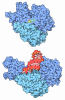
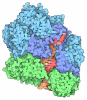
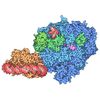
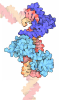
| Title | Dormant ribosome with SERBP1 | |||||||||||||||
 Components Components |
| |||||||||||||||
 Keywords Keywords | RIBOSOME / dormant ribosome / SERBP1 | |||||||||||||||
| Function / homology |  Function and homology information Function and homology informationSynthesis of diphthamide-EEF2 / translation at postsynapse / PML body organization / glial cell proliferation / skeletal muscle cell differentiation / ribosome hibernation / translation elongation factor binding / response to folic acid / SUMO binding / male meiosis I ...Synthesis of diphthamide-EEF2 / translation at postsynapse / PML body organization / glial cell proliferation / skeletal muscle cell differentiation / ribosome hibernation / translation elongation factor binding / response to folic acid / SUMO binding / male meiosis I / translation at presynapse / positive regulation of cytoplasmic translation / response to insecticide / regulation of translation involved in cellular response to UV / eukaryotic 80S initiation complex / ribosomal protein import into nucleus / negative regulation of endoplasmic reticulum unfolded protein response / regulation of G1 to G0 transition / positive regulation of intrinsic apoptotic signaling pathway in response to DNA damage by p53 class mediator / oxidized pyrimidine DNA binding / response to TNF agonist / positive regulation of base-excision repair / protein-DNA complex disassembly / positive regulation of intrinsic apoptotic signaling pathway in response to DNA damage / positive regulation of respiratory burst involved in inflammatory response / positive regulation of gastrulation / regulation of adenylate cyclase-activating G protein-coupled receptor signaling pathway / protein tyrosine kinase inhibitor activity / G1 to G0 transition / IRE1-RACK1-PP2A complex / positive regulation of Golgi to plasma membrane protein transport / TNFR1-mediated ceramide production / negative regulation of formation of translation preinitiation complex / positive regulation of ubiquitin-protein transferase activity / GAIT complex / nucleolus organization / positive regulation of DNA-templated transcription initiation / negative regulation of RNA splicing / negative regulation of DNA repair / TORC2 complex binding / positive regulation of DNA damage response, signal transduction by p53 class mediator / erythrocyte homeostasis / supercoiled DNA binding / regulation of establishment of cell polarity / cysteine-type endopeptidase activator activity involved in apoptotic process / oxidized purine DNA binding / NF-kappaB complex / cytoplasmic translational initiation / rRNA modification in the nucleus and cytosol / negative regulation of intrinsic apoptotic signaling pathway in response to hydrogen peroxide / negative regulation of phagocytosis / negative regulation of bicellular tight junction assembly / ubiquitin-like protein conjugating enzyme binding / Uptake and function of diphtheria toxin / cytoplasmic side of rough endoplasmic reticulum membrane / Formation of the ternary complex, and subsequently, the 43S complex / laminin receptor activity / lncRNA binding / negative regulation of myoblast fusion / ion channel inhibitor activity / positive regulation of mitochondrial depolarization / protein kinase A binding / Ribosomal scanning and start codon recognition / Translation initiation complex formation / negative regulation of Wnt signaling pathway / fibroblast growth factor binding / Protein hydroxylation / TOR signaling / negative regulation of translational frameshifting / BH3 domain binding / iron-sulfur cluster binding / monocyte chemotaxis / PELO:HBS1L and ABCE1 dissociate a ribosome on a non-stop mRNA / mTORC1-mediated signalling / gastrulation / SARS-CoV-1 modulates host translation machinery / regulation of cell division / protein localization to nucleus / positive regulation of GTPase activity / translational elongation / Peptide chain elongation / cellular response to ethanol / protein targeting / Selenocysteine synthesis / Formation of a pool of free 40S subunits / negative regulation of protein binding / positive regulation of intrinsic apoptotic signaling pathway by p53 class mediator / protein serine/threonine kinase inhibitor activity / negative regulation of respiratory burst involved in inflammatory response / Eukaryotic Translation Termination / Dengue Virus Attachment and Entry / negative regulation of ubiquitin-dependent protein catabolic process / ubiquitin ligase inhibitor activity / SRP-dependent cotranslational protein targeting to membrane / Response of EIF2AK4 (GCN2) to amino acid deficiency / response to ischemia / endonucleolytic cleavage to generate mature 3'-end of SSU-rRNA from (SSU-rRNA, 5.8S rRNA, LSU-rRNA) / Viral mRNA Translation / translation elongation factor activity / positive regulation of signal transduction by p53 class mediator Similarity search - Function | |||||||||||||||
| Biological species |  Homo sapiens (human) Homo sapiens (human) | |||||||||||||||
| Method | ELECTRON MICROSCOPY / single particle reconstruction / cryo EM / Resolution: 3.3 Å | |||||||||||||||
 Authors Authors | Du, M. / Zeng, F. | |||||||||||||||
| Funding support |  China, 4items China, 4items
| |||||||||||||||
 Citation Citation | Journal: Front Mol Biosci / Year: 2024 Title: Implication of Stm1 in the protection of eIF5A, eEF2 and tRNA through dormant ribosomes. Authors: Mengtan Du / Xin Li / Wanlin Dong / Fuxing Zeng / Abstract: Dormant ribosomes are typically associated with preservation factors to protect themselves from degradation under stress conditions. Stm1/SERBP1 is one such protein that anchors the 40S and 60S ... Dormant ribosomes are typically associated with preservation factors to protect themselves from degradation under stress conditions. Stm1/SERBP1 is one such protein that anchors the 40S and 60S subunits together. Several proteins and tRNAs bind to this complex as well, yet the molecular mechanisms remain unclear. Here, we reported the cryo-EM structures of five newly identified Stm1/SERBP1-bound ribosomes. These structures highlighted that eIF5A, eEF2, and tRNA might bind to dormant ribosomes under stress to avoid their own degradation, thus facilitating protein synthesis upon the restoration of growth conditions. In addition, Ribo-seq data analysis reflected the upregulation of nutrient, metabolism, and external-stimulus-related pathways in the strain, suggesting possible regulatory roles of Stm1. The knowledge generated from the present work will facilitate in better understanding the molecular mechanism of dormant ribosomes. | |||||||||||||||
| History |
|
- Structure visualization
| Structure viewer | Molecule: MolmilJmol/JSmol |
|---|
- Downloads & links
-Download
| PDBx/mmCIF format | 8y0x.cif.gz | 4.9 MB | Display | PDBx/mmCIF format |
|---|---|---|---|---|
| PDB format | pdb8y0x.ent.gz | Display | PDB format | |
| PDBx/mmJSON format | 8y0x.json.gz | Tree view | PDBx/mmJSON format | |
| Others |  Other downloads Other downloads |
-Validation report
| Arichive directory | https://data.pdbj.org/pub/pdb/validation_reports/y0/8y0xftp://data.pdbj.org/pub/pdb/validation_reports/y0/8y0x | HTTPS FTP |
|---|
-Related structure data
| Related structure data |  37992MC  8y0uC  8y0wC M: map data used to model this data C: citing same article ( |
|---|---|
| Similar structure data |


-Links
 PDBj
PDBj
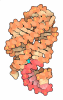
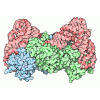
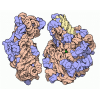
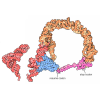
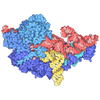
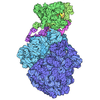
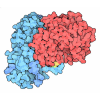
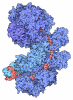

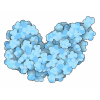
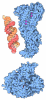
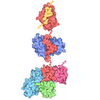
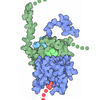


- Assembly
| Deposited unit | 
|
|---|---|
| 1 |
|
-Components
-RNA chain , 5 types, 5 molecules L5L7L8S2E
| #1: RNA chain | Mass: 1640222.125 Da / Num. of mol.: 1 / Source method: isolated from a natural source / Source: (natural) Homo sapiens (human) / Cell line: HEK293F / References: GenBank: 86475748 |
|---|---|
| #2: RNA chain | Mass: 38998.078 Da / Num. of mol.: 1 / Source method: isolated from a natural source / Source: (natural) Homo sapiens (human) / References: GenBank: 23898 |
| #3: RNA chain | Mass: 50449.812 Da / Num. of mol.: 1 / Source method: isolated from a natural source / Source: (natural) Homo sapiens (human) / References: GenBank: 555853 |
| #46: RNA chain | Mass: 602776.875 Da / Num. of mol.: 1 / Source method: isolated from a natural source / Source: (natural) Homo sapiens (human) / References: GenBank: 36162 |
| #48: RNA chain | Mass: 27379.225 Da / Num. of mol.: 1 / Source method: isolated from a natural source / Source: (natural) Homo sapiens (human) / References: GenBank: 2634358191 |
+60S ribosomal protein ... , 41 types, 41 molecules LALBLCLDLELFLGLHLILJLLLMLNLOLPLQLRLSLTLULVLWLXLYLZLaLbLcLdLe...
-Protein , 4 types, 4 molecules LmSSgCB
| #41: Protein | Mass: 14758.394 Da / Num. of mol.: 1 / Source method: isolated from a natural source / Source: (natural) Homo sapiens (human) / References: UniProt: P62987 |
|---|---|
| #47: Protein | Mass: 44341.781 Da / Num. of mol.: 1 / Source method: isolated from a natural source / Source: (natural) Homo sapiens (human) / References: UniProt: Q8NC51 |
| #69: Protein | Mass: 35115.652 Da / Num. of mol.: 1 / Source method: isolated from a natural source / Source: (natural) Homo sapiens (human) / References: UniProt: P63244 |
| #70: Protein | Mass: 95463.211 Da / Num. of mol.: 1 / Source method: isolated from a natural source / Source: (natural) Homo sapiens (human)References: UniProt: P13639, Hydrolases; Acting on acid anhydrides; Acting on GTP to facilitate cellular and subcellular movement |
+40S ribosomal protein ... , 30 types, 30 molecules SASBSNSOSPSQSRSSSTSUSVSWSXSYSZSaSbScSdSeSGSJSCSFSHSDSESISKSL
-Non-polymers , 2 types, 262 molecules 

| #81: Chemical | ChemComp-MG /  Mass: 24.305 Da / Num. of mol.: 255 / Source method: obtained synthetically / Formula: Mg / Feature type: SUBJECT OF INVESTIGATION Mass: 24.305 Da / Num. of mol.: 255 / Source method: obtained synthetically / Formula: Mg / Feature type: SUBJECT OF INVESTIGATION#82: Chemical | ChemComp-ZN /  Mass: 65.409 Da / Num. of mol.: 7 / Source method: obtained synthetically / Formula: Zn / Feature type: SUBJECT OF INVESTIGATION Mass: 65.409 Da / Num. of mol.: 7 / Source method: obtained synthetically / Formula: Zn / Feature type: SUBJECT OF INVESTIGATION |
|---|
-Details
| Has ligand of interest | Y |
|---|
-Experimental details
-Experiment
| Experiment | Method: ELECTRON MICROSCOPY |
|---|---|
| EM experiment | Aggregation state: PARTICLE / 3D reconstruction method: single particle reconstruction |
- Sample preparation
| Component | Name: dormant ribosome with SERBP1 / Type: RIBOSOME Details: dorminant ribosome purified by In vitro translation system Entity ID: #1-#80 / Source: NATURAL |
|---|---|
| Source (natural) | Organism: Homo sapiens (human) |
| Buffer solution | pH: 7.4 Details: 50mM HEPES, pH7.4, 100mM KoAc, 5mM Mg(OAc)2, 1mM DTT |
| Specimen | Embedding applied: NO / Shadowing applied: NO / Staining applied: NO / Vitrification applied: YES |
| Specimen support | Grid material: COPPER / Grid mesh size: 300 divisions/in. / Grid type: Quantifoil R1.2/1.3 |
| Vitrification | Instrument: FEI VITROBOT MARK II / Cryogen name: ETHANE / Humidity: 100 % / Chamber temperature: 277 K |
- Electron microscopy imaging
| Experimental equipment |  Model: Titan Krios / Image courtesy: FEI Company |
|---|---|
| Microscopy | Model: FEI TITAN KRIOS |
| Electron gun | Electron source:  FIELD EMISSION GUN / Accelerating voltage: 300 kV / Illumination mode: FLOOD BEAM FIELD EMISSION GUN / Accelerating voltage: 300 kV / Illumination mode: FLOOD BEAM |
| Electron lens | Mode: BRIGHT FIELD / Nominal defocus max: 2500 nm / Nominal defocus min: 1500 nm |
| Image recording | Electron dose: 30 e/Å2 / Film or detector model: GATAN K3 (6k x 4k) |
- Processing
| EM software |
| ||||||||||||||||||||||||
|---|---|---|---|---|---|---|---|---|---|---|---|---|---|---|---|---|---|---|---|---|---|---|---|---|---|
| CTF correction | Type: PHASE FLIPPING AND AMPLITUDE CORRECTION | ||||||||||||||||||||||||
| 3D reconstruction | Resolution: 3.3 Å / Resolution method: FSC 0.33 CUT-OFF / Num. of particles: 85947 / Symmetry type: POINT | ||||||||||||||||||||||||
| Refinement | Cross valid method: NONE Stereochemistry target values: GeoStd + Monomer Library + CDL v1.2 | ||||||||||||||||||||||||
| Displacement parameters | Biso mean: 97.66 Å2 | ||||||||||||||||||||||||
| Refine LS restraints |
|
