Journal: Nucleic Acids Res / Year: 2025 Title: Elucidation of multiple high-resolution states of human MutSβ by cryo-EM reveals interplay between ATP/ADP binding and heteroduplex DNA recognition. Authors: Jung-Hoon Lee / Maren Thomsen / Herwin Daub / Gabriel Thieulin-Pardo / Stefan Steinbacher / Agnieszka Sztyler / Vinay Dahiya / Tobias Neudegger / Celia Dominguez / Ravi R Iyer / Hilary A ...Authors: Jung-Hoon Lee / Maren Thomsen / Herwin Daub / Gabriel Thieulin-Pardo / Stefan Steinbacher / Agnieszka Sztyler / Vinay Dahiya / Tobias Neudegger / Celia Dominguez / Ravi R Iyer / Hilary A Wilkinson / Edith Monteagudo / Nikolay V Plotnikov / Dan P Felsenfeld / Tasir S Haque / Michael Finley / Julien Boudet / Thomas F Vogt / Brinda C Prasad / Abstract: Human and mouse genetic studies have demonstrated a role for DNA mismatch repair (MMR) molecular machines in modulating the rate of somatic expansion of the huntingtin (HTT) CAG repeats, and onset ...Human and mouse genetic studies have demonstrated a role for DNA mismatch repair (MMR) molecular machines in modulating the rate of somatic expansion of the huntingtin (HTT) CAG repeats, and onset and progression of Huntington's Disease (HD). MutSβ, a key component of the MMR pathway, is a heterodimeric protein of MSH2 and MSH3 that recognizes and initiates the repair of extrahelical DNA extrusions. Loss-of-function of mouse Msh3 and reduced-expression alleles of human MSH3 lead to slower rates of somatic expansion and delayed disease onset in humans, signifying MSH3 as a promising therapeutic target for HD. Here we report biochemical and cryo-electron microscopy analyses of human MutSβ, demonstrating MutSβ undergoes conformational changes induced by nucleotide and DNA binding. We present multiple conformations of MutSβ including the DNA-free MutSβ compatible with precisely complementary base-paired homoduplex DNA binding, two distinct structures of MutSβ bound to (CAG)2 DNA, a sliding clamp form and a DNA-unbound, ATP-bound conformation. Along with evidence for novel conformational states adopted by MutSβ to initiate the MMR cascade, these structures provide a foundation for structure-guided drug discovery.
In the structure databanks used in Yorodumi, some data are registered as the other names, "COVID-19 virus" and "2019-nCoV". Here are the details of the virus and the list of structure data.
Jan 31, 2019. EMDB accession codes are about to change! (news from PDBe EMDB page)
EMDB accession codes are about to change! (news from PDBe EMDB page)
The allocation of 4 digits for EMDB accession codes will soon come to an end. Whilst these codes will remain in use, new EMDB accession codes will include an additional digit and will expand incrementally as the available range of codes is exhausted. The current 4-digit format prefixed with “EMD-” (i.e. EMD-XXXX) will advance to a 5-digit format (i.e. EMD-XXXXX), and so on. It is currently estimated that the 4-digit codes will be depleted around Spring 2019, at which point the 5-digit format will come into force.
The EM Navigator/Yorodumi systems omit the EMD- prefix.
Related info.:Q: What is EMD? / ID/Accession-code notation in Yorodumi/EM Navigator
Yorodumi is a browser for structure data from EMDB, PDB, SASBDB, etc.
This page is also the successor to EM Navigator detail page, and also detail information page/front-end page for Omokage search.
The word "yorodu" (or yorozu) is an old Japanese word meaning "ten thousand". "mi" (miru) is to see.
Related info.:EMDB / PDB / SASBDB / Comparison of 3 databanks / Yorodumi Search / Aug 31, 2016. New EM Navigator & Yorodumi / Yorodumi Papers / Jmol/JSmol / Function and homology information / Changes in new EM Navigator and Yorodumi
 Movie
Movie Controller


 Open data
 Basic information
 Map data
 Sample
 Keywords
 Homo sapiens (human)
 Authors
 United States, 1 items
  Citation
 Structure visualization
 Downloads & links
 EMDB map data format
 emd_16975.png
 https://data.pdbj.org/pub/emdb/structures/EMD-16975


 Z (Sec.)
 Y (Row.)
 X (Col.)
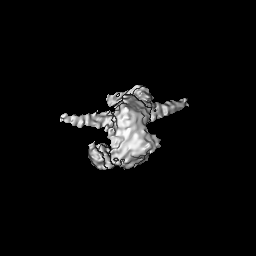
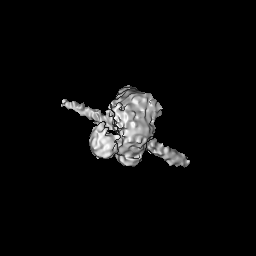
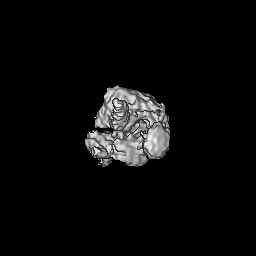

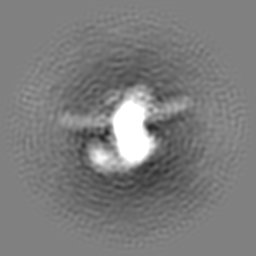
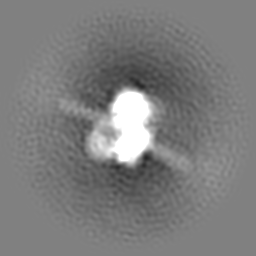
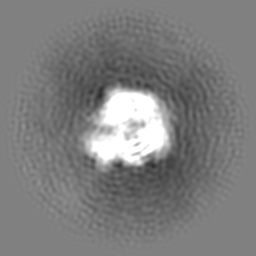







 Sample components
 Processing
 Electron microscopy
 FIELD EMISSION GUN
