Flagellar hook protein FlgE superfamily / Flagellar hook protein FlgE / Flagellar basal body protein FlaE D2 domain / Flagellar hook-basal body protein, FlgE/F/G / Flagellar hook-basal body protein, FlgE/F/G-like / : / Flagellar hook protein FlgE/F/G D1 domain / Flagellar basal body rod protein, conserved site / Flagella basal body rod proteins signature. / Flagellar basal body rod protein, N-terminal ...Flagellar hook protein FlgE superfamily / Flagellar hook protein FlgE / Flagellar basal body protein FlaE D2 domain / Flagellar hook-basal body protein, FlgE/F/G / Flagellar hook-basal body protein, FlgE/F/G-like / : / Flagellar hook protein FlgE/F/G D1 domain / Flagellar basal body rod protein, conserved site / Flagella basal body rod proteins signature. / Flagellar basal body rod protein, N-terminal / Flagellar basal-body/hook protein, C-terminal domain / Flagella basal body rod protein / Flagellar basal body rod FlgEFG protein C-terminal 類似検索 - ドメイン・相同性
Flagellar hook protein FlgE / Flagellar hook protein FlgE 類似検索 - 構成要素
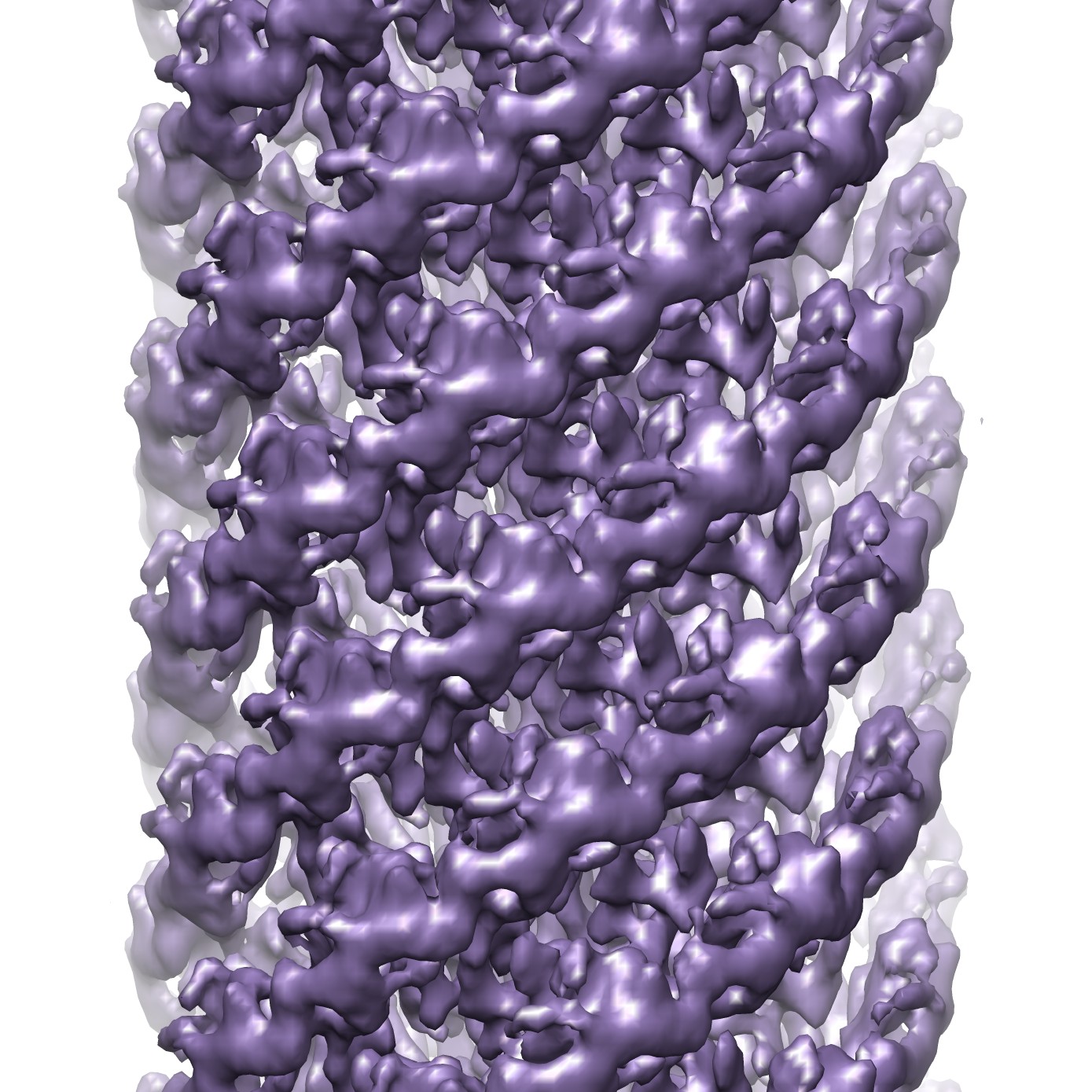
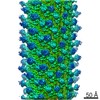
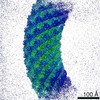
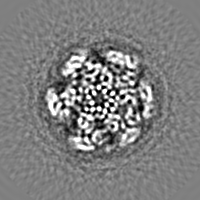
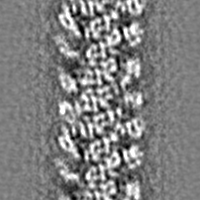
ジャーナル: Structure / 年: 2009 タイトル: Specific arrangement of alpha-helical coiled coils in the core domain of the bacterial flagellar hook for the universal joint function. 著者: Takashi Fujii / Takayuki Kato / Keiichi Namba / 要旨: The bacterial flagellar hook is a short, highly curved tubular structure connecting the rotary motor to the filament acting as a helical propeller. The bending flexibility of the hook allows it to ...The bacterial flagellar hook is a short, highly curved tubular structure connecting the rotary motor to the filament acting as a helical propeller. The bending flexibility of the hook allows it to work as a universal joint. A partial atomic model of the hook revealed a sliding intersubunit domain interaction along the protofilament to produce bending flexibility. However, it remained unclear how the tightly packed inner core domains can still permit axial extension and compression. We report advances in cryoEM image analysis for high-resolution, high-throughput structural analysis and a density map of the hook that reveals most of the secondary structures, including the terminal alpha helices forming a coiled coil. The orientations and axial packing interactions of these two alpha helices are distinctly different from those of the filament, allowing them to have a room for axial compression and extension for bending flexibility without impairing the mechanical stability of the hook.
 ムービー
ムービー コントローラー


 データを開く
 基本情報
基本情報 マップデータ
 試料
試料 キーワード
キーワード 機能・相同性情報
 Salmonella enterica subsp. enterica serovar Typhimurium (サルモネラ菌)
 データ登録者
 引用
引用
 構造の表示
構造の表示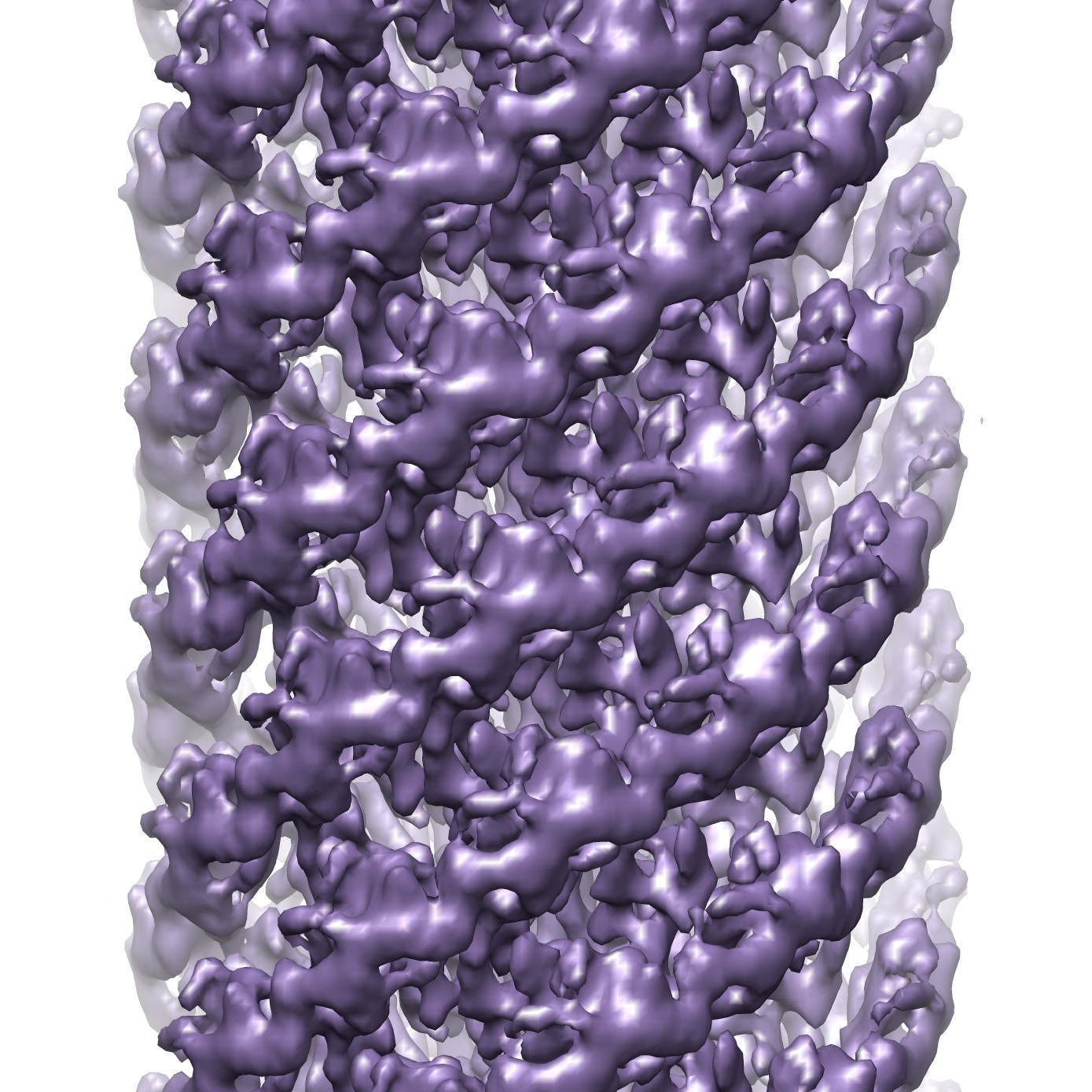
 ダウンロードとリンク
 1647.jpg
 http://ftp.pdbj.org/pub/emdb/structures/EMD-1647


 Z (Sec.)
 Y (Row.)
 X (Col.)





 試料の構成要素
 解析
解析 電子顕微鏡法
 FIELD EMISSION GUN