 Movie
Movie Controller


+ Open data

- Basic information
| Entry | Database: PDB / ID: 9wd5 | ||||||||||||||||||||||||||||||
|---|---|---|---|---|---|---|---|---|---|---|---|---|---|---|---|---|---|---|---|---|---|---|---|---|---|---|---|---|---|---|---|
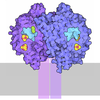
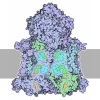
| Title | Cryo-EM structure of PSI-CpcL | ||||||||||||||||||||||||||||||
 Components Components |
| ||||||||||||||||||||||||||||||
 Keywords Keywords | PHOTOSYNTHESIS / Photosystem I | ||||||||||||||||||||||||||||||
| Function / homology |  Function and homology information Function and homology informationphycobilisome / photosystem I reaction center / photosystem I / photosynthetic electron transport in photosystem I / photosystem I / plasma membrane-derived thylakoid membrane / photosynthesis / 4 iron, 4 sulfur cluster binding / electron transfer activity / magnesium ion binding Similarity search - Function | ||||||||||||||||||||||||||||||
| Biological species |  Nostoc sp. PCC 7120 = FACHB-418 (bacteria) Nostoc sp. PCC 7120 = FACHB-418 (bacteria) | ||||||||||||||||||||||||||||||
| Method | ELECTRON MICROSCOPY / single particle reconstruction / cryo EM / Resolution: 2.98 Å | ||||||||||||||||||||||||||||||
 Authors Authors | Mao, Z.Y. / Li, Z.H. / Han, G.Y. | ||||||||||||||||||||||||||||||
| Funding support |  China, 1items China, 1items
| ||||||||||||||||||||||||||||||
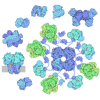
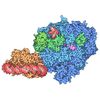
 Citation Citation | Journal: Proc Natl Acad Sci U S A / Year: 2026 Title: Structural insight of a photosystem I-CpcL-phycobilisome supercomplex from a cyanobacterium sp. PCC 7120. Authors: Zhiyuan Mao / Zhenhua Li / Xingyue Li / Liangliang Shen / Tingyun Kuang / Wenda Wang / Jian-Ren Shen / Guangye Han /  Abstract: Phycobilisomes (PBSs) are supramolecular pigment-protein complexes composed of phycobiliproteins and linker proteins, serving as the major light-harvesting complexes that capture and transfer light ...Phycobilisomes (PBSs) are supramolecular pigment-protein complexes composed of phycobiliproteins and linker proteins, serving as the major light-harvesting complexes that capture and transfer light energy to photosystem II (PSII) and photosystem I (PSI) in cyanobacteria and eukaryotic red algae. In cyanobacteria, a rod-type PBS that does not have a core is specifically connected to PSI by a linker protein CpcL to form a PSI-CpcL-PBS supercomplex. However, the mechanism of CpcL-PBS association to PSI remains unclear. Here, we report the cryoelectron microscopic structures of PSI-CpcL-PBS at 2.98 Å and CpcL-PBS at 2.93 Å resolution from a cyanobacterium sp. PCC 7120, respectively. CpcL-PBS is located on the stromal side of a PSI tetramer and exhibits a structure of three-layered PBS consisting of four linkers (CpcL, CpcC1, CpcC2, PecC) and 18 pairs of phycocyanin αβ monomers. The C-terminal transmembrane helix of CpcL inserts to the membrane and interacts with PsaA, PsaB, and PsaM of PSI at an interface I between two PSI monomers, enabling the formation of the PSI-CpcL-PBS supercomplex. The exact structure of protein subunits and arrangement of bilin and chlorophyll pigments are revealed, which provide a structural basis for the assembly of PSI-CpcL-PBS and possible excitation energy transfer pathways from antennas to PSI within this supercomplex, shedding light on the organization and attachment of CpcL-PBS in cyanobacterial thylakoids. | ||||||||||||||||||||||||||||||
| History |
|
- Structure visualization
| Structure viewer | Molecule: MolmilJmol/JSmol |
|---|
- Downloads & links
-Download
| PDBx/mmCIF format | 9wd5.cif.gz | 2.4 MB | Display | PDBx/mmCIF format |
|---|---|---|---|---|
| PDB format | pdb9wd5.ent.gz | 2.1 MB | Display | PDB format |
| PDBx/mmJSON format | 9wd5.json.gz | Tree view | PDBx/mmJSON format | |
| Others |  Other downloads Other downloads |
-Validation report
| Arichive directory | https://data.pdbj.org/pub/pdb/validation_reports/wd/9wd5ftp://data.pdbj.org/pub/pdb/validation_reports/wd/9wd5 | HTTPS FTP |
|---|
-Related structure data
| Related structure data |  65883MC  9w4jC  9w7kC M: map data used to model this data C: citing same article ( |
|---|---|
| Similar structure data |


-Links
 PDBj
PDBj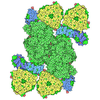
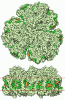
- Assembly
| Deposited unit | 
|
|---|---|
| 1 |
|
-Components
-Protein , 1 types, 1 molecules 1
| #1: Protein | Mass: 27232.633 Da / Num. of mol.: 1 / Source method: isolated from a natural source Source: (natural) Nostoc sp. PCC 7120 = FACHB-418 (bacteria)References: UniProt: P29988 |
|---|
-Photosystem I ... , 12 types, 48 molecules GgAaHhXxNnBbPpCcQqDdRrEeSsFfTt...
| #2: Protein | Mass: 83289.680 Da / Num. of mol.: 4 / Source method: isolated from a natural source Source: (natural) Nostoc sp. PCC 7120 = FACHB-418 (bacteria)References: UniProt: P58576, photosystem I #3: Protein/peptide | Mass: 4872.792 Da / Num. of mol.: 4 / Source method: isolated from a natural source Source: (natural) Nostoc sp. PCC 7120 = FACHB-418 (bacteria)References: UniProt: P58566 #4: Protein | Mass: 83457.016 Da / Num. of mol.: 4 / Source method: isolated from a natural source Source: (natural) Nostoc sp. PCC 7120 = FACHB-418 (bacteria)References: UniProt: P58565, photosystem I #5: Protein | Mass: 8825.206 Da / Num. of mol.: 4 / Source method: isolated from a natural source Source: (natural) Nostoc sp. PCC 7120 = FACHB-418 (bacteria)References: UniProt: P0A410, photosystem I #6: Protein | Mass: 15176.240 Da / Num. of mol.: 4 / Source method: isolated from a natural source Source: (natural) Nostoc sp. PCC 7120 = FACHB-418 (bacteria)References: UniProt: P58573 #7: Protein | Mass: 7897.051 Da / Num. of mol.: 4 / Source method: isolated from a natural source Source: (natural) Nostoc sp. PCC 7120 = FACHB-418 (bacteria)References: UniProt: P58575 #8: Protein | Mass: 17850.568 Da / Num. of mol.: 4 / Source method: isolated from a natural source Source: (natural) Nostoc sp. PCC 7120 = FACHB-418 (bacteria)References: UniProt: P58564 #9: Protein/peptide | Mass: 5499.422 Da / Num. of mol.: 4 / Source method: isolated from a natural source Source: (natural) Nostoc sp. PCC 7120 = FACHB-418 (bacteria)References: UniProt: P58568 #10: Protein | Mass: 8852.457 Da / Num. of mol.: 4 / Source method: isolated from a natural source Source: (natural) Nostoc sp. PCC 7120 = FACHB-418 (bacteria)References: UniProt: P58583 #11: Protein/peptide | Mass: 5066.925 Da / Num. of mol.: 4 / Source method: isolated from a natural source Source: (natural) Nostoc sp. PCC 7120 = FACHB-418 (bacteria)References: UniProt: P58560 #12: Protein | Mass: 18130.725 Da / Num. of mol.: 4 / Source method: isolated from a natural source Source: (natural) Nostoc sp. PCC 7120 = FACHB-418 (bacteria)References: UniProt: P58577 #13: Protein/peptide | Mass: 3538.204 Da / Num. of mol.: 4 / Source method: isolated from a natural source Source: (natural) Nostoc sp. PCC 7120 = FACHB-418 (bacteria)References: UniProt: Q8YNB0 |
|---|
-Non-polymers , 8 types, 518 molecules 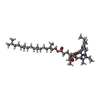
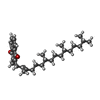
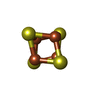
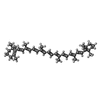
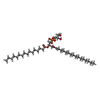
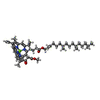
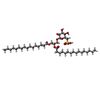
| #14: Chemical | ChemComp-CLA / 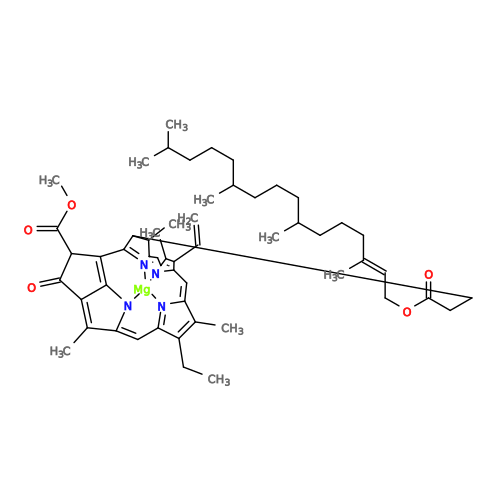 Mass: 893.489 Da / Num. of mol.: 376 / Source method: obtained synthetically / Formula: C55H72MgN4O5 / Feature type: SUBJECT OF INVESTIGATION Mass: 893.489 Da / Num. of mol.: 376 / Source method: obtained synthetically / Formula: C55H72MgN4O5 / Feature type: SUBJECT OF INVESTIGATION#15: Chemical | ChemComp-PQN / 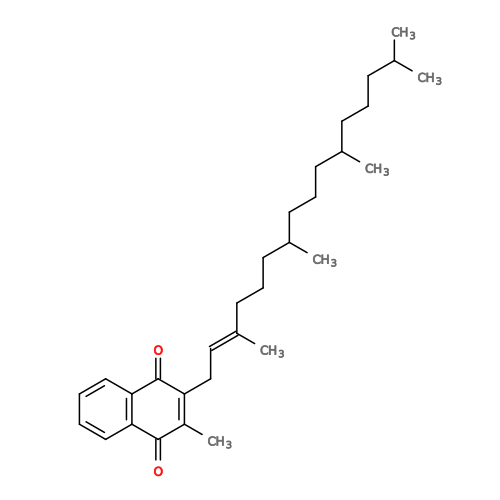 Mass: 450.696 Da / Num. of mol.: 8 / Source method: obtained synthetically / Formula: C31H46O2 / Feature type: SUBJECT OF INVESTIGATION Mass: 450.696 Da / Num. of mol.: 8 / Source method: obtained synthetically / Formula: C31H46O2 / Feature type: SUBJECT OF INVESTIGATION#16: Chemical | ChemComp-SF4 / 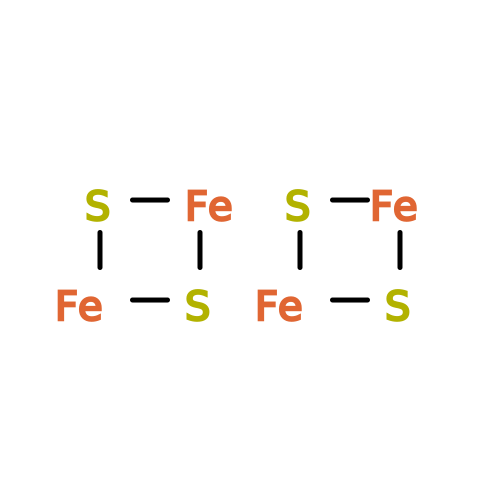 Mass: 351.640 Da / Num. of mol.: 12 / Source method: obtained synthetically / Formula: Fe4S4 / Feature type: SUBJECT OF INVESTIGATION Mass: 351.640 Da / Num. of mol.: 12 / Source method: obtained synthetically / Formula: Fe4S4 / Feature type: SUBJECT OF INVESTIGATION#17: Chemical | ChemComp-BCR / 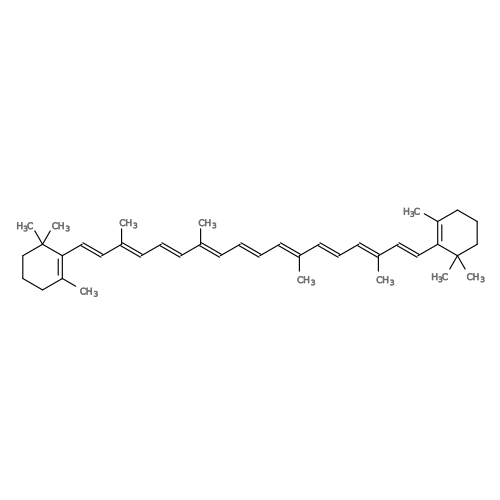 Mass: 536.873 Da / Num. of mol.: 92 / Source method: obtained synthetically / Formula: C40H56 / Feature type: SUBJECT OF INVESTIGATION Mass: 536.873 Da / Num. of mol.: 92 / Source method: obtained synthetically / Formula: C40H56 / Feature type: SUBJECT OF INVESTIGATION#18: Chemical | ChemComp-LHG / 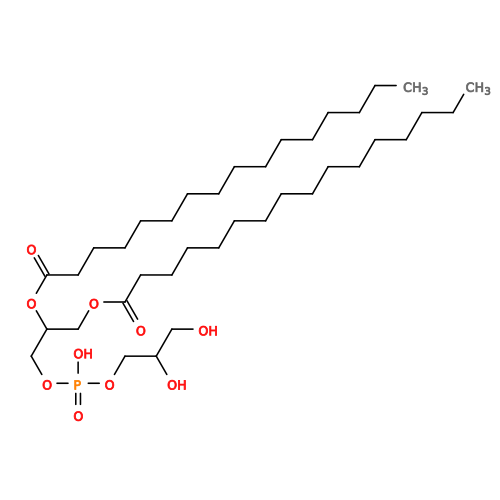 Mass: 722.970 Da / Num. of mol.: 12 / Source method: obtained synthetically / Formula: C38H75O10P / Feature type: SUBJECT OF INVESTIGATION / Comment: phospholipid*YM Mass: 722.970 Da / Num. of mol.: 12 / Source method: obtained synthetically / Formula: C38H75O10P / Feature type: SUBJECT OF INVESTIGATION / Comment: phospholipid*YM#19: Chemical | ChemComp-CL0 / 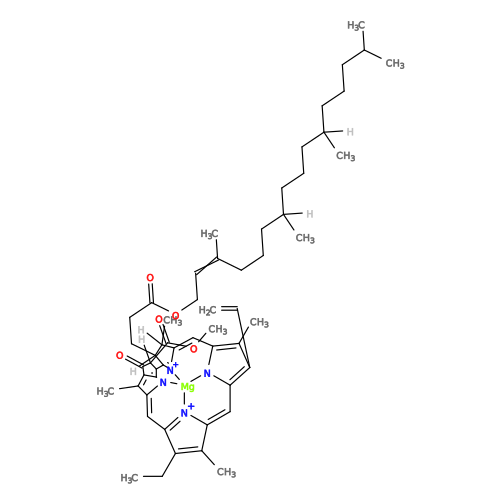 Mass: 893.489 Da / Num. of mol.: 4 / Source method: obtained synthetically / Formula: C55H72MgN4O5 / Feature type: SUBJECT OF INVESTIGATION Mass: 893.489 Da / Num. of mol.: 4 / Source method: obtained synthetically / Formula: C55H72MgN4O5 / Feature type: SUBJECT OF INVESTIGATION#20: Chemical | ChemComp-SQD / 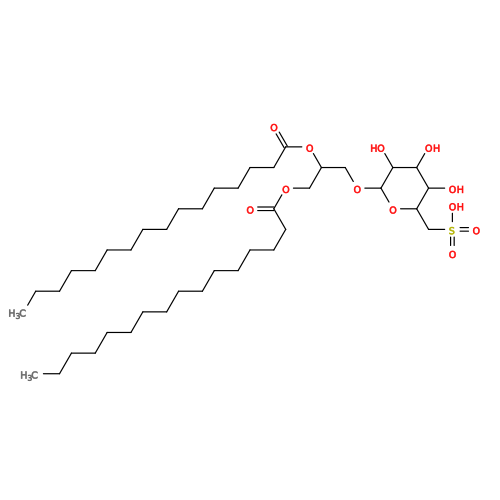 Mass: 795.116 Da / Num. of mol.: 8 / Source method: obtained synthetically / Formula: C41H78O12S / Feature type: SUBJECT OF INVESTIGATION Mass: 795.116 Da / Num. of mol.: 8 / Source method: obtained synthetically / Formula: C41H78O12S / Feature type: SUBJECT OF INVESTIGATION#21: Chemical | ChemComp-LMG / 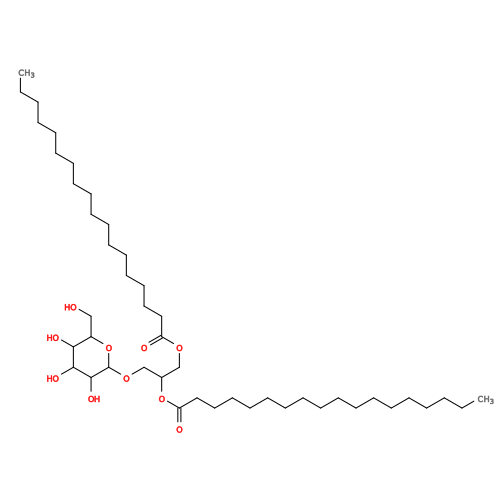 Mass: 787.158 Da / Num. of mol.: 6 / Source method: obtained synthetically / Formula: C45H86O10 / Feature type: SUBJECT OF INVESTIGATION Mass: 787.158 Da / Num. of mol.: 6 / Source method: obtained synthetically / Formula: C45H86O10 / Feature type: SUBJECT OF INVESTIGATION |
|---|
-Details
| Has ligand of interest | Y |
|---|---|
| Has protein modification | Y |
-Experimental details
-Experiment
| Experiment | Method: ELECTRON MICROSCOPY |
|---|---|
| EM experiment | Aggregation state: PARTICLE / 3D reconstruction method: single particle reconstruction |
- Sample preparation
| Component | Name: PSI-CpcL / Type: COMPLEX / Entity ID: #1-#13 / Source: NATURAL |
|---|---|
| Source (natural) | Organism: Nostoc sp. PCC 7120 = FACHB-418 (bacteria) |
| Buffer solution | pH: 7 |
| Specimen | Embedding applied: NO / Shadowing applied: NO / Staining applied: NO / Vitrification applied: YES |
| Vitrification | Cryogen name: ETHANE |
- Electron microscopy imaging
| Experimental equipment |  Model: Titan Krios / Image courtesy: FEI Company |
|---|---|
| Microscopy | Model: TFS KRIOS |
| Electron gun | Electron source:  FIELD EMISSION GUN / Accelerating voltage: 300 kV / Illumination mode: OTHER FIELD EMISSION GUN / Accelerating voltage: 300 kV / Illumination mode: OTHER |
| Electron lens | Mode: BRIGHT FIELD / Nominal defocus max: 2000 nm / Nominal defocus min: 1000 nm |
| Image recording | Electron dose: 60 e/Å2 / Film or detector model: GATAN K3 BIOCONTINUUM (6k x 4k) |
- Processing
| EM software |
| ||||||||||||||||||||||||
|---|---|---|---|---|---|---|---|---|---|---|---|---|---|---|---|---|---|---|---|---|---|---|---|---|---|
| CTF correction | Type: PHASE FLIPPING AND AMPLITUDE CORRECTION | ||||||||||||||||||||||||
| 3D reconstruction | Resolution: 2.98 Å / Resolution method: FSC 0.143 CUT-OFF / Num. of particles: 120345 / Symmetry type: POINT | ||||||||||||||||||||||||
| Refinement | Highest resolution: 2.98 Å Stereochemistry target values: REAL-SPACE (WEIGHTED MAP SUM AT ATOM CENTERS) | ||||||||||||||||||||||||
| Refine LS restraints |
|
