 ムービー
ムービー コントローラー


+ データを開く

- 基本情報
基本情報
| 登録情報 | データベース: PDB / ID: 9ppx | |||||||||||||||||||||||||||
|---|---|---|---|---|---|---|---|---|---|---|---|---|---|---|---|---|---|---|---|---|---|---|---|---|---|---|---|---|
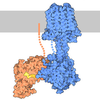
| タイトル | CryoEM structure of delta opioid receptor bound to G proteins and naltrexone | |||||||||||||||||||||||||||
 要素 要素 |
| |||||||||||||||||||||||||||
 キーワード キーワード | MEMBRANE PROTEIN / GPCR / Delta OPIOID Receptor | |||||||||||||||||||||||||||
| 機能・相同性 |  機能・相同性情報 機能・相同性情報G protein-coupled enkephalin receptor activity / spine apparatus / G protein-coupled opioid receptor activity / G protein-coupled opioid receptor signaling pathway / receptor serine/threonine kinase binding / cellular response to toxic substance / neuropeptide binding / eating behavior / regulation of calcium ion transport / G protein-coupled receptor signaling pathway, coupled to cyclic nucleotide second messenger ...G protein-coupled enkephalin receptor activity / spine apparatus / G protein-coupled opioid receptor activity / G protein-coupled opioid receptor signaling pathway / receptor serine/threonine kinase binding / cellular response to toxic substance / neuropeptide binding / eating behavior / regulation of calcium ion transport / G protein-coupled receptor signaling pathway, coupled to cyclic nucleotide second messenger / neuropeptide signaling pathway / neuronal dense core vesicle / negative regulation of protein-containing complex assembly / adenylate cyclase inhibitor activity / positive regulation of protein localization to cell cortex / T cell migration / Adenylate cyclase inhibitory pathway / response to prostaglandin E / D2 dopamine receptor binding / G protein-coupled serotonin receptor binding / dendrite membrane / adenylate cyclase regulator activity / adenylate cyclase-inhibiting serotonin receptor signaling pathway / axon terminus / cellular response to forskolin / Peptide ligand-binding receptors / regulation of mitotic spindle organization / adult locomotory behavior / regulation of mitochondrial membrane potential / response to nicotine / Regulation of insulin secretion / positive regulation of cholesterol biosynthetic process / negative regulation of insulin secretion / G protein-coupled receptor binding / postsynaptic density membrane / adenylate cyclase-inhibiting G protein-coupled receptor signaling pathway / response to peptide hormone / cellular response to growth factor stimulus / adenylate cyclase-modulating G protein-coupled receptor signaling pathway / centriolar satellite / G-protein beta/gamma-subunit complex binding / Olfactory Signaling Pathway / Activation of the phototransduction cascade / G beta:gamma signalling through PLC beta / Presynaptic function of Kainate receptors / Thromboxane signalling through TP receptor / G protein-coupled acetylcholine receptor signaling pathway / Activation of G protein gated Potassium channels / Inhibition of voltage gated Ca2+ channels via Gbeta/gamma subunits / G-protein activation / G beta:gamma signalling through CDC42 / Prostacyclin signalling through prostacyclin receptor / Glucagon signaling in metabolic regulation / G beta:gamma signalling through BTK / Synthesis, secretion, and inactivation of Glucagon-like Peptide-1 (GLP-1) / ADP signalling through P2Y purinoceptor 12 / photoreceptor disc membrane / Glucagon-type ligand receptors / GDP binding / Sensory perception of sweet, bitter, and umami (glutamate) taste / Adrenaline,noradrenaline inhibits insulin secretion / Vasopressin regulates renal water homeostasis via Aquaporins / Glucagon-like Peptide-1 (GLP1) regulates insulin secretion / G alpha (z) signalling events / ADP signalling through P2Y purinoceptor 1 / ADORA2B mediated anti-inflammatory cytokines production / cellular response to catecholamine stimulus / G beta:gamma signalling through PI3Kgamma / adenylate cyclase-activating dopamine receptor signaling pathway / Cooperation of PDCL (PhLP1) and TRiC/CCT in G-protein beta folding / GPER1 signaling / synaptic vesicle membrane / G-protein beta-subunit binding / cellular response to prostaglandin E stimulus / heterotrimeric G-protein complex / G alpha (12/13) signalling events / Inactivation, recovery and regulation of the phototransduction cascade / extracellular vesicle / sensory perception of taste / Thrombin signalling through proteinase activated receptors (PARs) / signaling receptor complex adaptor activity / retina development in camera-type eye / G protein activity / GTPase binding / presynaptic membrane / Ca2+ pathway / fibroblast proliferation / Interleukin-4 and Interleukin-13 signaling / midbody / cell cortex / High laminar flow shear stress activates signaling by PIEZO1 and PECAM1:CDH5:KDR in endothelial cells / cellular response to hypoxia / G alpha (i) signalling events / G alpha (s) signalling events / phospholipase C-activating G protein-coupled receptor signaling pathway / G alpha (q) signalling events / 加水分解酵素; 酸無水物に作用; GTPに作用・細胞または細胞小器官の運動に関与 / response to ethanol / Ras protein signal transduction / Extra-nuclear estrogen signaling 類似検索 - 分子機能 | |||||||||||||||||||||||||||
| 生物種 |  Homo sapiens (ヒト) Homo sapiens (ヒト)  Mus musculus (ハツカネズミ) Mus musculus (ハツカネズミ) | |||||||||||||||||||||||||||
| 手法 | 電子顕微鏡法 / 単粒子再構成法 / クライオ電子顕微鏡法 / 解像度: 3.04 Å | |||||||||||||||||||||||||||
 データ登録者 データ登録者 | Fay, J.F. / Che, T. | |||||||||||||||||||||||||||
| 資金援助 |  米国, 1件 米国, 1件
| |||||||||||||||||||||||||||
 引用 引用 | ジャーナル: To Be Published タイトル: Mechanistic Insights into the Therapeutic Properties of Delta Opioid Receptor 著者: Bernhard, S.M. / Roy Chowdhury, S. / Murata, T. / Reinl, E.L. / Ramos-Gonzalez, N. / Denn, E. / Appourchaux, K. / Inoue, A. / England, S.K. / Fay, J.F. / Majumdar, S. / Chanda, B. / Che, T. | |||||||||||||||||||||||||||
| 履歴 |
|
- 構造の表示
構造の表示
| 構造ビューア | 分子: MolmilJmol/JSmol |
|---|
- ダウンロードとリンク
-ダウンロード
| PDBx/mmCIF形式 | 9ppx.cif.gz | 201.3 KB | 表示 | PDBx/mmCIF形式 |
|---|---|---|---|---|
| PDB形式 | pdb9ppx.ent.gz | 表示 | PDB形式 | |
| PDBx/mmJSON形式 | 9ppx.json.gz | ツリー表示 | PDBx/mmJSON形式 | |
| その他 |  その他のダウンロード その他のダウンロード |
-検証レポート
| アーカイブディレクトリ | https://data.pdbj.org/pub/pdb/validation_reports/pp/9ppxftp://data.pdbj.org/pub/pdb/validation_reports/pp/9ppx | HTTPS FTP |
|---|
-関連構造データ


-リンク
 PDBj
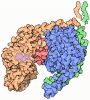
PDBj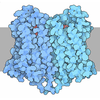
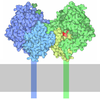
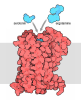
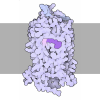
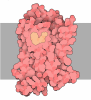





- 集合体
集合体
| 登録構造単位 | 
|
|---|---|
| 1 |
|
-要素
-Guanine nucleotide-binding protein ... , 3種, 3分子 BCD
| #2: タンパク質 | 分子量: 40414.047 Da / 分子数: 1 / Mutation: S47N, G203A, E245A, A326S / 由来タイプ: 組換発現 詳細: Guanine nucleotide-binding protein G(i) subunit alpha-1 由来: (組換発現) Homo sapiens (ヒト) / 遺伝子: GNAI1発現宿主:   Spodoptera frugiperda (ツマジロクサヨトウ) Spodoptera frugiperda (ツマジロクサヨトウ)参照: UniProt: P63096, 加水分解酵素; 酸無水物に作用; GTPに作用・細胞または細胞小器官の運動に関与 |
|---|---|
| #3: タンパク質 | 分子量: 37342.785 Da / 分子数: 1 / 由来タイプ: 組換発現 詳細: Guanine nucleotide-binding protein G(I)/G(S)/G(T) subunit beta-1 由来: (組換発現) Homo sapiens (ヒト) / 遺伝子: GNB1発現宿主: Spodoptera frugiperda (ツマジロクサヨトウ)参照: UniProt: P62873 |
| #4: タンパク質 | 分子量: 7861.143 Da / 分子数: 1 / 由来タイプ: 組換発現 / 由来: (組換発現) Homo sapiens (ヒト) / 遺伝子: GNG2発現宿主: Spodoptera frugiperda (ツマジロクサヨトウ)参照: UniProt: P59768 |
-タンパク質 / 抗体 / 非ポリマー , 3種, 3分子 AE
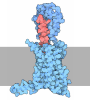
| #1: タンパク質 | 分子量: 33663.402 Da / 分子数: 1 / 由来タイプ: 組換発現 / 詳細: Delta-type opioid receptor / 由来: (組換発現) Homo sapiens (ヒト) / 遺伝子: OPRD1, OPRD発現宿主: Spodoptera frugiperda (ツマジロクサヨトウ)参照: UniProt: P41143 |
|---|---|
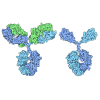
| #5: 抗体 | 分子量: 26679.721 Da / 分子数: 1 / 由来タイプ: 組換発現 / 詳細: ScFv16 protein / 由来: (組換発現) Mus musculus (ハツカネズミ)発現宿主: Spodoptera frugiperda (ツマジロクサヨトウ) |
| #6: 化合物 | ChemComp-A1CLJ / 分子量: 341.401 Da / 分子数: 1 / 由来タイプ: 合成 / 式: C20H23NO4 |
-詳細
| 研究の焦点であるリガンドがあるか | Y |
|---|---|
| Has protein modification | Y |
-実験情報
-実験
| 実験 | 手法: 電子顕微鏡法 |
|---|---|
| EM実験 | 試料の集合状態: PARTICLE / 3次元再構成法: 単粒子再構成法 |
- 試料調製
試料調製
| 構成要素 | 名称: CryoEM structure of delta opioid receptor bound to G proteins and naltrexone タイプ: COMPLEX / Entity ID: #1-#5 / 由来: RECOMBINANT |
|---|---|
| 由来(天然) | 生物種: Homo sapiens (ヒト) |
| 由来(組換発現) | 生物種: Spodoptera frugiperda (ツマジロクサヨトウ) |
| 緩衝液 | pH: 7.5 |
| 試料 | 包埋: NO / シャドウイング: NO / 染色: NO / 凍結: YES |
| 急速凍結 | 凍結剤: ETHANE-PROPANE |
- 電子顕微鏡撮影
| 実験機器 |  モデル: Titan Krios / 画像提供: FEI Company |
|---|---|
| 顕微鏡 | モデル: TFS KRIOS |
| 電子銃 | 電子線源:  FIELD EMISSION GUN / 加速電圧: 300 kV / 照射モード: FLOOD BEAM FIELD EMISSION GUN / 加速電圧: 300 kV / 照射モード: FLOOD BEAM |
| 電子レンズ | モード: BRIGHT FIELD / 最大 デフォーカス(公称値): 2900 nm / 最小 デフォーカス(公称値): 600 nm |
| 撮影 | 電子線照射量: 50 e/Å2 / フィルム・検出器のモデル: GATAN K3 (6k x 4k) / 実像数: 3703 |
- 解析
解析
| EMソフトウェア |
| ||||||||||||||||||||||||
|---|---|---|---|---|---|---|---|---|---|---|---|---|---|---|---|---|---|---|---|---|---|---|---|---|---|
| CTF補正 | タイプ: PHASE FLIPPING AND AMPLITUDE CORRECTION | ||||||||||||||||||||||||
| 3次元再構成 | 解像度: 3.04 Å / 解像度の算出法: FSC 0.143 CUT-OFF / 粒子像の数: 225207 / 対称性のタイプ: POINT | ||||||||||||||||||||||||
| 精密化 | 最高解像度: 3.04 Å 立体化学のターゲット値: REAL-SPACE (WEIGHTED MAP SUM AT ATOM CENTERS) | ||||||||||||||||||||||||
| 拘束条件 |
|
