 Movie
Movie Controller

[English] 日本語
 Yorodumi
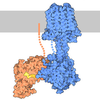
- PDB-9pq0: CryoEM structure of delta opioid receptor bound to G proteins and... -
+ Open data

- Basic information
| Entry | Database: PDB / ID: 9pq0 | ||||||||||||||||||||||||
|---|---|---|---|---|---|---|---|---|---|---|---|---|---|---|---|---|---|---|---|---|---|---|---|---|---|
| Title | CryoEM structure of delta opioid receptor bound to G proteins and ADL5859 | ||||||||||||||||||||||||
 Components Components |
| ||||||||||||||||||||||||
 Keywords Keywords | MEMBRANE PROTEIN / GPCR / Delta OPIOID Receptor | ||||||||||||||||||||||||
| Function / homology |  Function and homology information Function and homology informationG protein-coupled enkephalin receptor activity / spine apparatus / G protein-coupled opioid receptor activity / G protein-coupled opioid receptor signaling pathway / receptor serine/threonine kinase binding / cellular response to toxic substance / neuropeptide binding / eating behavior / regulation of calcium ion transport / G protein-coupled receptor signaling pathway, coupled to cyclic nucleotide second messenger ...G protein-coupled enkephalin receptor activity / spine apparatus / G protein-coupled opioid receptor activity / G protein-coupled opioid receptor signaling pathway / receptor serine/threonine kinase binding / cellular response to toxic substance / neuropeptide binding / eating behavior / regulation of calcium ion transport / G protein-coupled receptor signaling pathway, coupled to cyclic nucleotide second messenger / negative regulation of protein-containing complex assembly / neuronal dense core vesicle / regulation of eating behavior / adenylate cyclase inhibitor activity / T cell migration / positive regulation of protein localization to cell cortex / positive regulation of relaxation of smooth muscle / Adenylate cyclase inhibitory pathway / D2 dopamine receptor binding / adenylate cyclase-inhibiting dopamine receptor signaling pathway / regulation of mitochondrial membrane potential / adenylate cyclase-inhibiting serotonin receptor signaling pathway / G protein-coupled serotonin receptor binding / regulation of G protein-coupled receptor signaling pathway / axon terminus / dendrite membrane / cellular response to forskolin / regulation of mitotic spindle organization / Peptide ligand-binding receptors / mast cell degranulation / chemokine-mediated signaling pathway / response to nicotine / establishment of mitotic spindle orientation / neuropeptide signaling pathway / Regulation of insulin secretion / response to prostaglandin E / positive regulation of cholesterol biosynthetic process / cellular response to growth factor stimulus / postsynaptic density membrane / G protein-coupled receptor binding / response to peptide hormone / G-protein beta/gamma-subunit complex binding / adenylate cyclase-inhibiting G protein-coupled receptor signaling pathway / adenylate cyclase-modulating G protein-coupled receptor signaling pathway / Olfactory Signaling Pathway / phospholipase C-activating G protein-coupled receptor signaling pathway / Activation of the phototransduction cascade / G protein-coupled acetylcholine receptor signaling pathway / G beta:gamma signalling through PLC beta / Presynaptic function of Kainate receptors / Thromboxane signalling through TP receptor / Activation of G protein gated Potassium channels / Inhibition of voltage gated Ca2+ channels via Gbeta/gamma subunits / G-protein activation / Glucagon signaling in metabolic regulation / G beta:gamma signalling through CDC42 / Prostacyclin signalling through prostacyclin receptor / GDP binding / Synthesis, secretion, and inactivation of Glucagon-like Peptide-1 (GLP-1) / photoreceptor disc membrane / synaptic vesicle membrane / G beta:gamma signalling through BTK / ADP signalling through P2Y purinoceptor 12 / Sensory perception of sweet, bitter, and umami (glutamate) taste / Glucagon-type ligand receptors / Adrenaline,noradrenaline inhibits insulin secretion / Vasopressin regulates renal water homeostasis via Aquaporins / G alpha (z) signalling events / Glucagon-like Peptide-1 (GLP1) regulates insulin secretion / ADP signalling through P2Y purinoceptor 1 / cellular response to catecholamine stimulus / G beta:gamma signalling through PI3Kgamma / ADORA2B mediated anti-inflammatory cytokines production / adenylate cyclase-activating dopamine receptor signaling pathway / cellular response to prostaglandin E stimulus / Cooperation of PDCL (PhLP1) and TRiC/CCT in G-protein beta folding / GPER1 signaling / heterotrimeric G-protein complex / G alpha (12/13) signalling events / Inactivation, recovery and regulation of the phototransduction cascade / G-protein beta-subunit binding / extracellular vesicle / Thrombin signalling through proteinase activated receptors (PARs) / adenylate cyclase-activating G protein-coupled receptor signaling pathway / signaling receptor complex adaptor activity / spindle pole / ciliary basal body / Interleukin-4 and Interleukin-13 signaling / GTPase binding / midbody / G protein activity / cellular response to hypoxia / presynaptic membrane / cell cortex / Ca2+ pathway / High laminar flow shear stress activates signaling by PIEZO1 and PECAM1:CDH5:KDR in endothelial cells / G alpha (i) signalling events / G alpha (s) signalling events / G alpha (q) signalling events / cell division Similarity search - Function | ||||||||||||||||||||||||
| Biological species |  Homo sapiens (human) Homo sapiens (human)  Mus musculus (house mouse) Mus musculus (house mouse) | ||||||||||||||||||||||||
| Method | ELECTRON MICROSCOPY / single particle reconstruction / cryo EM / Resolution: 3.12 Å | ||||||||||||||||||||||||
 Authors Authors | Fay, J.F. / Che, T. | ||||||||||||||||||||||||
| Funding support |  United States, 1items United States, 1items
| ||||||||||||||||||||||||
 Citation Citation | Journal: Sci Adv / Year: 2026 Title: Mechanistic insights into the therapeutic properties of delta opioid receptor. Authors: Sarah M Bernhard / Susovan Roy Chowdhury / Tsuyoshi Murata / Erin L Reinl / Nokomis Ramos-Gonzalez / Elizabeth Denn / Kevin Appourchaux / Asuka Inoue / Sarah K England / Jonathan F Fay / ...Authors: Sarah M Bernhard / Susovan Roy Chowdhury / Tsuyoshi Murata / Erin L Reinl / Nokomis Ramos-Gonzalez / Elizabeth Denn / Kevin Appourchaux / Asuka Inoue / Sarah K England / Jonathan F Fay / Susruta Majumdar / Baron Chanda / Tao Che /  Abstract: The delta opioid receptor (DOR) is a promising target for treating pain, anxiety, and depression, yet no DOR-based drugs have reached the clinic. Here, we examine how ligands with varying therapeutic ...The delta opioid receptor (DOR) is a promising target for treating pain, anxiety, and depression, yet no DOR-based drugs have reached the clinic. Here, we examine how ligands with varying therapeutic properties modulate DOR function. While full agonists rapidly internalize the receptor, partial agonists show a slower rate of internalization, and antagonists increase cell-surface DOR levels. High-resolution structures of ligand-bound DOR-G complexes, including those with antagonists engaged, reveal key interactions that account for DOR ligand selectivity, potency, and efficacy. Single-molecule fluorescence resonance energy transfer studies show that DOR dynamically samples three distinct states (active, obligate preactive, and inactive), and transition rates are tuned by both ligand efficacy and G protein coupling. The endogenous agonist, met-enkephalin, not only stabilizes the active-state conformation but also catalyzes transitions between the active and inactive states. These results reveal how ligand-specific interactions and receptor dynamics can govern pharmacological profiles and provide a framework for developing DOR-targeted therapeutics. | ||||||||||||||||||||||||
| History |
|
- Structure visualization
| Structure viewer | Molecule: MolmilJmol/JSmol |
|---|
- Downloads & links
-Download
| PDBx/mmCIF format | 9pq0.cif.gz | 225.2 KB | Display | PDBx/mmCIF format |
|---|---|---|---|---|
| PDB format | pdb9pq0.ent.gz | Display | PDB format | |
| PDBx/mmJSON format | 9pq0.json.gz | Tree view | PDBx/mmJSON format | |
| Others |  Other downloads Other downloads |
-Validation report
| Arichive directory | https://data.pdbj.org/pub/pdb/validation_reports/pq/9pq0ftp://data.pdbj.org/pub/pdb/validation_reports/pq/9pq0 | HTTPS FTP |
|---|
-Related structure data
| Related structure data |  71780MC  9ppwC  9ppxC  9ppyC  9ppzC M: map data used to model this data C: citing same article ( |
|---|---|
| Similar structure data |


-Links
 PDBj
PDBj

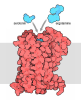
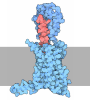


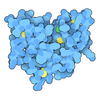

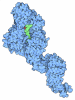


- Assembly
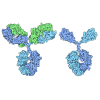
| Deposited unit | 
|
|---|---|
| 1 |
|
-Components
-Guanine nucleotide-binding protein ... , 3 types, 3 molecules BCD
| #2: Protein | Mass: 40414.047 Da / Num. of mol.: 1 / Mutation: S47N, G203A, E245A, A326S Source method: isolated from a genetically manipulated source Details: Guanine nucleotide-binding protein G(i) subunit alpha-1 Source: (gene. exp.) Homo sapiens (human) / Gene: GNAI1 / Production host:   Spodoptera frugiperda (fall armyworm) Spodoptera frugiperda (fall armyworm)References: UniProt: P63096, Hydrolases; Acting on acid anhydrides; Acting on GTP to facilitate cellular and subcellular movement |
|---|---|
| #3: Protein | Mass: 37342.785 Da / Num. of mol.: 1 Source method: isolated from a genetically manipulated source Details: Guanine nucleotide-binding protein G(I)/G(S)/G(T) subunit beta-1 Source: (gene. exp.) Homo sapiens (human) / Gene: GNB1 / Production host: Spodoptera frugiperda (fall armyworm) / References: UniProt: P62873 |
| #4: Protein | Mass: 7861.143 Da / Num. of mol.: 1 Source method: isolated from a genetically manipulated source Details: Guanine nucleotide-binding protein G(I)/G(S)/G(O) subunit gamma-2 Source: (gene. exp.) Homo sapiens (human) / Gene: GNG2 / Production host: Spodoptera frugiperda (fall armyworm) / References: UniProt: P59768 |
-Protein / Antibody / Non-polymers , 3 types, 3 molecules AE
| #1: Protein | Mass: 33663.402 Da / Num. of mol.: 1 Source method: isolated from a genetically manipulated source Details: Delta-type opioid receptor / Source: (gene. exp.) Homo sapiens (human) / Gene: OPRD1, OPRD / Production host: Spodoptera frugiperda (fall armyworm) / References: UniProt: P41143 |
|---|---|
| #5: Antibody | Mass: 26679.721 Da / Num. of mol.: 1 Source method: isolated from a genetically manipulated source Details: ScFv16 protein / Source: (gene. exp.) Mus musculus (house mouse) / Production host: Spodoptera frugiperda (fall armyworm) |
| #6: Chemical | ChemComp-A1LXY / ~{ Mass: 392.491 Da / Num. of mol.: 1 / Source method: obtained synthetically / Formula: C24H28N2O3 |
-Details
| Has ligand of interest | Y |
|---|---|
| Has protein modification | Y |
-Experimental details
-Experiment
| Experiment | Method: ELECTRON MICROSCOPY |
|---|---|
| EM experiment | Aggregation state: PARTICLE / 3D reconstruction method: single particle reconstruction |
- Sample preparation
| Component | Name: CryoEM structure of delta opioid receptor bound to G proteins and ADL5859 Type: COMPLEX / Entity ID: #1-#5 / Source: RECOMBINANT |
|---|---|
| Source (natural) | Organism: Homo sapiens (human) |
| Source (recombinant) | Organism: Spodoptera frugiperda (fall armyworm) |
| Buffer solution | pH: 7.5 |
| Specimen | Embedding applied: NO / Shadowing applied: NO / Staining applied: NO / Vitrification applied: YES |
| Vitrification | Cryogen name: ETHANE-PROPANE |
- Electron microscopy imaging
| Experimental equipment | 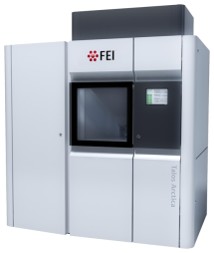 Model: Talos Arctica / Image courtesy: FEI Company |
|---|---|
| Microscopy | Model: FEI TALOS ARCTICA |
| Electron gun | Electron source:  FIELD EMISSION GUN / Accelerating voltage: 200 kV / Illumination mode: FLOOD BEAM FIELD EMISSION GUN / Accelerating voltage: 200 kV / Illumination mode: FLOOD BEAM |
| Electron lens | Mode: BRIGHT FIELD / Nominal defocus max: 2200 nm / Nominal defocus min: 600 nm |
| Image recording | Electron dose: 56.5 e/Å2 / Film or detector model: GATAN K3 (6k x 4k) / Num. of real images: 4259 |
- Processing
| EM software |
| ||||||||||||||||
|---|---|---|---|---|---|---|---|---|---|---|---|---|---|---|---|---|---|
| CTF correction | Type: PHASE FLIPPING AND AMPLITUDE CORRECTION | ||||||||||||||||
| 3D reconstruction | Resolution: 3.12 Å / Resolution method: FSC 0.143 CUT-OFF / Num. of particles: 1801667 / Symmetry type: POINT |
