 Movie
Movie Controller


+ Open data

- Basic information
| Entry | Database: PDB / ID: 9p0l | |||||||||||||||
|---|---|---|---|---|---|---|---|---|---|---|---|---|---|---|---|---|
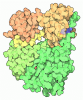
| Title | Composite map of CXCL10-CXCR3-Gi-scFv16 | |||||||||||||||
 Components Components |
| |||||||||||||||
 Keywords Keywords | MEMBRANE PROTEIN / GPCR / chemokine receptor | |||||||||||||||
| Function / homology |  Function and homology information Function and homology informationregulation of T cell chemotaxis / CXCR3 chemokine receptor binding / regulation of leukocyte migration / chemokine binding / C-X-C chemokine binding / regulation of endothelial tube morphogenesis / cellular response to interleukin-17 / Differentiation of naive CD4+ T cells to T helper 1 cells (Th1 cells) / chemokine receptor activity / CXCR chemokine receptor binding ...regulation of T cell chemotaxis / CXCR3 chemokine receptor binding / regulation of leukocyte migration / chemokine binding / C-X-C chemokine binding / regulation of endothelial tube morphogenesis / cellular response to interleukin-17 / Differentiation of naive CD4+ T cells to T helper 1 cells (Th1 cells) / chemokine receptor activity / CXCR chemokine receptor binding / C-X-C chemokine receptor activity / response to auditory stimulus / cAMP-dependent protein kinase regulator activity / positive regulation of chemotaxis / T cell chemotaxis / negative regulation of execution phase of apoptosis / response to vitamin D / C-C chemokine binding / muscle organ development / C-C chemokine receptor activity / positive regulation of monocyte chemotaxis / endothelial cell activation / chemokine activity / Chemokine receptors bind chemokines / blood circulation / negative regulation of endothelial cell proliferation / Interleukin-10 signaling / chemoattractant activity / regulation of cell adhesion / positive regulation of execution phase of apoptosis / positive regulation of T cell migration / neutrophil chemotaxis / negative regulation of angiogenesis / regulation of eating behavior / response to gamma radiation / adenylate cyclase inhibitor activity / T cell migration / positive regulation of protein localization to cell cortex / positive regulation of relaxation of smooth muscle / Adenylate cyclase inhibitory pathway / D2 dopamine receptor binding / adenylate cyclase-inhibiting dopamine receptor signaling pathway / adenylate cyclase-inhibiting serotonin receptor signaling pathway / G protein-coupled serotonin receptor binding / regulation of G protein-coupled receptor signaling pathway / positive regulation of release of sequestered calcium ion into cytosol / bioluminescence / cellular response to forskolin / regulation of mitotic spindle organization / mast cell degranulation / chemokine-mediated signaling pathway / calcium-mediated signaling / cell chemotaxis / antiviral innate immune response / establishment of mitotic spindle orientation / generation of precursor metabolites and energy / cellular response to virus / neuropeptide signaling pathway / Regulation of insulin secretion / response to prostaglandin E / positive regulation of cholesterol biosynthetic process / G protein-coupled receptor binding / chemotaxis / response to peptide hormone / positive regulation of angiogenesis / G-protein beta/gamma-subunit complex binding / adenylate cyclase-inhibiting G protein-coupled receptor signaling pathway / adenylate cyclase-modulating G protein-coupled receptor signaling pathway / Olfactory Signaling Pathway / Activation of the phototransduction cascade / G protein-coupled acetylcholine receptor signaling pathway / G beta:gamma signalling through PLC beta / Presynaptic function of Kainate receptors / Thromboxane signalling through TP receptor / Activation of G protein gated Potassium channels / Inhibition of voltage gated Ca2+ channels via Gbeta/gamma subunits / G-protein activation / heparin binding / Glucagon signaling in metabolic regulation / G beta:gamma signalling through CDC42 / Prostacyclin signalling through prostacyclin receptor / Synthesis, secretion, and inactivation of Glucagon-like Peptide-1 (GLP-1) / GDP binding / photoreceptor disc membrane / G beta:gamma signalling through BTK / ADP signalling through P2Y purinoceptor 12 / Sensory perception of sweet, bitter, and umami (glutamate) taste / Glucagon-type ligand receptors / Adrenaline,noradrenaline inhibits insulin secretion / regulation of cell population proliferation / cell-cell signaling / Vasopressin regulates renal water homeostasis via Aquaporins / G alpha (z) signalling events / Glucagon-like Peptide-1 (GLP1) regulates insulin secretion / cellular response to catecholamine stimulus / ADP signalling through P2Y purinoceptor 1 / G beta:gamma signalling through PI3Kgamma / ADORA2B mediated anti-inflammatory cytokines production / adenylate cyclase-activating dopamine receptor signaling pathway / cellular response to lipopolysaccharide Similarity search - Function | |||||||||||||||
| Biological species |  Homo sapiens (human) Homo sapiens (human)  Mus musculus (house mouse) Mus musculus (house mouse) | |||||||||||||||
| Method | ELECTRON MICROSCOPY / single particle reconstruction / cryo EM / Resolution: 3.1 Å | |||||||||||||||
 Authors Authors | Sun, D. / Masureel, M. / Johnson, M. | |||||||||||||||
| Funding support | 1items
| |||||||||||||||
 Citation Citation | Journal: Sci Adv / Year: 2026 Title: Molecular basis of CXC chemokine receptor 3 ligand multispecificity. Authors: Alexandre Bouyssou / Dawei Sun / Tricia Zhou / Shannon Smith / Hoangdung Ho / Matthew Johnson / Caleigh Azumaya / Sigrid Noreng / Peter Liu / Shu Ti / Prajakta Joshi / Christine Tam / Ying ...Authors: Alexandre Bouyssou / Dawei Sun / Tricia Zhou / Shannon Smith / Hoangdung Ho / Matthew Johnson / Caleigh Azumaya / Sigrid Noreng / Peter Liu / Shu Ti / Prajakta Joshi / Christine Tam / Ying Yang / Eric Janezic / Laëtitia Comps-Agrar / Matthieu Masureel /  Abstract: C-X-C motif chemokine receptor 3 (CXCR3) is essential for immune cell functions and pivotal in T helper 1 cell infiltration in autoimmune and chronic inflammatory diseases and in tumor proliferation ...C-X-C motif chemokine receptor 3 (CXCR3) is essential for immune cell functions and pivotal in T helper 1 cell infiltration in autoimmune and chronic inflammatory diseases and in tumor proliferation and metastasis, but the mechanisms by which the endogenous ligands CXCL9, CXCL10, and CXCL11 differentially recognize and activate CXCR3 are not fully understood. Here, we present cryo-electron microscopy structures of all three chemokine-CXCR3-G complexes, complemented by cell binding studies and functional mutagenesis data. We systematically compare the pharmacological and interaction profiles of CXCL9, CXCL10, and CXCL11 to rationalize their varying efficacies and potencies and to reveal the critical role of the membrane-distal CXCR3 N terminus in ligand binding and signaling. Using chimeric chemokines and molecular dynamics, we reveal the signaling plasticity of chemokine ligands and signaling determinants. Together, these insights enable us to propose a multimodal binding and activation framework that explains CXCR3 chemokine ligand multispecificity and signaling versatility and offer tools to interrogate and modulate CXCR3 biology. | |||||||||||||||
| History |
|
- Structure visualization
| Structure viewer | Molecule: MolmilJmol/JSmol |
|---|
- Downloads & links
-Download
| PDBx/mmCIF format | 9p0l.cif.gz | 410 KB | Display | PDBx/mmCIF format |
|---|---|---|---|---|
| PDB format | pdb9p0l.ent.gz | 328.2 KB | Display | PDB format |
| PDBx/mmJSON format | 9p0l.json.gz | Tree view | PDBx/mmJSON format | |
| Others |  Other downloads Other downloads |
-Validation report
| Arichive directory | https://data.pdbj.org/pub/pdb/validation_reports/p0/9p0lftp://data.pdbj.org/pub/pdb/validation_reports/p0/9p0l | HTTPS FTP |
|---|
-Related structure data
| Related structure data |  71080MC  9p0kC  9p0mC M: map data used to model this data C: citing same article ( |
|---|---|
| Similar structure data |


-Links
 PDBj
PDBj
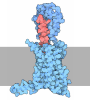

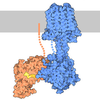
- Assembly
| Deposited unit | 
|
|---|---|
| 1 |
|
-Components
-Protein , 2 types, 2 molecules AB
| #1: Protein | Mass: 75792.680 Da / Num. of mol.: 1 Source method: isolated from a genetically manipulated source Source: (gene. exp.) Homo sapiens (human) / Gene: CXCR3, GPR9, EAH_00062270 / Production host: Homo sapiens (human) / References: UniProt: P49682, UniProt: U6GSR1 |
|---|---|
| #2: Protein | Mass: 8663.343 Da / Num. of mol.: 1 Source method: isolated from a genetically manipulated source Source: (gene. exp.) Homo sapiens (human) / Gene: CXCL10, INP10, SCYB10 / Production host:   Escherichia coli (E. coli) / References: UniProt: P02778 Escherichia coli (E. coli) / References: UniProt: P02778 |
-Guanine nucleotide-binding protein ... , 3 types, 3 molecules CDE
| #3: Protein | Mass: 43182.078 Da / Num. of mol.: 1 Source method: isolated from a genetically manipulated source Source: (gene. exp.) Homo sapiens (human) / Gene: GNAI1 / Production host: Escherichia coli (E. coli) / References: UniProt: P63096 |
|---|---|
| #4: Protein | Mass: 39518.121 Da / Num. of mol.: 1 Source method: isolated from a genetically manipulated source Source: (gene. exp.) Homo sapiens (human) / Gene: GNB1 / Production host:  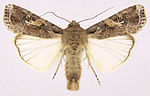 Spodoptera frugiperda (fall armyworm) / References: UniProt: P62873 Spodoptera frugiperda (fall armyworm) / References: UniProt: P62873 |
| #5: Protein | Mass: 7861.143 Da / Num. of mol.: 1 Source method: isolated from a genetically manipulated source Source: (gene. exp.) Homo sapiens (human) / Gene: GNG2 / Production host: Spodoptera frugiperda (fall armyworm) / References: UniProt: P59768 |
-Antibody , 1 types, 1 molecules F
| #6: Antibody | Mass: 28754.949 Da / Num. of mol.: 1 Source method: isolated from a genetically manipulated source Source: (gene. exp.) Mus musculus (house mouse) / Production host: Spodoptera frugiperda (fall armyworm) |
|---|
-Details
| Has protein modification | Y |
|---|
-Experimental details
-Experiment
| Experiment | Method: ELECTRON MICROSCOPY |
|---|---|
| EM experiment | Aggregation state: PARTICLE / 3D reconstruction method: single particle reconstruction |
- Sample preparation
| Component | Name: CXCR3, CXCL10, Gi / Type: COMPLEX / Source: RECOMBINANT |
|---|---|
| Source (natural) | Organism: Homo sapiens (human) |
| Source (recombinant) | Organism: Homo sapiens (human) |
| Buffer solution | pH: 7.5 |
| Specimen | Embedding applied: NO / Shadowing applied: NO / Staining applied: NO / Vitrification applied: YES |
| Vitrification | Cryogen name: ETHANE |
- Electron microscopy imaging
| Experimental equipment |  Model: Titan Krios / Image courtesy: FEI Company |
|---|---|
| Microscopy | Model: TFS KRIOS |
| Electron gun | Electron source:  FIELD EMISSION GUN / Accelerating voltage: 300 kV / Illumination mode: FLOOD BEAM FIELD EMISSION GUN / Accelerating voltage: 300 kV / Illumination mode: FLOOD BEAM |
| Electron lens | Mode: OTHER / Nominal defocus max: 1500 nm / Nominal defocus min: 500 nm |
| Image recording | Electron dose: 40 e/Å2 / Film or detector model: FEI FALCON IV (4k x 4k) |
- Processing
| EM software |
| |||||||||
|---|---|---|---|---|---|---|---|---|---|---|
| CTF correction | Type: PHASE FLIPPING AND AMPLITUDE CORRECTION | |||||||||
| 3D reconstruction | Resolution: 3.1 Å / Resolution method: FSC 0.5 CUT-OFF / Num. of particles: 101131 / Symmetry type: POINT |
