 Movie
Movie Controller


+ Open data

- Basic information
| Entry |  | |||||||||
|---|---|---|---|---|---|---|---|---|---|---|
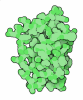
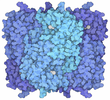
| Title | Composite map of CXCL10-CXCR3-Gi-scFv16 | |||||||||
 Map data Map data | Composite map of CXCL10-CXCR3-Gi-scFv16 | |||||||||
 Sample Sample |
| |||||||||
 Keywords Keywords | GPCR / chemokine receptor / MEMBRANE PROTEIN | |||||||||
| Function / homology |  Function and homology information Function and homology informationregulation of T cell chemotaxis / CXCR3 chemokine receptor binding / regulation of leukocyte migration / chemokine binding / C-X-C chemokine binding / regulation of endothelial tube morphogenesis / cellular response to interleukin-17 / Differentiation of naive CD4+ T cells to T helper 1 cells (Th1 cells) / CXCR chemokine receptor binding / C-X-C chemokine receptor activity ...regulation of T cell chemotaxis / CXCR3 chemokine receptor binding / regulation of leukocyte migration / chemokine binding / C-X-C chemokine binding / regulation of endothelial tube morphogenesis / cellular response to interleukin-17 / Differentiation of naive CD4+ T cells to T helper 1 cells (Th1 cells) / CXCR chemokine receptor binding / C-X-C chemokine receptor activity / chemokine receptor activity / response to auditory stimulus / cAMP-dependent protein kinase regulator activity / positive regulation of chemotaxis / T cell chemotaxis / negative regulation of execution phase of apoptosis / C-C chemokine binding / muscle organ development / response to vitamin D / C-C chemokine receptor activity / positive regulation of monocyte chemotaxis / endothelial cell activation / chemokine activity / Chemokine receptors bind chemokines / blood circulation / negative regulation of endothelial cell proliferation / Interleukin-10 signaling / chemoattractant activity / regulation of cell adhesion / positive regulation of execution phase of apoptosis / positive regulation of T cell migration / neutrophil chemotaxis / negative regulation of angiogenesis / regulation of eating behavior / response to gamma radiation / adenylate cyclase inhibitor activity / T cell migration / positive regulation of protein localization to cell cortex / positive regulation of relaxation of smooth muscle / Adenylate cyclase inhibitory pathway / D2 dopamine receptor binding / adenylate cyclase-inhibiting dopamine receptor signaling pathway / adenylate cyclase-inhibiting serotonin receptor signaling pathway / G protein-coupled serotonin receptor binding / regulation of G protein-coupled receptor signaling pathway / positive regulation of release of sequestered calcium ion into cytosol / bioluminescence / cellular response to forskolin / regulation of mitotic spindle organization / mast cell degranulation / calcium-mediated signaling / chemokine-mediated signaling pathway / cell chemotaxis / cellular response to virus / generation of precursor metabolites and energy / antiviral innate immune response / establishment of mitotic spindle orientation / neuropeptide signaling pathway / Regulation of insulin secretion / response to prostaglandin E / positive regulation of cholesterol biosynthetic process / G protein-coupled receptor binding / chemotaxis / response to peptide hormone / positive regulation of angiogenesis / G-protein beta/gamma-subunit complex binding / adenylate cyclase-inhibiting G protein-coupled receptor signaling pathway / adenylate cyclase-modulating G protein-coupled receptor signaling pathway / Olfactory Signaling Pathway / Activation of the phototransduction cascade / G protein-coupled acetylcholine receptor signaling pathway / G beta:gamma signalling through PLC beta / Presynaptic function of Kainate receptors / Thromboxane signalling through TP receptor / Activation of G protein gated Potassium channels / Inhibition of voltage gated Ca2+ channels via Gbeta/gamma subunits / heparin binding / G-protein activation / Glucagon signaling in metabolic regulation / G beta:gamma signalling through CDC42 / Prostacyclin signalling through prostacyclin receptor / GDP binding / Synthesis, secretion, and inactivation of Glucagon-like Peptide-1 (GLP-1) / photoreceptor disc membrane / G beta:gamma signalling through BTK / ADP signalling through P2Y purinoceptor 12 / Sensory perception of sweet, bitter, and umami (glutamate) taste / Glucagon-type ligand receptors / Adrenaline,noradrenaline inhibits insulin secretion / regulation of cell population proliferation / cell-cell signaling / Vasopressin regulates renal water homeostasis via Aquaporins / G alpha (z) signalling events / Glucagon-like Peptide-1 (GLP1) regulates insulin secretion / ADP signalling through P2Y purinoceptor 1 / cellular response to catecholamine stimulus / G beta:gamma signalling through PI3Kgamma / ADORA2B mediated anti-inflammatory cytokines production / cellular response to lipopolysaccharide / adenylate cyclase-activating dopamine receptor signaling pathway Similarity search - Function | |||||||||
| Biological species |  Homo sapiens (human) / Homo sapiens (human) /   Mus musculus (house mouse) Mus musculus (house mouse) | |||||||||
| Method | single particle reconstruction / cryo EM / Resolution: 3.1 Å | |||||||||
 Authors Authors | Sun D / Masureel M / Johnson M | |||||||||
| Funding support | 1 items
| |||||||||
 Citation Citation | Journal: Sci Adv / Year: 2026 Title: Molecular basis of CXC chemokine receptor 3 ligand multispecificity. Authors: Alexandre Bouyssou / Dawei Sun / Tricia Zhou / Shannon Smith / Hoangdung Ho / Matthew Johnson / Caleigh Azumaya / Sigrid Noreng / Peter Liu / Shu Ti / Prajakta Joshi / Christine Tam / Ying ...Authors: Alexandre Bouyssou / Dawei Sun / Tricia Zhou / Shannon Smith / Hoangdung Ho / Matthew Johnson / Caleigh Azumaya / Sigrid Noreng / Peter Liu / Shu Ti / Prajakta Joshi / Christine Tam / Ying Yang / Eric Janezic / Laëtitia Comps-Agrar / Matthieu Masureel /  Abstract: C-X-C motif chemokine receptor 3 (CXCR3) is essential for immune cell functions and pivotal in T helper 1 cell infiltration in autoimmune and chronic inflammatory diseases and in tumor proliferation ...C-X-C motif chemokine receptor 3 (CXCR3) is essential for immune cell functions and pivotal in T helper 1 cell infiltration in autoimmune and chronic inflammatory diseases and in tumor proliferation and metastasis, but the mechanisms by which the endogenous ligands CXCL9, CXCL10, and CXCL11 differentially recognize and activate CXCR3 are not fully understood. Here, we present cryo-electron microscopy structures of all three chemokine-CXCR3-G complexes, complemented by cell binding studies and functional mutagenesis data. We systematically compare the pharmacological and interaction profiles of CXCL9, CXCL10, and CXCL11 to rationalize their varying efficacies and potencies and to reveal the critical role of the membrane-distal CXCR3 N terminus in ligand binding and signaling. Using chimeric chemokines and molecular dynamics, we reveal the signaling plasticity of chemokine ligands and signaling determinants. Together, these insights enable us to propose a multimodal binding and activation framework that explains CXCR3 chemokine ligand multispecificity and signaling versatility and offer tools to interrogate and modulate CXCR3 biology. | |||||||||
| History |
|
- Structure visualization
| Supplemental images |
|---|

- Downloads & links
-EMDB archive
| Map data | emd_71080.map.gz | 31.3 MB | EMDB map data format | |
|---|---|---|---|---|
| Header (meta data) | emd-71080-v30.xmlemd-71080.xml | 18.5 KB 18.5 KB | Display Display | EMDB header |
| Images |  emd_71080.png emd_71080.png | 71.9 KB | ||
| Filedesc metadata | emd-71080.cif.gz | 6.9 KB | ||
| Archive directory |  https://data.pdbj.org/pub/emdb/structures/EMD-71080ftp://data.pdbj.org/pub/emdb/structures/EMD-71080 https://data.pdbj.org/pub/emdb/structures/EMD-71080ftp://data.pdbj.org/pub/emdb/structures/EMD-71080 | HTTPS FTP |
-Related structure data
| Related structure data |  9p0lMC  9p0kC  9p0mC C: citing same article ( M: atomic model generated by this map |
|---|---|
| Similar structure data |


-Links
| EMDB pages | EMDB (EBI/PDBe) / EMDataResource |
|---|---|
| Related items in Molecule of the Month |

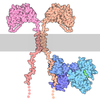
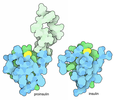
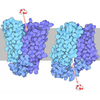
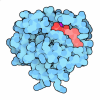
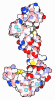
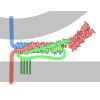
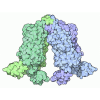
-Map
| File | Download / File: emd_71080.map.gz / Format: CCP4 / Size: 64 MB / Type: IMAGE STORED AS FLOATING POINT NUMBER (4 BYTES) | ||||||||||||||||||||||||||||||||||||
|---|---|---|---|---|---|---|---|---|---|---|---|---|---|---|---|---|---|---|---|---|---|---|---|---|---|---|---|---|---|---|---|---|---|---|---|---|---|
| Annotation | Composite map of CXCL10-CXCR3-Gi-scFv16 | ||||||||||||||||||||||||||||||||||||
| Projections & slices | Image control
Images are generated by Spider. | ||||||||||||||||||||||||||||||||||||
| Voxel size | X=Y=Z: 1.1422 Å | ||||||||||||||||||||||||||||||||||||
| Density |
| ||||||||||||||||||||||||||||||||||||
| Symmetry | Space group: 1 | ||||||||||||||||||||||||||||||||||||
| Details | EMDB XML:
|
 X (Sec.)
 Y (Row.)
 Z (Col.)


-Supplemental data
- Sample components
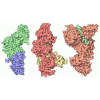
-Entire : CXCR3, CXCL10, Gi
| Entire | Name: CXCR3, CXCL10, Gi |
|---|---|
| Components |
|
-Supramolecule #1: CXCR3, CXCL10, Gi
| Supramolecule | Name: CXCR3, CXCL10, Gi / type: complex / ID: 1 / Parent: 0 |
|---|---|
| Source (natural) | Organism: Homo sapiens (human) |
-Macromolecule #1: C-X-C chemokine receptor type 3,GFP-like fluorescent chromoprotei...
| Macromolecule | Name: C-X-C chemokine receptor type 3,GFP-like fluorescent chromoprotein FP506, related type: protein_or_peptide / ID: 1 / Number of copies: 1 / Enantiomer: LEVO |
|---|---|
| Source (natural) | Organism: Homo sapiens (human) |
| Molecular weight | Theoretical: 75.79268 KDa |
| Recombinant expression | Organism: Homo sapiens (human) |
| Sequence | String: MKTIIALSYI FCLVFADYKD DDDKGSENLY FQSGSMVLEV SDHQVLNDAE VAALLENFSS SYDYGENESD SCCTSPPCPQ DFSLNFDRA FLPALYSLLF LLGLLGNGAV AAVLLSRRTA LSSTDTFLLH LAVADTLLVL TLPLWAVDAA VQWVFGSGLC K VAGALFNI ...String: MKTIIALSYI FCLVFADYKD DDDKGSENLY FQSGSMVLEV SDHQVLNDAE VAALLENFSS SYDYGENESD SCCTSPPCPQ DFSLNFDRA FLPALYSLLF LLGLLGNGAV AAVLLSRRTA LSSTDTFLLH LAVADTLLVL TLPLWAVDAA VQWVFGSGLC K VAGALFNI NFYAGALLLA CISFDRYLNI VHATQLYRRG PPARVTLTCL AVWGLCLLFA LPDFIFLSAH HDERLNATHC QY NFPQVGR TALRVLQLVA GFLLPLLVMA YCYAHILAVL LVSRGQRRLR AMRLVVVAVV AFALCWTPYH LVVLVDILMD LGA LARNCG RESRVDVAKS VTSGLGYMHC CLNPLLYAFV GVKFRERMWM LLLRLGCPNQ RGLQRQPSSS RRDSSWSETS EASY SGLGN SLEVLFQGPM VSKGEELFTG VVPILVELDG DVNGHKFSVS GEGEGDATYG KLTLKLICTT GKLPVPWPTL VTTLG YGLQ CFARYPDHMK QHDFFKSAMP EGYVQERTIF FKDDGNYKTR AEVKFEGDTL VNRIELKGID FKEDGNILGH KLEYNY NSH NVYITADKQK NGIKANFKIR HNIEDGGVQL ADHYQQNTPI GDGPVLLPDN HYLSYQSKLS KDPNEKRDHM VLLEFVT AA GITLGMDELY KGSAWSHPQF EKGGGSGGGS GGSAWSHPQF EK UniProtKB: C-X-C chemokine receptor type 3, GFP-like fluorescent chromoprotein FP506, related |
-Macromolecule #2: C-X-C motif chemokine 10
| Macromolecule | Name: C-X-C motif chemokine 10 / type: protein_or_peptide / ID: 2 / Number of copies: 1 / Enantiomer: LEVO |
|---|---|
| Source (natural) | Organism: Homo sapiens (human) |
| Molecular weight | Theoretical: 8.663343 KDa |
| Recombinant expression | Organism:   Escherichia coli (E. coli) Escherichia coli (E. coli) |
| Sequence | String: VPLSRTVRCT CISISNQPVN PRSLEKLEII PASQFCPRVE IIATMKKKGE KRCLNPESKA IKNLLKAVSK ERSKRSP UniProtKB: C-X-C motif chemokine 10 |
-Macromolecule #3: Guanine nucleotide-binding protein G(i) subunit alpha-1
| Macromolecule | Name: Guanine nucleotide-binding protein G(i) subunit alpha-1 type: protein_or_peptide / ID: 3 / Number of copies: 1 / Enantiomer: LEVO |
|---|---|
| Source (natural) | Organism: Homo sapiens (human) |
| Molecular weight | Theoretical: 43.182078 KDa |
| Recombinant expression | Organism: Escherichia coli (E. coli) |
| Sequence | String: MKKHHHHHHH HHHENLYFQG GSMGCTLSAE DKAAVERSKM IDRNLREDGE KAAREVKLLL LGAGESGKST IVKQMKIIHE AGYSEEECK QYKAVVYSNT IQSIIAIIRA MGRLKIDFGD SARADDARQL FVLAGAAEEG FMTAELAGVI KRLWKDSGVQ A CFNRSREY ...String: MKKHHHHHHH HHHENLYFQG GSMGCTLSAE DKAAVERSKM IDRNLREDGE KAAREVKLLL LGAGESGKST IVKQMKIIHE AGYSEEECK QYKAVVYSNT IQSIIAIIRA MGRLKIDFGD SARADDARQL FVLAGAAEEG FMTAELAGVI KRLWKDSGVQ A CFNRSREY QLNDSAAYYL NDLDRIAQPN YIPTQQDVLR TRVKTTGIVE THFTFKDLHF KMFDVGGQRS ERKKWIHCFE GV TAIIFCV ALSDYDLVLA EDEEMNRMHE SMKLFDSICN NKWFTDTSII LFLNKKDLFE EKIKKSPLTI CYPEYAGSNT YEE AAAYIQ CQFEDLNKRK DTKEIYTHFT CATDTKNVQF VFDAVTDVII KNNLKDCGLF UniProtKB: Guanine nucleotide-binding protein G(i) subunit alpha-1 |
-Macromolecule #4: Guanine nucleotide-binding protein G(I)/G(S)/G(T) subunit beta-1
| Macromolecule | Name: Guanine nucleotide-binding protein G(I)/G(S)/G(T) subunit beta-1 type: protein_or_peptide / ID: 4 / Number of copies: 1 / Enantiomer: LEVO |
|---|---|
| Source (natural) | Organism: Homo sapiens (human) |
| Molecular weight | Theoretical: 39.518121 KDa |
| Recombinant expression | Organism:   Spodoptera frugiperda (fall armyworm) Spodoptera frugiperda (fall armyworm) |
| Sequence | String: MHHHHHHHHG ENLYFQGSSE LDQLRQEAEQ LKNQIRDARK ACADATLSQI TNNIDPVGRI QMRTRRTLRG HLAKIYAMHW GTDSRLLVS ASQDGKLIIW DSYTTNKVHA IPLRSSWVMT CAYAPSGNYV ACGGLDNICS IYNLKTREGN VRVSRELAGH T GYLSCCRF ...String: MHHHHHHHHG ENLYFQGSSE LDQLRQEAEQ LKNQIRDARK ACADATLSQI TNNIDPVGRI QMRTRRTLRG HLAKIYAMHW GTDSRLLVS ASQDGKLIIW DSYTTNKVHA IPLRSSWVMT CAYAPSGNYV ACGGLDNICS IYNLKTREGN VRVSRELAGH T GYLSCCRF LDDNQIVTSS GDTTCALWDI ETGQQTTTFT GHTGDVMSLS LAPDTRLFVS GACDASAKLW DVREGMCRQT FT GHESDIN AICFFPNGNA FATGSDDATC RLFDLRADQE LMTYSHDNII CGITSVSFSK SGRLLLAGYD DFNCNVWDAL KAD RAGVLA GHDNRVSCLG VTDDGMAVAT GSWDSFLKIW N UniProtKB: Guanine nucleotide-binding protein G(I)/G(S)/G(T) subunit beta-1 |
-Macromolecule #5: Guanine nucleotide-binding protein G(I)/G(S)/G(O) subunit gamma-2
| Macromolecule | Name: Guanine nucleotide-binding protein G(I)/G(S)/G(O) subunit gamma-2 type: protein_or_peptide / ID: 5 / Number of copies: 1 / Enantiomer: LEVO |
|---|---|
| Source (natural) | Organism: Homo sapiens (human) |
| Molecular weight | Theoretical: 7.861143 KDa |
| Recombinant expression | Organism: Spodoptera frugiperda (fall armyworm) |
| Sequence | String: MASNNTASIA QARKLVEQLK MEANIDRIKV SKAAADLMAY CEAHAKEDPL LTPVPASENP FREKKFFCAI L UniProtKB: Guanine nucleotide-binding protein G(I)/G(S)/G(O) subunit gamma-2 |
-Macromolecule #6: scFv16
| Macromolecule | Name: scFv16 / type: protein_or_peptide / ID: 6 / Number of copies: 1 / Enantiomer: LEVO |
|---|---|
| Source (natural) | Organism: Mus musculus (house mouse) |
| Molecular weight | Theoretical: 28.754949 KDa |
| Recombinant expression | Organism: Spodoptera frugiperda (fall armyworm) |
| Sequence | String: AGSDVQLVES GGGLVQPGGS RKLSCSASGF AFSSFGMHWV RQAPEKGLEW VAYISSGSGT IYYADTVKGR FTISRDDPKN TLFLQMTSL RSEDTAMYYC VRSIYYYGSS PFDFWGQGTT LTVSSGGGSG GGSGGGGSDI VMTQATSSVP VTPGESVSIS C RSSKSLLH ...String: AGSDVQLVES GGGLVQPGGS RKLSCSASGF AFSSFGMHWV RQAPEKGLEW VAYISSGSGT IYYADTVKGR FTISRDDPKN TLFLQMTSL RSEDTAMYYC VRSIYYYGSS PFDFWGQGTT LTVSSGGGSG GGSGGGGSDI VMTQATSSVP VTPGESVSIS C RSSKSLLH SNGNTYLYWF LQRPGQSPQL LIYRMSNLAS GVPDRFSGSG SGTAFTLTIS RLEAEDVGVY YCMQHLEYPL TF GAGTKLE LKAAAGNSLV PRGSHHHHHH HH |
-Experimental details
-Structure determination
| Method | cryo EM |
|---|---|
 Processing Processing | single particle reconstruction |
| Aggregation state | particle |
-Sample preparation
| Buffer | pH: 7.5 |
|---|---|
| Vitrification | Cryogen name: ETHANE |
- Electron microscopy
| Microscope | TFS KRIOS |
|---|---|
| Image recording | Film or detector model: FEI FALCON IV (4k x 4k) / Average electron dose: 40.0 e/Å2 |
| Electron beam | Acceleration voltage: 300 kV / Electron source:  FIELD EMISSION GUN FIELD EMISSION GUN |
| Electron optics | Illumination mode: FLOOD BEAM / Imaging mode: OTHER / Nominal defocus max: 1.5 µm / Nominal defocus min: 0.5 µm |
| Experimental equipment |  Model: Titan Krios / Image courtesy: FEI Company |
