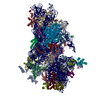
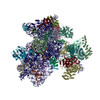
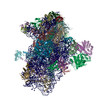
Movie
Movie Controller

[English] 日本語
 Yorodumi
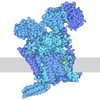
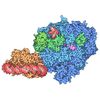
- PDB-9h74: Late-stage 48S Initiation Complex with eIF3 (LS48S-eIF3 IC) guide... -
+ Open data

- Basic information
| Entry | Database: PDB / ID: 9h74 | ||||||||||||
|---|---|---|---|---|---|---|---|---|---|---|---|---|---|
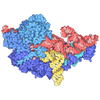
| Title | Late-stage 48S Initiation Complex with eIF3 (LS48S-eIF3 IC) guided by the trans-RNA | ||||||||||||
 Components Components |
| ||||||||||||
 Keywords Keywords | TRANSLATION / 48S late-stage initiation complex / Programmable mRNA translation initiation / trans-RNA / activation of mRNA translation | ||||||||||||
| Function / homology |  Function and homology information Function and homology informationTranslation initiation complex formation / Formation of the ternary complex, and subsequently, the 43S complex / Ribosomal scanning and start codon recognition / regulation of macromolecule metabolic process / eukaryotic initiation factor eIF2 binding / PELO:HBS1L and ABCE1 dissociate a ribosome on a non-stop mRNA / Major pathway of rRNA processing in the nucleolus and cytosol / GTP hydrolysis and joining of the 60S ribosomal subunit / L13a-mediated translational silencing of Ceruloplasmin expression / SRP-dependent cotranslational protein targeting to membrane ...Translation initiation complex formation / Formation of the ternary complex, and subsequently, the 43S complex / Ribosomal scanning and start codon recognition / regulation of macromolecule metabolic process / eukaryotic initiation factor eIF2 binding / PELO:HBS1L and ABCE1 dissociate a ribosome on a non-stop mRNA / Major pathway of rRNA processing in the nucleolus and cytosol / GTP hydrolysis and joining of the 60S ribosomal subunit / L13a-mediated translational silencing of Ceruloplasmin expression / SRP-dependent cotranslational protein targeting to membrane / Formation of a pool of free 40S subunits / Nonsense Mediated Decay (NMD) independent of the Exon Junction Complex (EJC) / Nonsense Mediated Decay (NMD) enhanced by the Exon Junction Complex (EJC) / viral translational termination-reinitiation / ZNF598 and the Ribosome-associated Quality Trigger (RQT) complex dissociate a ribosome stalled on a no-go mRNA / eukaryotic translation initiation factor 3 complex, eIF3e / cap-dependent translational initiation / eukaryotic translation initiation factor 3 complex, eIF3m / IRES-dependent viral translational initiation / translation reinitiation / eukaryotic translation initiation factor 2 complex / formation of cytoplasmic translation initiation complex / multi-eIF complex / eukaryotic translation initiation factor 3 complex / eukaryotic 43S preinitiation complex / translation factor activity, RNA binding / formation of translation preinitiation complex / mRNA cap binding / eukaryotic 48S preinitiation complex / cellular response to chemical stress / protein-synthesizing GTPase / nuclear-transcribed mRNA catabolic process, nonsense-mediated decay / regulation of translational initiation / GDP-dissociation inhibitor activity / metal-dependent deubiquitinase activity / Formation of the ternary complex, and subsequently, the 43S complex / laminin receptor activity / Ribosomal scanning and start codon recognition / Translation initiation complex formation / Formation of a pool of free 40S subunits / ubiquitin ligase inhibitor activity / endonucleolytic cleavage to generate mature 3'-end of SSU-rRNA from (SSU-rRNA, 5.8S rRNA, LSU-rRNA) / 90S preribosome / positive regulation of signal transduction by p53 class mediator / GTP hydrolysis and joining of the 60S ribosomal subunit / L13a-mediated translational silencing of Ceruloplasmin expression / phagocytic cup / gastrulation / endonucleolytic cleavage in ITS1 to separate SSU-rRNA from 5.8S rRNA and LSU-rRNA from tricistronic rRNA transcript (SSU-rRNA, 5.8S rRNA, LSU-rRNA) / translation regulator activity / rough endoplasmic reticulum / ribosomal small subunit export from nucleus / laminin binding / translation initiation factor activity / MDM2/MDM4 family protein binding / translation initiation factor binding / response to endoplasmic reticulum stress / positive regulation of apoptotic signaling pathway / DNA-(apurinic or apyrimidinic site) lyase / class I DNA-(apurinic or apyrimidinic site) endonuclease activity / GTPase activator activity / positive regulation of translation / ribosome assembly / cytosolic ribosome / maturation of SSU-rRNA / maturation of SSU-rRNA from tricistronic rRNA transcript (SSU-rRNA, 5.8S rRNA, LSU-rRNA) / small-subunit processome / translational initiation / PML body / spindle / fibrillar center / cytoplasmic stress granule / rRNA processing / regulation of translation / rhythmic process / ribosomal small subunit assembly / virus receptor activity / ribosome binding / ribosomal small subunit biogenesis / small ribosomal subunit / small ribosomal subunit rRNA binding / cytosolic small ribosomal subunit / perikaryon / cell differentiation / cytoplasmic translation / tRNA binding / cysteine-type deubiquitinase activity / postsynaptic density / mitochondrial inner membrane / rRNA binding / structural constituent of ribosome / ribosome / translation / ribonucleoprotein complex / cell division / DNA repair / mRNA binding / centrosome / GTPase activity / apoptotic process Similarity search - Function | ||||||||||||
| Biological species |   Oryctolagus cuniculus (rabbit) Oryctolagus cuniculus (rabbit) | ||||||||||||
| Method | ELECTRON MICROSCOPY / single particle reconstruction / cryo EM / Resolution: 2.9 Å | ||||||||||||
 Authors Authors | Nguyen, T.T. / Hashem, Y. / Rocha, R.E.O. / Boissier, F. / Qian, S.B. / Jia, L. / Uematsu, S. / Gu, Y. / Shi, S. | ||||||||||||
| Funding support |  United States, European Union, 3items United States, European Union, 3items
| ||||||||||||
 Citation Citation | Journal: Nat Biotechnol / Year: 2025 Title: Programmable initiation of mRNA translation by trans-RNA. Authors: Longfei Jia / Tan-Trung Nguyen / Saori Uematsu / Yifei Gu / Shengcho Shi / Yaser Hashem / Shu-Bing Qian /   Abstract: Several approaches exist to silence genes, but few tools are available to activate individual mRNAs for translation inside cells. Guiding ribosomes to specific start codons without altering the ...Several approaches exist to silence genes, but few tools are available to activate individual mRNAs for translation inside cells. Guiding ribosomes to specific start codons without altering the original sequence remains a formidable task. Here we design capped trans-RNAs capable of directing ribosomes to specific initiation sites on individual mRNAs when the trans-cap is positioned near the target start codon. Structural and biochemical data suggest that the capped trans-RNA facilitates ribosome loading and scanning on the target mRNA through a synergistic mechanism involving alternative cap recognition. The trans-RNA also acts independently of the cap on the target mRNA, enabling translation of circular RNAs lacking internal ribosome entry sites. We apply trans-RNAs in vivo to achieve programmable alternative translation of endogenous genes in mouse liver. Finally, we provide the evidence for the existence of natural transcripts that, similarly to exogenous trans-RNAs, activate translation of endogenous mRNAs. | ||||||||||||
| History |
|
- Structure visualization
| Structure viewer | Molecule: MolmilJmol/JSmol |
|---|
- Downloads & links
-Download
| PDBx/mmCIF format | 9h74.cif.gz | 2.7 MB | Display | PDBx/mmCIF format |
|---|---|---|---|---|
| PDB format | pdb9h74.ent.gz | Display | PDB format | |
| PDBx/mmJSON format | 9h74.json.gz | Tree view | PDBx/mmJSON format | |
| Others |  Other downloads Other downloads |
-Validation report
| Arichive directory | https://data.pdbj.org/pub/pdb/validation_reports/h7/9h74ftp://data.pdbj.org/pub/pdb/validation_reports/h7/9h74 | HTTPS FTP |
|---|
-Related structure data
| Related structure data |  51911MC  9h6yC M: map data used to model this data C: citing same article ( |
|---|---|
| Similar structure data |

-Links
 PDBj
PDBj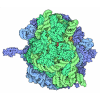
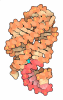
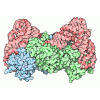
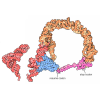
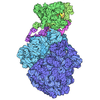
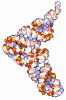
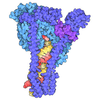
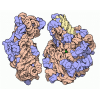
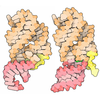
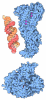
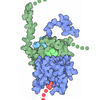
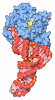
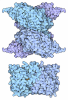
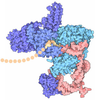

- Assembly
| Deposited unit | 
|
|---|---|
| 1 |
|
-Components
-RNA chain , 3 types, 3 molecules 123
| #1: RNA chain | Mass: 24721.828 Da / Num. of mol.: 1 / Source method: isolated from a natural source / Source: (natural) Oryctolagus cuniculus (rabbit) / Cell line: Reticulocytes / Plasmid details: Rabbit Reticulocyte Lysate, Promega L4960 |
|---|---|
| #2: RNA chain | Mass: 601015.688 Da / Num. of mol.: 1 / Source method: isolated from a natural source / Source: (natural) Oryctolagus cuniculus (rabbit) / Cell line: Reticulocytes / Plasmid details: Rabbit Reticulocyte Lysate, Promega L4960 |
| #3: RNA chain | Mass: 51665.809 Da / Num. of mol.: 1 / Source method: isolated from a natural source / Source: (natural) Oryctolagus cuniculus (rabbit) / Cell line: Reticulocytes / Plasmid details: Rabbit Reticulocyte Lysate, Promega L4960 |
-Eukaryotic translation initiation factor ... , 12 types, 12 molecules Ajmoqrstuvwy
| #4: Protein | Mass: 44692.543 Da / Num. of mol.: 1 / Source method: isolated from a natural source / Source: (natural) Oryctolagus cuniculus (rabbit) / Cell line: Reticulocytes / Plasmid details: Rabbit Reticulocyte Lysate, Promega L4960 / References: UniProt: G1T2G4 |
|---|---|
| #38: Protein | Mass: 16476.395 Da / Num. of mol.: 1 / Source method: isolated from a natural source Details: Uniprot: G1SYS4, Eukaryotic translation initiation factor 4C. Many last papers called this protein as Eukaryotic translation initiation factor 1A Source: (natural) Oryctolagus cuniculus (rabbit) / Cell line: Reticulocytes / Plasmid details: Rabbit Reticulocyte Lysate, Promega L4960 / References: UniProt: P47813 |
| #41: Protein | Mass: 64959.684 Da / Num. of mol.: 1 / Source method: isolated from a natural source / Details: G1SQV5 (162-526) / Source: (natural) Oryctolagus cuniculus (rabbit) / Cell line: Reticulocytes / Plasmid details: Rabbit Reticulocyte Lysate, Promega L4960 / References: UniProt: G1SQV5 |
| #43: Protein | Mass: 49131.520 Da / Num. of mol.: 1 / Source method: isolated from a natural source Details: G1TGW1 (2019-12-11 v2) (430 aa) and A0A5F9C5D3 (2019-12-11 v1) (398 aa). Different the C-ter of two protein isoform from the position 354 Source: (natural) Oryctolagus cuniculus (rabbit) / Cell line: Reticulocytes / Plasmid details: Rabbit Reticulocyte Lysate, Promega L4960 / References: UniProt: G1TGW1 |
| #44: Protein | Mass: 37846.730 Da / Num. of mol.: 1 / Source method: isolated from a natural source / Details: G1SLC2 (364 aa) (86-357) A0A5F9CZR4 (366 aa) / Source: (natural) Oryctolagus cuniculus (rabbit) / Cell line: Reticulocytes / Plasmid details: Rabbit Reticulocyte Lysate, Promega L4960 / References: UniProt: G1SLC2 |
| #45: Protein | Mass: 39955.324 Da / Num. of mol.: 1 / Source method: isolated from a natural source / Details: A0A1U7U441 / Source: (natural) Oryctolagus cuniculus (rabbit) / Cell line: Reticulocytes / Plasmid details: Rabbit Reticulocyte Lysate, Promega L4960 / References: UniProt: A0A1U7U441 |
| #46: Protein | Mass: 25129.709 Da / Num. of mol.: 1 / Source method: isolated from a natural source / Details: G1T3L2 / Source: (natural) Oryctolagus cuniculus (rabbit) / Cell line: Reticulocytes / Plasmid details: Rabbit Reticulocyte Lysate, Promega L4960 / References: UniProt: G1T3L2 |
| #47: Protein | Mass: 71001.477 Da / Num. of mol.: 1 / Source method: isolated from a natural source / Details: G1SED9 (607 aa) (181-552) A0A5F9DP35 (466 aa) / Source: (natural) Oryctolagus cuniculus (rabbit) / Cell line: Reticulocytes / Plasmid details: Rabbit Reticulocyte Lysate, Promega L4960 / References: UniProt: G1SED9 |
| #48: Protein | Mass: 42555.832 Da / Num. of mol.: 1 / Source method: isolated from a natural source / Details: G1SLW8 / Source: (natural) Oryctolagus cuniculus (rabbit) / Cell line: Reticulocytes / Plasmid details: Rabbit Reticulocyte Lysate, Promega L4960 / References: UniProt: G1SLW8 |
| #49: Protein | Mass: 105676.172 Da / Num. of mol.: 1 / Source method: isolated from a natural source Details: G1U971 (913 aa) A0A5F9CMJ3 (892 aa). The difference is in N-terminal of two version of protein Eukaryotic translation initiation factor 3 subunit C (A0A5F9CMJ3 - 892 aa - position 1-10 vs ...Details: G1U971 (913 aa) A0A5F9CMJ3 (892 aa). The difference is in N-terminal of two version of protein Eukaryotic translation initiation factor 3 subunit C (A0A5F9CMJ3 - 892 aa - position 1-10 vs G1U971 - 913 aa - position position 1-31) Source: (natural) Oryctolagus cuniculus (rabbit) / Cell line: Reticulocytes / Plasmid details: Rabbit Reticulocyte Lysate, Promega L4960 / References: UniProt: G1U971 |
| #50: Protein | Mass: 54199.863 Da / Num. of mol.: 1 / Source method: isolated from a natural source / Details: G1SUC8 (4-422) / Source: (natural) Oryctolagus cuniculus (rabbit) / Cell line: Reticulocytes / Plasmid details: Rabbit Reticulocyte Lysate, Promega L4960 / References: UniProt: G1SUC8 |
| #51: Protein | Mass: 164902.656 Da / Num. of mol.: 1 / Source method: isolated from a natural source Details: G1SMZ5 (1362 aa) A0A5F9C991 (1350 aa) A0A5F9CMG0 (1343 aa) A0A5F9C3S1 (1351 aa) The difference is in N-terminal of two version of protein Eukaryotic translation initiation factor 3 subunit A Source: (natural) Oryctolagus cuniculus (rabbit) / Cell line: Reticulocytes / Plasmid details: Rabbit Reticulocyte Lysate, Promega L4960 / References: UniProt: G1SMZ5 |
-Protein , 2 types, 2 molecules Bk
| #5: Protein | Mass: 52499.992 Da / Num. of mol.: 1 / Source method: isolated from a natural source / Details: Uniprot ID: A0A5F9C3W2 / Source: (natural) Oryctolagus cuniculus (rabbit) / Cell line: Reticulocytes / Plasmid details: Rabbit Reticulocyte Lysate, Promega L4960References: UniProt: A0A5F9C3W2, protein-synthesizing GTPase |
|---|---|
| #39: Protein | Mass: 67419.258 Da / Num. of mol.: 1 / Source method: isolated from a natural source / Details: G1SG72 / Source: (natural) Oryctolagus cuniculus (rabbit) / Cell line: Reticulocytes / Plasmid details: Rabbit Reticulocyte Lysate, Promega L4960 / References: UniProt: A0A5K1V8K4 |
+40S ribosomal protein ... , 23 types, 23 molecules CDGJLNOPQRTUVWXZabcdein
-Small ribosomal subunit protein ... , 5 types, 5 molecules EIKMg
| #8: Protein | Mass: 29099.955 Da / Num. of mol.: 1 / Source method: isolated from a natural source / Details: A0AAA9WW19 / Source: (natural) Oryctolagus cuniculus (rabbit) / Cell line: Reticulocytes / Plasmid details: Rabbit Reticulocyte Lysate, Promega L4960 / References: UniProt: A0AAA9WW19 |
|---|---|
| #12: Protein | Mass: 28755.895 Da / Num. of mol.: 1 / Source method: isolated from a natural source / Details: G1TM55 / Source: (natural) Oryctolagus cuniculus (rabbit) / Cell line: Reticulocytes / Plasmid details: Rabbit Reticulocyte Lysate, Promega L4960 / References: UniProt: G1TM55 |
| #14: Protein | Mass: 24163.244 Da / Num. of mol.: 1 / Source method: isolated from a natural source / Details: G1TJW1 / Source: (natural) Oryctolagus cuniculus (rabbit) / Cell line: Reticulocytes / Plasmid details: Rabbit Reticulocyte Lysate, Promega L4960 / References: UniProt: G1TJW1 |
| #16: Protein | Mass: 17156.865 Da / Num. of mol.: 1 / Source method: isolated from a natural source / Details: G1U0Y5 / Source: (natural) Oryctolagus cuniculus (rabbit) / Cell line: Reticulocytes / Plasmid details: Rabbit Reticulocyte Lysate, Promega L4960 / References: UniProt: G1U0Y5 |
| #36: Protein | Mass: 35115.652 Da / Num. of mol.: 1 / Source method: isolated from a natural source / Details: G1SJB4 / Source: (natural) Oryctolagus cuniculus (rabbit) / Cell line: Reticulocytes / Plasmid details: Rabbit Reticulocyte Lysate, Promega L4960 / References: UniProt: G1SJB4 |
-Ribosomal protein ... , 5 types, 5 molecules FHSYf
| #9: Protein | Mass: 26715.344 Da / Num. of mol.: 1 / Source method: isolated from a natural source / Details: G1TNM3 / Source: (natural) Oryctolagus cuniculus (rabbit) / Cell line: Reticulocytes / Plasmid details: Rabbit Reticulocyte Lysate, Promega L4960 / References: UniProt: G1TNM3 |
|---|---|
| #11: Protein | Mass: 22913.453 Da / Num. of mol.: 1 / Source method: isolated from a natural source / Details: G1TFM5 / Source: (natural) Oryctolagus cuniculus (rabbit) / Cell line: Reticulocytes / Plasmid details: Rabbit Reticulocyte Lysate, Promega L4960 / References: UniProt: G1TFM5 |
| #22: Protein | Mass: 16477.377 Da / Num. of mol.: 1 / Source method: isolated from a natural source / Details: G1SGX4 / Source: (natural) Oryctolagus cuniculus (rabbit) / Cell line: Reticulocytes / Plasmid details: Rabbit Reticulocyte Lysate, Promega L4960 / References: UniProt: G1SGX4 |
| #28: Protein | Mass: 14865.555 Da / Num. of mol.: 1 / Source method: isolated from a natural source / Details: G1TG89 / Source: (natural) Oryctolagus cuniculus (rabbit) / Cell line: Reticulocytes / Plasmid details: Rabbit Reticulocyte Lysate, Promega L4960 / References: UniProt: G1TG89 |
| #35: Protein | Mass: 18004.041 Da / Num. of mol.: 1 / Source method: isolated from a natural source / Details: G1SK22 / Source: (natural) Oryctolagus cuniculus (rabbit) / Cell line: Reticulocytes / Plasmid details: Rabbit Reticulocyte Lysate, Promega L4960 / References: UniProt: G1SK22 |
-Protein/peptide / Non-polymers , 2 types, 3 molecules l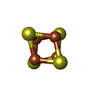
| #40: Protein/peptide | Mass: 3473.451 Da / Num. of mol.: 1 / Source method: isolated from a natural source / Details: A0A087WNH4 / Source: (natural) Oryctolagus cuniculus (rabbit) / Cell line: Reticulocytes / Plasmid details: Rabbit Reticulocyte Lysate, Promega L4960 / References: UniProt: A0A087WNH4 |
|---|---|
| #52: Chemical | 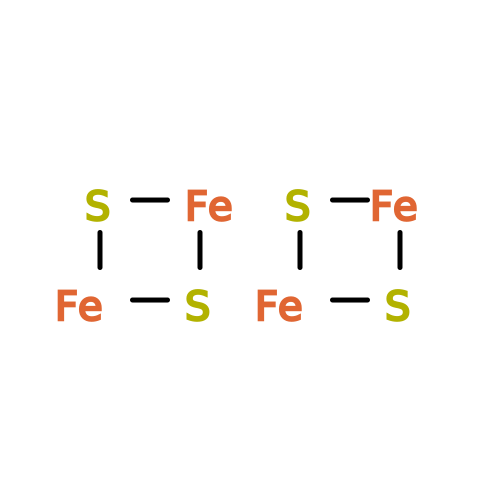 Mass: 351.640 Da / Num. of mol.: 2 / Source method: obtained synthetically / Formula: Fe4S4 / Feature type: SUBJECT OF INVESTIGATION Mass: 351.640 Da / Num. of mol.: 2 / Source method: obtained synthetically / Formula: Fe4S4 / Feature type: SUBJECT OF INVESTIGATION |
-Details
| Has ligand of interest | Y |
|---|---|
| Has protein modification | N |
-Experimental details
-Experiment
| Experiment | Method: ELECTRON MICROSCOPY |
|---|---|
| EM experiment | Aggregation state: PARTICLE / 3D reconstruction method: single particle reconstruction |
- Sample preparation
| Component | Name: Late-stage 48S Initiation Complex with eIF3 (LS48S-eIF3 IC) guided by the trans-RNA of 15 nt length, purification method of biotinylated DNA-oligo pull-down Type: RIBOSOME / Entity ID: #1-#51 / Source: NATURAL | ||||||||||||||||||||||||||||||
|---|---|---|---|---|---|---|---|---|---|---|---|---|---|---|---|---|---|---|---|---|---|---|---|---|---|---|---|---|---|---|---|
| Molecular weight | Value: 1.5 MDa / Experimental value: NO | ||||||||||||||||||||||||||||||
| Source (natural) | Organism: Oryctolagus cuniculus (rabbit) | ||||||||||||||||||||||||||||||
| Buffer solution | pH: 7.4 Details: 10 mM HEPES-KOH pH 7.4, 5 mM Mg(OAc)2, 50 mM KOAc, 10 mM NH4Cl, 2 mM DTT and Roche cOmplete protease inhibitor cocktail | ||||||||||||||||||||||||||||||
| Buffer component |
| ||||||||||||||||||||||||||||||
| Specimen | Conc.: 0.4 mg/ml / Embedding applied: NO / Shadowing applied: NO / Staining applied: NO / Vitrification applied: YES Details: late-stage 48S initiation translation complex with eIF3 (LS48S-eIF3 IC) was dissolved in 20 microlitre buffer containing 10 mM HEPES-KOH pH 7.4, 5 mM Mg(OAc)2, 50 mM KOAc, 10 mM NH4Cl, 2 mM ...Details: late-stage 48S initiation translation complex with eIF3 (LS48S-eIF3 IC) was dissolved in 20 microlitre buffer containing 10 mM HEPES-KOH pH 7.4, 5 mM Mg(OAc)2, 50 mM KOAc, 10 mM NH4Cl, 2 mM DTT and Roche cOmplete protease inhibitor cocktail | ||||||||||||||||||||||||||||||
| Specimen support | Details: glow-discharged at 2.5 mA for 20 s / Grid material: COPPER / Grid mesh size: 300 divisions/in. / Grid type: Quantifoil R2/2 | ||||||||||||||||||||||||||||||
| Vitrification | Instrument: FEI VITROBOT MARK IV / Cryogen name: ETHANE / Humidity: 100 % / Chamber temperature: 277 K Details: The sample was incubated on the grid for 30 s and then blotted with filter paper from both sides for 1.5 s with the blot force 5 |
- Electron microscopy imaging
| Experimental equipment | 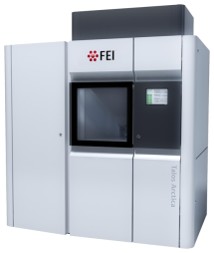 Model: Talos Arctica / Image courtesy: FEI Company |
|---|---|
| Microscopy | Model: FEI TALOS ARCTICA |
| Electron gun | Electron source:  FIELD EMISSION GUN / Accelerating voltage: 200 kV / Illumination mode: FLOOD BEAM FIELD EMISSION GUN / Accelerating voltage: 200 kV / Illumination mode: FLOOD BEAM |
| Electron lens | Mode: BRIGHT FIELD / Nominal magnification: 59000 X / Nominal defocus max: 2500 nm / Nominal defocus min: 500 nm / Cs: 2.7 mm / C2 aperture diameter: 30 µm / Alignment procedure: COMA FREE |
| Specimen holder | Cryogen: NITROGEN / Specimen holder model: FEI TITAN KRIOS AUTOGRID HOLDER / Temperature (max): 95 K / Temperature (min): 90 K |
| Image recording | Average exposure time: 6 sec. / Electron dose: 50 e/Å2 / Detector mode: COUNTING / Film or detector model: GATAN K2 SUMMIT (4k x 4k) / Num. of grids imaged: 1 / Num. of real images: 9524 |
| Image scans | Sampling size: 6.35 µm / Width: 4096 / Height: 4096 / Movie frames/image: 40 / Used frames/image: 1-40 |
- Processing
| EM software |
| |||||||||||||||||||||||||||||||||||||||||||||
|---|---|---|---|---|---|---|---|---|---|---|---|---|---|---|---|---|---|---|---|---|---|---|---|---|---|---|---|---|---|---|---|---|---|---|---|---|---|---|---|---|---|---|---|---|---|---|
| CTF correction | Type: PHASE FLIPPING AND AMPLITUDE CORRECTION | |||||||||||||||||||||||||||||||||||||||||||||
| 3D reconstruction | Resolution: 2.9 Å / Resolution method: OTHER / Num. of particles: 1000 / Symmetry type: POINT | |||||||||||||||||||||||||||||||||||||||||||||
| Atomic model building | Protocol: RIGID BODY FIT Details: The atomic model of LS48S IC complex (PDB: 8P09) was initially rigid body fitted in density using ChimeraX and further model building was done for mRNA, eIF5 N-terminal domain, eIF2gamma, ...Details: The atomic model of LS48S IC complex (PDB: 8P09) was initially rigid body fitted in density using ChimeraX and further model building was done for mRNA, eIF5 N-terminal domain, eIF2gamma, eIF3d and eIF3 octamer in ChimeraX. Densities for eIF5 N-terminal domain, eIF2gamma, eIF3d and eIF3 octamer were observed in the map and therefore were included in the model. The 3D structure of the eIF5-N terminal domain was generated by Alphafold2 (PDB: G1TGW1). It was then accommodated into the model by aligning structurally to its counterparts in the yeast atomic model of the py48S-eIF5N pre-initiation complex (PDB: 6FYX). IF3d and eIF3 octamer were taken from the atomic model of LS48S IC complex with eIF3 proteins (PDB: 6YAM) and placed into density by rigid-body fitting. The atomic models with and without eIF3 proteins were inspected visually and performed stereochemical, torsional, angle refinement and optimization by using ISOLDE v1.6. Figures featuring cryo-EM densities and atomic models were visualized by using ChimeraX. | |||||||||||||||||||||||||||||||||||||||||||||
| Atomic model building | 3D fitting-ID: 1
|