Mediator of RNA polymerase II transcription subunit 7 / Mediator of RNA polymerase II transcription subunit 14 / Mediator of RNA polymerase II transcription subunit 24 / Mediator of RNA polymerase II transcription subunit 6 / Mediator of RNA polymerase II transcription subunit 21 / Mediator of RNA polymerase II transcription subunit 22 / Mediator of RNA polymerase II transcription subunit 1 / Mediator of RNA polymerase II transcription subunit 27 / Mediator of RNA polymerase II transcription subunit 25 / Mediator of RNA polymerase II transcription subunit 8 ...Mediator of RNA polymerase II transcription subunit 7 / Mediator of RNA polymerase II transcription subunit 14 / Mediator of RNA polymerase II transcription subunit 24 / Mediator of RNA polymerase II transcription subunit 6 / Mediator of RNA polymerase II transcription subunit 21 / Mediator of RNA polymerase II transcription subunit 22 / Mediator of RNA polymerase II transcription subunit 1 / Mediator of RNA polymerase II transcription subunit 27 / Mediator of RNA polymerase II transcription subunit 25 / Mediator of RNA polymerase II transcription subunit 8 / Mediator of RNA polymerase II transcription subunit 30 / Mediator of RNA polymerase II transcription subunit 15 / Mediator of RNA polymerase II transcription subunit 10 / Mediator of RNA polymerase II transcription subunit 18 / Mediator of RNA polymerase II transcription subunit 28 / Mediator of RNA polymerase II transcription subunit 20 / Mediator of RNA polymerase II transcription subunit 4 / Mediator of RNA polymerase II transcription subunit 17 / Mediator of RNA polymerase II transcription subunit 9 / Mediator of RNA polymerase II transcription subunit 29 / Mediator of RNA polymerase II transcription subunit 11 / Mediator of RNA polymerase II transcription subunit 13 / Mediator of RNA polymerase II transcription subunit 23 / Mediator of RNA polymerase II transcription subunit 16 / Mediator of RNA polymerase II transcription subunit 31 Similarity search - Component
Biological species
Homo sapiens (human)
Method
ELECTRON MICROSCOPY / single particle reconstruction / cryo EM / Resolution: 4.66 Å
National Institutes of Health/National Cancer Institute (NIH/NCI)
R01-67167
United States
Citation
Journal: Mol Cell / Year: 2024 Title: An IDR-dependent mechanism for nuclear receptor control of Mediator interaction with RNA polymerase II. Authors: Haiyan Zhao / Jiaqin Li / Yufei Xiang / Sohail Malik / Supriya V Vartak / Giovana M B Veronezi / Natalie Young / McKayla Riney / Jens Kalchschmidt / Andrea Conte / Seol Kyoung Jung / ...Authors: Haiyan Zhao / Jiaqin Li / Yufei Xiang / Sohail Malik / Supriya V Vartak / Giovana M B Veronezi / Natalie Young / McKayla Riney / Jens Kalchschmidt / Andrea Conte / Seol Kyoung Jung / Srinivas Ramachandran / Robert G Roeder / Yi Shi / Rafael Casellas / Francisco J Asturias / Abstract: The essential Mediator (MED) coactivator complex plays a well-understood role in regulation of basal transcription in all eukaryotes, but the mechanism underlying its role in activator-dependent ...The essential Mediator (MED) coactivator complex plays a well-understood role in regulation of basal transcription in all eukaryotes, but the mechanism underlying its role in activator-dependent transcription remains unknown. We investigated modulation of metazoan MED interaction with RNA polymerase II (RNA Pol II) by antagonistic effects of the MED26 subunit and the CDK8 kinase module (CKM). Biochemical analysis of CKM-MED showed that the CKM blocks binding of the RNA Pol II carboxy-terminal domain (CTD), preventing RNA Pol II interaction. This restriction is eliminated by nuclear receptor (NR) binding to CKM-MED, which enables CTD binding in a MED26-dependent manner. Cryoelectron microscopy (cryo-EM) and crosslinking-mass spectrometry (XL-MS) revealed that the structural basis for modulation of CTD interaction with MED relates to a large intrinsically disordered region (IDR) in CKM subunit MED13 that blocks MED26 and CTD interaction with MED but is repositioned upon NR binding. Hence, NRs can control transcription initiation by priming CKM-MED for MED26-dependent RNA Pol II interaction.
A: Mediator of RNA polymerase II transcription subunit 1 B: Mediator of RNA polymerase II transcription subunit 4 C: Mediator of RNA polymerase II transcription subunit 6 D: Mediator of RNA polymerase II transcription subunit 7 E: Mediator of RNA polymerase II transcription subunit 8 F: Mediator of RNA polymerase II transcription subunit 9 G: Mediator of RNA polymerase II transcription subunit 10 H: Mediator of RNA polymerase II transcription subunit 11 I: Mediator of RNA polymerase II transcription subunit 14 J: Mediator of RNA polymerase II transcription subunit 15 K: Mediator of RNA polymerase II transcription subunit 16 L: Mediator of RNA polymerase II transcription subunit 17 M: Mediator of RNA polymerase II transcription subunit 18 O: Mediator of RNA polymerase II transcription subunit 20 P: Mediator of RNA polymerase II transcription subunit 21 Q: Mediator of RNA polymerase II transcription subunit 22 R: Mediator of RNA polymerase II transcription subunit 23 S: Mediator of RNA polymerase II transcription subunit 24 T: Mediator of RNA polymerase II transcription subunit 25 V: Mediator of RNA polymerase II transcription subunit 27 W: Mediator of RNA polymerase II transcription subunit 28 X: Mediator of RNA polymerase II transcription subunit 29 Y: Mediator of RNA polymerase II transcription subunit 30 Z: Mediator of RNA polymerase II transcription subunit 31 a: Unknown Peptide 9: Mediator of RNA polymerase II transcription subunit 13
Mediator of RNA polymerase II transcription subunit ... , 25 types, 25 molecules ABCDEFGHIJKLMOPQRSTVWXYZ9
#1: Protein
MediatorofRNApolymeraseIItranscriptionsubunit1 / Activator-recruited cofactor 205 kDa component / ARC205 / Mediator complex subunit 1 / Peroxisome ...Activator-recruited cofactor 205 kDa component / ARC205 / Mediator complex subunit 1 / Peroxisome proliferator-activated receptor-binding protein / PBP / PPAR-binding protein / Thyroid hormone receptor-associated protein complex 220 kDa component / Trap220 / Thyroid receptor-interacting protein 2 / TR-interacting protein 2 / TRIP-2 / Vitamin D receptor-interacting protein complex component DRIP205 / p53 regulatory protein RB18A
Mass: 168697.328 Da / Num. of mol.: 1 / Source method: isolated from a natural source / Source: (natural) Homo sapiens (human) / Cell line: HELA / References: UniProt: Q15648
Mass: 29781.424 Da / Num. of mol.: 1 / Source method: isolated from a natural source / Source: (natural) Homo sapiens (human) / Cell line: HELA / References: UniProt: Q9NPJ6
Mass: 28464.627 Da / Num. of mol.: 1 / Source method: isolated from a natural source / Source: (natural) Homo sapiens (human) / Cell line: HELA / References: UniProt: O75586
In the structure databanks used in Yorodumi, some data are registered as the other names, "COVID-19 virus" and "2019-nCoV". Here are the details of the virus and the list of structure data.
Jan 31, 2019. EMDB accession codes are about to change! (news from PDBe EMDB page)
EMDB accession codes are about to change! (news from PDBe EMDB page)
The allocation of 4 digits for EMDB accession codes will soon come to an end. Whilst these codes will remain in use, new EMDB accession codes will include an additional digit and will expand incrementally as the available range of codes is exhausted. The current 4-digit format prefixed with “EMD-” (i.e. EMD-XXXX) will advance to a 5-digit format (i.e. EMD-XXXXX), and so on. It is currently estimated that the 4-digit codes will be depleted around Spring 2019, at which point the 5-digit format will come into force.
The EM Navigator/Yorodumi systems omit the EMD- prefix.
Related info.:Q: What is EMD? / ID/Accession-code notation in Yorodumi/EM Navigator
Yorodumi is a browser for structure data from EMDB, PDB, SASBDB, etc.
This page is also the successor to EM Navigator detail page, and also detail information page/front-end page for Omokage search.
The word "yorodu" (or yorozu) is an old Japanese word meaning "ten thousand". "mi" (miru) is to see.
Related info.:EMDB / PDB / SASBDB / Comparison of 3 databanks / Yorodumi Search / Aug 31, 2016. New EM Navigator & Yorodumi / Yorodumi Papers / Jmol/JSmol / Function and homology information / Changes in new EM Navigator and Yorodumi
 Movie
Movie Controller


 Open data
 Basic information
 Components
 Keywords
 Function and homology information
 Homo sapiens (human)
 Authors
 United States, 1items
  Citation
 Structure visualization
 Downloads & links
 Other downloads


 PDBj
PDBj
 Assembly
 Sample preparation
 Electron microscopy imaging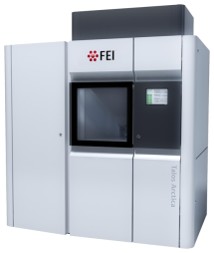
 FIELD EMISSION GUN / Accelerating voltage: 200 kV / Illumination mode: FLOOD BEAM
 Processing