U2 snRNA 3'-end processing / regulation of fertilization / NELF complex / protein localization to nuclear envelope / NTRK3 as a dependence receptor / snRNA 3'-end processing / PP2A-mediated dephosphorylation of key metabolic factors / RNA polymerase II CTD heptapeptide repeat S2 phosphatase activity / RNA polymerase II CTD heptapeptide repeat S7 phosphatase activity / regulation of hippo signaling ...U2 snRNA 3'-end processing / regulation of fertilization / NELF complex / protein localization to nuclear envelope / NTRK3 as a dependence receptor / snRNA 3'-end processing / PP2A-mediated dephosphorylation of key metabolic factors / RNA polymerase II CTD heptapeptide repeat S2 phosphatase activity / RNA polymerase II CTD heptapeptide repeat S7 phosphatase activity / regulation of hippo signaling / negative regulation of DNA-templated transcription, elongation / MASTL Facilitates Mitotic Progression / transcription pausing by RNA polymerase II / protein phosphatase type 2A complex / meiotic sister chromatid cohesion, centromeric / INTAC complex / negative regulation of stem cell differentiation / RNA polymerase II CTD heptapeptide repeat S5 phosphatase activity / FAR/SIN/STRIPAK complex / Regulation of glycolysis by fructose 2,6-bisphosphate metabolism / Inhibition of replication initiation of damaged DNA by RB1/E2F1 / snRNA processing / DSIF complex / centrosome localization / regulation of growth / protein phosphatase regulator activity / protein antigen binding / GABA receptor binding / APC truncation mutants have impaired AXIN binding / AXIN missense mutants destabilize the destruction complex / Truncations of AMER1 destabilize the destruction complex / regulation of transcription elongation by RNA polymerase II / B-WICH complex positively regulates rRNA expression / RNA Polymerase I Transcription Initiation / RNA Polymerase I Promoter Escape / RNA Polymerase I Transcription Termination / RNA Polymerase III Transcription Initiation From Type 1 Promoter / RNA Polymerase III Transcription Initiation From Type 2 Promoter / RNA Polymerase III Transcription Initiation From Type 3 Promoter / Hydrolases; Acting on ester bonds; Endoribonucleases producing 3'-phosphomonoesters / Formation of RNA Pol II elongation complex / Formation of the Early Elongation Complex / Transcriptional regulation by small RNAs / RNA Polymerase II Pre-transcription Events / TP53 Regulates Transcription of DNA Repair Genes / FGFR2 alternative splicing / RNA polymerase II transcribes snRNA genes / mRNA Capping / mRNA Splicing - Minor Pathway / Processing of Capped Intron-Containing Pre-mRNA / RNA Polymerase II Promoter Escape / RNA Polymerase II Transcription Pre-Initiation And Promoter Opening / RNA Polymerase II Transcription Initiation / RNA Polymerase II Transcription Elongation / RNA Polymerase II Transcription Initiation And Promoter Clearance / RNA Pol II CTD phosphorylation and interaction with CE / Estrogen-dependent gene expression / mRNA Splicing - Major Pathway / ERKs are inactivated / mRNA Polyadenylation / Formation of TC-NER Pre-Incision Complex / Dual incision in TC-NER / Gap-filling DNA repair synthesis and ligation in TC-NER / T cell homeostasis / Beta-catenin phosphorylation cascade / Signaling by GSK3beta mutants / CTNNB1 S33 mutants aren't phosphorylated / CTNNB1 S37 mutants aren't phosphorylated / CTNNB1 S45 mutants aren't phosphorylated / CTNNB1 T41 mutants aren't phosphorylated / Initiation of Nuclear Envelope (NE) Reformation / Co-stimulation by CD28 / integrator complex / positive regulation of DNA-templated transcription, elongation / RNA polymerase II transcription initiation surveillance / Disassembly of the destruction complex and recruitment of AXIN to the membrane / Abortive elongation of HIV-1 transcript in the absence of Tat / protein dephosphorylation / negative regulation of glycolytic process through fructose-6-phosphate / negative regulation of epithelial to mesenchymal transition / Co-inhibition by CTLA4 / kinetochore assembly / Platelet sensitization by LDL / protein-serine/threonine phosphatase / negative regulation of transcription elongation by RNA polymerase II / RNA Pol II CTD phosphorylation and interaction with CE during HIV infection / RNA Pol II CTD phosphorylation and interaction with CE / ERK/MAPK targets / Formation of the Early Elongation Complex / Formation of the HIV-1 Early Elongation Complex / mRNA Capping / flagellated sperm motility / vascular endothelial cell response to oscillatory fluid shear stress / protein serine/threonine phosphatase activity / regulation of cell differentiation / positive regulation of macroautophagy / regulation of microtubule polymerization / RNA polymerase II transcribes snRNA genes / Pausing and recovery of Tat-mediated HIV elongation / Tat-mediated HIV elongation arrest and recovery Similarity search - Function
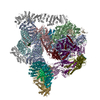
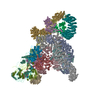
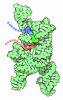
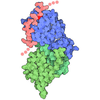
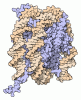
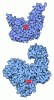
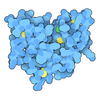
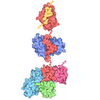
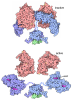
Journal: Nature / Year: 2024 Title: Structural basis of Integrator-dependent RNA polymerase II termination. Authors: Isaac Fianu / Moritz Ochmann / James L Walshe / Olexandr Dybkov / Joseph Neos Cruz / Henning Urlaub / Patrick Cramer / Abstract: The Integrator complex can terminate RNA polymerase II (Pol II) in the promoter-proximal region of genes. Previous work has shed light on how Integrator binds to the paused elongation complex ...The Integrator complex can terminate RNA polymerase II (Pol II) in the promoter-proximal region of genes. Previous work has shed light on how Integrator binds to the paused elongation complex consisting of Pol II, the DRB sensitivity-inducing factor (DSIF) and the negative elongation factor (NELF) and how it cleaves the nascent RNA transcript, but has not explained how Integrator removes Pol II from the DNA template. Here we present three cryo-electron microscopy structures of the complete Integrator-PP2A complex in different functional states. The structure of the pre-termination complex reveals a previously unresolved, scorpion-tail-shaped INTS10-INTS13-INTS14-INTS15 module that may use its 'sting' to open the DSIF DNA clamp and facilitate termination. The structure of the post-termination complex shows that the previously unresolved subunit INTS3 and associated sensor of single-stranded DNA complex (SOSS) factors prevent Pol II rebinding to Integrator after termination. The structure of the free Integrator-PP2A complex in an inactive closed conformation reveals that INTS6 blocks the PP2A phosphatase active site. These results lead to a model for how Integrator terminates Pol II transcription in three steps that involve major rearrangements.
Mass: 1890.321 Da / Num. of mol.: 1 Source method: isolated from a genetically manipulated source Source: (gene. exp.) Homo sapiens (human) / Production host: Trichoplusia ni (cabbage looper)
Mass: 24644.318 Da / Num. of mol.: 1 / Source method: isolated from a natural source / Source: (natural) Sus scrofa (pig) / References: UniProt: I3LSI7
#8: Protein
DNA-directedRNApolymeraseIIsubunitRPB7
Mass: 19314.283 Da / Num. of mol.: 1 / Source method: isolated from a natural source / Source: (natural) Sus scrofa (pig) / References: UniProt: A0A4X1VKG7
#10: Protein
DNA-directedRNApolymeraseIIsubunitRPB9 / RNA polymerase II subunit B9 / DNA-directed RNA polymerase II subunit I / RNA polymerase II 14.5 ...RNA polymerase II subunit B9 / DNA-directed RNA polymerase II subunit I / RNA polymerase II 14.5 kDa subunit / RPB14.5
Mass: 14541.221 Da / Num. of mol.: 1 / Source method: isolated from a natural source / Source: (natural) Sus scrofa (pig) / References: UniProt: P60899
#12: Protein
DNA-directedRNApolymeraseIIsubunitRPB11-a
Mass: 13310.284 Da / Num. of mol.: 1 / Source method: isolated from a natural source / Source: (natural) Sus scrofa (pig) / References: UniProt: F1RKE4
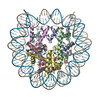
Mass: 14093.484 Da / Num. of mol.: 2 Source method: isolated from a genetically manipulated source Details: MSGRGKQGGKARAKAKSRSSRAGLQFPVGRVHRLLRKGNYAERVGAGAPVYLAAVLEYLTAEILELAGNAARDNKKTRIIPRHLQLAVRNDEELNKLLGKVTIAQGGVLPNIQAVLLPKKTESHHKAKGK Source: (gene. exp.) Homo sapiens (human) / Production host: Escherichia coli (E. coli) / References: UniProt: P02262
#19: Protein
HistoneH2Btype1-J
Mass: 13981.267 Da / Num. of mol.: 2 Source method: isolated from a genetically manipulated source Source: (gene. exp.) Homo sapiens (human) / Gene: H2BC11 / Production host: Escherichia coli (E. coli) / References: UniProt: P06899
In the structure databanks used in Yorodumi, some data are registered as the other names, "COVID-19 virus" and "2019-nCoV". Here are the details of the virus and the list of structure data.
Jan 31, 2019. EMDB accession codes are about to change! (news from PDBe EMDB page)
EMDB accession codes are about to change! (news from PDBe EMDB page)
The allocation of 4 digits for EMDB accession codes will soon come to an end. Whilst these codes will remain in use, new EMDB accession codes will include an additional digit and will expand incrementally as the available range of codes is exhausted. The current 4-digit format prefixed with “EMD-” (i.e. EMD-XXXX) will advance to a 5-digit format (i.e. EMD-XXXXX), and so on. It is currently estimated that the 4-digit codes will be depleted around Spring 2019, at which point the 5-digit format will come into force.
The EM Navigator/Yorodumi systems omit the EMD- prefix.
Related info.:Q: What is EMD? / ID/Accession-code notation in Yorodumi/EM Navigator
Yorodumi is a browser for structure data from EMDB, PDB, SASBDB, etc.
This page is also the successor to EM Navigator detail page, and also detail information page/front-end page for Omokage search.
The word "yorodu" (or yorozu) is an old Japanese word meaning "ten thousand". "mi" (miru) is to see.
Related info.:EMDB / PDB / SASBDB / Comparison of 3 databanks / Yorodumi Search / Aug 31, 2016. New EM Navigator & Yorodumi / Yorodumi Papers / Jmol/JSmol / Function and homology information / Changes in new EM Navigator and Yorodumi
 Movie
Movie Controller

 Yorodumi
 Open data
 Basic information
 Components
 Keywords
 Function and homology information
 Homo sapiens (human)
 Sus scrofa (pig)
 Trichoplusia ni (cabbage looper)
 Authors
 Germany, European Union, 3items
  Citation
 Structure visualization
 Downloads & links
 Other downloads



 PDBj
PDBj
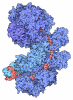
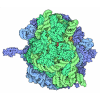
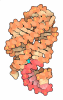
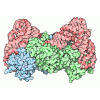
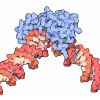
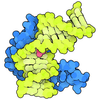
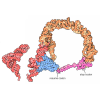
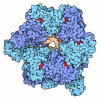
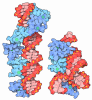
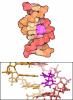
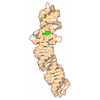
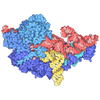
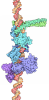
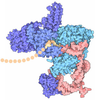
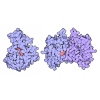
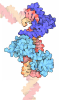
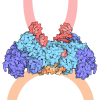
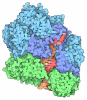
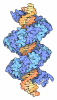
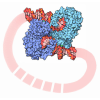
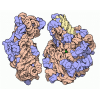
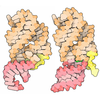
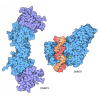
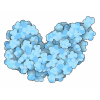
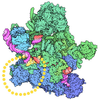
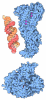
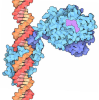
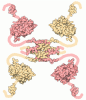
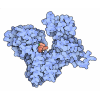
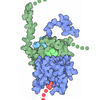

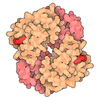
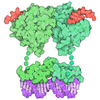
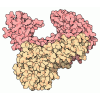
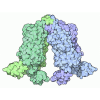
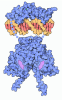
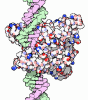
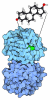
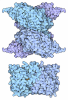
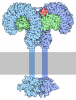
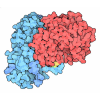
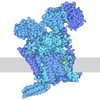
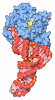
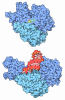
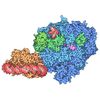
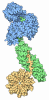
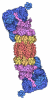
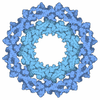

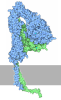
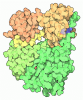
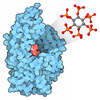
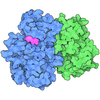
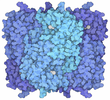
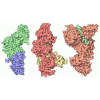
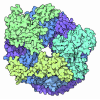
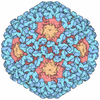
 Assembly

 Escherichia coli (E. coli)



 Sample preparation
 Electron microscopy imaging
 FIELD EMISSION GUN / Accelerating voltage: 300 kV / Illumination mode: OTHER
 Processing