 Movie
Movie Controller

[English] 日本語
 Yorodumi
- PDB-5jco: Structure and dynamics of single-isoform recombinant neuronal hum... -
+ Open data

- Basic information
| Entry | Database: PDB / ID: 5jco | ||||||||||||
|---|---|---|---|---|---|---|---|---|---|---|---|---|---|
| Title | Structure and dynamics of single-isoform recombinant neuronal human tubulin | ||||||||||||
 Components Components |
| ||||||||||||
 Keywords Keywords | STRUCTURAL PROTEIN / microtubules / tubulin / single isoform / recombinant / dynamic instability | ||||||||||||
| Function / homology |  Function and homology information Function and homology informationnetrin receptor binding / Cargo trafficking to the periciliary membrane / dorsal root ganglion development / Post-chaperonin tubulin folding pathway / axonemal microtubule / cytoskeleton-dependent intracellular transport / Carboxyterminal post-translational modifications of tubulin / Microtubule-dependent trafficking of connexons from Golgi to the plasma membrane / organelle transport along microtubule / forebrain morphogenesis ...netrin receptor binding / Cargo trafficking to the periciliary membrane / dorsal root ganglion development / Post-chaperonin tubulin folding pathway / axonemal microtubule / cytoskeleton-dependent intracellular transport / Carboxyterminal post-translational modifications of tubulin / Microtubule-dependent trafficking of connexons from Golgi to the plasma membrane / organelle transport along microtubule / forebrain morphogenesis / glial cell differentiation / cerebellar cortex morphogenesis / dentate gyrus development / Sealing of the nuclear envelope (NE) by ESCRT-III / Intraflagellar transport / neuron projection arborization / Formation of tubulin folding intermediates by CCT/TriC / Gap junction assembly / smoothened signaling pathway / motor behavior / pyramidal neuron differentiation / Kinesins / Prefoldin mediated transfer of substrate to CCT/TriC / response to L-glutamate / COPI-independent Golgi-to-ER retrograde traffic / Assembly and cell surface presentation of NMDA receptors / centrosome cycle / COPI-dependent Golgi-to-ER retrograde traffic / 'de novo' protein folding / intercellular bridge / startle response / flagellated sperm motility / regulation of synapse organization / Recycling pathway of L1 / microtubule polymerization / locomotory exploration behavior / response to tumor necrosis factor / homeostasis of number of cells within a tissue / response to mechanical stimulus / sperm flagellum / adult locomotory behavior / RHO GTPases activate IQGAPs / microtubule-based process / Hedgehog 'off' state / COPI-mediated anterograde transport / condensed chromosome / Activation of AMPK downstream of NMDARs / peptide binding / ciliary tip / Loss of Nlp from mitotic centrosomes / Loss of proteins required for interphase microtubule organization from the centrosome / Recruitment of mitotic centrosome proteins and complexes / MHC class II antigen presentation / Recruitment of NuMA to mitotic centrosomes / Anchoring of the basal body to the plasma membrane / cellular response to calcium ion / HSP90 chaperone cycle for steroid hormone receptors (SHR) in the presence of ligand / Mitotic Prometaphase / EML4 and NUDC in mitotic spindle formation / axon guidance / AURKA Activation by TPX2 / Resolution of Sister Chromatid Cohesion / cell periphery / Translocation of SLC2A4 (GLUT4) to the plasma membrane / filopodium / sperm principal piece / sperm end piece / neuromuscular junction / neuron migration / cerebral cortex development / visual learning / RHO GTPases Activate Formins / intracellular protein transport / memory / synapse organization / microtubule cytoskeleton organization / PKR-mediated signaling / recycling endosome / neuron apoptotic process / mitotic spindle / structural constituent of cytoskeleton / neuron differentiation / cytoplasmic ribonucleoprotein granule / HCMV Early Events / Aggrephagy / The role of GTSE1 in G2/M progression after G2 checkpoint / microtubule cytoskeleton / Separation of Sister Chromatids / Regulation of PLK1 Activity at G2/M Transition / mitotic cell cycle / lamellipodium / growth cone / protein-folding chaperone binding / cilium / microtubule binding / microtubule / Hydrolases; Acting on acid anhydrides; Acting on GTP to facilitate cellular and subcellular movement / protein stabilization / protein heterodimerization activity / axon Similarity search - Function | ||||||||||||
| Biological species |  Homo sapiens (human) Homo sapiens (human) | ||||||||||||
| Method | ELECTRON MICROSCOPY / helical reconstruction / cryo EM / Resolution: 4 Å | ||||||||||||
 Authors Authors | Vemu, A. / Atherton, J. / Spector, J.O. / Szyk, A. / Moores, C.A. / Roll-Mecak, A. | ||||||||||||
| Funding support |  United Kingdom, United Kingdom,  United States, 3items United States, 3items
| ||||||||||||
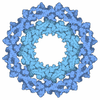
 Citation Citation | Journal: J Biol Chem / Year: 2016 Title: Structure and Dynamics of Single-isoform Recombinant Neuronal Human Tubulin. Authors: Annapurna Vemu / Joseph Atherton / Jeffrey O Spector / Agnieszka Szyk / Carolyn A Moores / Antonina Roll-Mecak / Abstract: Microtubules are polymers that cycle stochastically between polymerization and depolymerization, i.e. they exhibit "dynamic instability." This behavior is crucial for cell division, motility, and ...Microtubules are polymers that cycle stochastically between polymerization and depolymerization, i.e. they exhibit "dynamic instability." This behavior is crucial for cell division, motility, and differentiation. Although studies in the last decade have made fundamental breakthroughs in our understanding of how cellular effectors modulate microtubule dynamics, analysis of the relationship between tubulin sequence, structure, and dynamics has been held back by a lack of dynamics measurements with and structural characterization of homogeneous isotypically pure engineered tubulin. Here, we report for the first time the cryo-EM structure and in vitro dynamics parameters of recombinant isotypically pure human tubulin. α1A/βIII is a purely neuronal tubulin isoform. The 4.2-Å structure of post-translationally unmodified human α1A/βIII microtubules shows overall similarity to that of heterogeneous brain microtubules, but it is distinguished by subtle differences at polymerization interfaces, which are hot spots for sequence divergence between tubulin isoforms. In vitro dynamics assays show that, like mosaic brain microtubules, recombinant homogeneous microtubules undergo dynamic instability, but they polymerize slower and have fewer catastrophes. Interestingly, we find that epitaxial growth of α1A/βIII microtubules from heterogeneous brain seeds is inefficient but can be fully rescued by incorporating as little as 5% of brain tubulin into the homogeneous α1A/βIII lattice. Our study establishes a system to examine the structure and dynamics of mammalian microtubules with well defined tubulin species and is a first and necessary step toward uncovering how tubulin genetic and chemical diversity is exploited to modulate intrinsic microtubule dynamics. | ||||||||||||
| History |
|
- Structure visualization
| Movie |
Movie viewer |
|---|---|
| Structure viewer | Molecule: MolmilJmol/JSmol |
 UCSF Chimera
- Downloads & links
-Download
| PDBx/mmCIF format | 5jco.cif.gz | 994.7 KB | Display | PDBx/mmCIF format |
|---|---|---|---|---|
| PDB format | pdb5jco.ent.gz | 818.2 KB | Display | PDB format |
| PDBx/mmJSON format | 5jco.json.gz | Tree view | PDBx/mmJSON format | |
| Others |  Other downloads Other downloads |
-Validation report
| Arichive directory | https://data.pdbj.org/pub/pdb/validation_reports/jc/5jcoftp://data.pdbj.org/pub/pdb/validation_reports/jc/5jco | HTTPS FTP |
|---|
-Related structure data
| Related structure data | 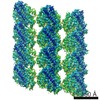 8150MC M: map data used to model this data C: citing same article ( |
|---|---|
| Similar structure data | |
| EM raw data | EMPIAR-10071 (Title: Structure and Dynamics of Single-isoform Recombinant Neuronal Human Tubulin Data size: 487.7 Data #1: Unaligned frame stacks of GMPCPP-bound alpha1a beta3 recombinant tubulin microtubules [micrographs - multiframe]) |


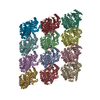
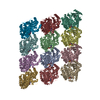
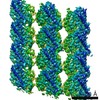
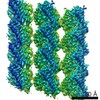
-Links
 PDBj
PDBj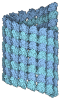


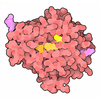
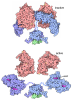
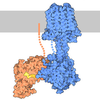
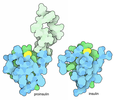
- Assembly
| Deposited unit | 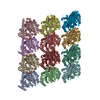
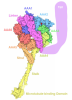
| |||||||||||||||||||||||||||||||||||||||||||||||||||||||||||||||||||||||||||||||||||||||||||||||||||||||||||||||||||||||||||||||||||||||||||||||||||||||||||||||||||||||||||||||||||||||||||||||||||||||||||||||||||||||||||||||||||||||||||||||||||||||||||||||||||||||||||||||||||||||||||||||||||||||||||||||||||||||||||||||||||||||||||||||||||||
|---|---|---|---|---|---|---|---|---|---|---|---|---|---|---|---|---|---|---|---|---|---|---|---|---|---|---|---|---|---|---|---|---|---|---|---|---|---|---|---|---|---|---|---|---|---|---|---|---|---|---|---|---|---|---|---|---|---|---|---|---|---|---|---|---|---|---|---|---|---|---|---|---|---|---|---|---|---|---|---|---|---|---|---|---|---|---|---|---|---|---|---|---|---|---|---|---|---|---|---|---|---|---|---|---|---|---|---|---|---|---|---|---|---|---|---|---|---|---|---|---|---|---|---|---|---|---|---|---|---|---|---|---|---|---|---|---|---|---|---|---|---|---|---|---|---|---|---|---|---|---|---|---|---|---|---|---|---|---|---|---|---|---|---|---|---|---|---|---|---|---|---|---|---|---|---|---|---|---|---|---|---|---|---|---|---|---|---|---|---|---|---|---|---|---|---|---|---|---|---|---|---|---|---|---|---|---|---|---|---|---|---|---|---|---|---|---|---|---|---|---|---|---|---|---|---|---|---|---|---|---|---|---|---|---|---|---|---|---|---|---|---|---|---|---|---|---|---|---|---|---|---|---|---|---|---|---|---|---|---|---|---|---|---|---|---|---|---|---|---|---|---|---|---|---|---|---|---|---|---|---|---|---|---|---|---|---|---|---|---|---|---|---|---|---|---|---|---|---|---|---|---|---|---|---|---|---|---|---|---|---|---|---|---|---|---|---|---|---|---|---|---|---|---|---|---|---|---|---|---|---|---|---|---|---|---|---|---|---|---|---|---|---|
| 1 |
| |||||||||||||||||||||||||||||||||||||||||||||||||||||||||||||||||||||||||||||||||||||||||||||||||||||||||||||||||||||||||||||||||||||||||||||||||||||||||||||||||||||||||||||||||||||||||||||||||||||||||||||||||||||||||||||||||||||||||||||||||||||||||||||||||||||||||||||||||||||||||||||||||||||||||||||||||||||||||||||||||||||||||||||||||||||
| Noncrystallographic symmetry (NCS) | NCS domain:
NCS domain segments: Component-ID: _ / Beg auth comp-ID: MET / Beg label comp-ID: MET / Refine code: _
|