 Movie
Movie Controller

[English] 日本語
 Yorodumi
- PDB-11ve: Cryo-EM structure of substrate engaged p97-Ufd1-NPL4-Faf1 complex... -
+ Open data

- Basic information
| Entry | Database: PDB / ID: 11ve | |||||||||||||||||||||
|---|---|---|---|---|---|---|---|---|---|---|---|---|---|---|---|---|---|---|---|---|---|---|
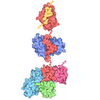
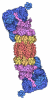
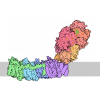
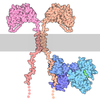
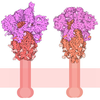
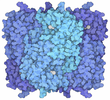
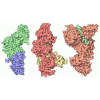
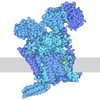
| Title | Cryo-EM structure of substrate engaged p97-Ufd1-NPL4-Faf1 complex (State1) | |||||||||||||||||||||
 Components Components |
| |||||||||||||||||||||
 Keywords Keywords | HYDROLASE / ERAD / ubiquitin / AAA+ ATPase / unfoldase | |||||||||||||||||||||
| Function / homology |  Function and homology information Function and homology informationUFD1-NPL4 complex / Fas signaling pathway / negative regulation of RIG-I signaling pathway / CD95 death-inducing signaling complex / flavin adenine dinucleotide catabolic process / protein kinase regulator activity / VCP-NSFL1C complex / endoplasmic reticulum stress-induced pre-emptive quality control / endosome to lysosome transport via multivesicular body sorting pathway / BAT3 complex binding ...UFD1-NPL4 complex / Fas signaling pathway / negative regulation of RIG-I signaling pathway / CD95 death-inducing signaling complex / flavin adenine dinucleotide catabolic process / protein kinase regulator activity / VCP-NSFL1C complex / endoplasmic reticulum stress-induced pre-emptive quality control / endosome to lysosome transport via multivesicular body sorting pathway / BAT3 complex binding / cellular response to arsenite ion / cytoplasmic ubiquitin ligase complex / protein-DNA covalent cross-linking repair / Derlin-1 retrotranslocation complex / positive regulation of protein K63-linked deubiquitination / ATPase complex / deubiquitinase activator activity / positive regulation of oxidative phosphorylation / cytoplasm protein quality control / aggresome assembly / ubiquitin-modified protein reader activity / regulation of protein localization to chromatin / cellular response to misfolded protein / mitotic spindle disassembly / VCP-NPL4-UFD1 AAA ATPase complex / positive regulation of mitochondrial membrane potential / regulation of protein catabolic process / vesicle-fusing ATPase / K48-linked polyubiquitin modification-dependent protein binding / nuclear outer membrane-endoplasmic reticulum membrane network / K63-linked polyubiquitin modification-dependent protein binding / ciliary transition zone / regulation of aerobic respiration / NAD+ metabolic process / retrograde protein transport, ER to cytosol / ribosome-associated ubiquitin-dependent protein catabolic process / stress granule disassembly / negative regulation of type I interferon production / ubiquitin-specific protease binding / Golgi organization / regulation of synapse organization / Dengue Virus Genome Translation and Replication / positive regulation of ATP biosynthetic process / intracellular membrane-bounded organelle / ubiquitin-like protein ligase binding / RHOH GTPase cycle / MHC class I protein binding / autophagosome maturation / negative regulation of hippo signaling / endoplasmic reticulum to Golgi vesicle-mediated transport / HSF1 activation / polyubiquitin modification-dependent protein binding / NF-kappaB binding / interstrand cross-link repair / ATP metabolic process / Attachment and Entry / skeletal system development / endoplasmic reticulum unfolded protein response / Protein methylation / ERAD pathway / heat shock protein binding / ciliary tip / translesion synthesis / Ribosome Quality Control (RQC) complex extracts and degrades nascent peptide / negative regulation of protein localization to chromatin / rescue of stalled cytosolic ribosome / lipid droplet / viral genome replication / positive regulation of DNA replication / proteasome complex / negative regulation of canonical NF-kappaB signal transduction / macroautophagy / negative regulation of smoothened signaling pathway / Josephin domain DUBs / establishment of protein localization / ubiquitin binding / proteasomal protein catabolic process / N-glycan trimming in the ER and Calnexin/Calreticulin cycle / positive regulation of protein-containing complex assembly / ADP binding / Hh mutants are degraded by ERAD / positive regulation of non-canonical NF-kappaB signal transduction / Translesion Synthesis by POLH / Hedgehog ligand biogenesis / Defective CFTR causes cystic fibrosis / ABC-family protein mediated transport / autophagy / cytoplasmic stress granule / positive regulation of protein catabolic process / positive regulation of canonical Wnt signaling pathway / Aggrephagy / azurophil granule lumen / Ovarian tumor domain proteases / nuclear envelope / KEAP1-NFE2L2 pathway / double-strand break repair / positive regulation of proteasomal ubiquitin-dependent protein catabolic process / cellular response to heat / E3 ubiquitin ligases ubiquitinate target proteins / ATPase binding Similarity search - Function | |||||||||||||||||||||
| Biological species |  Homo sapiens (human) Homo sapiens (human) | |||||||||||||||||||||
| Method | ELECTRON MICROSCOPY / single particle reconstruction / cryo EM / Resolution: 3.85 Å | |||||||||||||||||||||
 Authors Authors | Liao, Z. / Arkinson, C. / Andreas, M. | |||||||||||||||||||||
| Funding support |  United States, 1items United States, 1items
| |||||||||||||||||||||
 Citation Citation | Journal: bioRxiv / Year: 2025 Title: Faf1 accelerates p97-mediated protein unfolding by promoting ubiquitin engagement. Authors: Zengwei Liao / Connor Arkinson / Andreas Martin / Abstract: P97/VCP is a protein unfoldase of the AAA+ ATPase family that plays essential roles in numerous cellular processes, including ER-associated degradation and DNA replication. P97 utilizes various ...P97/VCP is a protein unfoldase of the AAA+ ATPase family that plays essential roles in numerous cellular processes, including ER-associated degradation and DNA replication. P97 utilizes various cofactors to process different substrates. For unfolding of proteins that are modified with K48-linked ubiquitin chains, p97 works with the heterodimeric cofactor Ufd1-Npl4, and the cofactor Faf1 was shown to enhance this activity in the context of replisome disassembly, yet the underlying mechanisms remain unknown. Here, we employ an reconstituted system with human components for biochemical experiments, mutational studies, FRET-based assays, and cryo-EM structure determination to reveal that Faf1 plays a generic role in accelerating ubiquitin-dependent substrate processing by promoting the unfolding of an initiator ubiquitin and its engagement by the ATPase motor. Faf1 thereby uses its p97-bound C-terminal UBX domain to anchor a long helix that braces the UT3 domain of Ufd1 and apparently stabilizes the Ufd1-Npl4 cofactor for ubiquitin unfolding. Our findings demonstrate how p97 works simultaneously with several cofactors to facilitate the unfolding of ubiquitinated proteins, indicating more complex regulatory mechanisms for substrate selection than for the simpler Cdc48 ortholog in yeast. | |||||||||||||||||||||
| History |
|
- Structure visualization
| Structure viewer | Molecule: MolmilJmol/JSmol |
|---|
- Downloads & links
-Download
| PDBx/mmCIF format | 11ve.cif.gz | 801.8 KB | Display | PDBx/mmCIF format |
|---|---|---|---|---|
| PDB format | pdb11ve.ent.gz | 648.6 KB | Display | PDB format |
| PDBx/mmJSON format | 11ve.json.gz | Tree view | PDBx/mmJSON format | |
| Others |  Other downloads Other downloads |
-Validation report
| Arichive directory | https://data.pdbj.org/pub/pdb/validation_reports/1v/11veftp://data.pdbj.org/pub/pdb/validation_reports/1v/11ve | HTTPS FTP |
|---|
-Related structure data
| Related structure data |  76074MC  11syC  11taC C: citing same article ( M: map data used to model this data |
|---|---|
| Similar structure data |


-Links
 PDBj
PDBj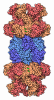

- Assembly
| Deposited unit | 
|
|---|---|
| 1 |
|
-Components
-Protein , 4 types, 10 molecules GMOPABCDEF
| #1: Protein | Mass: 68202.016 Da / Num. of mol.: 1 Source method: isolated from a genetically manipulated source Source: (gene. exp.) Homo sapiens (human) / Gene: NPLOC4, KIAA1499, NPL4 / Production host:   Escherichia coli (E. coli) / References: UniProt: Q8TAT6 Escherichia coli (E. coli) / References: UniProt: Q8TAT6 | ||||
|---|---|---|---|---|---|
| #2: Protein | Mass: 20495.000 Da / Num. of mol.: 2 Source method: isolated from a genetically manipulated source Source: (gene. exp.) Homo sapiens (human) / Gene: FAF1, UBXD12, UBXN3A, CGI-03 / Production host: Escherichia coli (E. coli) / References: UniProt: Q9UNN5#3: Protein | | Mass: 35373.188 Da / Num. of mol.: 1 Source method: isolated from a genetically manipulated source Source: (gene. exp.) Homo sapiens (human) / Gene: UFD1, UFD1L / Production host: Escherichia coli (E. coli) / References: UniProt: Q92890#4: Protein | Mass: 91177.781 Da / Num. of mol.: 6 Source method: isolated from a genetically manipulated source Source: (gene. exp.) Homo sapiens (human) / Gene: VCP, HEL-220, HEL-S-70 / Production host: Escherichia coli (E. coli) / References: UniProt: P55072, vesicle-fusing ATPase |
-Non-polymers , 3 types, 14 molecules 
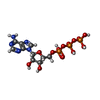
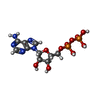
| #5: Chemical |  Mass: 65.409 Da / Num. of mol.: 2 / Source method: obtained synthetically / Formula: Zn / Feature type: SUBJECT OF INVESTIGATION Mass: 65.409 Da / Num. of mol.: 2 / Source method: obtained synthetically / Formula: Zn / Feature type: SUBJECT OF INVESTIGATION#6: Chemical | 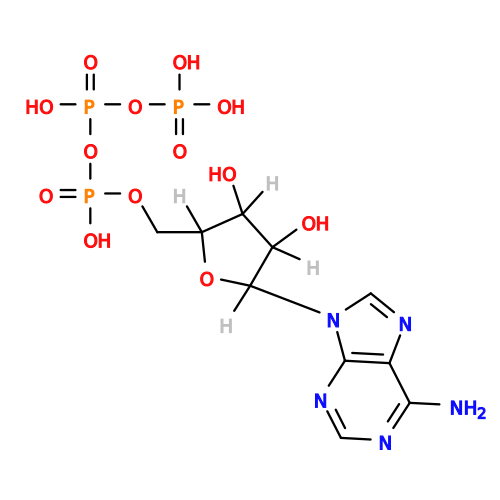 Mass: 507.181 Da / Num. of mol.: 3 / Source method: obtained synthetically / Formula: C10H16N5O13P3 / Feature type: SUBJECT OF INVESTIGATION / Comment: ATP, energy-carrying molecule*YM Mass: 507.181 Da / Num. of mol.: 3 / Source method: obtained synthetically / Formula: C10H16N5O13P3 / Feature type: SUBJECT OF INVESTIGATION / Comment: ATP, energy-carrying molecule*YM#7: Chemical | ChemComp-ADP / 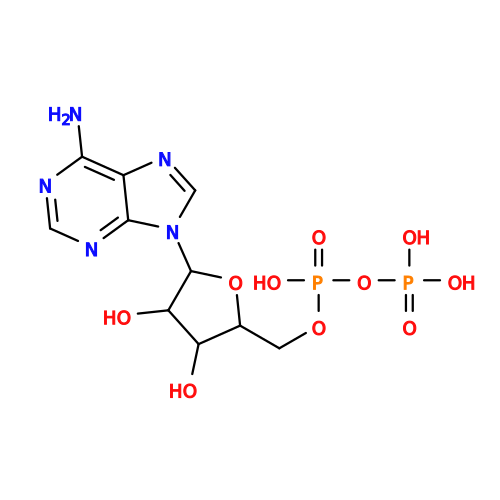 Mass: 427.201 Da / Num. of mol.: 9 / Source method: obtained synthetically / Formula: C10H15N5O10P2 / Feature type: SUBJECT OF INVESTIGATION / Comment: ADP, energy-carrying molecule*YM Mass: 427.201 Da / Num. of mol.: 9 / Source method: obtained synthetically / Formula: C10H15N5O10P2 / Feature type: SUBJECT OF INVESTIGATION / Comment: ADP, energy-carrying molecule*YM |
|---|
-Details
| Has ligand of interest | Y |
|---|---|
| Has protein modification | N |
-Experimental details
-Experiment
| Experiment | Method: ELECTRON MICROSCOPY |
|---|---|
| EM experiment | Aggregation state: PARTICLE / 3D reconstruction method: single particle reconstruction |
- Sample preparation
| Component | Name: substrate engaged p97-Ufd1-NPL4-Faf1 complex / Type: COMPLEX / Entity ID: #2-#4 / Source: RECOMBINANT |
|---|---|
| Molecular weight | Value: 734 kDa/nm / Experimental value: NO |
| Source (natural) | Organism: Homo sapiens (human) |
| Source (recombinant) | Organism: Escherichia coli (E. coli) |
| Buffer solution | pH: 7.6 |
| Specimen | Embedding applied: NO / Shadowing applied: NO / Staining applied: NO / Vitrification applied: YES |
| Specimen support | Grid material: COPPER / Grid mesh size: 200 divisions/in. / Grid type: Quantifoil R2/2 |
| Vitrification | Cryogen name: ETHANE |
- Electron microscopy imaging
| Experimental equipment |  Model: Titan Krios / Image courtesy: FEI Company |
|---|---|
| Microscopy | Model: TFS KRIOS |
| Electron gun | Electron source:  FIELD EMISSION GUN / Accelerating voltage: 300 kV / Illumination mode: FLOOD BEAM FIELD EMISSION GUN / Accelerating voltage: 300 kV / Illumination mode: FLOOD BEAM |
| Electron lens | Mode: BRIGHT FIELD / Nominal defocus max: 1600 nm / Nominal defocus min: 800 nm |
| Specimen holder | Cryogen: NITROGEN / Specimen holder model: FEI TITAN KRIOS AUTOGRID HOLDER |
| Image recording | Electron dose: 50 e/Å2 / Film or detector model: FEI FALCON IV (4k x 4k) |
- Processing
| EM software |
| ||||||||||||||||||||||||||||||||||||
|---|---|---|---|---|---|---|---|---|---|---|---|---|---|---|---|---|---|---|---|---|---|---|---|---|---|---|---|---|---|---|---|---|---|---|---|---|---|
| CTF correction | Type: PHASE FLIPPING AND AMPLITUDE CORRECTION | ||||||||||||||||||||||||||||||||||||
| 3D reconstruction | Resolution: 3.85 Å / Resolution method: FSC 0.143 CUT-OFF / Num. of particles: 99404 / Symmetry type: POINT | ||||||||||||||||||||||||||||||||||||
| Refinement | Highest resolution: 3.85 Å Stereochemistry target values: REAL-SPACE (WEIGHTED MAP SUM AT ATOM CENTERS) | ||||||||||||||||||||||||||||||||||||
| Refine LS restraints |
|
