National Health and Medical Research Council (NHMRC, Australia)
1155302
Australia
National Health and Medical Research Council (NHMRC, Australia)
1150083
Australia
National Health and Medical Research Council (NHMRC, Australia)
1154434
Australia
National Health and Medical Research Council (NHMRC, Australia)
2025694
Australia
National Health and Medical Research Council (NHMRC, Australia)
2026300
Australia
Australian Research Council (ARC)
230102776
Australia
Citation
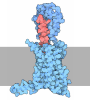
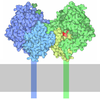
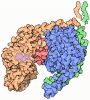
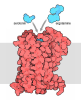
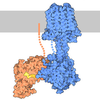
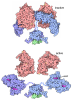
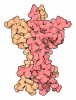
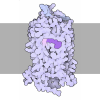
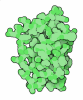
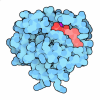
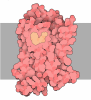
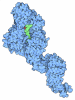
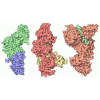
Journal: Proc Natl Acad Sci U S A / Year: 2025 Title: Structural basis of modified ligand selectivity from N-terminal PAC1R alternative splicing. Authors: Jessica J Lu / Giuseppe Deganutti / Miaomiao Li / Laura J Humphrys / Yandi Li / Theodore J Nettleton / Hariprasad Venugopal / Villy Julita / George Christopoulos / Christopher A Reynolds / ...Authors: Jessica J Lu / Giuseppe Deganutti / Miaomiao Li / Laura J Humphrys / Yandi Li / Theodore J Nettleton / Hariprasad Venugopal / Villy Julita / George Christopoulos / Christopher A Reynolds / Patrick M Sexton / Denise Wootten / Peishen Zhao / Sarah J Piper / Abstract: The pituitary adenylate cyclase-activating polypeptide (PACAP) 1 receptor (PAC1R) is a class B1 G protein-coupled receptor activated by the endogenous peptide agonists PACAP and vasoactive intestinal ...The pituitary adenylate cyclase-activating polypeptide (PACAP) 1 receptor (PAC1R) is a class B1 G protein-coupled receptor activated by the endogenous peptide agonists PACAP and vasoactive intestinal peptide (VIP). Alternate splicing within the receptor extracellular domain (ECD) generates the PAC1R short variant (PAC1sR) that has selectively enhanced VIP function compared to the full-length, PAC1R null variant (PAC1nR). However, to date, a comprehensive pharmacological assessment of the downstream signaling outcomes of PAC1sR activation compared to PAC1nR has not been performed, and little information is available to mechanistically understand how ECD splicing may alter ligand engagement. Here, we demonstrated that VIP, but not PACAP, has globally enhanced activity across a broad range of functional endpoints at PAC1sR compared to PAC1nR. Cryo-EM structures of VIP-bound, stimulatory G protein (G)-coupled PAC1sR and PAC1nR, supported by molecular dynamics (MD) simulations, demonstrate transient engagement of the null loop in PAC1nR, which is absent in PAC1sR, with residues in extracellular loop 2 (ECL2) and the N-terminal helix of the ECD. These interactions result in differential engagement of VIP with these domains and the top of TM2/ECL1 with PAC1sR and PAC1nR. Moreover, MD simulations predicted differential interactions of the G protein with the two PAC1R variants when bound by VIP that correlate with a greater allosteric influence of the G protein on VIP affinity at the PAC1sR, relative to PAC1nR. Our study provides insights into the structural basis and functional consequences of PAC1R ECD splicing, increasing understanding of PAC1R ligand selectivity and signaling.
In the structure databanks used in Yorodumi, some data are registered as the other names, "COVID-19 virus" and "2019-nCoV". Here are the details of the virus and the list of structure data.
Jan 31, 2019. EMDB accession codes are about to change! (news from PDBe EMDB page)
EMDB accession codes are about to change! (news from PDBe EMDB page)
The allocation of 4 digits for EMDB accession codes will soon come to an end. Whilst these codes will remain in use, new EMDB accession codes will include an additional digit and will expand incrementally as the available range of codes is exhausted. The current 4-digit format prefixed with “EMD-” (i.e. EMD-XXXX) will advance to a 5-digit format (i.e. EMD-XXXXX), and so on. It is currently estimated that the 4-digit codes will be depleted around Spring 2019, at which point the 5-digit format will come into force.
The EM Navigator/Yorodumi systems omit the EMD- prefix.
Related info.:Q: What is EMD? / ID/Accession-code notation in Yorodumi/EM Navigator
Yorodumi is a browser for structure data from EMDB, PDB, SASBDB, etc.
This page is also the successor to EM Navigator detail page, and also detail information page/front-end page for Omokage search.
The word "yorodu" (or yorozu) is an old Japanese word meaning "ten thousand". "mi" (miru) is to see.
Related info.:EMDB / PDB / SASBDB / Comparison of 3 databanks / Yorodumi Search / Aug 31, 2016. New EM Navigator & Yorodumi / Yorodumi Papers / Jmol/JSmol / Function and homology information / Changes in new EM Navigator and Yorodumi
 Movie
Movie Controller


 Open data
 Basic information
 Map data
 Sample
 Keywords
 Function and homology information
 Homo sapiens (human) /
 Lama glama (llama)
 Authors
 Australia, 6 items
  Citation
 Structure visualization
 Downloads & links
 emd_71396.png
 http://ftp.pdbj.org/pub/emdb/structures/EMD-71396



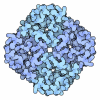
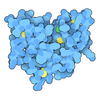
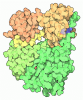
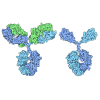
 Z (Sec.)
 Y (Row.)
 X (Col.)


 Sample components
 Trichoplusia ni (cabbage looper)
 Escherichia coli (E. coli)
 Processing
 Electron microscopy
 FIELD EMISSION GUN

