 Movie
Movie Controller


+ Open data

- Basic information
| Entry | Database: PDB / ID: 9p93 | ||||||||||||||||||||||||||||||||||||
|---|---|---|---|---|---|---|---|---|---|---|---|---|---|---|---|---|---|---|---|---|---|---|---|---|---|---|---|---|---|---|---|---|---|---|---|---|---|
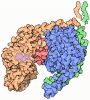
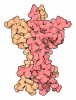
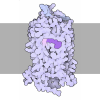
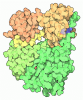
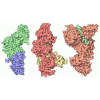
| Title | Cryo-EM structure of the PAC1sR-VIP-Gs complex | ||||||||||||||||||||||||||||||||||||
 Components Components |
| ||||||||||||||||||||||||||||||||||||
 Keywords Keywords | MEMBRANE PROTEIN / drug discovery / G protein coupled receptor / signalling | ||||||||||||||||||||||||||||||||||||
| Function / homology |  Function and homology information Function and homology informationepinephrine secretion / prolactin secretion / development of primary female sexual characteristics / type 1 vasoactive intestinal polypeptide receptor binding / type 2 vasoactive intestinal polypeptide receptor binding / body fluid secretion / pituitary adenylate cyclase-activating polypeptide receptor activity / vasoactive intestinal polypeptide receptor activity / regulation of cellular response to oxidative stress / positive regulation of small GTPase mediated signal transduction ...epinephrine secretion / prolactin secretion / development of primary female sexual characteristics / type 1 vasoactive intestinal polypeptide receptor binding / type 2 vasoactive intestinal polypeptide receptor binding / body fluid secretion / pituitary adenylate cyclase-activating polypeptide receptor activity / vasoactive intestinal polypeptide receptor activity / regulation of cellular response to oxidative stress / positive regulation of small GTPase mediated signal transduction / neuropeptide hormone activity / NGF-independant TRKA activation / G protein-coupled peptide receptor activity / cAMP biosynthetic process / mRNA stabilization / positive regulation of cAMP/PKA signal transduction / peptide hormone receptor binding / positive regulation of inositol phosphate biosynthetic process / adenylate cyclase-activating G protein-coupled bile acid receptor signaling pathway / adenylate cyclase-activating serotonin receptor signaling pathway / peptide hormone binding / positive regulation of calcium ion transport into cytosol / regulation of skeletal muscle contraction / adenylate cyclase binding / developmental growth / hair follicle placode formation / PKA activation in glucagon signalling / multicellular organismal response to stress / renal water homeostasis / bicellular tight junction / intracellular transport / D1 dopamine receptor binding / vascular endothelial cell response to laminar fluid shear stress / Hedgehog 'off' state / activation of adenylate cyclase activity / adenylate cyclase-activating adrenergic receptor signaling pathway / cellular response to acidic pH / cellular response to glucagon stimulus / intracellular glucose homeostasis / adenylate cyclase activator activity / positive regulation of insulin secretion involved in cellular response to glucose stimulus / trans-Golgi network membrane / positive regulation of insulin secretion / negative regulation of inflammatory response to antigenic stimulus / response to prostaglandin E / bone development / hormone activity / platelet aggregation / caveola / cognition / small GTPase binding / G-protein beta/gamma-subunit complex binding / adenylate cyclase-modulating G protein-coupled receptor signaling pathway / Olfactory Signaling Pathway / positive regulation of protein catabolic process / Activation of the phototransduction cascade / G protein-coupled acetylcholine receptor signaling pathway / sensory perception of smell / G beta:gamma signalling through PLC beta / Presynaptic function of Kainate receptors / Thromboxane signalling through TP receptor / Activation of G protein gated Potassium channels / Inhibition of voltage gated Ca2+ channels via Gbeta/gamma subunits / G-protein activation / Glucagon signaling in metabolic regulation / G beta:gamma signalling through CDC42 / Prostacyclin signalling through prostacyclin receptor / Synthesis, secretion, and inactivation of Glucagon-like Peptide-1 (GLP-1) / photoreceptor disc membrane / response to estradiol / G beta:gamma signalling through BTK / ADP signalling through P2Y purinoceptor 12 / Sensory perception of sweet, bitter, and umami (glutamate) taste / Glucagon-type ligand receptors / Adrenaline,noradrenaline inhibits insulin secretion / regulation of protein localization / Vasopressin regulates renal water homeostasis via Aquaporins / G alpha (z) signalling events / Glucagon-like Peptide-1 (GLP1) regulates insulin secretion / ADP signalling through P2Y purinoceptor 1 / cellular response to catecholamine stimulus / G beta:gamma signalling through PI3Kgamma / ADORA2B mediated anti-inflammatory cytokines production / adenylate cyclase-activating dopamine receptor signaling pathway / cellular response to prostaglandin E stimulus / Cooperation of PDCL (PhLP1) and TRiC/CCT in G-protein beta folding / positive regulation of cold-induced thermogenesis / GPER1 signaling / heterotrimeric G-protein complex / Inactivation, recovery and regulation of the phototransduction cascade / G alpha (12/13) signalling events / G-protein beta-subunit binding / extracellular vesicle / Thrombin signalling through proteinase activated receptors (PARs) / adenylate cyclase-activating G protein-coupled receptor signaling pathway / signaling receptor complex adaptor activity / signaling receptor activity / GTPase binding / G protein activity / spermatogenesis Similarity search - Function | ||||||||||||||||||||||||||||||||||||
| Biological species |  Homo sapiens (human) Homo sapiens (human)  Lama glama (llama) Lama glama (llama) | ||||||||||||||||||||||||||||||||||||
| Method | ELECTRON MICROSCOPY / single particle reconstruction / cryo EM / Resolution: 3.2 Å | ||||||||||||||||||||||||||||||||||||
 Authors Authors | Piper, S.J. / Lu, J. / Sexton, P. / Wootten, D. | ||||||||||||||||||||||||||||||||||||
| Funding support |  Australia, 6items Australia, 6items
| ||||||||||||||||||||||||||||||||||||
 Citation Citation | Journal: Proc Natl Acad Sci U S A / Year: 2025 Title: Structural basis of modified ligand selectivity from N-terminal PAC1R alternative splicing. Authors: Jessica J Lu / Giuseppe Deganutti / Miaomiao Li / Laura J Humphrys / Yandi Li / Theodore J Nettleton / Hariprasad Venugopal / Villy Julita / George Christopoulos / Christopher A Reynolds / ...Authors: Jessica J Lu / Giuseppe Deganutti / Miaomiao Li / Laura J Humphrys / Yandi Li / Theodore J Nettleton / Hariprasad Venugopal / Villy Julita / George Christopoulos / Christopher A Reynolds / Patrick M Sexton / Denise Wootten / Peishen Zhao / Sarah J Piper /  Abstract: The pituitary adenylate cyclase-activating polypeptide (PACAP) 1 receptor (PAC1R) is a class B1 G protein-coupled receptor activated by the endogenous peptide agonists PACAP and vasoactive intestinal ...The pituitary adenylate cyclase-activating polypeptide (PACAP) 1 receptor (PAC1R) is a class B1 G protein-coupled receptor activated by the endogenous peptide agonists PACAP and vasoactive intestinal peptide (VIP). Alternate splicing within the receptor extracellular domain (ECD) generates the PAC1R short variant (PAC1sR) that has selectively enhanced VIP function compared to the full-length, PAC1R null variant (PAC1nR). However, to date, a comprehensive pharmacological assessment of the downstream signaling outcomes of PAC1sR activation compared to PAC1nR has not been performed, and little information is available to mechanistically understand how ECD splicing may alter ligand engagement. Here, we demonstrated that VIP, but not PACAP, has globally enhanced activity across a broad range of functional endpoints at PAC1sR compared to PAC1nR. Cryo-EM structures of VIP-bound, stimulatory G protein (G)-coupled PAC1sR and PAC1nR, supported by molecular dynamics (MD) simulations, demonstrate transient engagement of the null loop in PAC1nR, which is absent in PAC1sR, with residues in extracellular loop 2 (ECL2) and the N-terminal helix of the ECD. These interactions result in differential engagement of VIP with these domains and the top of TM2/ECL1 with PAC1sR and PAC1nR. Moreover, MD simulations predicted differential interactions of the G protein with the two PAC1R variants when bound by VIP that correlate with a greater allosteric influence of the G protein on VIP affinity at the PAC1sR, relative to PAC1nR. Our study provides insights into the structural basis and functional consequences of PAC1R ECD splicing, increasing understanding of PAC1R ligand selectivity and signaling. | ||||||||||||||||||||||||||||||||||||
| History |
|
- Structure visualization
| Structure viewer | Molecule: MolmilJmol/JSmol |
|---|
- Downloads & links
-Download
| PDBx/mmCIF format | 9p93.cif.gz | 235.7 KB | Display | PDBx/mmCIF format |
|---|---|---|---|---|
| PDB format | pdb9p93.ent.gz | 178.7 KB | Display | PDB format |
| PDBx/mmJSON format | 9p93.json.gz | Tree view | PDBx/mmJSON format | |
| Others |  Other downloads Other downloads |
-Validation report
| Arichive directory | https://data.pdbj.org/pub/pdb/validation_reports/p9/9p93ftp://data.pdbj.org/pub/pdb/validation_reports/p9/9p93 | HTTPS FTP |
|---|
-Related structure data
| Related structure data |  71397MC  9p92C  9p94C M: map data used to model this data C: citing same article ( |
|---|---|
| Similar structure data |


-Links
 PDBj
PDBj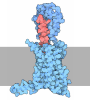

- Assembly
| Deposited unit | 
|
|---|---|
| 1 |
|
-Components
-Guanine nucleotide-binding protein ... , 3 types, 3 molecules BGA
| #1: Protein | Mass: 38534.062 Da / Num. of mol.: 1 Source method: isolated from a genetically manipulated source Source: (gene. exp.) Homo sapiens (human) / Gene: GNB1 / Production host:  Trichoplusia ni (cabbage looper) / References: UniProt: P62873 Trichoplusia ni (cabbage looper) / References: UniProt: P62873 |
|---|---|
| #2: Protein | Mass: 7861.143 Da / Num. of mol.: 1 Source method: isolated from a genetically manipulated source Source: (gene. exp.) Homo sapiens (human) / Gene: GNG2 / Production host: Trichoplusia ni (cabbage looper) / References: UniProt: P59768 |
| #6: Protein | Mass: 45699.434 Da / Num. of mol.: 1 Mutation: S54N, G226A, E268A, N271K, K274D, R280K, T284D, I285T, A366S Source method: isolated from a genetically manipulated source Source: (gene. exp.) Homo sapiens (human) / Gene: GNAS, GNAS1, GSP / Production host: Trichoplusia ni (cabbage looper) / References: UniProt: P63092 |
-Antibody / Protein/peptide / Protein , 3 types, 3 molecules NPR
| #3: Antibody | Mass: 15140.742 Da / Num. of mol.: 1 Source method: isolated from a genetically manipulated source Source: (gene. exp.) Lama glama (llama) / Production host:   Escherichia coli (E. coli) Escherichia coli (E. coli) |
|---|---|
| #4: Protein/peptide | Mass: 3332.831 Da / Num. of mol.: 1 / Source method: obtained synthetically / Source: (synth.) Homo sapiens (human) / References: UniProt: P01282 |
| #5: Protein | Mass: 53155.906 Da / Num. of mol.: 1 Source method: isolated from a genetically manipulated source Source: (gene. exp.) Homo sapiens (human) / Gene: ADCYAP1R1 / Production host: Trichoplusia ni (cabbage looper) / References: UniProt: P41586 |
-Details
| Has protein modification | Y |
|---|
-Experimental details
-Experiment
| Experiment | Method: ELECTRON MICROSCOPY |
|---|---|
| EM experiment | Aggregation state: PARTICLE / 3D reconstruction method: single particle reconstruction |
- Sample preparation
| Component |
| ||||||||||||||||||||||||||||||
|---|---|---|---|---|---|---|---|---|---|---|---|---|---|---|---|---|---|---|---|---|---|---|---|---|---|---|---|---|---|---|---|
| Molecular weight | Experimental value: NO | ||||||||||||||||||||||||||||||
| Source (natural) |
| ||||||||||||||||||||||||||||||
| Source (recombinant) |
| ||||||||||||||||||||||||||||||
| Buffer solution | pH: 7.4 | ||||||||||||||||||||||||||||||
| Specimen | Conc.: 4.34 mg/ml / Embedding applied: NO / Shadowing applied: NO / Staining applied: NO / Vitrification applied: YES | ||||||||||||||||||||||||||||||
| Vitrification | Cryogen name: ETHANE |
- Electron microscopy imaging
| Experimental equipment |  Model: Titan Krios / Image courtesy: FEI Company |
|---|---|
| Microscopy | Model: TFS KRIOS |
| Electron gun | Electron source:  FIELD EMISSION GUN / Accelerating voltage: 300 kV / Illumination mode: FLOOD BEAM FIELD EMISSION GUN / Accelerating voltage: 300 kV / Illumination mode: FLOOD BEAM |
| Electron lens | Mode: BRIGHT FIELD / Nominal defocus max: 1400 nm / Nominal defocus min: 400 nm |
| Image recording | Electron dose: 60 e/Å2 / Detector mode: COUNTING / Film or detector model: GATAN K3 BIOQUANTUM (6k x 4k) |
- Processing
| EM software |
| |||||||||
|---|---|---|---|---|---|---|---|---|---|---|
| CTF correction | Type: PHASE FLIPPING AND AMPLITUDE CORRECTION | |||||||||
| 3D reconstruction | Resolution: 3.2 Å / Resolution method: FSC 0.143 CUT-OFF / Num. of particles: 144243 / Symmetry type: POINT | |||||||||
| Refinement | Highest resolution: 3.2 Å Stereochemistry target values: REAL-SPACE (WEIGHTED MAP SUM AT ATOM CENTERS) |
