 ムービー
ムービー コントローラー


+ データを開く

- 基本情報
基本情報
| 登録情報 |  | |||||||||
|---|---|---|---|---|---|---|---|---|---|---|
| タイトル | Cryo-EM structure of the full-length GPR15L bound GPR15-Gi complex | |||||||||
 マップデータ マップデータ | ||||||||||
 試料 試料 |
| |||||||||
 キーワード キーワード | GPCR / GPR15L / GPR15 / MEMBRANE PROTEIN/IMMUNE SYSTEM / MEMBRANE PROTEIN-IMMUNE SYSTEM complex | |||||||||
| 機能・相同性 |  機能・相同性情報 機能・相同性情報lymphocyte chemotaxis / regulation of keratinocyte proliferation / regulation of T cell migration / negative regulation of cell cycle G1/S phase transition / negative regulation of cell division / negative regulation of adenylate cyclase activity / GTP metabolic process / chemokine activity / mast cell degranulation / T cell homeostasis ...lymphocyte chemotaxis / regulation of keratinocyte proliferation / regulation of T cell migration / negative regulation of cell cycle G1/S phase transition / negative regulation of cell division / negative regulation of adenylate cyclase activity / GTP metabolic process / chemokine activity / mast cell degranulation / T cell homeostasis / positive regulation of macroautophagy / defense response to fungus / coreceptor activity / T cell migration / Adenylate cyclase inhibitory pathway / G protein-coupled receptor binding / G protein-coupled receptor activity / adenylate cyclase-modulating G protein-coupled receptor signaling pathway / G-protein beta/gamma-subunit complex binding / centriolar satellite / adenylate cyclase-inhibiting G protein-coupled receptor signaling pathway / Olfactory Signaling Pathway / Activation of the phototransduction cascade / G protein-coupled acetylcholine receptor signaling pathway / G beta:gamma signalling through PLC beta / Presynaptic function of Kainate receptors / Thromboxane signalling through TP receptor / Activation of G protein gated Potassium channels / Inhibition of voltage gated Ca2+ channels via Gbeta/gamma subunits / G-protein activation / Glucagon signaling in metabolic regulation / G beta:gamma signalling through CDC42 / Prostacyclin signalling through prostacyclin receptor / G beta:gamma signalling through BTK / Synthesis, secretion, and inactivation of Glucagon-like Peptide-1 (GLP-1) / photoreceptor disc membrane / ADP signalling through P2Y purinoceptor 12 / Sensory perception of sweet, bitter, and umami (glutamate) taste / GDP binding / Glucagon-type ligand receptors / Adrenaline,noradrenaline inhibits insulin secretion / Vasopressin regulates renal water homeostasis via Aquaporins / Glucagon-like Peptide-1 (GLP1) regulates insulin secretion / G alpha (z) signalling events / cellular response to catecholamine stimulus / ADP signalling through P2Y purinoceptor 1 / ADORA2B mediated anti-inflammatory cytokines production / G beta:gamma signalling through PI3Kgamma / adenylate cyclase-activating dopamine receptor signaling pathway / Cooperation of PDCL (PhLP1) and TRiC/CCT in G-protein beta folding / GPER1 signaling / cellular response to prostaglandin E stimulus / heterotrimeric G-protein complex / G alpha (12/13) signalling events / Inactivation, recovery and regulation of the phototransduction cascade / G-protein beta-subunit binding / extracellular vesicle / sensory perception of taste / sperm principal piece / Thrombin signalling through proteinase activated receptors (PARs) / signaling receptor complex adaptor activity / virus receptor activity / retina development in camera-type eye / GTPase binding / fibroblast proliferation / angiogenesis / Ca2+ pathway / midbody / High laminar flow shear stress activates signaling by PIEZO1 and PECAM1:CDH5:KDR in endothelial cells / G alpha (i) signalling events / G alpha (s) signalling events / phospholipase C-activating G protein-coupled receptor signaling pathway / G alpha (q) signalling events / Ras protein signal transduction / cell population proliferation / Extra-nuclear estrogen signaling / endosome / defense response to Gram-positive bacterium / ciliary basal body / G protein-coupled receptor signaling pathway / receptor ligand activity / cell division / lysosomal membrane / GTPase activity / symbiont entry into host cell / centrosome / synapse / GTP binding / protein-containing complex binding / nucleolus / Golgi apparatus / signal transduction / : / extracellular exosome / extracellular region / nucleoplasm / membrane / metal ion binding / plasma membrane / cytoplasm 類似検索 - 分子機能 | |||||||||
| 生物種 |  Homo sapiens (ヒト) / Homo sapiens (ヒト) /   Mus musculus (ハツカネズミ) Mus musculus (ハツカネズミ) | |||||||||
| 手法 | 単粒子再構成法 / クライオ電子顕微鏡法 / 解像度: 3.3 Å | |||||||||
 データ登録者 データ登録者 | Han S / Wu B / Zhao Q | |||||||||
| 資金援助 |  中国, 1件 中国, 1件
| |||||||||
 引用 引用 | ジャーナル: iScience / 年: 2025 タイトル: Molecular insights into ligand recognition and receptor activation of GPR15. 著者: Shutian Chen / Xuteng Han / Yuxia Zhang / Limin Ma / Cuiying Yi / Xiaojing Chu / Qiuxiang Tan / Shuo Han / Qiang Zhao / Beili Wu / 要旨: In response to the chemokine-like peptide GPR15L, G protein-coupled receptor 15 (GPR15) is crucial for immune cell trafficking and inflammatory diseases. However, understanding of its physiology and ...In response to the chemokine-like peptide GPR15L, G protein-coupled receptor 15 (GPR15) is crucial for immune cell trafficking and inflammatory diseases. However, understanding of its physiology and pathology is hindered by lack of molecular details of the interaction between GPR15 and the full-length GPR15L. Here, we report the structure of GPR15 bound to the full-length GPR15L and G protein. Combined with mutagenesis data, this structure reveals key interactions that define ligand recognition and a subpocket that governs GPR15L selectivity and receptor activation. Molecular dynamics simulations suggest that sulfation modifications in the N-terminal region of GPR15 may play a role in stabilizing the binding between GPR15 and the core region of GPR15L. Furthermore, molecular docking of some potential small-molecule antagonists suggests a conserved molecular pattern of these ligands inhibiting receptor activation. These findings provide essential insight into functional modulation of GPR15 and would facilitate development of therapeutic strategies for treatment of inflammation and immune diseases. | |||||||||
| 履歴 |
|
- 構造の表示
構造の表示
| 添付画像 |
|---|

- ダウンロードとリンク
-EMDBアーカイブ
| マップデータ | emd_66350.map.gz | 59.5 MB | EMDBマップデータ形式 | |
|---|---|---|---|---|
| ヘッダ (付随情報) | emd-66350-v30.xmlemd-66350.xml | 18.5 KB 18.5 KB | 表示 表示 | EMDBヘッダ |
| 画像 |  emd_66350.png emd_66350.png | 81.8 KB | ||
| Filedesc metadata | emd-66350.cif.gz | 6.8 KB | ||
| アーカイブディレクトリ |  http://ftp.pdbj.org/pub/emdb/structures/EMD-66350ftp://ftp.pdbj.org/pub/emdb/structures/EMD-66350 http://ftp.pdbj.org/pub/emdb/structures/EMD-66350ftp://ftp.pdbj.org/pub/emdb/structures/EMD-66350 | HTTPS FTP |
-関連構造データ


-リンク
| EMDBのページ | EMDB (EBI/PDBe) / EMDataResource |
|---|---|
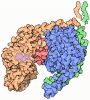
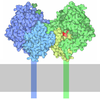
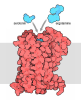
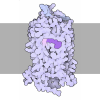
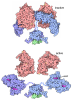
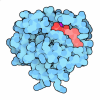
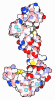
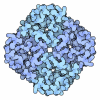
| 「今月の分子」の関連する項目 |

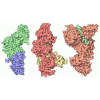
-マップ
| ファイル | ダウンロード / ファイル: emd_66350.map.gz / 形式: CCP4 / 大きさ: 64 MB / タイプ: IMAGE STORED AS FLOATING POINT NUMBER (4 BYTES) | ||||||||||||||||||||||||||||||||||||
|---|---|---|---|---|---|---|---|---|---|---|---|---|---|---|---|---|---|---|---|---|---|---|---|---|---|---|---|---|---|---|---|---|---|---|---|---|---|
| 投影像・断面図 | 画像のコントロール
画像は Spider により作成 | ||||||||||||||||||||||||||||||||||||
| ボクセルのサイズ | X=Y=Z: 1.071 Å | ||||||||||||||||||||||||||||||||||||
| 密度 |
| ||||||||||||||||||||||||||||||||||||
| 対称性 | 空間群: 1 | ||||||||||||||||||||||||||||||||||||
| 詳細 | EMDB XML:
|
 Z (Sec.)
 Y (Row.)
 X (Col.)


-添付データ
- 試料の構成要素
-全体 : GPR15L bound GPR15-Gi complex
| 全体 | 名称: GPR15L bound GPR15-Gi complex |
|---|---|
| 要素 |
|
-超分子 #1: GPR15L bound GPR15-Gi complex
| 超分子 | 名称: GPR15L bound GPR15-Gi complex / タイプ: complex / ID: 1 / 親要素: 0 / 含まれる分子: all |
|---|---|
| 由来(天然) | 生物種: Homo sapiens (ヒト) |
-分子 #1: Protein GPR15LG
| 分子 | 名称: Protein GPR15LG / タイプ: protein_or_peptide / ID: 1 / コピー数: 1 / 光学異性体: LEVO |
|---|---|
| 由来(天然) | 生物種: Homo sapiens (ヒト) |
| 分子量 | 理論値: 6.591857 KDa |
| 組換発現 | 生物種:   Spodoptera frugiperda (ツマジロクサヨトウ) Spodoptera frugiperda (ツマジロクサヨトウ) |
| 配列 | 文字列: GKRRPAKAWS GRRTRLCCHR VPSPNSTNLK GHHVRLCKPC KLEPEPRLWV VPGALPQV UniProtKB: Protein GPR15LG |
-分子 #2: G-protein coupled receptor 15
| 分子 | 名称: G-protein coupled receptor 15 / タイプ: protein_or_peptide / ID: 2 / コピー数: 1 / 光学異性体: LEVO |
|---|---|
| 由来(天然) | 生物種: Homo sapiens (ヒト) |
| 分子量 | 理論値: 42.638719 KDa |
| 組換発現 | 生物種: Spodoptera frugiperda (ツマジロクサヨトウ) |
| 配列 | 文字列: GAPMDPEETS VYLDYYYATS PNSDIRETHS HVPYTSVFLP VFYTAVFLTG VLGNLVLMGA LHFKPGSRRL IDIFIINLAA SDFIFLVTL PLWVDKEASL GLWRTGSFLC KGSSYMISVN MHCSVLLLTC MSVDRYLAIV WPVVSRKFRR TDCAYVVCAS I WFISCLLG ...文字列: GAPMDPEETS VYLDYYYATS PNSDIRETHS HVPYTSVFLP VFYTAVFLTG VLGNLVLMGA LHFKPGSRRL IDIFIINLAA SDFIFLVTL PLWVDKEASL GLWRTGSFLC KGSSYMISVN MHCSVLLLTC MSVDRYLAIV WPVVSRKFRR TDCAYVVCAS I WFISCLLG LPTLLSRELT LIDDKPYCAE KKATPIKLIW SLVALIFTFF VPLLSIVTCY CCIARKLCAH YQQSGKHNKK LK KSIKIIF IVVAAFLVSW LPFNTFKFLA IVSGLRQEHY LPSAILQLGM EVSGPLAFAN SCVNPFIYYI FDSYIRRAIV HCL CPCLKN YDFGSSTEFL EVLFQGPWSH PQFEKGGGSG GGSGGSAWSH PQFEKDYKDD DDK UniProtKB: G-protein coupled receptor 15 |
-分子 #3: Guanine nucleotide-binding protein G(i) subunit alpha-3
| 分子 | 名称: Guanine nucleotide-binding protein G(i) subunit alpha-3 タイプ: protein_or_peptide / ID: 3 / コピー数: 1 / 光学異性体: LEVO |
|---|---|
| 由来(天然) | 生物種: Homo sapiens (ヒト) |
| 分子量 | 理論値: 40.617246 KDa |
| 組換発現 | 生物種: Spodoptera frugiperda (ツマジロクサヨトウ) |
| 配列 | 文字列: MGCTLSAEDK AAVERSKMID RNLREDGEKA AKEVKLLLLG AGESGKCTIV KQMKIIHEDG YSEDECKQYK VVVYSNTIQS IIAIIRAMG RLKIDFGEAA RADDARQLFV LAGSAEEGVM TPELAGVIKR LWRDGGVQAC FSRSREYQLN DSASYYLNDL D RISQSNYI ...文字列: MGCTLSAEDK AAVERSKMID RNLREDGEKA AKEVKLLLLG AGESGKCTIV KQMKIIHEDG YSEDECKQYK VVVYSNTIQS IIAIIRAMG RLKIDFGEAA RADDARQLFV LAGSAEEGVM TPELAGVIKR LWRDGGVQAC FSRSREYQLN DSASYYLNDL D RISQSNYI PTQQDVLRTR VKTTGIVETH FTFKDLYFKM FDVTAQRSER KKWIHCFEGV TAIIFCVALS DYDLVLAEDE EM NRMHASM KLFDSICNNK WFTETSIILF LNKKDLFEEK IKRSPLTICY PEYTGSNTYE EAAAYIQCQF EDLNRRKDTK EIY THFTCS TDTKNVQFVF DAVTDVIIKN NLKECGLY UniProtKB: Guanine nucleotide-binding protein G(i) subunit alpha-3 |
-分子 #4: Guanine nucleotide-binding protein G(I)/G(S)/G(T) subunit beta-1
| 分子 | 名称: Guanine nucleotide-binding protein G(I)/G(S)/G(T) subunit beta-1 タイプ: protein_or_peptide / ID: 4 / コピー数: 1 / 光学異性体: LEVO |
|---|---|
| 由来(天然) | 生物種: Homo sapiens (ヒト) |
| 分子量 | 理論値: 38.744371 KDa |
| 組換発現 | 生物種: Spodoptera frugiperda (ツマジロクサヨトウ) |
| 配列 | 文字列: MHHHHHHGSL LQSELDQLRQ EAEQLKNQIR DARKACADAT LSQITNNIDP VGRIQMRTRR TLRGHLAKIY AMHWGTDSRL LVSASQDGK LIIWDSYTTN KVHAIPLRSS WVMTCAYAPS GNYVACGGLD NICSIYNLKT REGNVRVSRE LAGHTGYLSC C RFLDDNQI ...文字列: MHHHHHHGSL LQSELDQLRQ EAEQLKNQIR DARKACADAT LSQITNNIDP VGRIQMRTRR TLRGHLAKIY AMHWGTDSRL LVSASQDGK LIIWDSYTTN KVHAIPLRSS WVMTCAYAPS GNYVACGGLD NICSIYNLKT REGNVRVSRE LAGHTGYLSC C RFLDDNQI VTSSGDTTCA LWDIETGQQT TTFTGHTGDV MSLSLAPDTR LFVSGACDAS AKLWDVREGM CRQTFTGHES DI NAICFFP NGNAFATGSD DATCRLFDLR ADQELMTYSH DNIICGITSV SFSKSGRLLL AGYDDFNCNV WDALKADRAG VLA GHDNRV SCLGVTDDGM AVATGSWDSF LKIWN UniProtKB: Guanine nucleotide-binding protein G(I)/G(S)/G(T) subunit beta-1 |
-分子 #5: Guanine nucleotide-binding protein G(I)/G(S)/G(O) subunit gamma-2
| 分子 | 名称: Guanine nucleotide-binding protein G(I)/G(S)/G(O) subunit gamma-2 タイプ: protein_or_peptide / ID: 5 / コピー数: 1 / 光学異性体: LEVO |
|---|---|
| 由来(天然) | 生物種: Homo sapiens (ヒト) |
| 分子量 | 理論値: 7.861143 KDa |
| 組換発現 | 生物種: Spodoptera frugiperda (ツマジロクサヨトウ) |
| 配列 | 文字列: MASNNTASIA QARKLVEQLK MEANIDRIKV SKAAADLMAY CEAHAKEDPL LTPVPASENP FREKKFFCAI L UniProtKB: Guanine nucleotide-binding protein G(I)/G(S)/G(O) subunit gamma-2 |
-分子 #6: scFv16
| 分子 | 名称: scFv16 / タイプ: protein_or_peptide / ID: 6 / コピー数: 1 / 光学異性体: LEVO |
|---|---|
| 由来(天然) | 生物種: Mus musculus (ハツカネズミ) |
| 分子量 | 理論値: 28.668922 KDa |
| 組換発現 | 生物種:   Escherichia coli (大腸菌) Escherichia coli (大腸菌) |
| 配列 | 文字列: DVQLVESGGG LVQPGGSRKL SCSASGFAFS SFGMHWVRQA PEKGLEWVAY ISSGSGTIYY ADTVKGRFTI SRDDPKNTLF LQMTSLRSE DTAMYYCVRS IYYYGSSPFD FWGQGTTLTV SSGGGGSGGG GSGGGGSDIV MTQATSSVPV TPGESVSISC R SSKSLLHS ...文字列: DVQLVESGGG LVQPGGSRKL SCSASGFAFS SFGMHWVRQA PEKGLEWVAY ISSGSGTIYY ADTVKGRFTI SRDDPKNTLF LQMTSLRSE DTAMYYCVRS IYYYGSSPFD FWGQGTTLTV SSGGGGSGGG GSGGGGSDIV MTQATSSVPV TPGESVSISC R SSKSLLHS NGNTYLYWFL QRPGQSPQLL IYRMSNLASG VPDRFSGSGS GTAFTLTISR LEAEDVGVYY CMQHLEYPLT FG AGTKLEL KAAALEVLFQ GPHHHHHHHH |
-実験情報
-構造解析
| 手法 | クライオ電子顕微鏡法 |
|---|---|
 解析 解析 | 単粒子再構成法 |
| 試料の集合状態 | particle |
-試料調製
| 緩衝液 | pH: 7.5 |
|---|---|
| 凍結 | 凍結剤: ETHANE |
- 電子顕微鏡法
| 顕微鏡 | TFS KRIOS |
|---|---|
| 撮影 | フィルム・検出器のモデル: GATAN K3 BIOQUANTUM (6k x 4k) 平均電子線量: 70.0 e/Å2 |
| 電子線 | 加速電圧: 300 kV / 電子線源:  FIELD EMISSION GUN FIELD EMISSION GUN |
| 電子光学系 | 照射モード: FLOOD BEAM / 撮影モード: BRIGHT FIELD / 最大 デフォーカス(公称値): 1.5 µm / 最小 デフォーカス(公称値): 0.8 µm |
| 実験機器 |  モデル: Titan Krios / 画像提供: FEI Company |
