[English] 日本語
Yorodumi
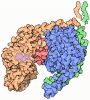
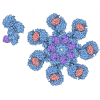
- EMDB-64367: mouse PDCD5-TRiC complex -

+
Open data


ID or keywords:

Loading...

-
Basic information

Entry
Database: EMDB / ID: EMD-64367
Titlemouse PDCD5-TRiC complex
Map data
Sample
  • Complex: mouse PDCD5-TRiC complex
    • Protein or peptide: Programmed cell death protein 5
  • Protein or peptide: T-complex protein 1 subunit alpha
  • Protein or peptide: T-complex protein 1 subunit beta
  • Protein or peptide: T-complex protein 1 subunit gamma
  • Protein or peptide: T-complex protein 1 subunit delta
  • Protein or peptide: T-complex protein 1 subunit epsilon
  • Protein or peptide: T-complex protein 1 subunit zeta
  • Protein or peptide: T-complex protein 1 subunit eta
  • Protein or peptide: T-complex protein 1 subunit theta
KeywordsComplex / cofactor / CHAPERONE
Function / homology
Function and homology information


Association of TriC/CCT with target proteins during biosynthesis / RHOBTB1 GTPase cycle / negative regulation of protein folding / RHOBTB2 GTPase cycle / Cooperation of PDCL (PhLP1) and TRiC/CCT in G-protein beta folding / zona pellucida receptor complex / positive regulation of establishment of protein localization to telomere / scaRNA localization to Cajal body / positive regulation of telomerase RNA localization to Cajal body / chaperonin-containing T-complex ...Association of TriC/CCT with target proteins during biosynthesis / RHOBTB1 GTPase cycle / negative regulation of protein folding / RHOBTB2 GTPase cycle / Cooperation of PDCL (PhLP1) and TRiC/CCT in G-protein beta folding / zona pellucida receptor complex / positive regulation of establishment of protein localization to telomere / scaRNA localization to Cajal body / positive regulation of telomerase RNA localization to Cajal body / chaperonin-containing T-complex / binding of sperm to zona pellucida / acetyltransferase activator activity / WD40-repeat domain binding / pericentriolar material / microtubule organizing center / cellular response to transforming growth factor beta stimulus / chaperone-mediated protein complex assembly / Hydrolases; Acting on acid anhydrides; In phosphorus-containing anhydrides / beta-tubulin binding / heterochromatin / positive regulation of telomere maintenance via telomerase / Neutrophil degranulation / protein folding chaperone / acrosomal vesicle / mRNA 3'-UTR binding / ATP-dependent protein folding chaperone / mRNA 5'-UTR binding / response to virus / melanosome / unfolded protein binding / myelin sheath / heparin binding / G-protein beta-subunit binding / protein folding / cell body / regulation of apoptotic process / microtubule / protein stabilization / positive regulation of apoptotic process / apoptotic process / ubiquitin protein ligase binding / positive regulation of gene expression / centrosome / Golgi apparatus / ATP hydrolysis activity / mitochondrion / DNA binding / nucleoplasm / ATP binding / metal ion binding / identical protein binding / nucleus / cytoplasm / cytosol
Similarity search - Function
PDCD5-like / PDCD5-like superfamily / Double-stranded DNA-binding domain / T-complex protein 1, alpha subunit / T-complex protein 1, eta subunit / T-complex protein 1, theta subunit / T-complex protein 1, zeta subunit / T-complex protein 1, delta subunit / T-complex protein 1, gamma subunit / T-complex protein 1, epsilon subunit ...PDCD5-like / PDCD5-like superfamily / Double-stranded DNA-binding domain / T-complex protein 1, alpha subunit / T-complex protein 1, eta subunit / T-complex protein 1, theta subunit / T-complex protein 1, zeta subunit / T-complex protein 1, delta subunit / T-complex protein 1, gamma subunit / T-complex protein 1, epsilon subunit / T-complex protein 1, beta subunit / : / Chaperonins TCP-1 signature 1. / : / Chaperonins TCP-1 signature 2. / Chaperonin TCP-1, conserved site / Chaperonins TCP-1 signature 3. / Chaperone tailless complex polypeptide 1 (TCP-1) / GroEL-like equatorial domain superfamily / TCP-1-like chaperonin intermediate domain superfamily / GroEL-like apical domain superfamily / TCP-1/cpn60 chaperonin family / Chaperonin Cpn60/GroEL/TCP-1 family
Similarity search - Domain/homology
T-complex protein 1 subunit alpha / T-complex protein 1 subunit theta / Programmed cell death protein 5 / T-complex protein 1 subunit eta / T-complex protein 1 subunit beta / T-complex protein 1 subunit delta / T-complex protein 1 subunit epsilon / T-complex protein 1 subunit zeta / T-complex protein 1 subunit gamma
Similarity search - Component
Biological speciesMus musculus (house mouse)
Methodsingle particle reconstruction / cryo EM / Resolution: 3.55 Å
AuthorsSong QQ / Cong Y
Funding support China, 1 items
OrganizationGrant numberCountry
National Natural Science Foundation of China (NSFC) China
CitationJournal: Mol Cell / Year: 2026
Title: PDCD5 promotes substrate release from the TRiC complex in cilia and flagella.
Authors: Huafang Wei / Qianqian Song / Liying Wang / Qiong Deng / Bingbing Wu / Yinghong Chen / Tingting Han / Yueshuai Guo / Zuyang Li / Fucheng Dong / Shuang Ma / Qiaoyu Zhao / Xiangyi Shi / Chen ...Authors: Huafang Wei / Qianqian Song / Liying Wang / Qiong Deng / Bingbing Wu / Yinghong Chen / Tingting Han / Yueshuai Guo / Zuyang Li / Fucheng Dong / Shuang Ma / Qiaoyu Zhao / Xiangyi Shi / Chen Pan / Wanying Jiang / Xiaofei Liu / Yingyu Chen / Renjie Jiao / Li Yuan / Chao Liu / Xuejiang Guo / Yao Cong / Wei Li /
Abstract: Approximately 10% of eukaryotic proteins are folded by the TRiC/CCT complex (TCP1-ring complex, also called CCT for cytosolic chaperonin containing TCP1), and only open-state TRiC can bind with ...Approximately 10% of eukaryotic proteins are folded by the TRiC/CCT complex (TCP1-ring complex, also called CCT for cytosolic chaperonin containing TCP1), and only open-state TRiC can bind with programmed cell death 5 (PDCD5). However, the physiological role of the PDCD5-TRiC interaction remains elusive. Here, we show that PDCD5 is required for flagellum biogenesis and ciliogenesis and present the PDCD5-TRiC structures in their open states at near-atomic resolution. Mechanically, we find that PDCD5 promotes substrates release by competing with PhLP2A to interact with TRiC, and the depletion of PDCD5 traps flagellum- and cilium-associated proteins within TRiC, finally leading to malformed flagella of spermatids and cilia in mouse ciliated cells. Moreover, we demonstrate that the function of PDCD5 in flagellum biogenesis and ciliogenesis depends on the interaction with TRiC by its C terminus. These findings identify PDCD5 as a TRiC regulator to promote a subset of proteins release.
History
DepositionApr 24, 2025-
Header (metadata) releaseMar 25, 2026-
Map releaseMar 25, 2026-
UpdateMar 25, 2026-
Current statusMar 25, 2026Processing site: PDBc / Status: Released

-
Structure visualization

Supplemental images

Downloads & links

-
Map

FileDownload / File: emd_64367.map.gz / Format: CCP4 / Size: 244.1 MB / Type: IMAGE STORED AS FLOATING POINT NUMBER (4 BYTES)
Projections & slices

Image control

Size
Brightness
Contrast
Others
AxesZ (Sec.)Y (Row.)X (Col.)
0.87 Å/pix.
x 400 pix.
= 348. Å
0.87 Å/pix.
x 400 pix.
= 348. Å
0.87 Å/pix.
x 400 pix.
= 348. Å

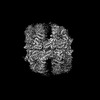
Surface

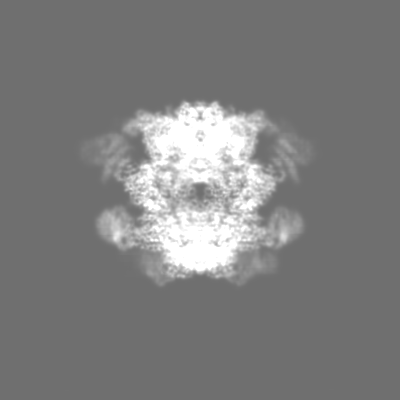
Projections

Slices (1/3)

Slices (1/2)

Slices (2/3)

Images are generated by Spider.

Voxel sizeX=Y=Z: 0.87 Å
Density
Contour LevelBy AUTHOR: 2.56
Minimum - Maximum0.0 - 15.151498
Average (Standard dev.)0.07283124 (±0.57756215)
SymmetrySpace group: 1
Details

EMDB XML:

Map geometry
Axis orderXYZ
Origin000
Dimensions400400400
Spacing400400400
CellA=B=C: 348.0 Å
α=β=γ: 90.0 °

-
Supplemental data

-
Sample components

+
Entire : mouse PDCD5-TRiC complex

EntireName: mouse PDCD5-TRiC complex
Components
  • Complex: mouse PDCD5-TRiC complex
    • Protein or peptide: Programmed cell death protein 5
  • Protein or peptide: T-complex protein 1 subunit alpha
  • Protein or peptide: T-complex protein 1 subunit beta
  • Protein or peptide: T-complex protein 1 subunit gamma
  • Protein or peptide: T-complex protein 1 subunit delta
  • Protein or peptide: T-complex protein 1 subunit epsilon
  • Protein or peptide: T-complex protein 1 subunit zeta
  • Protein or peptide: T-complex protein 1 subunit eta
  • Protein or peptide: T-complex protein 1 subunit theta

+
Supramolecule #1: mouse PDCD5-TRiC complex

SupramoleculeName: mouse PDCD5-TRiC complex / type: complex / ID: 1 / Parent: 0 / Macromolecule list: #9
Source (natural)Organism: Mus musculus (house mouse)

+
Macromolecule #1: T-complex protein 1 subunit alpha

MacromoleculeName: T-complex protein 1 subunit alpha / type: protein_or_peptide / ID: 1 / Number of copies: 1 / Enantiomer: LEVO
EC number: Hydrolases; Acting on acid anhydrides; In phosphorus-containing anhydrides
Source (natural)Organism: Mus musculus (house mouse)
Molecular weightTheoretical: 60.524516 KDa
SequenceString: MEGPLSVFGD RSTGEAVRSQ NVMAAASIAN IVKSSFGPVG LDKMLVDDIG DVTITNDGAT ILKLLEVEHP AAKVLCELAD LQDKEVGDG TTSVVIIAAE LLKNADELVK QKIHPTSVIS GYRLACKEAV RYINENLIIN TDELGRDCLI NAAKTSMSSK I IGINGDYF ...String:
MEGPLSVFGD RSTGEAVRSQ NVMAAASIAN IVKSSFGPVG LDKMLVDDIG DVTITNDGAT ILKLLEVEHP AAKVLCELAD LQDKEVGDG TTSVVIIAAE LLKNADELVK QKIHPTSVIS GYRLACKEAV RYINENLIIN TDELGRDCLI NAAKTSMSSK I IGINGDYF ANMVVDAVLA VKYTDARGQP RYPVNSVNIL KAHGRSQIES MLINGYALNC VVGSQGMPKR IVNAKIACLD FS LQKTKMK LGVQVVITDP EKLDQIRQRE SDITKERIQK ILATGANVIL TTGGIDDMYL KYFVEAGAMA VRRVLKRDLK HVA KASGAS ILSTLANLEG EETFEVTMLG QAEEVVQERI CDDELILIKN TKARTSASII LRGANDFMCD EMERSLHDAL CVVK RVLEL KSVVPGGGAV EAALSIYLEN YATSMGSREQ LAIAEFARSL LVIPNTLAVN AAQDSTDLVA KLRAFHNEAQ VNPER KNLK WIGLDLVHGK PRDNKQAGVF EPTIVKVKSL KFATEAAITI LRIDDLIKLH PESKDDKHGS YENAVHSGAL DD

UniProtKB: T-complex protein 1 subunit alpha

+
Macromolecule #2: T-complex protein 1 subunit beta

MacromoleculeName: T-complex protein 1 subunit beta / type: protein_or_peptide / ID: 2 / Number of copies: 1 / Enantiomer: LEVO
EC number: Hydrolases; Acting on acid anhydrides; In phosphorus-containing anhydrides
Source (natural)Organism: Mus musculus (house mouse)
Molecular weightTheoretical: 57.556148 KDa
SequenceString: MASLSLAPVN IFKAGADEER AETARLSSFI GAIAIGDLVK STLGPKGMDK ILLSSGRDAA LMVTNDGATI LKNIGVDNPA AKVLVDMSR VQDDEVGDGT TSVTVLAAEL LREAESLIAK KIHPQTIISG WREATKAARE ALLSSAVDHG SDEARFWQDL M NIAGTTLS ...String:
MASLSLAPVN IFKAGADEER AETARLSSFI GAIAIGDLVK STLGPKGMDK ILLSSGRDAA LMVTNDGATI LKNIGVDNPA AKVLVDMSR VQDDEVGDGT TSVTVLAAEL LREAESLIAK KIHPQTIISG WREATKAARE ALLSSAVDHG SDEARFWQDL M NIAGTTLS SKLLTHHKDH FTKLAVEAVL RLKGSGNLEA IHVIKKLGGS LADSYLDEGF LLDKKIGVNQ PKRIENAKIL IA NTGMDTD KIKIFGSRVR VDSTAKVAEI EHAEKEKMKE KVERILKHGI NCFINRQLIY NYPEQLFGAA GVMAIEHADF AGV ERLALV TGGEIASTFD HPELVKLGSC KLIEEVMIGE DKLIHFSGVA LGEACTIVLR GATQQILDEA ERSLHDALCV LAQT VKDPR TVYGGGCSEM LMAHAVTQLA NRTPGKEAVA MESFAKALRM LPTIIADNAG YDSADLVAQL RAAHSEGHIT AGLDM KEGT IGDMAVLGIT ESFQVKRQVL LSAAEAAEVI LRVDNIIKAA PRKRVPDHHP C

UniProtKB: T-complex protein 1 subunit beta

+
Macromolecule #3: T-complex protein 1 subunit gamma

MacromoleculeName: T-complex protein 1 subunit gamma / type: protein_or_peptide / ID: 3 / Number of copies: 1 / Enantiomer: LEVO
EC number: Hydrolases; Acting on acid anhydrides; In phosphorus-containing anhydrides
Source (natural)Organism: Mus musculus (house mouse)
Molecular weightTheoretical: 60.710934 KDa
SequenceString: MMGHRPVLVL SQNTKRESGR KVQSGNINAA KTIADIIRTC LGPKSMMKML LDPMGGIVMT NDGNAILREI QVQHPAAKSM IEISRTQDE EVGDGTTSVI ILAGEMLSVA EHFLEQQMHP TVVISAYRMA LDDMISTLKK ISTPVDVNNR EMMLSIINSS I TTKVISRW ...String:
MMGHRPVLVL SQNTKRESGR KVQSGNINAA KTIADIIRTC LGPKSMMKML LDPMGGIVMT NDGNAILREI QVQHPAAKSM IEISRTQDE EVGDGTTSVI ILAGEMLSVA EHFLEQQMHP TVVISAYRMA LDDMISTLKK ISTPVDVNNR EMMLSIINSS I TTKVISRW SSLACNIALD AVKTVQFEEN GRKEIDIKKY ARVEKIPGGI IEDSCVLRGV MINKDVTHPR MRRYIKNPRI VL LDSSLEY KKGESQTDIE ITREEDFTRI LQMEEEYIHQ LCEDIIQLKP DVVITEKGIS DLAQHYLMRA NVTAIRRVRK TDN NRIARA CGARIVSRPE ELREDDVGTG AGLLEIKKIG DEYFTFITDC KDPKACTILL RGASKEILSE VERNLQDAMQ VCRN VLLDP QLVPGGGASE MAVAHALTEK SKAMTGVEQW PYRAVAQALE VIPRTLIQNC GASTIRLLTS LRAKHTQESC ETWGV NGET GTLVDMKELG IWEPLAVKLQ TYKTAVETAV LLLRIDDIVS GHKKKGDDQN RQTGAPDAGQ E

UniProtKB: T-complex protein 1 subunit gamma

+
Macromolecule #4: T-complex protein 1 subunit delta

MacromoleculeName: T-complex protein 1 subunit delta / type: protein_or_peptide / ID: 4 / Number of copies: 1 / Enantiomer: LEVO
EC number: Hydrolases; Acting on acid anhydrides; In phosphorus-containing anhydrides
Source (natural)Organism: Mus musculus (house mouse)
Molecular weightTheoretical: 58.138238 KDa
SequenceString: MPENVASRSG APTAGPGSRG KSAYQDRDKP AQIRFSNISA AKAVADAIRT SLGPKGMDKM IQDGKGDVTI TNDGATILKQ MQVLHPAAR MLVELSKAQD IEAGDGTTSV VIIAGSLLDS CTKLLQKGIH PTIISESFQK ALEKGLEILT DMSRPVQLSD R ETLLNSAT ...String:
MPENVASRSG APTAGPGSRG KSAYQDRDKP AQIRFSNISA AKAVADAIRT SLGPKGMDKM IQDGKGDVTI TNDGATILKQ MQVLHPAAR MLVELSKAQD IEAGDGTTSV VIIAGSLLDS CTKLLQKGIH PTIISESFQK ALEKGLEILT DMSRPVQLSD R ETLLNSAT TSLNSKVVSQ YSSLLSPMSV NAVMKVIDPA TATSVDLRDI KIVKKLGGTI DDCELVEGLV LTQKVANSGI TR VEKAKIG LIQFCLSAPK TDMDNQIVVS DYAQMDRVLR EERAYILNLV KQIKKTGCNV LLIQKSILRD ALSDLALHFL NKM KIMVVK DVEREDIEFI CKTIGTKPVA HIDQFTADML GSAELAEEVS LNGSGKLFKI TGCTSPGKTV TIVVRGSNKL VIEE AERSI HDALCVIRCL VKKRALIAGG GAPEIELALR LTEYSRTLSG MESYCVRAFA DAMEVIPSTL AENAGLNPIS TVTEL RNRH AQGEKTTGIN VRKGGISNIL EEMVVQPLLV SVSALTLATE TVRSILKIDD VVNTR

UniProtKB: T-complex protein 1 subunit delta

+
Macromolecule #5: T-complex protein 1 subunit epsilon

MacromoleculeName: T-complex protein 1 subunit epsilon / type: protein_or_peptide / ID: 5 / Number of copies: 1 / Enantiomer: LEVO
EC number: Hydrolases; Acting on acid anhydrides; In phosphorus-containing anhydrides
Source (natural)Organism: Mus musculus (house mouse)
Molecular weightTheoretical: 59.70402 KDa
SequenceString: MASVGTLAFD EYGRPFLIIK DQDRKSRLMG LEALKSHIMA AKAVANTMRT SLGPNGLDKM MVDKDGDVTI TNDGATILSM MDVDHQIAK LMVELSKSQD DEIGDGTTGV VVLAGALLEE AEQLLDRGIH PIRIADGYEQ AARIAIQHLD KISDKVLVDI N NPEPLIQT ...String:
MASVGTLAFD EYGRPFLIIK DQDRKSRLMG LEALKSHIMA AKAVANTMRT SLGPNGLDKM MVDKDGDVTI TNDGATILSM MDVDHQIAK LMVELSKSQD DEIGDGTTGV VVLAGALLEE AEQLLDRGIH PIRIADGYEQ AARIAIQHLD KISDKVLVDI N NPEPLIQT AKTTLGSKVI NSCHRQMAEI AVNAVLTVAD MERRDVDFEL IKVEGKVGGR LEDTKLIKGV IVDKDFSHPQ MP KKVVDAK IAILTCPFEP PKPKTKHKLD VMSVEDYKAL QKYEKEKFEE MIKQIKETGA NLAICQWGFD DEANHLLLQN GLP AVRWVG GPEIELIAIA TGGRIVPRFS ELTSEKLGFA GVVQEISFGT TKDKMLVIEK CKNSRAVTIF IRGGNKMIIE EAKR SLHDA LCVIRNLIRD NRVVYGGGAA EISCALAVSQ EADKCPTLEQ YAMRAFADAL EVIPMALSEN SGMNPIQTMT EVRAR QVKE SNPALGIDCL HKGSNDMQYQ HVIETLIGKK QQISLATQMV RMILKIDDIR KPGESEE

UniProtKB: T-complex protein 1 subunit epsilon

+
Macromolecule #6: T-complex protein 1 subunit zeta

MacromoleculeName: T-complex protein 1 subunit zeta / type: protein_or_peptide / ID: 6 / Number of copies: 1 / Enantiomer: LEVO
EC number: Hydrolases; Acting on acid anhydrides; In phosphorus-containing anhydrides
Source (natural)Organism: Mus musculus (house mouse)
Molecular weightTheoretical: 58.08618 KDa
SequenceString: MAAVKTLNPK AEVARAQAAL AVNISAARGL QDVLRTNLGP KGTMKMLVSG AGDIKLTKDG NVLLHEMQIQ HPTASLIAKV ATAQDDITG DGTTSNVLII GELLKQADLY ISEGLHPRII TEGFEAAKEK ALQFLEQVKV SKEMDRETLI DVARTSLRTK V HAELADVL ...String:
MAAVKTLNPK AEVARAQAAL AVNISAARGL QDVLRTNLGP KGTMKMLVSG AGDIKLTKDG NVLLHEMQIQ HPTASLIAKV ATAQDDITG DGTTSNVLII GELLKQADLY ISEGLHPRII TEGFEAAKEK ALQFLEQVKV SKEMDRETLI DVARTSLRTK V HAELADVL TEAVVDSILA IRKKDEPIDL FMVEIMEMKH KSETDTSLIR GLVLDHGARH PDMKKRVENA YILTCNVSLE YE KTEVNSG FFYKSAEERE KLVKAERKFI EDRVKKIIEL KKKVCGDSDK GFVVINQKGI DPFSLDALAK EGIVALRRAK RRN MERLTL ACGGIALNSF DDLNPDCLGH AGLVYEYTLG EEKFTFIEKC NNPRSVTLLV KGPNKHTLTQ IKDAIRDGLR AVKN AIDDG CVVPGAGAVE VALAEALIKY KPSVKGRAQL GVQAFADALL IIPKVLAQNS GFDLQETLVK VQAEHSESGQ LVGVD LSTG EPMVAAEMGV WDNYCVKKQL LHSCTVIATN ILLVDEIMRA GMSSLKG

UniProtKB: T-complex protein 1 subunit zeta

+
Macromolecule #7: T-complex protein 1 subunit eta

MacromoleculeName: T-complex protein 1 subunit eta / type: protein_or_peptide / ID: 7 / Number of copies: 1 / Enantiomer: LEVO
EC number: Hydrolases; Acting on acid anhydrides; In phosphorus-containing anhydrides
Source (natural)Organism: Mus musculus (house mouse)
Molecular weightTheoretical: 59.727059 KDa
SequenceString: MMPTPVILLK EGTDSSQGIP QLVSNISACQ VIAEAVRTTL GPRGMDKLIV DGRGKATISN DGATILKLLD VVHPAAKTLV DIAKSQDAE VGDGTTSVTL LAAEFLKQVK PYVEEGLHPQ IIIRAFRTAT QLAVNKIKEI AVTVKKQDKV EQRKMLEKCA M TALSSKLI ...String:
MMPTPVILLK EGTDSSQGIP QLVSNISACQ VIAEAVRTTL GPRGMDKLIV DGRGKATISN DGATILKLLD VVHPAAKTLV DIAKSQDAE VGDGTTSVTL LAAEFLKQVK PYVEEGLHPQ IIIRAFRTAT QLAVNKIKEI AVTVKKQDKV EQRKMLEKCA M TALSSKLI SQQKVFFAKM VVDAVMMLDE LLQLKMIGIK KVQGGALEES QLVAGVAFKK TFSYAGFEMQ PKKYKNPKIA LL NVELELK AEKDNAEIRV HTVEDYQAIV DAEWNILYDK LEKIHQSGAK VILSKLPIGD VATQYFADRD MFCAGRVPEE DLK RTMMAC GGSIQTSVNA LVPDVLGHCQ VFEETQIGGE RYNFFTGCPK AKTCTIILRG GAEQFMEETE RSLHDAIMIV RRAI KNDSV VAGGGAIEME LSKYLRDYSR TIPGKQQLLI GAYAKALEII PRQLCDNAGF DATNILNKLR ARHAQGGMWY GVDIN NENI ADNFQAFVWE PAMVRINALT AASEAACLIV SVDETIKNPR STVDPPAPSA GRGRGQARFH

UniProtKB: T-complex protein 1 subunit eta

+
Macromolecule #8: T-complex protein 1 subunit theta

MacromoleculeName: T-complex protein 1 subunit theta / type: protein_or_peptide / ID: 8 / Number of copies: 1 / Enantiomer: LEVO
EC number: Hydrolases; Acting on acid anhydrides; In phosphorus-containing anhydrides
Source (natural)Organism: Mus musculus (house mouse)
Molecular weightTheoretical: 59.625312 KDa
SequenceString: MALHVPKAPG FAQMLKDGAK HFSGLEEAVY RNIQACKELA QTTRTAYGPN GMNKMVINRL EKLFVTNDAA TILRELEVQH PAAKMIVMA SHMQEQEVGD GTNFVLVFAG ALLELAEELL RIGLSVSEVI SGYEIACKKA HEILPELVCC SAKNLRDVDE V SSLLRTSI ...String:
MALHVPKAPG FAQMLKDGAK HFSGLEEAVY RNIQACKELA QTTRTAYGPN GMNKMVINRL EKLFVTNDAA TILRELEVQH PAAKMIVMA SHMQEQEVGD GTNFVLVFAG ALLELAEELL RIGLSVSEVI SGYEIACKKA HEILPELVCC SAKNLRDVDE V SSLLRTSI MSKQYGSETF LAKLIAQACV SIFPDSGNFN VDNIRVCKIL GSGIYSSSVL HGMVFKKETE GDVTSVKDAK IA VYSCPFD GMITETKGTV LIKTAEELMN FSKGEENLMD AQVKAIAGTG ANVIVTGGKV ADIALHYANK YNIMLVRLNS KWD LRRLCK TVGATALPKL TPPVQEEMGH CDSVYLSEVG DTQVVVFKHE KEDGAISTIV LRGSTDNLMD DIERAVDDGV NTFK VLTRD KRLVPGGGAT EIELAKQITS YGETCPGLEQ YAIKKFAEAF EAIPRALAEN SGVKANEVIS KLYSVHQEGN KNVGL DIEA EVPAVKDMLE ASILDTYLGK YWAIKLATNA AVTVLRVDQI IMAKPAGGPK PPSGKKDWDD DQND

UniProtKB: T-complex protein 1 subunit theta

+
Macromolecule #9: Programmed cell death protein 5

MacromoleculeName: Programmed cell death protein 5 / type: protein_or_peptide / ID: 9 / Number of copies: 1 / Enantiomer: LEVO
Source (natural)Organism: Mus musculus (house mouse)
Molecular weightTheoretical: 19.048205 KDa
Recombinant expressionOrganism: Escherichia coli BL21(DE3) (bacteria)
SequenceString:
MGSSHHHHHH SSGLVPRGSH MASMTGGQQM GRGSMADEEL EALRKQRLAE LQAKHGDPGD AAQQEAKQRE AEMRNSILAQ VLDQSARAR LSNLALVKPE KTKAVENYLI QMARYGQLSG KVSEQGLIEI LEKVSQQTEK KTTVKFNRRK VMDSDEDDAD Y GSGDYKDD DDK

UniProtKB: Programmed cell death protein 5

-
Experimental details

-
Structure determination

Methodcryo EM
Processingsingle particle reconstruction
Aggregation stateparticle

-
Sample preparation

BufferpH: 7.5
VitrificationCryogen name: ETHANE

-
Electron microscopy

MicroscopeTFS KRIOS
Image recordingFilm or detector model: GATAN K3 BIOQUANTUM (6k x 4k) / Average electron dose: 57.0 e/Å2
Electron beamAcceleration voltage: 300 kV / Electron source: FIELD EMISSION GUN
Electron opticsIllumination mode: FLOOD BEAM / Imaging mode: BRIGHT FIELD / Nominal defocus max: 15.0 µm / Nominal defocus min: 9.0 µm
Experimental equipment
Model: Titan Krios / Image courtesy: FEI Company

+
Image processing

CTF correctionType: PHASE FLIPPING AND AMPLITUDE CORRECTION
Startup modelType of model: EMDB MAP
EMDB ID:
Final reconstructionApplied symmetry - Point group: C2 (2 fold cyclic) / Resolution.type: BY AUTHOR / Resolution: 3.55 Å / Resolution method: FSC 0.143 CUT-OFF / Software - Name: cryoSPARC / Number images used: 659930
Initial angle assignmentType: RANDOM ASSIGNMENT
Final angle assignmentType: MAXIMUM LIKELIHOOD

+
About Yorodumi

-
News

-
Feb 9, 2022. New format data for meta-information of EMDB entries

New format data for meta-information of EMDB entries

  • Version 3 of the EMDB header file is now the official format.
  • The previous official version 1.9 will be removed from the archive.

Related info.:EMDB header

External links:wwPDB to switch to version 3 of the EMDB data model

-
Aug 12, 2020. Covid-19 info

Covid-19 info

URL: https://pdbj.org/emnavi/covid19.php

New page: Covid-19 featured information page in EM Navigator.

Related info.:Covid-19 info / Mar 5, 2020. Novel coronavirus structure data

+
Mar 5, 2020. Novel coronavirus structure data

Novel coronavirus structure data

Related info.:Yorodumi Speices / Aug 12, 2020. Covid-19 info

External links:COVID-19 featured content - PDBj / Molecule of the Month (242):Coronavirus Proteases

+
Jan 31, 2019. EMDB accession codes are about to change! (news from PDBe EMDB page)

EMDB accession codes are about to change! (news from PDBe EMDB page)

  • The allocation of 4 digits for EMDB accession codes will soon come to an end. Whilst these codes will remain in use, new EMDB accession codes will include an additional digit and will expand incrementally as the available range of codes is exhausted. The current 4-digit format prefixed with “EMD-” (i.e. EMD-XXXX) will advance to a 5-digit format (i.e. EMD-XXXXX), and so on. It is currently estimated that the 4-digit codes will be depleted around Spring 2019, at which point the 5-digit format will come into force.
  • The EM Navigator/Yorodumi systems omit the EMD- prefix.

Related info.:Q: What is EMD? / ID/Accession-code notation in Yorodumi/EM Navigator

External links:EMDB Accession Codes are Changing Soon! / Contact to PDBj

+
Jul 12, 2017. Major update of PDB

Major update of PDB

  • wwPDB released updated PDB data conforming to the new PDBx/mmCIF dictionary.
  • This is a major update changing the version number from 4 to 5, and with Remediation, in which all the entries are updated.
  • In this update, many items about electron microscopy experimental information are reorganized (e.g. em_software).
  • Now, EM Navigator and Yorodumi are based on the updated data.

External links:wwPDB Remediation / Enriched Model Files Conforming to OneDep Data Standards Now Available in the PDB FTP Archive

-
Yorodumi

Thousand views of thousand structures

  • Yorodumi is a browser for structure data from EMDB, PDB, SASBDB, etc.
  • This page is also the successor to EM Navigator detail page, and also detail information page/front-end page for Omokage search.
  • The word "yorodu" (or yorozu) is an old Japanese word meaning "ten thousand". "mi" (miru) is to see.

Related info.:EMDB / PDB / SASBDB / Comparison of 3 databanks / Yorodumi Search / Aug 31, 2016. New EM Navigator & Yorodumi / Yorodumi Papers / Jmol/JSmol / Function and homology information / Changes in new EM Navigator and Yorodumi

Read more