[English] 日本語
Yorodumi
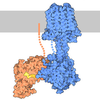
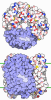
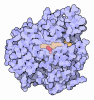
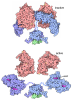
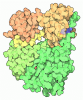
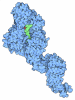
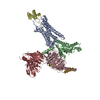
- EMDB-62626: Structure of EP67 bound mouse C5aR1 in complex with Go -

+
Open data


ID or keywords:

Loading...

-
Basic information

Entry
Database: EMDB / ID: EMD-62626
TitleStructure of EP67 bound mouse C5aR1 in complex with Go
Map data
Sample
  • Complex: EP67 bound to mouse C5aR1 in complex with Go
    • Complex: mouse C5a anaphylatoxin chemotactic receptor 1
      • Protein or peptide: Muscarinic acetylcholine receptor M4,C5a anaphylatoxin chemotactic receptor 1
    • Complex: Guanine nucleotide-binding protein G(o) subunit alpha
      • Protein or peptide: Guanine nucleotide-binding protein G(o) subunit alpha
    • Complex: Guanine nucleotide-binding protein G(I)/G(S)/G(T) subunit beta-1
      • Protein or peptide: Guanine nucleotide-binding protein G(I)/G(S)/G(T) subunit beta-1
    • Complex: Antibody fragment ScFv16
      • Protein or peptide: Antibody fragment ScFv16
    • Complex: Guanine nucleotide-binding protein G(I)/G(S)/G(O) subunit gamma-2
      • Protein or peptide: Guanine nucleotide-binding protein G(I)/G(S)/G(O) subunit gamma-2
    • Complex: EP67 ligand
      • Protein or peptide: EP67 ligand
KeywordsGPCR / G protein / SIGNALING PROTEIN / SIGNALING PROTEIN-IMMUNE SYSTEM complex
Function / homology
Function and homology information


complement component C5a binding / cell proliferation in hindbrain / response to peptidoglycan / presynapse organization / complement component C5a signaling pathway / Regulation of Complement cascade / Peptide ligand-binding receptors / complement component C5a receptor activity / Muscarinic acetylcholine receptors / G protein-coupled acetylcholine receptor activity ...complement component C5a binding / cell proliferation in hindbrain / response to peptidoglycan / presynapse organization / complement component C5a signaling pathway / Regulation of Complement cascade / Peptide ligand-binding receptors / complement component C5a receptor activity / Muscarinic acetylcholine receptors / G protein-coupled acetylcholine receptor activity / regulation of locomotion / G alpha (i) signalling events / mu-type opioid receptor binding / adenylate cyclase-inhibiting G protein-coupled acetylcholine receptor signaling pathway / corticotropin-releasing hormone receptor 1 binding / complement receptor mediated signaling pathway / positive regulation of neutrophil chemotaxis / G protein-coupled dopamine receptor signaling pathway / positive regulation of macrophage chemotaxis / parallel fiber to Purkinje cell synapse / amyloid-beta clearance / positive regulation of vascular endothelial growth factor production / negative regulation of insulin secretion / G protein-coupled receptor signaling pathway, coupled to cyclic nucleotide second messenger / postsynaptic modulation of chemical synaptic transmission / neutrophil chemotaxis / muscle contraction / Neutrophil degranulation / astrocyte activation / positive regulation of epithelial cell proliferation / adenylate cyclase-inhibiting serotonin receptor signaling pathway / G protein-coupled serotonin receptor binding / microglial cell activation / mRNA transcription by RNA polymerase II / cognition / GABA-ergic synapse / G protein-coupled receptor activity / positive regulation of angiogenesis / G-protein beta/gamma-subunit complex binding / apical part of cell / adenylate cyclase-inhibiting G protein-coupled receptor signaling pathway / adenylate cyclase-modulating G protein-coupled receptor signaling pathway / phospholipase C-activating G protein-coupled receptor signaling pathway / Olfactory Signaling Pathway / Activation of the phototransduction cascade / G protein-coupled acetylcholine receptor signaling pathway / G beta:gamma signalling through PLC beta / Presynaptic function of Kainate receptors / Thromboxane signalling through TP receptor / Activation of G protein gated Potassium channels / Inhibition of voltage gated Ca2+ channels via Gbeta/gamma subunits / G-protein activation / Glucagon signaling in metabolic regulation / G beta:gamma signalling through CDC42 / Prostacyclin signalling through prostacyclin receptor / Synthesis, secretion, and inactivation of Glucagon-like Peptide-1 (GLP-1) / G beta:gamma signalling through BTK / photoreceptor disc membrane / ADP signalling through P2Y purinoceptor 12 / Glucagon-type ligand receptors / Sensory perception of sweet, bitter, and umami (glutamate) taste / Adrenaline,noradrenaline inhibits insulin secretion / Vasopressin regulates renal water homeostasis via Aquaporins / Glucagon-like Peptide-1 (GLP1) regulates insulin secretion / G alpha (z) signalling events / cellular response to catecholamine stimulus / ADP signalling through P2Y purinoceptor 1 / G beta:gamma signalling through PI3Kgamma / ADORA2B mediated anti-inflammatory cytokines production / adenylate cyclase-activating dopamine receptor signaling pathway / cellular response to prostaglandin E stimulus / Cooperation of PDCL (PhLP1) and TRiC/CCT in G-protein beta folding / GPER1 signaling / heterotrimeric G-protein complex / Inactivation, recovery and regulation of the phototransduction cascade / G alpha (12/13) signalling events / G-protein beta-subunit binding / extracellular vesicle / positive regulation of cytosolic calcium ion concentration / Thrombin signalling through proteinase activated receptors (PARs) / signaling receptor complex adaptor activity / cell body / GTPase binding / presynaptic membrane / cytoplasmic vesicle / G protein activity / chemical synaptic transmission / Ca2+ pathway / negative regulation of neuron apoptotic process / High laminar flow shear stress activates signaling by PIEZO1 and PECAM1:CDH5:KDR in endothelial cells / G alpha (i) signalling events / G alpha (s) signalling events / basolateral plasma membrane / G alpha (q) signalling events / Hydrolases; Acting on acid anhydrides; Acting on GTP to facilitate cellular and subcellular movement / Ras protein signal transduction / positive regulation of ERK1 and ERK2 cascade / postsynaptic membrane / cell surface receptor signaling pathway / Extra-nuclear estrogen signaling
Similarity search - Function
Muscarinic acetylcholine receptor M4 / Anaphylatoxin chemotactic receptor, C3a/C5a1/C5a2 / Muscarinic acetylcholine receptor family / Formyl peptide receptor-related / G-protein alpha subunit, group I / Serpentine type 7TM GPCR chemoreceptor Srsx / G protein alpha subunit, helical insertion / G protein alpha subunit / Guanine nucleotide binding protein (G-protein), alpha subunit / G-protein alpha subunit ...Muscarinic acetylcholine receptor M4 / Anaphylatoxin chemotactic receptor, C3a/C5a1/C5a2 / Muscarinic acetylcholine receptor family / Formyl peptide receptor-related / G-protein alpha subunit, group I / Serpentine type 7TM GPCR chemoreceptor Srsx / G protein alpha subunit, helical insertion / G protein alpha subunit / Guanine nucleotide binding protein (G-protein), alpha subunit / G-protein alpha subunit / G-alpha domain profile. / G-protein, gamma subunit / G-protein gamma subunit domain profile. / G-protein gamma-like domain / G-protein gamma-like domain superfamily / GGL domain / G protein gamma subunit-like motifs / GGL domain / G protein beta WD-40 repeat protein / Guanine nucleotide-binding protein, beta subunit / G-protein, beta subunit / G-protein coupled receptors family 1 signature. / 7 transmembrane receptor (rhodopsin family) / G protein-coupled receptor, rhodopsin-like / GPCR, rhodopsin-like, 7TM / G-protein coupled receptors family 1 profile. / G-protein beta WD-40 repeat / WD40 repeat, conserved site / Trp-Asp (WD) repeats signature. / Trp-Asp (WD) repeats profile. / Trp-Asp (WD) repeats circular profile. / WD40 repeats / WD40 repeat / WD40-repeat-containing domain superfamily / WD40/YVTN repeat-like-containing domain superfamily / P-loop containing nucleoside triphosphate hydrolase
Similarity search - Domain/homology
Muscarinic acetylcholine receptor M4 / Guanine nucleotide-binding protein G(o) subunit alpha / C5a anaphylatoxin chemotactic receptor 1 / Guanine nucleotide-binding protein G(I)/G(S)/G(O) subunit gamma-2 / Guanine nucleotide-binding protein G(I)/G(S)/G(T) subunit beta-1
Similarity search - Component
Biological speciesMus musculus (house mouse) / Homo sapiens (human)
Methodsingle particle reconstruction / cryo EM / Resolution: 3.31 Å
AuthorsBanerjee R / Yadav R / Yadav MK / Ganguly M / Mishra S / Dalal A / Gati C / Shukla AK
Funding support India, United Kingdom, 3 items
OrganizationGrant numberCountry
Science and Engineering Research Board (SERB)IPA/2020/000405 India
Wellcome TrustIA/S/20/1/504916 United Kingdom
Science and Engineering Research Board (SERB)CRG/2022/002646 India
CitationJournal: Proc Natl Acad Sci U S A / Year: 2026
Title: Structural basis of complement anaphylatoxin receptor activation by an immunostimulant lead candidate.
Authors: Annu Dalal / Manish K Yadav / Manisankar Ganguly / Sudha Mishra / Ravi Yadav / Shachie Sinha / Nabarun Roy / Divyanshu Tiwari / Debdatta Mukherjee / Ashna Reyaz / Calvin A Dsouza / Ameesha ...Authors: Annu Dalal / Manish K Yadav / Manisankar Ganguly / Sudha Mishra / Ravi Yadav / Shachie Sinha / Nabarun Roy / Divyanshu Tiwari / Debdatta Mukherjee / Ashna Reyaz / Calvin A Dsouza / Ameesha Nigam / Nilanjana Banerjee / Xaria X Li / Richard J Clark / Trent M Woodruff / Ramanuj Banerjee / Cornelius Gati / Arun K Shukla /
Abstract: Activation of the complement cascade is a primary innate immune response mechanism to combat pathogenic infections. Complement anaphylatoxins (i.e., C3a and C5a) exert a robust inflammatory response ...Activation of the complement cascade is a primary innate immune response mechanism to combat pathogenic infections. Complement anaphylatoxins (i.e., C3a and C5a) exert a robust inflammatory response via prototypical GPCRs (i.e., C3aR and C5aR1). Several peptides derived from anaphylatoxins have shown promise as immunostimulants from therapeutic standpoint by eliciting immune response without excessive inflammation. EP67, a C5a-derived decapeptide, is the most advanced candidate with preclinical indications in antiviral and antibacterial context. Still, the molecular mechanism and the precise receptor target of EP67 remain unclear. Here, we perform a comprehensive pharmacological profiling of EP67 on the human and mouse C3aR and C5aR1 and find that it preferentially activates human C3aR in transducer-coupling assays. Subsequently, we determined four cryo-EM structures of C3aR and C5aR1 in complex with EP67, which elucidate the molecular details of its interaction with, and activation of, these receptors. Interestingly, we observe that EP67 adopts a hook-like structure and binds in the orthosteric pocket of the receptors, analogous to that of the carboxyl terminus of C3a and C5a. We employ site-directed mutagenesis studies to validate the key interactions of EP67 with these receptors and corroborate the structural observations including the engagement of a critical activation switch. Finally, we observe that EP67 induces distinct conformations of the TM7-Helix8 interface for C3aR and C5aR1, which provides a plausible explanation for its ability to preferentially activate C3aR. In summary, our study elucidates molecular insights into the interaction of EP67 with the complement anaphylatoxin receptors, and it should facilitate further optimization for therapeutic applications.
History
DepositionDec 7, 2024-
Header (metadata) releaseNov 26, 2025-
Map releaseNov 26, 2025-
UpdateJul 22, 2026-
Current statusJul 22, 2026Processing site: PDBj / Status: Released

-
Structure visualization

Supplemental images

Downloads & links

-
Map

FileDownload / File: emd_62626.map.gz / Format: CCP4 / Size: 64 MB / Type: IMAGE STORED AS FLOATING POINT NUMBER (4 BYTES)
Projections & slices

Image control

Size
Brightness
Contrast
Others
AxesZ (Sec.)Y (Row.)X (Col.)
1.21 Å/pix.
x 256 pix.
= 309.606 Å
1.21 Å/pix.
x 256 pix.
= 309.606 Å
1.21 Å/pix.
x 256 pix.
= 309.606 Å

Surface

Projections

Slices (1/3)

Slices (1/2)

Slices (2/3)

Images are generated by Spider.

Voxel sizeX=Y=Z: 1.2094 Å
Density
Contour LevelBy AUTHOR: 0.025
Minimum - Maximum-0.047065184 - 1.9833423
Average (Standard dev.)0.00051569537 (±0.018822044)
SymmetrySpace group: 1
Details

EMDB XML:

Map geometry
Axis orderXYZ
Origin000
Dimensions256256256
Spacing256256256
CellA=B=C: 309.6064 Å
α=β=γ: 90.0 °

-
Supplemental data

-
Half map: #2

Fileemd_62626_half_map_1.map
Projections & Slices
AxesZYX

Projections

Slices (1/2)
Density Histograms

-
Half map: #1

Fileemd_62626_half_map_2.map
Projections & Slices
AxesZYX

Projections

Slices (1/2)
Density Histograms

-
Sample components

+
Entire : EP67 bound to mouse C5aR1 in complex with Go

EntireName: EP67 bound to mouse C5aR1 in complex with Go
Components
  • Complex: EP67 bound to mouse C5aR1 in complex with Go
    • Complex: mouse C5a anaphylatoxin chemotactic receptor 1
      • Protein or peptide: Muscarinic acetylcholine receptor M4,C5a anaphylatoxin chemotactic receptor 1
    • Complex: Guanine nucleotide-binding protein G(o) subunit alpha
      • Protein or peptide: Guanine nucleotide-binding protein G(o) subunit alpha
    • Complex: Guanine nucleotide-binding protein G(I)/G(S)/G(T) subunit beta-1
      • Protein or peptide: Guanine nucleotide-binding protein G(I)/G(S)/G(T) subunit beta-1
    • Complex: Antibody fragment ScFv16
      • Protein or peptide: Antibody fragment ScFv16
    • Complex: Guanine nucleotide-binding protein G(I)/G(S)/G(O) subunit gamma-2
      • Protein or peptide: Guanine nucleotide-binding protein G(I)/G(S)/G(O) subunit gamma-2
    • Complex: EP67 ligand
      • Protein or peptide: EP67 ligand

+
Supramolecule #1: EP67 bound to mouse C5aR1 in complex with Go

SupramoleculeName: EP67 bound to mouse C5aR1 in complex with Go / type: complex / ID: 1 / Parent: 0 / Macromolecule list: all

+
Supramolecule #2: mouse C5a anaphylatoxin chemotactic receptor 1

SupramoleculeName: mouse C5a anaphylatoxin chemotactic receptor 1 / type: complex / ID: 2 / Parent: 1 / Macromolecule list: #1
Source (natural)Organism: Mus musculus (house mouse)

+
Supramolecule #3: Guanine nucleotide-binding protein G(o) subunit alpha

SupramoleculeName: Guanine nucleotide-binding protein G(o) subunit alpha / type: complex / ID: 3 / Parent: 1 / Macromolecule list: #2
Details: This is a variant of Guanine nucleotide-binding protein G(o) subunit alpha called the "mini G(o) alpha"
Source (natural)Organism: Homo sapiens (human)

+
Supramolecule #4: Guanine nucleotide-binding protein G(I)/G(S)/G(T) subunit beta-1

SupramoleculeName: Guanine nucleotide-binding protein G(I)/G(S)/G(T) subunit beta-1
type: complex / ID: 4 / Parent: 1 / Macromolecule list: #3
Source (natural)Organism: Homo sapiens (human)

+
Supramolecule #5: Antibody fragment ScFv16

SupramoleculeName: Antibody fragment ScFv16 / type: complex / ID: 5 / Parent: 1 / Macromolecule list: #5
Source (natural)Organism: Mus musculus (house mouse)

+
Supramolecule #6: Guanine nucleotide-binding protein G(I)/G(S)/G(O) subunit gamma-2

SupramoleculeName: Guanine nucleotide-binding protein G(I)/G(S)/G(O) subunit gamma-2
type: complex / ID: 6 / Parent: 1 / Macromolecule list: #4
Source (natural)Organism: Homo sapiens (human)

+
Supramolecule #7: EP67 ligand

SupramoleculeName: EP67 ligand / type: complex / ID: 7 / Parent: 1 / Macromolecule list: #6

+
Macromolecule #1: Muscarinic acetylcholine receptor M4,C5a anaphylatoxin chemotacti...

MacromoleculeName: Muscarinic acetylcholine receptor M4,C5a anaphylatoxin chemotactic receptor 1
type: protein_or_peptide / ID: 1 / Number of copies: 1 / Enantiomer: LEVO
Source (natural)Organism: Mus musculus (house mouse)
Molecular weightTheoretical: 44.958422 KDa
Recombinant expressionOrganism: Spodoptera frugiperda (fall armyworm)
SequenceString: MGKTIIALSY IFCLVFADYK DDDDAANFTP VNGSSGNQSV RLVTSSSLEV LFQGPGSDPI DNSSFEINYD HYGTMDPNIP ADGIHLPKR QPGDVAALII YSVVFLVGVP GNALVVWVTA FEARRAVNAI WFLNLAVADL LSCLALPVLF TTVLNHNYWY F DATACIVL ...String:
MGKTIIALSY IFCLVFADYK DDDDAANFTP VNGSSGNQSV RLVTSSSLEV LFQGPGSDPI DNSSFEINYD HYGTMDPNIP ADGIHLPKR QPGDVAALII YSVVFLVGVP GNALVVWVTA FEARRAVNAI WFLNLAVADL LSCLALPVLF TTVLNHNYWY F DATACIVL PSLILLNMYA SILLLATISA DRFLLVFKPI WCQKVRGTGL AWMACGVAWV LALLLTIPSF VYREAYKDFY SE HTVCGIN YGGGSFPKEK AVAILRLMVG FVLPLLTLNI CYTFLLLRTW SRKATRSTKT LKVVMAVVIC FFIFWLPYQV TGV MIAWLP PSSPTLKRVE KLNSLCVSLA YINCCVNPII YVMAGQGFHG RLLRSLPSII RNALSEDSVG RDSKTFTPST TDTS TRKSQ AV

UniProtKB: Muscarinic acetylcholine receptor M4, C5a anaphylatoxin chemotactic receptor 1

+
Macromolecule #2: Guanine nucleotide-binding protein G(o) subunit alpha

MacromoleculeName: Guanine nucleotide-binding protein G(o) subunit alpha / type: protein_or_peptide / ID: 2 / Number of copies: 1 / Enantiomer: LEVO
EC number: Hydrolases; Acting on acid anhydrides; Acting on GTP to facilitate cellular and subcellular movement
Source (natural)Organism: Homo sapiens (human)
Molecular weightTheoretical: 27.024762 KDa
Recombinant expressionOrganism: Escherichia coli (E. coli)
SequenceString: MGHHHHHHEN LYFQGTLSAE ERAALERSKA IEKNLKEDGI SAAKDVKLLL LGADNSGKST IVKQMKIIHG GSGGSGGTTG IVETHFTFK NLHFRLFDVG GQRSERKKWI HCFEDVTAII FCVDLSDYNR MHESLMLFDS ICNNKFFIDT SIILFLNKKD L FGEKIKKS ...String:
MGHHHHHHEN LYFQGTLSAE ERAALERSKA IEKNLKEDGI SAAKDVKLLL LGADNSGKST IVKQMKIIHG GSGGSGGTTG IVETHFTFK NLHFRLFDVG GQRSERKKWI HCFEDVTAII FCVDLSDYNR MHESLMLFDS ICNNKFFIDT SIILFLNKKD L FGEKIKKS PLTICFPEYT GPNTYEDAAA YIQAQFESKN RSPNKEIYCH MTCATDTNNA QVIFDAVTDI IIANNLRGCG LY

UniProtKB: Guanine nucleotide-binding protein G(o) subunit alpha, Guanine nucleotide-binding protein G(o) subunit alpha

+
Macromolecule #3: Guanine nucleotide-binding protein G(I)/G(S)/G(T) subunit beta-1

MacromoleculeName: Guanine nucleotide-binding protein G(I)/G(S)/G(T) subunit beta-1
type: protein_or_peptide / ID: 3 / Number of copies: 1 / Enantiomer: LEVO
Source (natural)Organism: Homo sapiens (human)
Molecular weightTheoretical: 38.534062 KDa
Recombinant expressionOrganism: Spodoptera frugiperda (fall armyworm)
SequenceString: MHHHHHHGSS GSELDQLRQE AEQLKNQIRD ARKACADATL SQITNNIDPV GRIQMRTRRT LRGHLAKIYA MHWGTDSRLL VSASQDGKL IIWDSYTTNK VHAIPLRSSW VMTCAYAPSG NYVACGGLDN ICSIYNLKTR EGNVRVSREL AGHTGYLSCC R FLDDNQIV ...String:
MHHHHHHGSS GSELDQLRQE AEQLKNQIRD ARKACADATL SQITNNIDPV GRIQMRTRRT LRGHLAKIYA MHWGTDSRLL VSASQDGKL IIWDSYTTNK VHAIPLRSSW VMTCAYAPSG NYVACGGLDN ICSIYNLKTR EGNVRVSREL AGHTGYLSCC R FLDDNQIV TSSGDTTCAL WDIETGQQTT TFTGHTGDVM SLSLAPDTRL FVSGACDASA KLWDVREGMC RQTFTGHESD IN AICFFPN GNAFATGSDD ATCRLFDLRA DQELMTYSHD NIICGITSVS FSKSGRLLLA GYDDFNCNVW DALKADRAGV LAG HDNRVS CLGVTDDGMA VATGSWDSFL KIWN

UniProtKB: Guanine nucleotide-binding protein G(I)/G(S)/G(T) subunit beta-1

+
Macromolecule #4: Guanine nucleotide-binding protein G(I)/G(S)/G(O) subunit gamma-2

MacromoleculeName: Guanine nucleotide-binding protein G(I)/G(S)/G(O) subunit gamma-2
type: protein_or_peptide / ID: 4 / Number of copies: 1 / Enantiomer: LEVO
Source (natural)Organism: Homo sapiens (human)
Molecular weightTheoretical: 7.861143 KDa
Recombinant expressionOrganism: Spodoptera frugiperda (fall armyworm)
SequenceString:
MASNNTASIA QARKLVEQLK MEANIDRIKV SKAAADLMAY CEAHAKEDPL LTPVPASENP FREKKFFCAI L

UniProtKB: Guanine nucleotide-binding protein G(I)/G(S)/G(O) subunit gamma-2

+
Macromolecule #5: Antibody fragment ScFv16

MacromoleculeName: Antibody fragment ScFv16 / type: protein_or_peptide / ID: 5 / Number of copies: 1 / Enantiomer: LEVO
Source (natural)Organism: Mus musculus (house mouse)
Molecular weightTheoretical: 27.340482 KDa
Recombinant expressionOrganism: Escherichia coli (E. coli)
SequenceString: DVQLVESGGG LVQPGGSRKL SCSASGFAFS SFGMHWVRQA PEKGLEWVAY ISSGSGTIYY ADTVKGRFTI SRDDPKNTLF LQMTSLRSE DTAMYYCVRS IYYYGSSPFD FWGQGTTLTV SSGGGGSGGG GSGGGGSDIV MTQATSSVPV TPGESVSISC R SSKSLLHS ...String:
DVQLVESGGG LVQPGGSRKL SCSASGFAFS SFGMHWVRQA PEKGLEWVAY ISSGSGTIYY ADTVKGRFTI SRDDPKNTLF LQMTSLRSE DTAMYYCVRS IYYYGSSPFD FWGQGTTLTV SSGGGGSGGG GSGGGGSDIV MTQATSSVPV TPGESVSISC R SSKSLLHS NGNTYLYWFL QRPGQSPQLL IYRMSNLASG VPDRFSGSGS GTAFTLTISR LEAEDVGVYY CMQHLEYPLT FG AGTKLEL KGSLEVLFQ

+
Macromolecule #6: EP67 ligand

MacromoleculeName: EP67 ligand / type: protein_or_peptide / ID: 6 / Number of copies: 1 / Enantiomer: LEVO
Source (natural)Organism: Homo sapiens (human)
Molecular weightTheoretical: 1.243474 KDa
SequenceString:
YSFKDMP(MLE)(DAL)R

-
Experimental details

-
Structure determination

Methodcryo EM
Processingsingle particle reconstruction
Aggregation stateparticle

-
Sample preparation

BufferpH: 7.4
VitrificationCryogen name: ETHANE

-
Electron microscopy

MicroscopeTFS KRIOS
Image recordingFilm or detector model: GATAN K3 (6k x 4k) / Detector mode: COUNTING / Average electron dose: 48.49 e/Å2
Electron beamAcceleration voltage: 300 kV / Electron source: FIELD EMISSION GUN
Electron opticsIllumination mode: FLOOD BEAM / Imaging mode: BRIGHT FIELD / Nominal defocus max: 1.8 µm / Nominal defocus min: 0.8 µm
Experimental equipment
Model: Titan Krios / Image courtesy: FEI Company

+
Image processing

CTF correctionSoftware - Name: cryoSPARC (ver. 4.5.3) / Type: NONE
Startup modelType of model: PDB ENTRY
PDB model - PDB ID:
Final reconstructionApplied symmetry - Point group: C1 (asymmetric) / Resolution.type: BY AUTHOR / Resolution: 3.31 Å / Resolution method: FSC 0.143 CUT-OFF / Software - Name: cryoSPARC (ver. 4.5.3) / Number images used: 409104
Initial angle assignmentType: MAXIMUM LIKELIHOOD / Software - Name: cryoSPARC (ver. 4.5.3)
Final angle assignmentType: MAXIMUM LIKELIHOOD / Software - Name: cryoSPARC (ver. 4.5.3)
Final 3D classificationSoftware - Name: cryoSPARC (ver. 4.6.2)
FSC plot (resolution estimation)

-
Atomic model buiding 1

RefinementSpace: REAL / Protocol: FLEXIBLE FIT
Output model

PDB-9kxs:
Structure of EP67 bound mouse C5aR1 in complex with Go

+
About Yorodumi

-
News

-
Feb 9, 2022. New format data for meta-information of EMDB entries

New format data for meta-information of EMDB entries

  • Version 3 of the EMDB header file is now the official format.
  • The previous official version 1.9 will be removed from the archive.

Related info.:EMDB header

External links:wwPDB to switch to version 3 of the EMDB data model

-
Aug 12, 2020. Covid-19 info

Covid-19 info

URL: https://pdbj.org/emnavi/covid19.php

New page: Covid-19 featured information page in EM Navigator.

Related info.:Covid-19 info / Mar 5, 2020. Novel coronavirus structure data

+
Mar 5, 2020. Novel coronavirus structure data

Novel coronavirus structure data

Related info.:Yorodumi Speices / Aug 12, 2020. Covid-19 info

External links:COVID-19 featured content - PDBj / Molecule of the Month (242):Coronavirus Proteases

+
Jan 31, 2019. EMDB accession codes are about to change! (news from PDBe EMDB page)

EMDB accession codes are about to change! (news from PDBe EMDB page)

  • The allocation of 4 digits for EMDB accession codes will soon come to an end. Whilst these codes will remain in use, new EMDB accession codes will include an additional digit and will expand incrementally as the available range of codes is exhausted. The current 4-digit format prefixed with “EMD-” (i.e. EMD-XXXX) will advance to a 5-digit format (i.e. EMD-XXXXX), and so on. It is currently estimated that the 4-digit codes will be depleted around Spring 2019, at which point the 5-digit format will come into force.
  • The EM Navigator/Yorodumi systems omit the EMD- prefix.

Related info.:Q: What is EMD? / ID/Accession-code notation in Yorodumi/EM Navigator

External links:EMDB Accession Codes are Changing Soon! / Contact to PDBj

+
Jul 12, 2017. Major update of PDB

Major update of PDB

  • wwPDB released updated PDB data conforming to the new PDBx/mmCIF dictionary.
  • This is a major update changing the version number from 4 to 5, and with Remediation, in which all the entries are updated.
  • In this update, many items about electron microscopy experimental information are reorganized (e.g. em_software).
  • Now, EM Navigator and Yorodumi are based on the updated data.

External links:wwPDB Remediation / Enriched Model Files Conforming to OneDep Data Standards Now Available in the PDB FTP Archive

-
Yorodumi

Thousand views of thousand structures

  • Yorodumi is a browser for structure data from EMDB, PDB, SASBDB, etc.
  • This page is also the successor to EM Navigator detail page, and also detail information page/front-end page for Omokage search.
  • The word "yorodu" (or yorozu) is an old Japanese word meaning "ten thousand". "mi" (miru) is to see.

Related info.:EMDB / PDB / SASBDB / Comparison of 3 databanks / Yorodumi Search / Aug 31, 2016. New EM Navigator & Yorodumi / Yorodumi Papers / Jmol/JSmol / Function and homology information / Changes in new EM Navigator and Yorodumi

Read more