Regulation of HMOX1 expression and activity / Parkin-FBXW7-Cul1 ubiquitin ligase complex / F-box domain binding / ligand-modulated transcription factor activity / PcG protein complex / negative regulation of beige fat cell differentiation / cullin-RING-type E3 NEDD8 transferase / NEDD8 transferase activity / cullin-RING ubiquitin ligase complex / maintenance of protein location in nucleus ...Regulation of HMOX1 expression and activity / Parkin-FBXW7-Cul1 ubiquitin ligase complex / F-box domain binding / ligand-modulated transcription factor activity / PcG protein complex / negative regulation of beige fat cell differentiation / cullin-RING-type E3 NEDD8 transferase / NEDD8 transferase activity / cullin-RING ubiquitin ligase complex / maintenance of protein location in nucleus / Cul7-RING ubiquitin ligase complex / regulation of smoothened signaling pathway / cellular response to chemical stress / Loss of Function of FBXW7 in Cancer and NOTCH1 Signaling / positive regulation of protein autoubiquitination / RNA polymerase II transcription initiation surveillance / protein neddylation / ubiquitin ligase activator activity / NEDD8 ligase activity / protein K27-linked ubiquitination / negative regulation of response to oxidative stress / NFE2L2 regulating anti-oxidant/detoxification enzymes / VCB complex / Cul5-RING ubiquitin ligase complex / ubiquitin-ubiquitin ligase activity / neural crest cell differentiation / ubiquitin-dependent protein catabolic process via the C-end degron rule pathway / SCF ubiquitin ligase complex / Cul2-RING ubiquitin ligase complex / Cul3-RING ubiquitin ligase complex / negative regulation of type I interferon production / SCF-dependent proteasomal ubiquitin-dependent protein catabolic process / Cul4A-RING E3 ubiquitin ligase complex / Cul4-RING E3 ubiquitin ligase complex / Prolactin receptor signaling / negative regulation of mitophagy / Cul4B-RING E3 ubiquitin ligase complex / ubiquitin ligase complex scaffold activity / protein quality control for misfolded or incompletely synthesized proteins / cullin family protein binding / protein monoubiquitination / ubiquitin-like ligase-substrate adaptor activity / site of DNA damage / signal transduction in response to DNA damage / Nuclear events stimulated by ALK signaling in cancer / protein K48-linked ubiquitination / transcription-coupled nucleotide-excision repair / negative regulation of insulin receptor signaling pathway / regulation of cellular response to insulin stimulus / positive regulation of TORC1 signaling / post-translational protein modification / intrinsic apoptotic signaling pathway / molecular function activator activity / T cell activation / animal organ morphogenesis / Regulation of BACH1 activity / MAP3K8 (TPL2)-dependent MAPK1/3 activation / negative regulation of canonical NF-kappaB signal transduction / SCF-beta-TrCP mediated degradation of Emi1 / NIK-->noncanonical NF-kB signaling / cellular response to amino acid stimulus / Heme signaling / Vpu mediated degradation of CD4 / Degradation of DVL / Dectin-1 mediated noncanonical NF-kB signaling / Degradation of CRY and PER proteins / Activation of NF-kappaB in B cells / G1/S transition of mitotic cell cycle / Degradation of GLI1 by the proteasome / Iron uptake and transport / negative regulation of canonical Wnt signaling pathway / GSK3B and BTRC:CUL1-mediated-degradation of NFE2L2 / Negative regulation of NOTCH4 signaling / Recognition of DNA damage by PCNA-containing replication complex / Hedgehog 'on' state / Vif-mediated degradation of APOBEC3G / FBXL7 down-regulates AURKA during mitotic entry and in early mitosis / Ubiquitin-Mediated Degradation of Phosphorylated Cdc25A / Degradation of GLI2 by the proteasome / GLI3 is processed to GLI3R by the proteasome / RING-type E3 ubiquitin transferase / Degradation of beta-catenin by the destruction complex / beta-catenin binding / NOTCH1 Intracellular Domain Regulates Transcription / Evasion by RSV of host interferon responses / Oxygen-dependent proline hydroxylation of Hypoxia-inducible Factor Alpha / DNA Damage Recognition in GG-NER / DNA-binding transcription repressor activity, RNA polymerase II-specific / CLEC7A (Dectin-1) signaling / Constitutive Signaling by NOTCH1 PEST Domain Mutants / Constitutive Signaling by NOTCH1 HD+PEST Domain Mutants / SCF(Skp2)-mediated degradation of p27/p21 / Dual Incision in GG-NER / Transcription-Coupled Nucleotide Excision Repair (TC-NER) / FCERI mediated NF-kB activation / Formation of TC-NER Pre-Incision Complex / RNA polymerase II transcription regulator complex / Regulation of expression of SLITs and ROBOs / Formation of Incision Complex in GG-NER / Interleukin-1 signaling 類似検索 - 分子機能
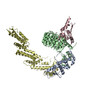
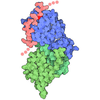
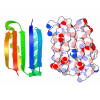
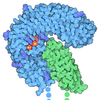
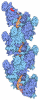
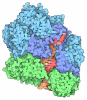
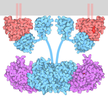
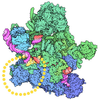
ジャーナル: Cell / 年: 2024 タイトル: Recognition of BACH1 quaternary structure degrons by two F-box proteins under oxidative stress. 著者: Shiyun Cao / Sheena Faye Garcia / Huigang Shi / Ellie I James / Yuki Kito / Hui Shi / Haibin Mao / Sharon Kaisari / Gergely Rona / Sophia Deng / Hailey V Goldberg / Jackeline Ponce / Beatrix ...著者: Shiyun Cao / Sheena Faye Garcia / Huigang Shi / Ellie I James / Yuki Kito / Hui Shi / Haibin Mao / Sharon Kaisari / Gergely Rona / Sophia Deng / Hailey V Goldberg / Jackeline Ponce / Beatrix Ueberheide / Luca Lignitto / Miklos Guttman / Michele Pagano / Ning Zheng / 要旨: Ubiquitin-dependent proteolysis regulates diverse cellular functions with high substrate specificity, which hinges on the ability of ubiquitin E3 ligases to decode the targets' degradation signals, i. ...Ubiquitin-dependent proteolysis regulates diverse cellular functions with high substrate specificity, which hinges on the ability of ubiquitin E3 ligases to decode the targets' degradation signals, i.e., degrons. Here, we show that BACH1, a transcription repressor of antioxidant response genes, features two distinct unconventional degrons encrypted in the quaternary structure of its homodimeric BTB domain. These two degrons are both functionalized by oxidative stress and are deciphered by two complementary E3s. FBXO22 recognizes a degron constructed by the BACH1 BTB domain dimer interface, which is unmasked from transcriptional co-repressors after oxidative stress releases BACH1 from chromatin. When this degron is impaired by oxidation, a second BACH1 degron manifested by its destabilized BTB dimer is probed by a pair of FBXL17 proteins that remodels the substrate into E3-bound monomers for ubiquitination. Our findings highlight the multidimensionality of protein degradation signals and the functional complementarity of different ubiquitin ligases targeting the same substrate.
 ムービー
ムービー コントローラー


 データを開く
 基本情報
基本情報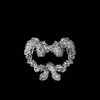
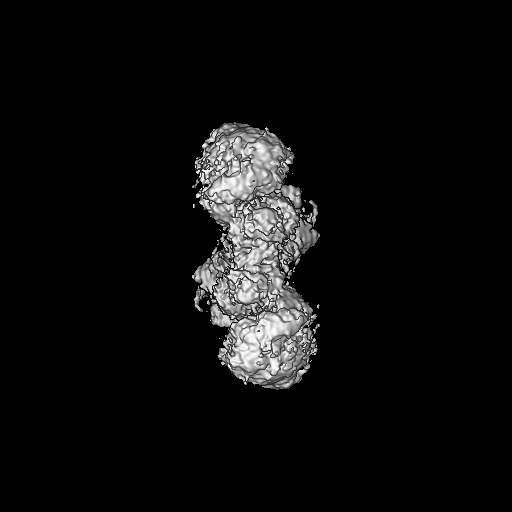
 マップデータ
 試料
試料 キーワード
キーワード 機能・相同性情報
 Homo sapiens (ヒト)
 データ登録者
 米国, 1件
  引用
引用

 構造の表示
構造の表示
 ダウンロードとリンク
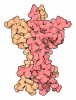
 emd_42105.png
 http://ftp.pdbj.org/pub/emdb/structures/EMD-42105








 Z (Sec.)
 Y (Row.)
 X (Col.)






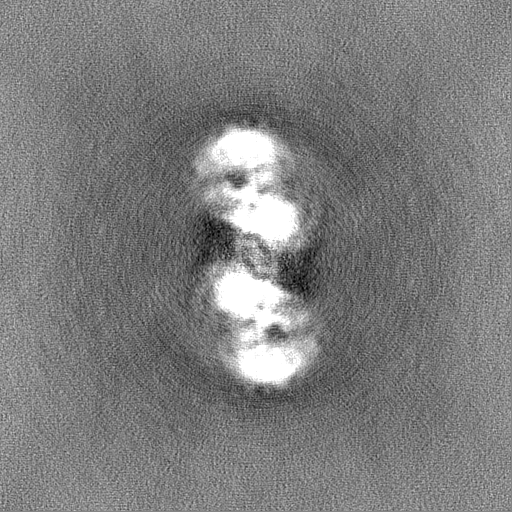
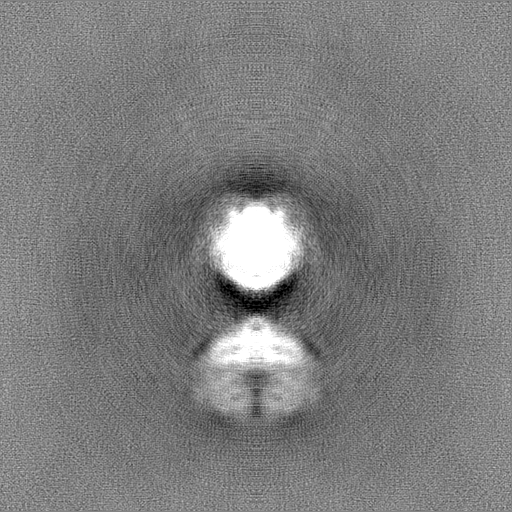


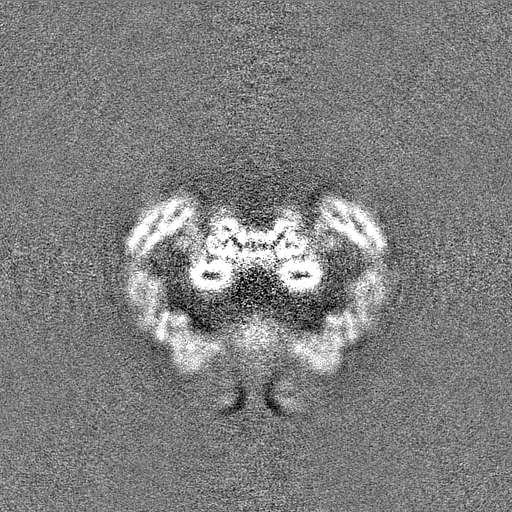


 試料の構成要素
 Escherichia coli BL21 (大腸菌)
 Trichoplusia ni (イラクサキンウワバ)
 解析
解析 電子顕微鏡法
 FIELD EMISSION GUN