Movie
Movie Controller

[English] 日本語
 Yorodumi
- EMDB-33790: Structure of the Rat GluN1-GluN2C NMDA receptor in complex with g... -
+ Open data

- Basic information
| Entry |  | |||||||||
|---|---|---|---|---|---|---|---|---|---|---|
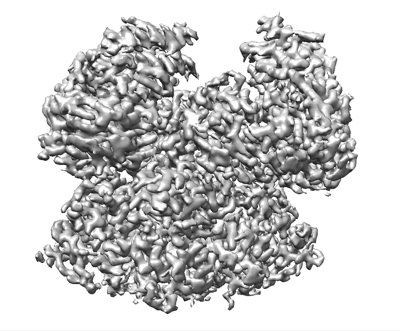
| Title | Structure of the Rat GluN1-GluN2C NMDA receptor in complex with glycine, glutamate and (R)-PYD-106 | |||||||||
 Map data Map data | ||||||||||
 Sample Sample |
| |||||||||
 Keywords Keywords | NMDA receptor / GluN2C / MEMBRANE PROTEIN | |||||||||
| Function / homology |  Function and homology information Function and homology informationdirectional locomotion / pons maturation / EPHB-mediated forward signaling / positive regulation of Schwann cell migration / Assembly and cell surface presentation of NMDA receptors / regulation of cell communication / protein localization to postsynaptic membrane / conditioned taste aversion / neuromuscular process controlling balance / suckling behavior ...directional locomotion / pons maturation / EPHB-mediated forward signaling / positive regulation of Schwann cell migration / Assembly and cell surface presentation of NMDA receptors / regulation of cell communication / protein localization to postsynaptic membrane / conditioned taste aversion / neuromuscular process controlling balance / suckling behavior / positive regulation of mitochondrial calcium ion concentration / olfactory learning / dendritic branch / response to glycoside / transmitter-gated monoatomic ion channel activity / regulation of respiratory gaseous exchange / propylene metabolic process / response to glycine / neurotransmitter receptor complex / RAF/MAP kinase cascade / response to amine / Synaptic adhesion-like molecules / NMDA glutamate receptor activity / regulation of monoatomic cation transmembrane transport / neuromuscular process / NMDA selective glutamate receptor complex / glutamate binding / regulation of axonogenesis / ligand-gated sodium channel activity / startle response / voltage-gated monoatomic cation channel activity / regulation of synapse assembly / calcium ion transmembrane import into cytosol / response to morphine / positive regulation of reactive oxygen species biosynthetic process / male mating behavior / protein heterotetramerization / regulation of dendrite morphogenesis / glycine binding / parallel fiber to Purkinje cell synapse / positive regulation of calcium ion transport into cytosol / associative learning / hypothalamus development / regulation of neuronal synaptic plasticity / social behavior / positive regulation of dendritic spine maintenance / monoatomic cation transmembrane transport / cellular response to glycine / Unblocking of NMDA receptors, glutamate binding and activation / monoatomic cation transport / calcium ion homeostasis / glutamate receptor binding / prepulse inhibition / phosphatase binding / long-term memory / adult locomotory behavior / regulation of long-term neuronal synaptic plasticity / response to fungicide / monoatomic cation channel activity / sensory perception of pain / glutamate-gated receptor activity / cellular response to manganese ion / response to amphetamine / positive regulation of synaptic transmission, glutamatergic / glutamate-gated calcium ion channel activity / presynaptic active zone membrane / visual learning / synaptic cleft / regulation of neuron apoptotic process / learning / ionotropic glutamate receptor signaling pathway / excitatory synapse / ligand-gated monoatomic ion channel activity involved in regulation of presynaptic membrane potential / excitatory postsynaptic potential / dendrite membrane / hippocampal mossy fiber to CA3 synapse / positive regulation of excitatory postsynaptic potential / sodium ion transmembrane transport / response to wounding / synaptic membrane / negative regulation of protein catabolic process / synaptic transmission, glutamatergic / PDZ domain binding / long-term synaptic potentiation / memory / transmitter-gated monoatomic ion channel activity involved in regulation of postsynaptic membrane potential / cerebral cortex development / regulation of membrane potential / response to calcium ion / regulation of synaptic plasticity / postsynaptic density membrane / modulation of chemical synaptic transmission / intracellular calcium ion homeostasis / calcium channel activity / calcium ion transmembrane transport / calcium ion transport / terminal bouton / synaptic vesicle membrane / negative regulation of neuron apoptotic process / synaptic vesicle Similarity search - Function | |||||||||
| Biological species |   Rattus norvegicus (Norway rat) Rattus norvegicus (Norway rat) | |||||||||
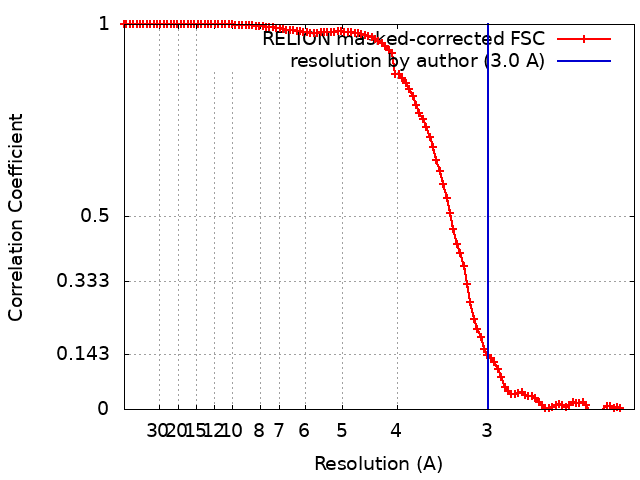
| Method | single particle reconstruction / cryo EM / Resolution: 3.0 Å | |||||||||
 Authors Authors | Zhang M / Zhang J / Guo F / Li Y / Zhu S | |||||||||
| Funding support |  China, 1 items China, 1 items
| |||||||||
 Citation Citation | Journal: Nat Struct Mol Biol / Year: 2023 Title: Distinct structure and gating mechanism in diverse NMDA receptors with GluN2C and GluN2D subunits. Authors: Jilin Zhang / Ming Zhang / Qinrui Wang / Han Wen / Zheyi Liu / Fangjun Wang / Yuhang Wang / Fenyong Yao / Nan Song / Zengwei Kou / Yang Li / Fei Guo / Shujia Zhu / Abstract: N-methyl-D-aspartate (NMDA) receptors are heterotetramers comprising two GluN1 and two alternate GluN2 (N2A-N2D) subunits. Here we report full-length cryo-EM structures of the human N1-N2D di- ...N-methyl-D-aspartate (NMDA) receptors are heterotetramers comprising two GluN1 and two alternate GluN2 (N2A-N2D) subunits. Here we report full-length cryo-EM structures of the human N1-N2D di-heterotetramer (di-receptor), rat N1-N2C di-receptor and N1-N2A-N2C tri-heterotetramer (tri-receptor) at a best resolution of 3.0 Å. The bilobate N-terminal domain (NTD) in N2D intrinsically adopts a closed conformation, leading to a compact NTD tetramer in the N1-N2D receptor. Additionally, crosslinking the ligand-binding domain (LBD) of two N1 protomers significantly elevated the channel open probability (Po) in N1-N2D di-receptors. Surprisingly, the N1-N2C di-receptor adopted both symmetric (minor) and asymmetric (major) conformations, the latter further locked by an allosteric potentiator, PYD-106, binding to a pocket between the NTD and LBD in only one N2C protomer. Finally, the N2A and N2C subunits in the N1-N2A-N2C tri-receptor display a conformation close to one protomer in the N1-N2A and N1-N2C di-receptors, respectively. These findings provide a comprehensive structural understanding of diverse function in major NMDA receptor subtypes. #1: Journal: Nat.Struct.Mol.Biol. / Year: 2023Title: Distinct structure and gating mechanism in diverse NMDA receptors with GluN2C and GluN2D subunits Authors: Zhang M / Zhu S | |||||||||
| History |
|
- Structure visualization
| Supplemental images |
|---|
- Downloads & links
-EMDB archive
| Map data | emd_33790.map.gz | 7.7 MB | EMDB map data format | |
|---|---|---|---|---|
| Header (meta data) | emd-33790-v30.xmlemd-33790.xml | 20.4 KB 20.4 KB | Display Display | EMDB header |
| FSC (resolution estimation) | emd_33790_fsc.xml | 10.6 KB | Display | FSC data file |
| Images |  emd_33790.png emd_33790.png | 120.7 KB | ||
| Filedesc metadata | emd-33790.cif.gz | 7 KB | ||
| Others | emd_33790_half_map_1.map.gzemd_33790_half_map_2.map.gz | 80.7 MB 80.7 MB | ||
| Archive directory |  https://data.pdbj.org/pub/emdb/structures/EMD-33790ftp://data.pdbj.org/pub/emdb/structures/EMD-33790 https://data.pdbj.org/pub/emdb/structures/EMD-33790ftp://data.pdbj.org/pub/emdb/structures/EMD-33790 | HTTPS FTP |
-Related structure data
| Related structure data |  7yfhMC  7yffC  7yfgC  7yfiC  7yflC  7yfmC  7yfoC  7yfrC  8hdkC M: atomic model generated by this map C: citing same article ( |
|---|---|
| Similar structure data |
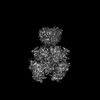
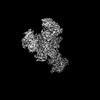
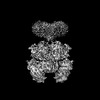
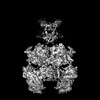
-Links
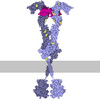
| EMDB pages | EMDB (EBI/PDBe) / EMDataResource |
|---|---|
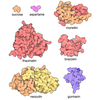
| Related items in Molecule of the Month |

-Map
| File | Download / File: emd_33790.map.gz / Format: CCP4 / Size: 103 MB / Type: IMAGE STORED AS FLOATING POINT NUMBER (4 BYTES) | ||||||||||||||||||||||||||||||||||||
|---|---|---|---|---|---|---|---|---|---|---|---|---|---|---|---|---|---|---|---|---|---|---|---|---|---|---|---|---|---|---|---|---|---|---|---|---|---|
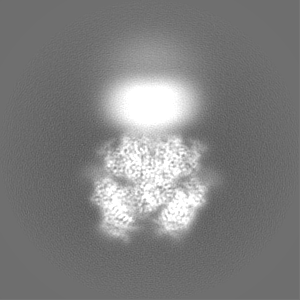
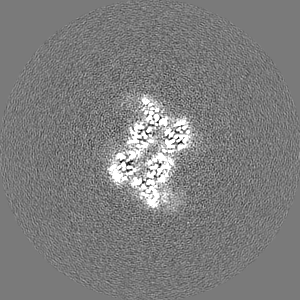
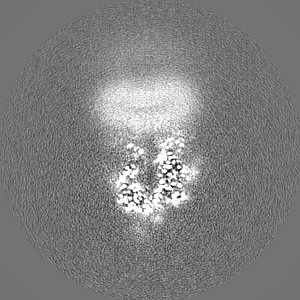
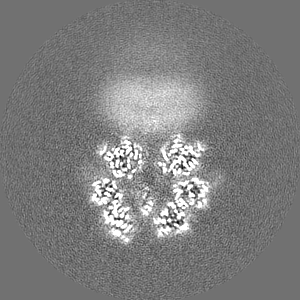
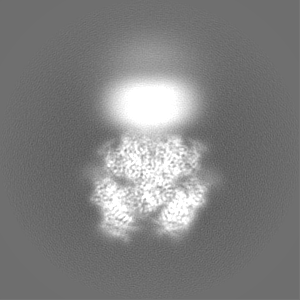
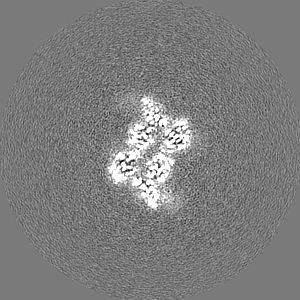
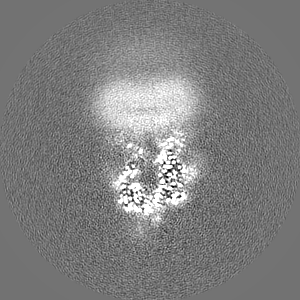
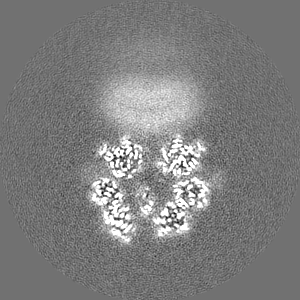
| Projections & slices | Image control
Images are generated by Spider. | ||||||||||||||||||||||||||||||||||||
| Voxel size | X=Y=Z: 1.071 Å | ||||||||||||||||||||||||||||||||||||
| Density |
| ||||||||||||||||||||||||||||||||||||
| Symmetry | Space group: 1 | ||||||||||||||||||||||||||||||||||||
| Details | EMDB XML:
|
 Z (Sec.)
 Y (Row.)
 X (Col.)


-Supplemental data
-Half map: #2
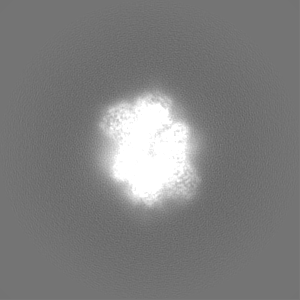
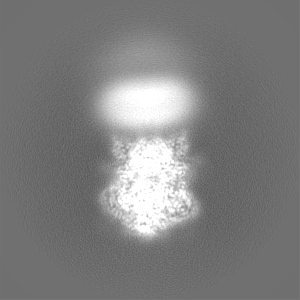
| File | emd_33790_half_map_1.map | ||||||||||||
|---|---|---|---|---|---|---|---|---|---|---|---|---|---|
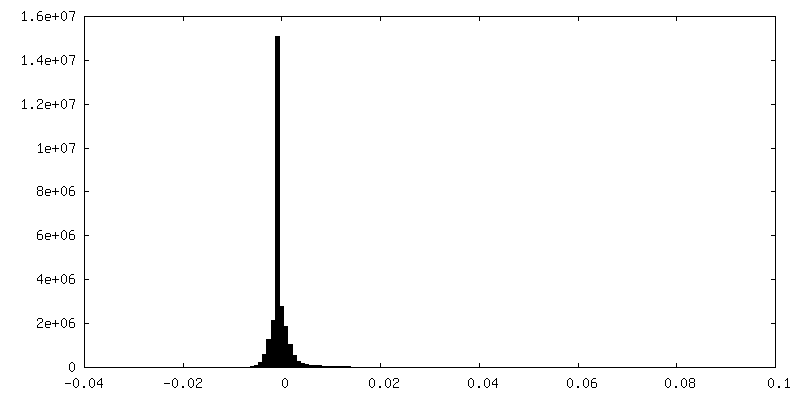
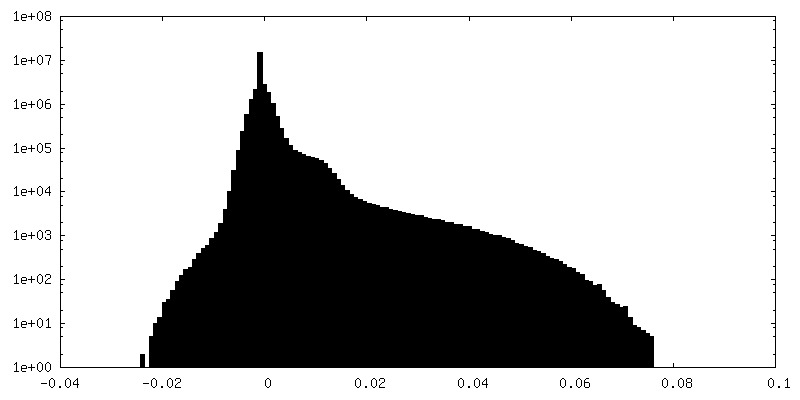
| Projections & Slices |
| ||||||||||||
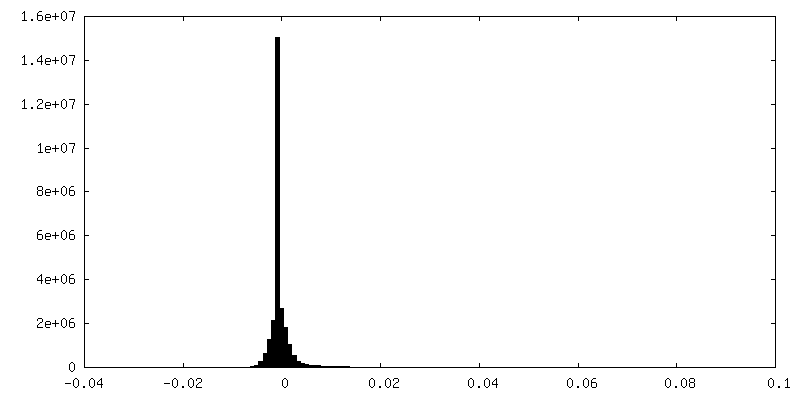
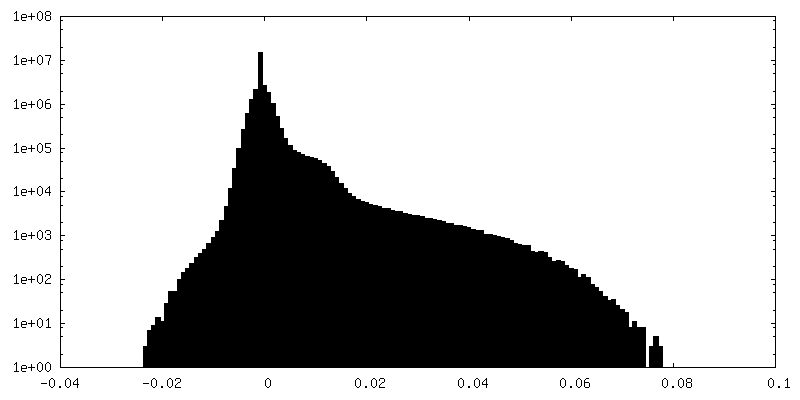
| Density Histograms |
-Half map: #1
| File | emd_33790_half_map_2.map | ||||||||||||
|---|---|---|---|---|---|---|---|---|---|---|---|---|---|
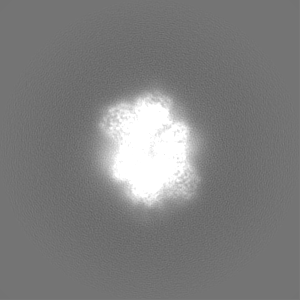
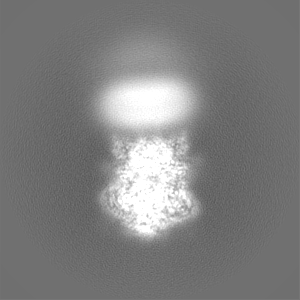
| Projections & Slices |
| ||||||||||||
| Density Histograms |
- Sample components
-Entire : Rat GluN1-GluN2C NMDA receptor in complex with glycine, glutamate...
| Entire | Name: Rat GluN1-GluN2C NMDA receptor in complex with glycine, glutamate and (R)-PYD-106 |
|---|---|
| Components |
|
-Supramolecule #1: Rat GluN1-GluN2C NMDA receptor in complex with glycine, glutamate...
| Supramolecule | Name: Rat GluN1-GluN2C NMDA receptor in complex with glycine, glutamate and (R)-PYD-106 type: organelle_or_cellular_component / ID: 1 / Parent: 0 / Macromolecule list: #1-#2 |
|---|---|
| Source (natural) | Organism: Rattus norvegicus (Norway rat) |
-Macromolecule #1: Glutamate receptor ionotropic, NMDA 1
| Macromolecule | Name: Glutamate receptor ionotropic, NMDA 1 / type: protein_or_peptide / ID: 1 / Number of copies: 2 / Enantiomer: LEVO |
|---|---|
| Source (natural) | Organism: Rattus norvegicus (Norway rat) |
| Molecular weight | Theoretical: 97.574625 KDa |
| Recombinant expression | Organism:  Homo sapiens (human) Homo sapiens (human) |
| Sequence | String: MSTMHLLTFA LLFSCSFARA ACDPKIVNIG AVLSTRKHEQ MFREAVNQAN KRHGSWKIQL NATSVTHKPN AIQMALSVCE DLISSQVYA ILVSHPPTPN DHFTPTPVSY TAGFYRIPVL GLTTRMSIYS DKSIHLSFLR TVPPYSHQSS VWFEMMRVYN W NHIILLVS ...String: MSTMHLLTFA LLFSCSFARA ACDPKIVNIG AVLSTRKHEQ MFREAVNQAN KRHGSWKIQL NATSVTHKPN AIQMALSVCE DLISSQVYA ILVSHPPTPN DHFTPTPVSY TAGFYRIPVL GLTTRMSIYS DKSIHLSFLR TVPPYSHQSS VWFEMMRVYN W NHIILLVS DDHEGRAAQK RLETLLEERE SKAEKVLQFD PGTKNVTALL MEARELEARV IILSASEDDA ATVYRAAAML NM TGSGYVW LVGEREISGN ALRYAPDGII GLQLINGKNE SAHISDAVGV VAQAVHELLE KENITDPPRG CVGNTNIWKT GPL FKRVLM SSKYADGVTG RVEFNEDGDR KFANYSIMNL QNRKLVQVGI YNGTHVIPND RKIIWPGGET EKPRGYQMST RLKI VTIHQ EPFVYVKPTM SDGTCKEEFT VNGDPVKKVI CTGPNDTSPG SPRHTVPQCC YGFCIDLLIK LARTMNFTYE VHLVA DGKF GTQERVNNSN KKEWNGMMGE LLSGQADMIV APLTINNERA QYIEFSKPFK YQGLTILVKK EIPRSTLDSF MQPFQS TLW LLVGLSVHVV AVMLYLLDRF SPFGRFKVNS EEEEEDALTL SSAMWFSWGV LLNSGIGEGA PRSFSARILG MVWAGFA MI IVASYTANLA AFLVLDRPEE RITGINDPRL RNPSDKFIYA TVKQSSVDIY FRRQVELSTM YRHMEKHNYE SAAEAIQA V RDNKLHAFIW DSAVLEFEAS QKCDLVTTGE LFFRSGFGIG MRKDSPWKQN VSLSILKSHE NGFMEDLDKT WVRYQECDS RSNAPATLTF ENMAGVFMLV AGGIVAGIFL IFIEIAYKRH KDARRKQLEV LFQGPAAAHH HHHHHH UniProtKB: Glutamate receptor ionotropic, NMDA 1 |
-Macromolecule #2: Glutamate receptor ionotropic, NMDA 2C
| Macromolecule | Name: Glutamate receptor ionotropic, NMDA 2C / type: protein_or_peptide / ID: 2 / Number of copies: 2 / Enantiomer: LEVO |
|---|---|
| Source (natural) | Organism: Rattus norvegicus (Norway rat) |
| Molecular weight | Theoretical: 87.753758 KDa |
| Recombinant expression | Organism: Homo sapiens (human) |
| Sequence | String: MGGALGPALL LTSLLGAWAR LGAGQGEQAV TVAVVFGSSG PLQTQARTRL TSQNFLDLPL EIQPLTVGVN NTNPSSILTQ ICGLLGAAR VHGIVFEDNV DTEAVAQLLD FVSSQTHVPI LSISGGSAVV LTPKEPGSAF LQLGVSLEQQ LQVLFKVLEE Y DWSAFAVI ...String: MGGALGPALL LTSLLGAWAR LGAGQGEQAV TVAVVFGSSG PLQTQARTRL TSQNFLDLPL EIQPLTVGVN NTNPSSILTQ ICGLLGAAR VHGIVFEDNV DTEAVAQLLD FVSSQTHVPI LSISGGSAVV LTPKEPGSAF LQLGVSLEQQ LQVLFKVLEE Y DWSAFAVI TSLHPGHALF LEGVRAVADA SYLSWRLLDV LTLELGPGGP RARTQRLLRQ VDAPVLVAYC SREEAEVLFA EA AQAGLVG PGHVWLVPNL ALGSTDAPPA AFPVGLISVV TESWRLSLRQ KVRDGVAILA LGAHSYRRQY GTLPAPAGDC RSH PGPVSP AREAFYRHLL NVTWEGRDFS FSPGGYLVRP TMVVIALNRH RLWEMVGRWD HGVLYMKYPV WPRYSTSLQP VVDS RHLTV ATLEERPFVI VESPDPGTGG CVPNTVPCRR QSNHTFSSGD LTPYTKLCCK GFCIDILKKL AKVVKFSYDL YLVTN GKHG KRVRGVWNGM IGEVYYKRAD MAIGSLTINE ERSEIIDFSV PFVETGISVM VSRSNGTVSP SAFLEPYSPA VWVMMF VMC LTVVAITVFM FEYFSPVSYN QNLTKGKKPG GPSFTIGKSV WLLWALVFNN SVPIENPRGT TSKIMVLVWA FFAVIFL AS YTANLAAFMI QEQYIDTVSG LSDKKFQRPQ DQYPPFRFGT VPNGSTERNI RSNYRDMHTH MVKFNQRSVE DALTSLKM G KLDAFIYDAA VLNYMAGKDE GCKLVTIGSG KVFATTGYGI AMQKDSHWKR AIDLALLQLL GDGETQKLET VWLSGICQN UniProtKB: Glutamate receptor ionotropic, NMDA 2C |
-Macromolecule #5: 2-acetamido-2-deoxy-beta-D-glucopyranose
| Macromolecule | Name: 2-acetamido-2-deoxy-beta-D-glucopyranose / type: ligand / ID: 5 / Number of copies: 13 / Formula: NAG |
|---|---|
| Molecular weight | Theoretical: 221.208 Da |
| Chemical component information | 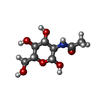 ChemComp-NAG: |
-Macromolecule #6: GLYCINE
| Macromolecule | Name: GLYCINE / type: ligand / ID: 6 / Number of copies: 2 / Formula: GLY |
|---|---|
| Molecular weight | Theoretical: 75.067 Da |
| Chemical component information | 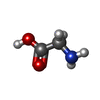 ChemComp-GLY: |
-Macromolecule #7: GLUTAMIC ACID
| Macromolecule | Name: GLUTAMIC ACID / type: ligand / ID: 7 / Number of copies: 2 / Formula: GLU |
|---|---|
| Molecular weight | Theoretical: 147.129 Da |
| Chemical component information | 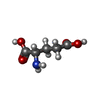 ChemComp-GLU: |
-Macromolecule #8: methyl 4-[(2~{R})-3-ethanoyl-1-[2-(2-methyl-1~{H}-indol-3-yl)ethy...
| Macromolecule | Name: methyl 4-[(2~{R})-3-ethanoyl-1-[2-(2-methyl-1~{H}-indol-3-yl)ethyl]-4-oxidanyl-5-oxidanylidene-2~{H}-pyrrol-2-yl]benzoate type: ligand / ID: 8 / Number of copies: 1 / Formula: IWB |
|---|---|
| Molecular weight | Theoretical: 432.468 Da |
| Chemical component information | 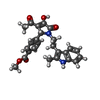 ChemComp-IWB: |
-Experimental details
-Structure determination
| Method | cryo EM |
|---|---|
 Processing Processing | single particle reconstruction |
| Aggregation state | particle |
-Sample preparation
| Concentration | 4.2 mg/mL |
|---|---|
| Buffer | pH: 8 |
| Grid | Model: Quantifoil R1.2/1.3 / Material: GOLD / Mesh: 300 / Pretreatment - Type: GLOW DISCHARGE |
| Vitrification | Cryogen name: ETHANE / Chamber humidity: 100 % / Chamber temperature: 281 K / Instrument: FEI VITROBOT MARK IV |
- Electron microscopy
| Microscope | FEI TITAN KRIOS |
|---|---|
| Image recording | Film or detector model: DIRECT ELECTRON DE-10 (5k x 4k) / Digitization - Dimensions - Width: 5760 pixel / Digitization - Dimensions - Height: 9042 pixel / Average electron dose: 60.0 e/Å2 |
| Electron beam | Acceleration voltage: 300 kV / Electron source:  FIELD EMISSION GUN FIELD EMISSION GUN |
| Electron optics | Illumination mode: FLOOD BEAM / Imaging mode: BRIGHT FIELD / Nominal defocus max: 2.0 µm / Nominal defocus min: 1.2 µm |
| Experimental equipment |  Model: Titan Krios / Image courtesy: FEI Company |