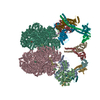
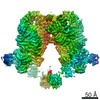
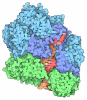
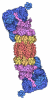
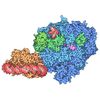
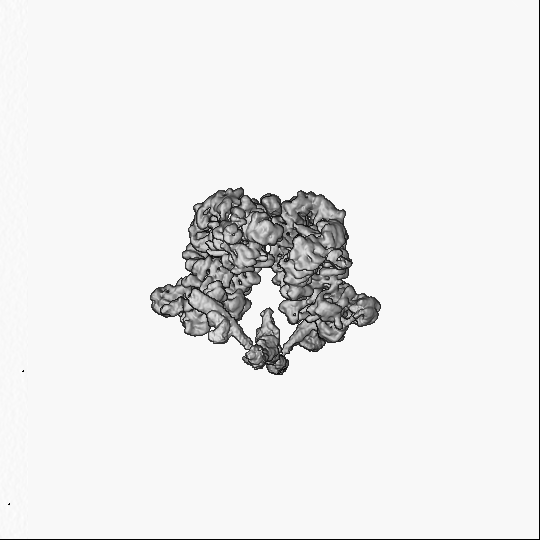
Organelle or cellular component: NHEJ super-complex (dimer)
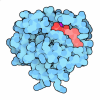
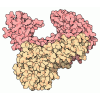
Organelle or cellular component: DNA-dependent protein kinase catalytic subunit
Protein or peptide: DNA-dependent protein kinase catalytic subunit,DNA-dependent protein kinase catalytic subunit,DNA-PKcs
Organelle or cellular component: X-ray repair cross-complementing proteins 5 and 6
Protein or peptide: X-ray repair cross-complementing protein 6
Protein or peptide: X-ray repair cross-complementing protein 5
Organelle or cellular component: Repair protein and ligase
Protein or peptide: DNA repair protein XRCC4
Protein or peptide: DNA ligase 4
Protein or peptide: Non-homologous end-joining factor 1
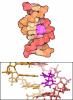
Organelle or cellular component: DNA
DNA: DNA (27-MER)
DNA: DNA (28-MER)
DNA: DNA (27-MER)
Keywords
NHEJ / DNA-PKcs / Ku70/80 / XLF / XRCC4 / DNA-LigaseIV / DNA BINDING PROTEIN
Function / homology
Function and homology information
T cell receptor V(D)J recombination / FHA domain binding / positive regulation of chromosome organization / pro-B cell differentiation / DNA ligase IV complex / positive regulation of ligase activity / positive regulation of platelet formation / DNA ligase activity / DNA-dependent protein kinase complex / DNA double-strand break attachment to nuclear envelope ...T cell receptor V(D)J recombination / FHA domain binding / positive regulation of chromosome organization / pro-B cell differentiation / DNA ligase IV complex / positive regulation of ligase activity / positive regulation of platelet formation / DNA ligase activity / DNA-dependent protein kinase complex / DNA double-strand break attachment to nuclear envelope / Ku70:Ku80 complex / DNA ligase (ATP) / negative regulation of t-circle formation / DNA-dependent protein kinase activity / DNA end binding / DNA ligase (ATP) activity / small-subunit processome assembly / positive regulation of lymphocyte differentiation / histone H2AXS139 kinase activity / DNA-dependent protein kinase-DNA ligase 4 complex / immunoglobulin V(D)J recombination / V(D)J recombination / nonhomologous end joining complex / nucleotide-excision repair, DNA gap filling / cellular response to X-ray / isotype switching / cellular response to lithium ion / regulation of epithelial cell proliferation / regulation of smooth muscle cell proliferation / double-strand break repair via classical nonhomologous end joining / double-strand break repair via alternative nonhomologous end joining / Cytosolic sensors of pathogen-associated DNA / protein localization to site of double-strand break / nuclear telomere cap complex / single strand break repair / telomere capping / IRF3-mediated induction of type I IFN / regulation of hematopoietic stem cell differentiation / positive regulation of neurogenesis / U3 snoRNA binding / regulation of telomere maintenance / recombinational repair / cellular hyperosmotic salinity response / somatic stem cell population maintenance / protein localization to chromosome, telomeric region / maturation of 5.8S rRNA / positive regulation of double-strand break repair via nonhomologous end joining / DNA biosynthetic process / 2-LTR circle formation / negative regulation of cGAS/STING signaling pathway / response to ionizing radiation / peptidyl-threonine phosphorylation / telomeric repeat DNA binding / ligase activity / negative regulation of protein phosphorylation / T cell differentiation / DNA 3'-5' helicase / 5'-deoxyribose-5-phosphate lyase activity / chromosome organization / response to X-ray / 3'-5' DNA helicase activity / ATP-dependent activity, acting on DNA / telomere maintenance via telomerase / SUMOylation of DNA damage response and repair proteins / condensed chromosome / mitotic G1 DNA damage checkpoint signaling / site of DNA damage / B cell differentiation / DNA polymerase binding / positive regulation of erythrocyte differentiation / response to gamma radiation / activation of innate immune response / telomere maintenance / cyclin binding / DNA helicase activity / protein modification process / DNA-(apurinic or apyrimidinic site) lyase / class I DNA-(apurinic or apyrimidinic site) endonuclease activity / cellular response to ionizing radiation / positive regulation of translation / central nervous system development / peptidyl-serine phosphorylation / small-subunit processome / Nonhomologous End-Joining (NHEJ) / cellular response to gamma radiation / cell population proliferation / protein-DNA complex / base-excision repair / establishment of integrated proviral latency / intrinsic apoptotic signaling pathway in response to DNA damage / regulation of circadian rhythm / double-strand break repair via nonhomologous end joining / positive regulation of fibroblast proliferation / cellular response to insulin stimulus / enzyme activator activity / in utero embryonic development / fibrillar center / T cell differentiation in thymus / neuron apoptotic process / rhythmic process Similarity search - Function
XLF, N-terminal / : / : / XLF N-terminal domain / XLF protein coiled-coil region / DNA ligase IV domain / DNA ligase IV / DNA ligase 4 / DNA Ligase 4, adenylation domain / XRCC4, N-terminal domain superfamily ...XLF, N-terminal / : / : / XLF N-terminal domain / XLF protein coiled-coil region / DNA ligase IV domain / DNA ligase IV / DNA ligase 4 / DNA Ligase 4, adenylation domain / XRCC4, N-terminal domain superfamily / DNA repair protein XRCC4 / : / : / : / XRCC4 N-terminal domain / XRCC4 coiled-coil / XRCC4 C-terminal region / XRCC4-like, N-terminal domain superfamily / DNA-dependent protein kinase catalytic subunit, CC3 / DNA-dependent protein kinase catalytic subunit, catalytic domain / DNA-dependent protein kinase catalytic subunit, CC5 / DNA-dependent protein kinase catalytic subunit, CC1/2 / DNA-PKcs, N-terminal / DNA-dependent protein kinase catalytic subunit, CC3 / DNA-PKcs, CC5 / DNA-PKcs, N-terminal / DNA-dependent protein kinase catalytic subunit, CC1/2 / NUC194 / Ku70, bridge and pillars domain superfamily / : / Ku70 / DNA ligase, ATP-dependent / DNA ligase, ATP-dependent, N-terminal / Ku, C-terminal / Ku, C-terminal domain superfamily / DNA ligase, ATP-dependent, N-terminal domain superfamily / DNA ligase N terminus / Ku C terminal domain like / Ku80 / Ku70/Ku80 C-terminal arm / Ku70/Ku80 C-terminal arm / Ku70/Ku80, N-terminal alpha/beta / Ku70/Ku80 N-terminal alpha/beta domain / ATP-dependent DNA ligase AMP-binding site. / ATP-dependent DNA ligase signature 2. / DNA ligase, ATP-dependent, C-terminal / ATP dependent DNA ligase C terminal region / DNA ligase, ATP-dependent, conserved site / Ku70/Ku80 beta-barrel domain / Ku70 and Ku80 are 70kDa and 80kDa subunits of the Lupus Ku autoantigen / Ku70/Ku80 beta-barrel domain / ATP-dependent DNA ligase family profile. / SPOC-like, C-terminal domain superfamily / DNA ligase, ATP-dependent, central / ATP dependent DNA ligase domain / SAP domain superfamily / DNA repair protein XRCC4-like, C-terminal / SAP motif profile. / SAP domain / Putative DNA-binding (bihelical) motif predicted to be involved in chromosomal organisation / SAP domain / : / FATC domain / PIK-related kinase, FAT / FAT domain / FATC / FATC domain / PIK-related kinase / FAT domain profile. / FATC domain profile. / BRCA1 C Terminus (BRCT) domain / breast cancer carboxy-terminal domain / Phosphatidylinositol 3- and 4-kinases signature 1. / Phosphatidylinositol 3/4-kinase, conserved site / Phosphatidylinositol 3- and 4-kinases signature 2. / Phosphatidylinositol 3-/4-kinase, catalytic domain superfamily / Phosphoinositide 3-kinase, catalytic domain / Phosphatidylinositol 3- and 4-kinase / Phosphatidylinositol 3- and 4-kinases catalytic domain profile. / Phosphatidylinositol 3-/4-kinase, catalytic domain / BRCT domain profile. / BRCT domain / von Willebrand factor (vWF) type A domain / BRCT domain superfamily / von Willebrand factor, type A / von Willebrand factor A-like domain superfamily / Armadillo-like helical / Armadillo-type fold / Nucleic acid-binding, OB-fold / Protein kinase-like domain superfamily Similarity search - Domain/homology
DNA repair protein Ku70 / DNA repair protein Ku80 / DNA ligase 4 / DNA-dependent protein kinase catalytic subunit / DNA repair protein XRCC4 / Non-homologous end-joining factor 1 Similarity search - Component
Biological species
Homo sapiens (human)
Method
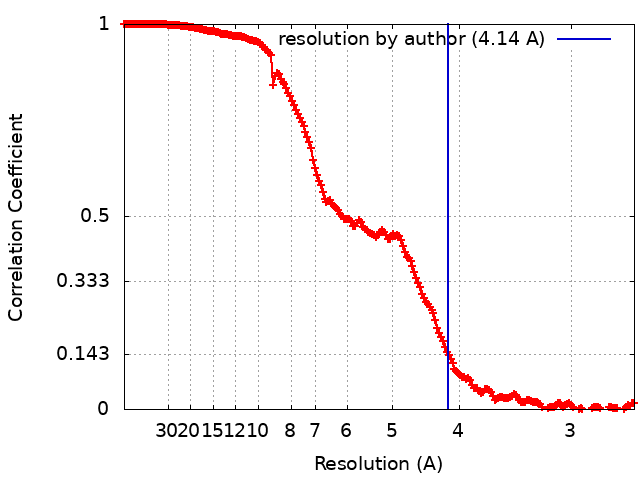
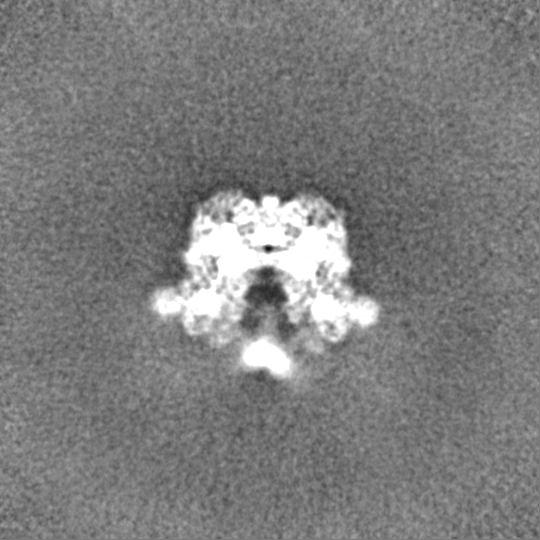
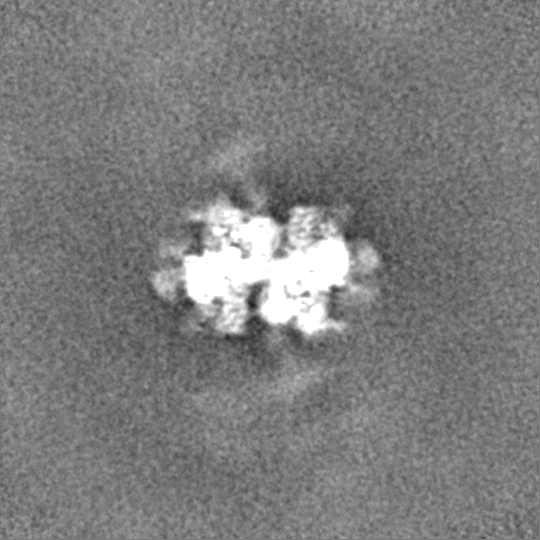
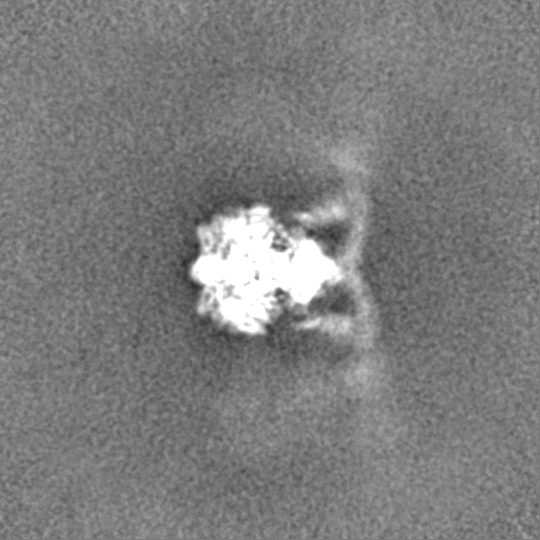
single particle reconstruction / cryo EM / Resolution: 4.14 Å
Journal: Mol Cell / Year: 2021 Title: Cryo-EM of NHEJ supercomplexes provides insights into DNA repair. Authors: Amanda K Chaplin / Steven W Hardwick / Antonia Kefala Stavridi / Christopher J Buehl / Noah J Goff / Virginie Ropars / Shikang Liang / Taiana Maia De Oliveira / Dimitri Y Chirgadze / ...Authors: Amanda K Chaplin / Steven W Hardwick / Antonia Kefala Stavridi / Christopher J Buehl / Noah J Goff / Virginie Ropars / Shikang Liang / Taiana Maia De Oliveira / Dimitri Y Chirgadze / Katheryn Meek / Jean-Baptiste Charbonnier / Tom L Blundell / Abstract: Non-homologous end joining (NHEJ) is one of two critical mechanisms utilized in humans to repair DNA double-strand breaks (DSBs). Unrepaired or incorrect repair of DSBs can lead to apoptosis or ...Non-homologous end joining (NHEJ) is one of two critical mechanisms utilized in humans to repair DNA double-strand breaks (DSBs). Unrepaired or incorrect repair of DSBs can lead to apoptosis or cancer. NHEJ involves several proteins, including the Ku70/80 heterodimer, DNA-dependent protein kinase catalytic subunit (DNA-PKcs), X-ray cross-complementing protein 4 (XRCC4), XRCC4-like factor (XLF), and ligase IV. These core proteins bind DSBs and ligate the damaged DNA ends. However, details of the structural assembly of these proteins remain unclear. Here, we present cryo-EM structures of NHEJ supercomplexes that are composed of these core proteins and DNA, revealing the detailed structural architecture of this assembly. We describe monomeric and dimeric forms of this supercomplex and also propose the existence of alternate dimeric forms of long-range synaptic complexes. Finally, we show that mutational disruption of several structural features within these NHEJ complexes negatively affects DNA repair.
History
Deposition
Feb 5, 2021
-
Header (metadata) release
Aug 18, 2021
-
Map release
Aug 18, 2021
-
Update
Jul 10, 2024
-
Current status
Jul 10, 2024
Processing site: PDBe / Status: Released
-
Structure visualization
Movie
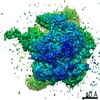
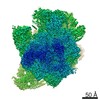
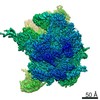
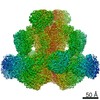
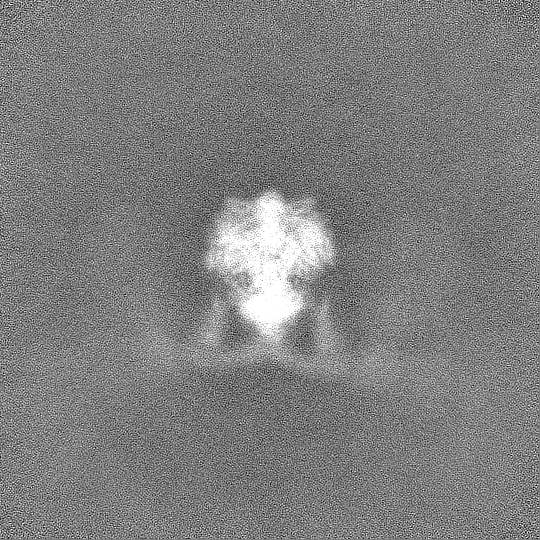
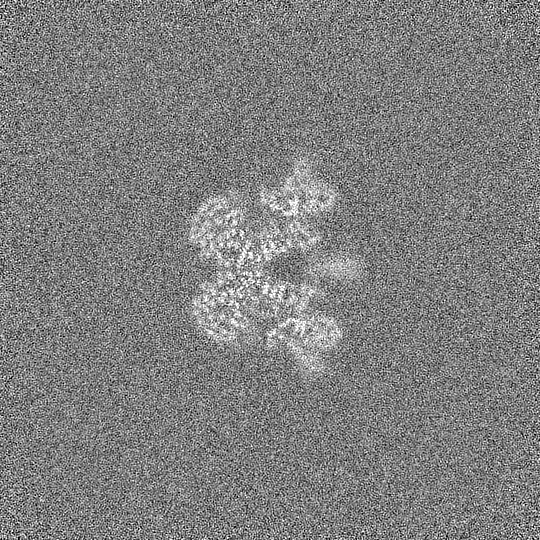
Surface view with section colored by density value
UniProtKB: DNA-dependent protein kinase catalytic subunit
+
Macromolecule #2: X-ray repair cross-complementing protein 6
Macromolecule
Name: X-ray repair cross-complementing protein 6 / type: protein_or_peptide / ID: 2 / Number of copies: 2 / Enantiomer: LEVO EC number: Hydrolases; Acting on acid anhydrides; Acting on acid anhydrides to facilitate cellular and subcellular movement
Macromolecule #3: X-ray repair cross-complementing protein 5
Macromolecule
Name: X-ray repair cross-complementing protein 5 / type: protein_or_peptide / ID: 3 / Number of copies: 2 / Enantiomer: LEVO EC number: Hydrolases; Acting on acid anhydrides; Acting on acid anhydrides to facilitate cellular and subcellular movement
In the structure databanks used in Yorodumi, some data are registered as the other names, "COVID-19 virus" and "2019-nCoV". Here are the details of the virus and the list of structure data.
Jan 31, 2019. EMDB accession codes are about to change! (news from PDBe EMDB page)
EMDB accession codes are about to change! (news from PDBe EMDB page)
The allocation of 4 digits for EMDB accession codes will soon come to an end. Whilst these codes will remain in use, new EMDB accession codes will include an additional digit and will expand incrementally as the available range of codes is exhausted. The current 4-digit format prefixed with “EMD-” (i.e. EMD-XXXX) will advance to a 5-digit format (i.e. EMD-XXXXX), and so on. It is currently estimated that the 4-digit codes will be depleted around Spring 2019, at which point the 5-digit format will come into force.
The EM Navigator/Yorodumi systems omit the EMD- prefix.
Related info.:Q: What is EMD? / ID/Accession-code notation in Yorodumi/EM Navigator
Yorodumi is a browser for structure data from EMDB, PDB, SASBDB, etc.
This page is also the successor to EM Navigator detail page, and also detail information page/front-end page for Omokage search.
The word "yorodu" (or yorozu) is an old Japanese word meaning "ten thousand". "mi" (miru) is to see.
Related info.:EMDB / PDB / SASBDB / Comparison of 3 databanks / Yorodumi Search / Aug 31, 2016. New EM Navigator & Yorodumi / Yorodumi Papers / Jmol/JSmol / Function and homology information / Changes in new EM Navigator and Yorodumi
 Movie
Movie Controller


 Open data
 Basic information
 Map data
 Sample
 Keywords
 Function and homology information
 Homo sapiens (human)
 Authors
 United Kingdom, 1 items
  Citation

 Structure visualization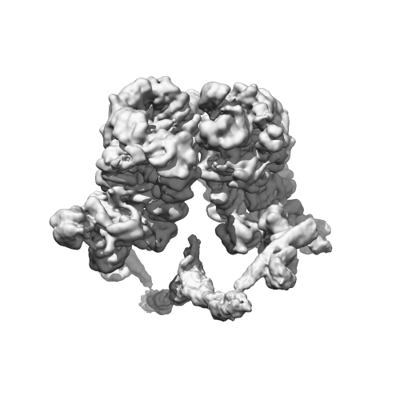
 Downloads & links
 emd_12299.png
 http://ftp.pdbj.org/pub/emdb/structures/EMD-12299


 X (Sec.)
 Y (Row.)
 Z (Col.)







 Sample components
 Escherichia coli BL21(DE3) (bacteria)
 Processing
 Electron microscopy
 FIELD EMISSION GUN