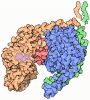
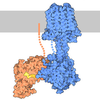
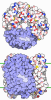
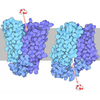
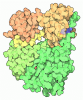
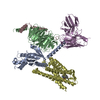
+
データを開く
-
基本情報
| 登録情報 | データベース: PDB / ID: 7scg | |||||||||||||||||||||||||||||||||
|---|---|---|---|---|---|---|---|---|---|---|---|---|---|---|---|---|---|---|---|---|---|---|---|---|---|---|---|---|---|---|---|---|---|---|
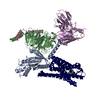
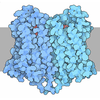
| タイトル | FH210 bound Mu Opioid Receptor-Gi Protein Complex | |||||||||||||||||||||||||||||||||
要素 |
| |||||||||||||||||||||||||||||||||
キーワード | MEMBRANE PROTEIN / GPCR | |||||||||||||||||||||||||||||||||
| 機能・相同性 | 機能・相同性情報Opioid Signalling / G-protein activation / beta-endorphin receptor activity / morphine receptor activity / negative regulation of Wnt protein secretion / Peptide ligand-binding receptors / G protein-coupled opioid receptor activity / G protein-coupled opioid receptor signaling pathway / G alpha (i) signalling events / negative regulation of nitric oxide biosynthetic process ...Opioid Signalling / G-protein activation / beta-endorphin receptor activity / morphine receptor activity / negative regulation of Wnt protein secretion / Peptide ligand-binding receptors / G protein-coupled opioid receptor activity / G protein-coupled opioid receptor signaling pathway / G alpha (i) signalling events / negative regulation of nitric oxide biosynthetic process / adenylate cyclase-inhibiting G protein-coupled acetylcholine receptor signaling pathway / regulation of NMDA receptor activity / positive regulation of neurogenesis / negative regulation of cytosolic calcium ion concentration / transmission of nerve impulse / G-protein alpha-subunit binding / adenylate cyclase inhibitor activity / positive regulation of protein localization to cell cortex / T cell migration / Adenylate cyclase inhibitory pathway / response to prostaglandin E / D2 dopamine receptor binding / G protein-coupled serotonin receptor binding / adenylate cyclase regulator activity / adenylate cyclase-inhibiting serotonin receptor signaling pathway / sensory perception of pain / presynaptic modulation of chemical synaptic transmission / cellular response to forskolin / regulation of mitotic spindle organization / Regulation of insulin secretion / locomotory behavior / positive regulation of cholesterol biosynthetic process / negative regulation of insulin secretion / G protein-coupled receptor binding / G protein-coupled receptor activity / adenylate cyclase-inhibiting G protein-coupled receptor signaling pathway / response to peptide hormone / GABA-ergic synapse / adenylate cyclase-modulating G protein-coupled receptor signaling pathway / centriolar satellite / G-protein beta/gamma-subunit complex binding / Olfactory Signaling Pathway / Activation of the phototransduction cascade / G beta:gamma signalling through PLC beta / Presynaptic function of Kainate receptors / Thromboxane signalling through TP receptor / G protein-coupled acetylcholine receptor signaling pathway / Activation of G protein gated Potassium channels / Inhibition of voltage gated Ca2+ channels via Gbeta/gamma subunits / G-protein activation / G beta:gamma signalling through CDC42 / Prostacyclin signalling through prostacyclin receptor / Glucagon signaling in metabolic regulation / G beta:gamma signalling through BTK / Synthesis, secretion, and inactivation of Glucagon-like Peptide-1 (GLP-1) / ADP signalling through P2Y purinoceptor 12 / photoreceptor disc membrane / Glucagon-type ligand receptors / Sensory perception of sweet, bitter, and umami (glutamate) taste / GDP binding / Adrenaline,noradrenaline inhibits insulin secretion / Vasopressin regulates renal water homeostasis via Aquaporins / Glucagon-like Peptide-1 (GLP1) regulates insulin secretion / G alpha (z) signalling events / ADP signalling through P2Y purinoceptor 1 / ADORA2B mediated anti-inflammatory cytokines production / cellular response to catecholamine stimulus / G beta:gamma signalling through PI3Kgamma / adenylate cyclase-activating dopamine receptor signaling pathway / Cooperation of PDCL (PhLP1) and TRiC/CCT in G-protein beta folding / GPER1 signaling / G-protein beta-subunit binding / cellular response to prostaglandin E stimulus / heterotrimeric G-protein complex / G alpha (12/13) signalling events / Inactivation, recovery and regulation of the phototransduction cascade / extracellular vesicle / sensory perception of taste / presynapse / Thrombin signalling through proteinase activated receptors (PARs) / signaling receptor complex adaptor activity / retina development in camera-type eye / G protein activity / GTPase binding / Ca2+ pathway / fibroblast proliferation / midbody / cell cortex / High laminar flow shear stress activates signaling by PIEZO1 and PECAM1:CDH5:KDR in endothelial cells / G alpha (i) signalling events / G alpha (s) signalling events / phospholipase C-activating G protein-coupled receptor signaling pathway / G alpha (q) signalling events / 加水分解酵素; 酸無水物に作用; GTPに作用・細胞または細胞小器官の運動に関与 / perikaryon / Ras protein signal transduction / Extra-nuclear estrogen signaling / positive regulation of ERK1 and ERK2 cascade / cell population proliferation / endosome 類似検索 - 分子機能 | |||||||||||||||||||||||||||||||||
| 生物種 | Homo sapiens (ヒト)![]() | |||||||||||||||||||||||||||||||||
| 手法 | 電子顕微鏡法 / 単粒子再構成法 / クライオ電子顕微鏡法 / 解像度: 3 Å | |||||||||||||||||||||||||||||||||
データ登録者 | Wang, H. / Kobilka, B. | |||||||||||||||||||||||||||||||||
| 資金援助 | 米国, 1件
| |||||||||||||||||||||||||||||||||
引用 | ジャーナル: Angew Chem Int Ed Engl / 年: 2022タイトル: Structure-Based Evolution of G Protein-Biased μ-Opioid Receptor Agonists. 著者: Haoqing Wang / Florian Hetzer / Weijiao Huang / Qianhui Qu / Justin Meyerowitz / Jonas Kaindl / Harald Hübner / Georgios Skiniotis / Brian K Kobilka / Peter Gmeiner / ![]() 要旨: The μ-opioid receptor (μOR) is the major target for opioid analgesics. Activation of μOR initiates signaling through G protein pathways as well as through β-arrestin recruitment. μOR agonists ...The μ-opioid receptor (μOR) is the major target for opioid analgesics. Activation of μOR initiates signaling through G protein pathways as well as through β-arrestin recruitment. μOR agonists that are biased towards G protein signaling pathways demonstrate diminished side effects. PZM21, discovered by computational docking, is a G protein biased μOR agonist. Here we report the cryoEM structure of PZM21 bound μOR in complex with G protein. Structure-based evolution led to multiple PZM21 analogs with more pronounced G protein bias and increased lipophilicity to improve CNS penetration. Among them, FH210 shows extremely low potency and efficacy for arrestin recruitment. We further determined the cryoEM structure of FH210 bound to μOR in complex with G protein and confirmed its expected binding pose. The structural and pharmacological studies reveal a potential mechanism to reduce β-arrestin recruitment by the μOR, and hold promise for developing next-generation analgesics with fewer adverse effects. | |||||||||||||||||||||||||||||||||
| 履歴 |
|
-
構造の表示
| 構造ビューア | 分子: Molmil Jmol/JSmol |
|---|
-
ダウンロードとリンク
-
ダウンロード
| PDBx/mmCIF形式 | 7scg.cif.gz | 211.8 KB | 表示 | PDBx/mmCIF形式 |
|---|---|---|---|---|
| PDB形式 | pdb7scg.ent.gz | 159.6 KB | 表示 | PDB形式 |
| PDBx/mmJSON形式 | 7scg.json.gz | ツリー表示 | PDBx/mmJSON形式 | |
| その他 | その他のダウンロード |
-検証レポート
| アーカイブディレクトリ | https://data.pdbj.org/pub/pdb/validation_reports/sc/7scg ftp://data.pdbj.org/pub/pdb/validation_reports/sc/7scg | HTTPS FTP |
|---|
-関連構造データ
| 関連構造データ | ![]() 25034MC ![]() 7sbfC M: このデータのモデリングに利用したマップデータ C: 同じ文献を引用 ( |
|---|---|
| 類似構造データ | 類似検索 - 機能・相同性 F&H 検索 |
-
リンク
-
集合体
| 登録構造単位 | ![]()
|
|---|---|
| 1 |
|
-
要素
-Guanine nucleotide-binding protein ... , 3種, 3分子 BCA
| #1: タンパク質 | 分子量: 37671.102 Da / 分子数: 1 / 由来タイプ: 組換発現 / 由来: (組換発現) Homo sapiens (ヒト) / 遺伝子: GNB1 / 発現宿主: Trichoplusia ni (イラクサキンウワバ) / 参照: UniProt: P62873 |
|---|---|
| #2: タンパク質 | 分子量: 7861.143 Da / 分子数: 1 / 由来タイプ: 組換発現 / 由来: (組換発現) Homo sapiens (ヒト) / 遺伝子: GNG2 / 発現宿主: Trichoplusia ni (イラクサキンウワバ) / 参照: UniProt: P59768 |
| #4: タンパク質 | 分子量: 40415.031 Da / 分子数: 1 / 由来タイプ: 組換発現 / 由来: (組換発現) Homo sapiens (ヒト) / 遺伝子: GNAI1 / 発現宿主: Trichoplusia ni (イラクサキンウワバ) / 参照: UniProt: P63096 |
-タンパク質 / 抗体 , 2種, 2分子 DE
| #3: タンパク質 | 分子量: 39995.105 Da / 分子数: 1 / 由来タイプ: 組換発現 / 由来: (組換発現) ![]() 発現宿主: ![]() 参照: UniProt: P42866 |
|---|---|
| #5: 抗体 | 分子量: 27784.896 Da / 分子数: 1 / 由来タイプ: 組換発現 / 由来: (組換発現) ![]() Trichoplusia ni (イラクサキンウワバ) |
-非ポリマー , 2種, 3分子 


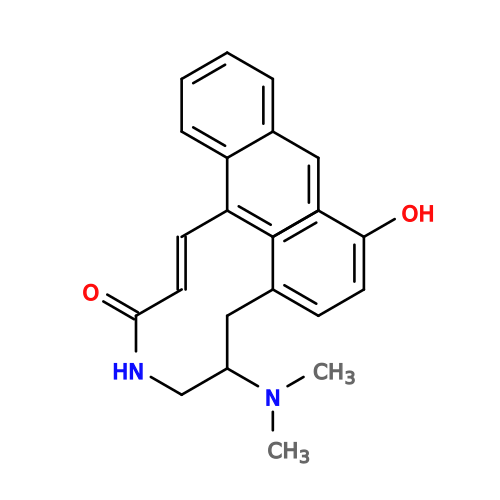
| #6: 化合物 | ChemComp-8RI / ( |
|---|---|
| #7: 水 | ChemComp-HOH / |
-詳細
| 研究の焦点であるリガンドがあるか | Y |
|---|---|
| Has protein modification | Y |
| 配列の詳細 | Entity 5 Mu-type opiod receptor contains a TEV protease recognition site 44-ENLYFQ-49. |
-実験情報
-実験
| 実験 | 手法: 電子顕微鏡法 |
|---|---|
| EM実験 | 試料の集合状態: PARTICLE / 3次元再構成法: 単粒子再構成法 |
-
試料調製
| 構成要素 | 名称: FH210 bound Mu Opioid Receptor-Gi Protein Complex / タイプ: COMPLEX / Entity ID: #1-#5 / 由来: MULTIPLE SOURCES | ||||||||||||
|---|---|---|---|---|---|---|---|---|---|---|---|---|---|
| 由来(天然) |
| ||||||||||||
| 由来(組換発現) |
| ||||||||||||
| 緩衝液 | pH: 7.4 | ||||||||||||
| 試料 | 包埋: NO / シャドウイング: NO / 染色: NO / 凍結: YES | ||||||||||||
| 急速凍結 | 凍結剤: ETHANE |
-
電子顕微鏡撮影
| 実験機器 | ![]() モデル: Titan Krios / 画像提供: FEI Company |
|---|---|
| 顕微鏡 | モデル: TFS KRIOS |
| 電子銃 | 電子線源: FIELD EMISSION GUN / 加速電圧: 300 kV / 照射モード: FLOOD BEAM |
| 電子レンズ | モード: BRIGHT FIELD |
| 撮影 | 電子線照射量: 66.75 e/Å2 / フィルム・検出器のモデル: GATAN K3 (6k x 4k) |
-
解析
| ソフトウェア | 名称: PHENIX / バージョン: 1.18.2_3874: / 分類: 精密化 | ||||||||||||||||||||||||
|---|---|---|---|---|---|---|---|---|---|---|---|---|---|---|---|---|---|---|---|---|---|---|---|---|---|
| EMソフトウェア | 名称: PHENIX / カテゴリ: モデル精密化 | ||||||||||||||||||||||||
| CTF補正 | タイプ: PHASE FLIPPING AND AMPLITUDE CORRECTION | ||||||||||||||||||||||||
| 3次元再構成 | 解像度: 3 Å / 解像度の算出法: FSC 0.143 CUT-OFF / 粒子像の数: 661174 / 対称性のタイプ: POINT | ||||||||||||||||||||||||
| 拘束条件 |
|
ムービー
コントローラー
万見について


Homo sapiens (ヒト)

米国, 1件
引用


PDBj


Trichoplusia ni (イラクサキンウワバ)
FIELD EMISSION GUN