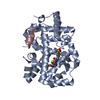
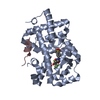
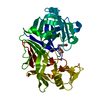
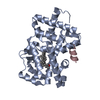
Entry Database : PDB / ID : 5aphTitle Ligand complex of RORg LBD NUCLEAR RECEPTOR COACTIVATOR 2 NUCLEAR RECEPTOR ROR-GAMMA Keywords / / / Function / homology Function Domain/homology Component
/ / / / / / / / / / / / / / / / / / / / / / / / / / / / / / / / / / / / / / / / / / / / / / / / / / / / / / / / / / / / / / / / / / / / / / / / / / / / / / / / / / / / / / / / / / / / / / / / / / / / / / / / / / / / / / / / / / / / / / / / / / / / / / / / / / / / / / / / / / / / / Biological species HOMO SAPIENS (human)Method / / / Resolution : 1.54 Å Authors Xue, Y. / Aagaard, A. / Narjes, F. Journal : ChemMedChem / Year : 2016Title : Benzoxazepines Achieve Potent Suppression of IL-17 Release in Human T-Helper 17 (TH 17) Cells through an Induced-Fit Binding Mode to the Nuclear Receptor ROR gamma.Authors: Olsson, R.I. / Xue, Y. / von Berg, S. / Aagaard, A. / McPheat, J. / Hansson, E.L. / Bernstrom, J. / Hansson, P. / Jirholt, J. / Grindebacke, H. / Leffler, A. / Chen, R. / Xiong, Y. / Ge, H. ... Authors : Olsson, R.I. / Xue, Y. / von Berg, S. / Aagaard, A. / McPheat, J. / Hansson, E.L. / Bernstrom, J. / Hansson, P. / Jirholt, J. / Grindebacke, H. / Leffler, A. / Chen, R. / Xiong, Y. / Ge, H. / Hansson, T.G. / Narjes, F. History Deposition Sep 16, 2015 Deposition site / Processing site Revision 1.0 Nov 25, 2015 Provider / Type Revision 1.1 Feb 3, 2016 Group Revision 1.2 Feb 14, 2018 Group / Category / citation_authorItem _citation.journal_abbrev / _citation.journal_id_ISSN ... _citation.journal_abbrev / _citation.journal_id_ISSN / _citation.page_last / _citation.pdbx_database_id_DOI / _citation.title / _citation_author.name Revision 1.3 Jan 10, 2024 Group Data collection / Database references ... Data collection / Database references / Derived calculations / Other / Refinement description Category chem_comp_atom / chem_comp_bond ... chem_comp_atom / chem_comp_bond / database_2 / pdbx_database_status / pdbx_initial_refinement_model / struct_site Item _database_2.pdbx_DOI / _database_2.pdbx_database_accession ... _database_2.pdbx_DOI / _database_2.pdbx_database_accession / _pdbx_database_status.status_code_sf / _struct_site.pdbx_auth_asym_id / _struct_site.pdbx_auth_comp_id / _struct_site.pdbx_auth_seq_id
Show all Show less
 Movie
Movie Controller


 Open data
 Basic information
 Components
 Keywords
 Function and homology information
 HOMO SAPIENS (human)
 X-RAY DIFFRACTION /
  Authors
 Citation
 Structure visualization
 Downloads & links
 Other downloads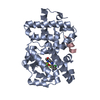
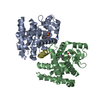
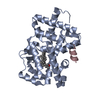
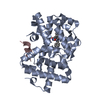


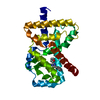
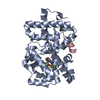

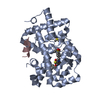

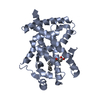
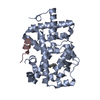
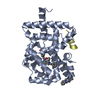
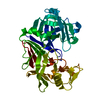
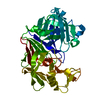
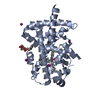
 PDBj
PDBj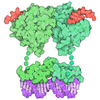

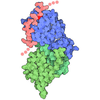
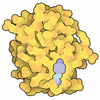
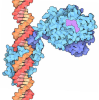
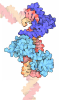
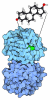
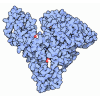
 Assembly

 ESCHERICHIA COLI (E. coli) / References: UniProt: P51449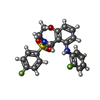
 Mass: 416.441 Da / Num. of mol.: 1 / Source method: obtained synthetically / Formula: C21H18F2N2O3S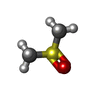
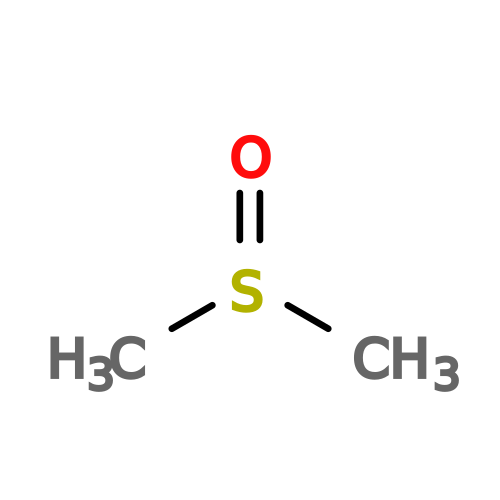 Mass: 78.133 Da / Num. of mol.: 1 / Source method: obtained synthetically / Formula: C2H6OS / Comment: DMSO, precipitant*YM
 Mass: 18.015 Da / Num. of mol.: 297 / Source method: isolated from a natural source / Formula: H2O
 Sample preparation
 / Beamline: ID29 / Wavelength: 0.976
  Processing