positive regulation of anoikis / mitotic DNA damage checkpoint signaling / cellular response to bisphenol A / regulation of autophagosome assembly / mitotic intra-S DNA damage checkpoint signaling / response to glycoside / thymocyte apoptotic process / cellular response to stress / regulation of protein catabolic process / negative regulation of DNA damage checkpoint ...positive regulation of anoikis / mitotic DNA damage checkpoint signaling / cellular response to bisphenol A / regulation of autophagosome assembly / mitotic intra-S DNA damage checkpoint signaling / response to glycoside / thymocyte apoptotic process / cellular response to stress / regulation of protein catabolic process / negative regulation of DNA damage checkpoint / replicative senescence / signal transduction in response to DNA damage / mitotic spindle assembly / intrinsic apoptotic signaling pathway in response to DNA damage by p53 class mediator / Chk1/Chk2(Cds1) mediated inactivation of Cyclin B:Cdk1 complex / DNA damage checkpoint signaling / regulation of signal transduction by p53 class mediator / DNA damage response, signal transduction by p53 class mediator / Ubiquitin-Mediated Degradation of Phosphorylated Cdc25A / protein catabolic process / Stabilization of p53 / cellular response to gamma radiation / G2/M DNA damage checkpoint / PML body / Regulation of TP53 Activity through Methylation / G2/M transition of mitotic cell cycle / cellular response to xenobiotic stimulus / intrinsic apoptotic signaling pathway in response to DNA damage / Regulation of TP53 Degradation / double-strand break repair / Recruitment and ATM-mediated phosphorylation of repair and signaling proteins at DNA double strand breaks / protein autophosphorylation / Regulation of TP53 Activity through Phosphorylation / protein phosphorylation / non-specific serine/threonine protein kinase / protein stabilization / cell division / protein serine kinase activity / protein serine/threonine kinase activity / DNA damage response / ubiquitin protein ligase binding / regulation of DNA-templated transcription / protein kinase binding / positive regulation of DNA-templated transcription / Golgi apparatus / protein homodimerization activity / nucleoplasm / ATP binding / metal ion binding / identical protein binding / nucleus / cytoplasm 類似検索 - 分子機能
pH: 7.8 詳細: 0.1 M HEPES PH 7.8, 0.2 M MAGNESIUM NITRATE, 14% W/V PEG3350, 16% V/V ETHYLENE GLYCOL. PROTEIN WAS INCUBATED WITH 1MM INHIBITOR PRIOR TO CRYSTALLIZATION
-
データ収集
回折
平均測定温度: 100 K
放射光源
由来: シンクロトロン / サイト: APS / ビームライン: 22-ID / 波長: 1
検出器
タイプ: MARRESEARCH / 検出器: CCD / 日付: 2007年6月10日
放射
プロトコル: SINGLE WAVELENGTH / 単色(M)・ラウエ(L): M / 散乱光タイプ: x-ray
放射波長
波長: 1 Å / 相対比: 1
反射
解像度: 2.05→50 Å / Num. obs: 28962 / % possible obs: 99.9 % / Observed criterion σ(I): 2 / 冗長度: 7.4 % / Rmerge(I) obs: 0.06 / Net I/σ(I): 25.9
反射 シェル
解像度: 2.05→2.12 Å / 冗長度: 7.3 % / Rmerge(I) obs: 0.54 / Mean I/σ(I) obs: 4.1 / % possible all: 99.9
解像度: 2.05→50 Å / Cor.coef. Fo:Fc: 0.951 / Cor.coef. Fo:Fc free: 0.943 / SU B: 4.323 / SU ML: 0.118 / 交差検証法: THROUGHOUT / ESU R: 0.168 / ESU R Free: 0.154 / 立体化学のターゲット値: MAXIMUM LIKELIHOOD / 詳細: HYDROGENS HAVE BEEN ADDED IN THE RIDING POSITIONS.
Rfactor
反射数
%反射
Selection details
Rfree
0.246
1432
5 %
RANDOM
Rwork
0.215
-
-
-
obs
0.217
26962
99.9 %
-
溶媒の処理
イオンプローブ半径: 0.8 Å / 減衰半径: 0.8 Å / VDWプローブ半径: 1.2 Å / 溶媒モデル: MASK
 ムービー
ムービー コントローラー


 データを開く
 基本情報
基本情報 要素
要素 キーワード
キーワード 機能・相同性情報
 HOMO SAPIENS (ヒト)
 X線回折 /
  データ登録者
 引用
引用 構造の表示
構造の表示 ダウンロードとリンク
 その他のダウンロード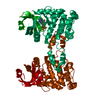
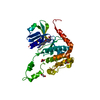
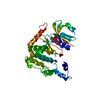

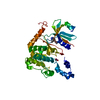

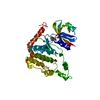
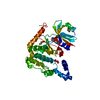
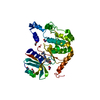
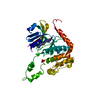
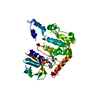
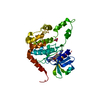
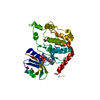
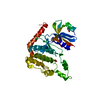
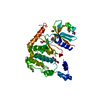
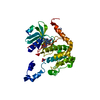
 PDBj
PDBj
 集合体
集合体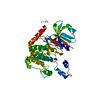

 ESCHERICHIA COLI (大腸菌) / 株 (発現宿主): BL21-CODONPLUS (DE3)RIL
 分子量: 408.460 Da / 分子数: 1 / 由来タイプ: 合成 / 式: C19H24N10O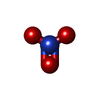
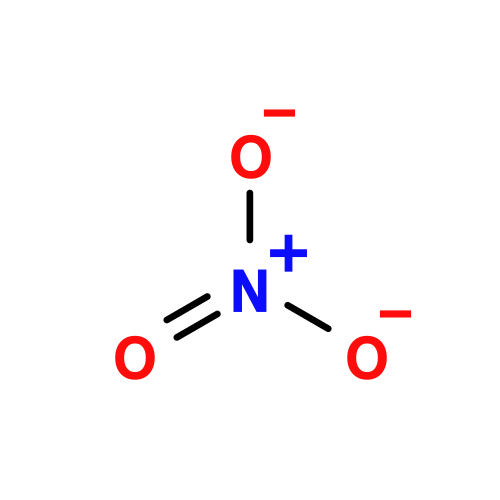 分子量: 62.005 Da / 分子数: 1 / 由来タイプ: 合成 / 式: NO3
 分子量: 18.015 Da / 分子数: 133 / 由来タイプ: 天然 / 式: H2O
 試料調製
試料調製 / ビームライン: 22-ID / 波長: 1
  解析
解析