establishment of RNA localization to telomere / positive regulation of telomerase catalytic core complex assembly / cellular response to nitrosative stress / negative regulation of telomere capping / establishment of protein-containing complex localization to telomere / Sensing of DNA Double Strand Breaks / peptidyl-serine autophosphorylation / positive regulation of telomere maintenance via telomere lengthening / meiotic telomere clustering / DNA-dependent protein kinase activity ...establishment of RNA localization to telomere / positive regulation of telomerase catalytic core complex assembly / cellular response to nitrosative stress / negative regulation of telomere capping / establishment of protein-containing complex localization to telomere / Sensing of DNA Double Strand Breaks / peptidyl-serine autophosphorylation / positive regulation of telomere maintenance via telomere lengthening / meiotic telomere clustering / DNA-dependent protein kinase activity / extrinsic component of synaptic vesicle membrane / pre-B cell allelic exclusion / histone mRNA catabolic process / histone H2AXS139 kinase activity / female meiotic nuclear division / regulation of telomere maintenance via telomerase / male meiotic nuclear division / lipoprotein catabolic process / DNA double-strand break processing / regulation of autophagosome assembly / V(D)J recombination / cellular response to X-ray / pexophagy / Impaired BRCA2 binding to PALB2 / oocyte development / DNA repair complex / reciprocal meiotic recombination / positive regulation of DNA damage response, signal transduction by p53 class mediator / 1-phosphatidylinositol-3-kinase activity / Homologous DNA Pairing and Strand Exchange / Defective homologous recombination repair (HRR) due to BRCA1 loss of function / Defective HDR through Homologous Recombination Repair (HRR) due to PALB2 loss of BRCA1 binding function / Defective HDR through Homologous Recombination Repair (HRR) due to PALB2 loss of BRCA2/RAD51/RAD51C binding function / Resolution of D-loop Structures through Synthesis-Dependent Strand Annealing (SDSA) / negative regulation of B cell proliferation / HDR through Single Strand Annealing (SSA) / TP53 Regulates Transcription of Caspase Activators and Caspases / Resolution of D-loop Structures through Holliday Junction Intermediates / mitotic spindle assembly checkpoint signaling / positive regulation of double-strand break repair / cellular response to stress / response to ionizing radiation / Impaired BRCA2 binding to RAD51 / mitotic G2 DNA damage checkpoint signaling / TP53 Regulates Transcription of Genes Involved in Cytochrome C Release / peroxisomal matrix / replicative senescence / Presynaptic phase of homologous DNA pairing and strand exchange / Regulation of HSF1-mediated heat shock response / somitogenesis / ovarian follicle development / regulation of cellular response to heat / cellular response to retinoic acid / signal transduction in response to DNA damage / positive regulation of telomere maintenance via telomerase / negative regulation of TORC1 signaling / positive regulation of cell adhesion / telomere maintenance / Pexophagy / DNA damage checkpoint signaling / thymus development / regulation of signal transduction by p53 class mediator / determination of adult lifespan / regulation of autophagy / post-embryonic development / TP53 Regulates Transcription of DNA Repair Genes / cellular response to reactive oxygen species / DNA damage response, signal transduction by p53 class mediator / Nonhomologous End-Joining (NHEJ) / Stabilization of p53 / Autodegradation of the E3 ubiquitin ligase COP1 / cellular response to gamma radiation / brain development / G2/M DNA damage checkpoint / Regulation of TP53 Activity through Methylation / double-strand break repair via homologous recombination / DNA Damage/Telomere Stress Induced Senescence / double-strand break repair via nonhomologous end joining / HDR through Homologous Recombination (HRR) / Meiotic recombination / spindle / multicellular organism growth / intrinsic apoptotic signaling pathway in response to DNA damage / cellular senescence / Regulation of TP53 Degradation / protein autophosphorylation / double-strand break repair / positive regulation of neuron apoptotic process / Recruitment and ATM-mediated phosphorylation of repair and signaling proteins at DNA double strand breaks / chromosome / site of double-strand break / heart development / Processing of DNA double-strand break ends / neuron apoptotic process / regulation of apoptotic process / Regulation of TP53 Activity through Phosphorylation / protein phosphorylation / non-specific serine/threonine protein kinase / regulation of cell cycle / protein stabilization 類似検索 - 分子機能
Telomere-length maintenance and DNA damage repair / Serine/threonine-protein kinase ATM, plant / ATM, catalytic domain / Telomere-length maintenance and DNA damage repair / Telomere-length maintenance and DNA damage repair / FATC domain / PIK-related kinase, FAT / FAT domain / FATC / FATC domain ...Telomere-length maintenance and DNA damage repair / Serine/threonine-protein kinase ATM, plant / ATM, catalytic domain / Telomere-length maintenance and DNA damage repair / Telomere-length maintenance and DNA damage repair / FATC domain / PIK-related kinase, FAT / FAT domain / FATC / FATC domain / PIK-related kinase / FAT domain profile. / FATC domain profile. / Phosphatidylinositol 3- and 4-kinases signature 1. / Phosphatidylinositol 3/4-kinase, conserved site / Phosphatidylinositol 3- and 4-kinases signature 2. / Phosphatidylinositol 3-/4-kinase, catalytic domain superfamily / Phosphoinositide 3-kinase, catalytic domain / Phosphatidylinositol 3- and 4-kinase / Phosphatidylinositol 3- and 4-kinases catalytic domain profile. / Phosphatidylinositol 3-/4-kinase, catalytic domain / Armadillo-type fold / Protein kinase-like domain superfamily 類似検索 - ドメイン・相同性
National Institutes of Health/National Cancer Institute (NIH/NCI)
5F32CA247320
米国
National Institutes of Health/Eunice Kennedy Shriver National Institute of Child Health & Human Development (NIH/NICHD)
CA008748
米国
引用
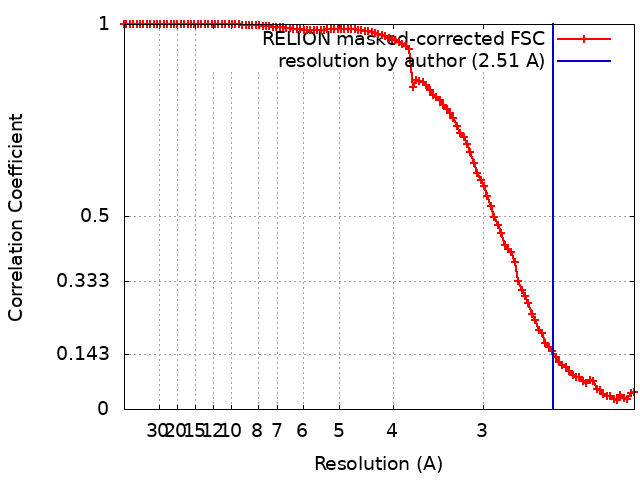
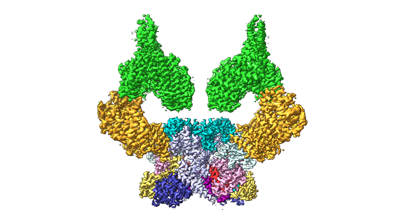
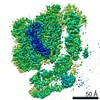
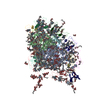
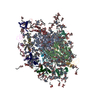
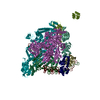
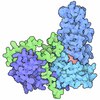
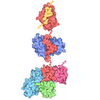
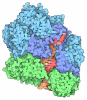
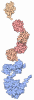
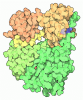
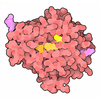
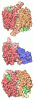
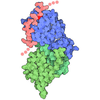
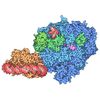
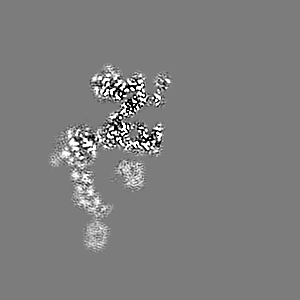
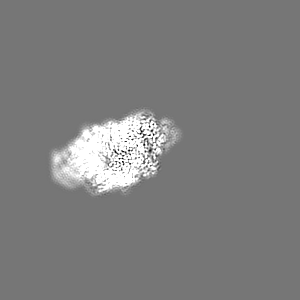
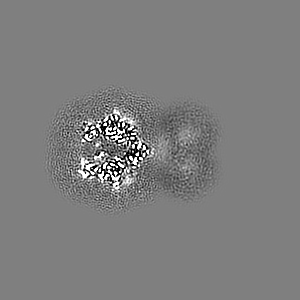
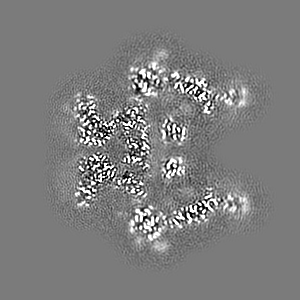
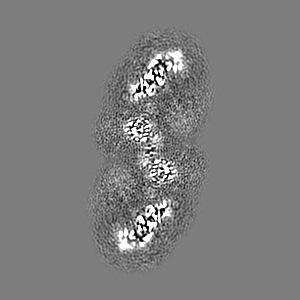
ジャーナル: Elife / 年: 2022 タイトル: Structure of the human ATM kinase and mechanism of Nbs1 binding. 著者: Christopher Warren / Nikola P Pavletich / 要旨: DNA double-strand breaks (DSBs) can lead to mutations, chromosomal rearrangements, genome instability, and cancer. Central to the sensing of DSBs is the ATM (Ataxia-telangiectasia mutated) kinase, ...DNA double-strand breaks (DSBs) can lead to mutations, chromosomal rearrangements, genome instability, and cancer. Central to the sensing of DSBs is the ATM (Ataxia-telangiectasia mutated) kinase, which belongs to the phosphatidylinositol 3-kinase-related protein kinase (PIKK) family. In response to DSBs, ATM is activated by the MRN (Mre11-Rad50-Nbs1) protein complex through a poorly understood process that also requires double-stranded DNA. Previous studies indicate that the FxF/Y motif of Nbs1 directly binds to ATM, and is required to retain active ATM at sites of DNA damage. Here, we report the 2.5 Å resolution cryo-EM structures of human ATM and its complex with the Nbs1 FxF/Y motif. In keeping with previous structures of ATM and its yeast homolog Tel1, the dimeric human ATM kinase adopts a symmetric, butterfly-shaped structure. The conformation of the ATM kinase domain is most similar to the inactive states of other PIKKs, suggesting that activation may involve an analogous realigning of the N and C lobes along with relieving the blockage of the substrate-binding site. We also show that the Nbs1 FxF/Y motif binds to a conserved hydrophobic cleft within the Spiral domain of ATM, suggesting an allosteric mechanism of activation. We evaluate the importance of these structural findings with mutagenesis and biochemical assays.
 ムービー
ムービー コントローラー


 データを開く
 基本情報
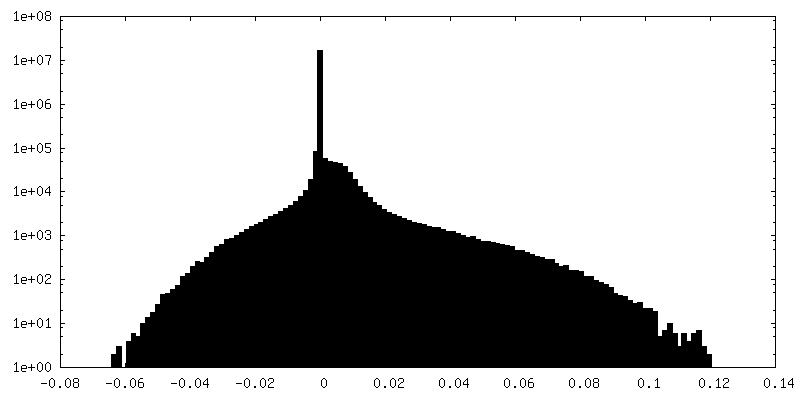
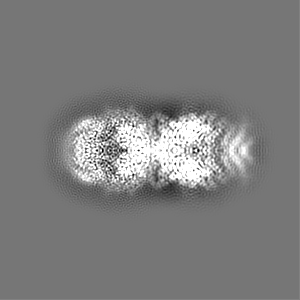
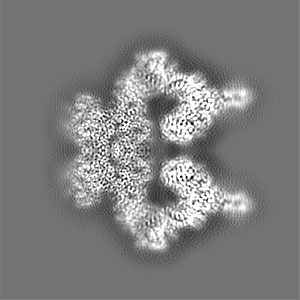
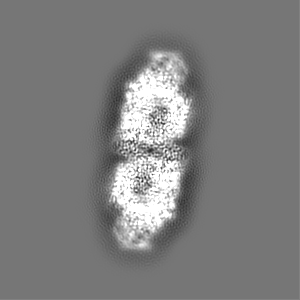
基本情報 マップデータ
 試料
試料 キーワード
キーワード 機能・相同性情報
 Homo sapiens (ヒト)
 データ登録者
 米国, 2件
  引用
引用 構造の表示
構造の表示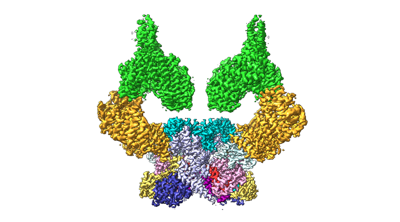
 ダウンロードとリンク
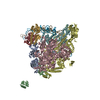
 emd_25140.png
 http://ftp.pdbj.org/pub/emdb/structures/EMD-25140


 Z (Sec.)
 Y (Row.)
 X (Col.)







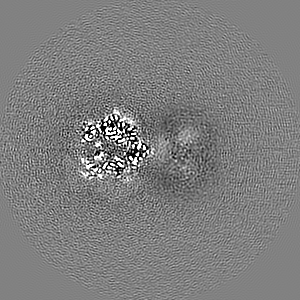
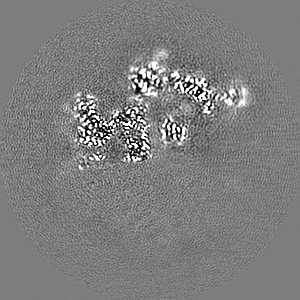
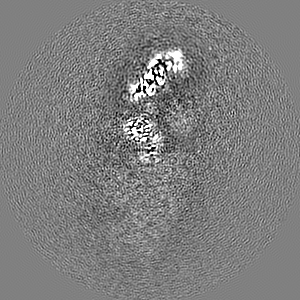
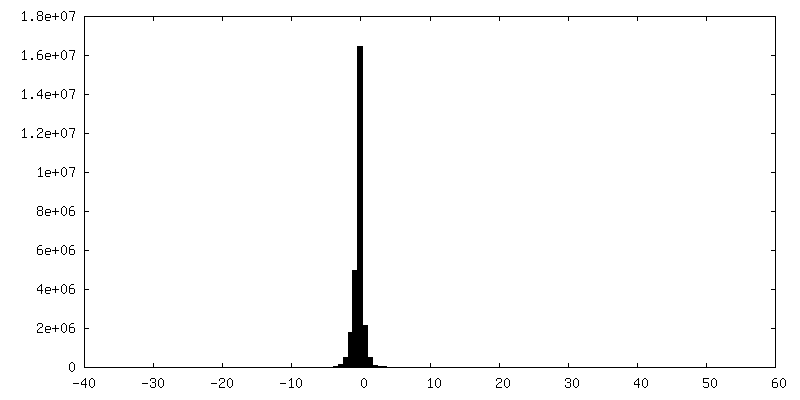
 試料の構成要素
 解析
解析 電子顕微鏡法
 FIELD EMISSION GUN