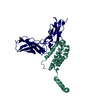
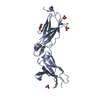
interleukin-10 binding / interleukin-10 receptor binding / regulation of response to wounding / interleukin-10 receptor activity / negative regulation of interleukin-18 production / interleukin-28 receptor complex / positive regulation of B cell apoptotic process / interleukin-10 receptor complex / type III interferon-mediated signaling pathway / regulation of B cell activation ...interleukin-10 binding / interleukin-10 receptor binding / regulation of response to wounding / interleukin-10 receptor activity / negative regulation of interleukin-18 production / interleukin-28 receptor complex / positive regulation of B cell apoptotic process / interleukin-10 receptor complex / type III interferon-mediated signaling pathway / regulation of B cell activation / negative regulation of interferon-alpha production / negative regulation of cytokine activity / negative regulation of chemokine (C-C motif) ligand 5 production / ubiquitin-dependent endocytosis / positive regulation of cellular respiration / negative regulation of membrane protein ectodomain proteolysis / response to inactivity / endothelial cell apoptotic process / positive regulation of plasma cell differentiation / regulation of isotype switching / negative regulation of heterotypic cell-cell adhesion / negative regulation of B cell proliferation / negative regulation of cytokine production involved in immune response / negative regulation of MHC class II biosynthetic process / negative regulation of interleukin-1 production / interleukin-10-mediated signaling pathway / negative regulation of interleukin-12 production / intestinal epithelial structure maintenance / negative regulation of interleukin-8 production / negative regulation of mitotic cell cycle / negative regulation of nitric oxide biosynthetic process / response to carbon monoxide / positive regulation of macrophage activation / negative regulation of oxidative stress-induced neuron intrinsic apoptotic signaling pathway / positive regulation of heterotypic cell-cell adhesion / B cell proliferation / type 2 immune response / negative regulation of cytokine production / leukocyte chemotaxis / CD163 mediating an anti-inflammatory response / Other interleukin signaling / response to molecule of bacterial origin / Interleukin-20 family signaling / T-helper 1 cell differentiation / positive regulation of immunoglobulin production / negative regulation of interleukin-6 production / positive regulation of tyrosine phosphorylation of STAT protein / positive regulation of sprouting angiogenesis / hemopoiesis / Interleukin-10 signaling / regulation of synapse organization / negative regulation of vascular associated smooth muscle cell proliferation / acute-phase response / negative regulation of tumor necrosis factor production / negative regulation of T cell proliferation / liver regeneration / positive regulation of vascular associated smooth muscle cell proliferation / cell surface receptor signaling pathway via JAK-STAT / coreceptor activity / B cell differentiation / positive regulation of endothelial cell proliferation / positive regulation of cell cycle / Nuclear events stimulated by ALK signaling in cancer / response to insulin / Gene and protein expression by JAK-STAT signaling after Interleukin-12 stimulation / cytokine activity / FCGR3A-mediated IL10 synthesis / response to glucocorticoid / negative regulation of autophagy / response to activity / positive regulation of receptor signaling pathway via JAK-STAT / growth factor activity / positive regulation of cytokine production / cellular response to estradiol stimulus / cellular response to virus / negative regulation of inflammatory response / positive regulation of miRNA transcription / regulation of gene expression / cytokine-mediated signaling pathway / Signaling by ALK fusions and activated point mutants / signaling receptor activity / response to lipopolysaccharide / cellular response to lipopolysaccharide / Interleukin-4 and Interleukin-13 signaling / inflammatory response / signaling receptor complex / protein dimerization activity / apical plasma membrane / response to xenobiotic stimulus / immune response / negative regulation of cell population proliferation / positive regulation of cell population proliferation / negative regulation of apoptotic process / positive regulation of DNA-templated transcription / signal transduction / positive regulation of transcription by RNA polymerase II / extracellular region / membrane / plasma membrane / cytosol Similarity search - Function
Interleukin-10 / Interleukin-10 family / Interleukin 10 / Interleukin-10/19/20/22/24/26 family / Interleukin-10, conserved site / Interleukin-10 family signature. / Interferon/interleukin receptor domain / Interferon-alpha/beta receptor, fibronectin type III / Tissue factor / Four-helical cytokine-like, core ...Interleukin-10 / Interleukin-10 family / Interleukin 10 / Interleukin-10/19/20/22/24/26 family / Interleukin-10, conserved site / Interleukin-10 family signature. / Interferon/interleukin receptor domain / Interferon-alpha/beta receptor, fibronectin type III / Tissue factor / Four-helical cytokine-like, core / Fibronectin type-III domain profile. / Fibronectin type III / Fibronectin type III superfamily / Immunoglobulin-like fold Similarity search - Domain/homology
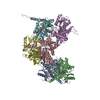
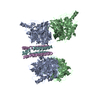
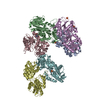
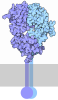
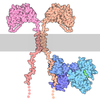
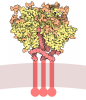
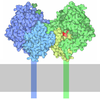
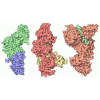
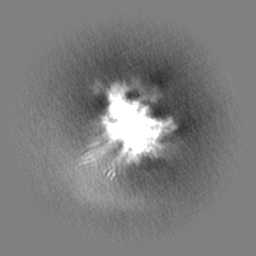
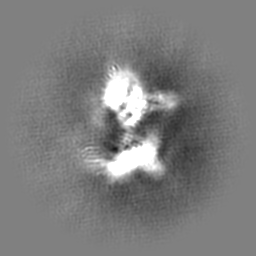
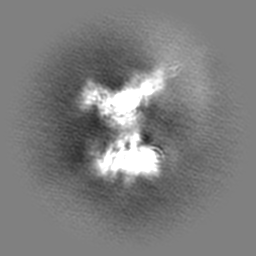
Journal: Science / Year: 2021 Title: Structure-based decoupling of the pro- and anti-inflammatory functions of interleukin-10. Authors: Robert A Saxton / Naotaka Tsutsumi / Leon L Su / Gita C Abhiraman / Kritika Mohan / Lukas T Henneberg / Nanda G Aduri / Cornelius Gati / K Christopher Garcia / Abstract: Interleukin-10 (IL-10) is an immunoregulatory cytokine with both anti-inflammatory and immunostimulatory properties and is frequently dysregulated in disease. We used a structure-based approach to ...Interleukin-10 (IL-10) is an immunoregulatory cytokine with both anti-inflammatory and immunostimulatory properties and is frequently dysregulated in disease. We used a structure-based approach to deconvolute IL-10 pleiotropy by determining the structure of the IL-10 receptor (IL-10R) complex by cryo-electron microscopy at a resolution of 3.5 angstroms. The hexameric structure shows how IL-10 and IL-10Rα form a composite surface to engage the shared signaling receptor IL-10Rβ, enabling the design of partial agonists. IL-10 variants with a range of IL-10Rβ binding strengths uncovered substantial differences in response thresholds across immune cell populations, providing a means of manipulating IL-10 cell type selectivity. Some variants displayed myeloid-biased activity by suppressing macrophage activation without stimulating inflammatory CD8 T cells, thereby uncoupling the major opposing functions of IL-10. These results provide a mechanistic blueprint for tuning the pleiotropic actions of IL-10.
History
Deposition
Jun 2, 2020
-
Header (metadata) release
Mar 17, 2021
-
Map release
Mar 17, 2021
-
Update
Oct 16, 2024
-
Current status
Oct 16, 2024
Processing site: RCSB / Status: Released
-
Structure visualization
Movie
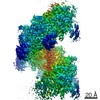
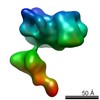
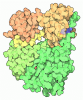
Surface view with section colored by density value
EMPIAR-10557 (Title: Interleukin-10 signaling complex with IL-10RA and IL-10RB Data size: 5.4 TB Data #1: Unaligned dark-subtracted TIFF movies with a gain reference for the 3D reconstruction of EMD-22098. [micrographs - multiframe])
In the structure databanks used in Yorodumi, some data are registered as the other names, "COVID-19 virus" and "2019-nCoV". Here are the details of the virus and the list of structure data.
Jan 31, 2019. EMDB accession codes are about to change! (news from PDBe EMDB page)
EMDB accession codes are about to change! (news from PDBe EMDB page)
The allocation of 4 digits for EMDB accession codes will soon come to an end. Whilst these codes will remain in use, new EMDB accession codes will include an additional digit and will expand incrementally as the available range of codes is exhausted. The current 4-digit format prefixed with “EMD-” (i.e. EMD-XXXX) will advance to a 5-digit format (i.e. EMD-XXXXX), and so on. It is currently estimated that the 4-digit codes will be depleted around Spring 2019, at which point the 5-digit format will come into force.
The EM Navigator/Yorodumi systems omit the EMD- prefix.
Related info.:Q: What is EMD? / ID/Accession-code notation in Yorodumi/EM Navigator
Yorodumi is a browser for structure data from EMDB, PDB, SASBDB, etc.
This page is also the successor to EM Navigator detail page, and also detail information page/front-end page for Omokage search.
The word "yorodu" (or yorozu) is an old Japanese word meaning "ten thousand". "mi" (miru) is to see.
Related info.:EMDB / PDB / SASBDB / Comparison of 3 databanks / Yorodumi Search / Aug 31, 2016. New EM Navigator & Yorodumi / Yorodumi Papers / Jmol/JSmol / Function and homology information / Changes in new EM Navigator and Yorodumi
 Movie
Movie Controller


 Open data
 Basic information
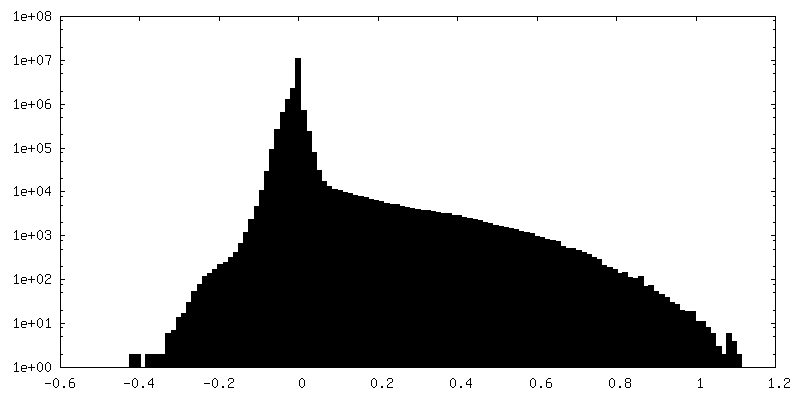
 Map data
 Sample
 Keywords
 Function and homology information
 Homo sapiens (human)
 Authors
 United States, 1 items
  Citation
 Structure visualization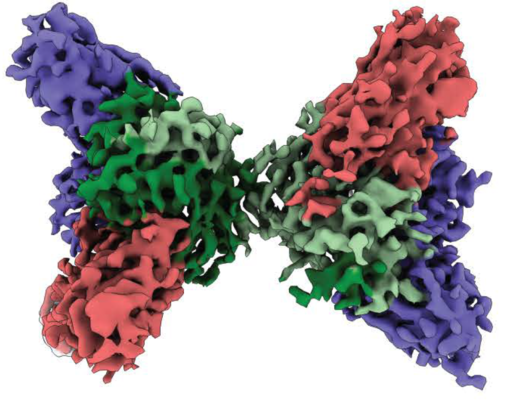
 Downloads & links
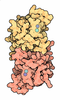
 emd_22098.png
 https://data.pdbj.org/pub/emdb/structures/EMD-22098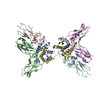


 Z (Sec.)
 Y (Row.)
 X (Col.)


 Sample components
 Trichoplusia ni (cabbage looper)
 Processing
 Electron microscopy
 FIELD EMISSION GUN