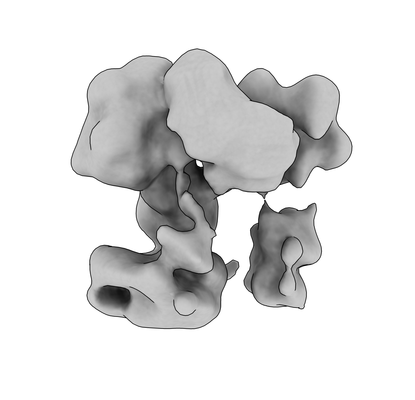
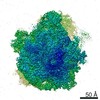
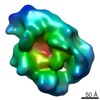
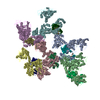
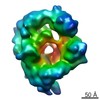
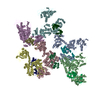
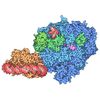
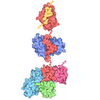
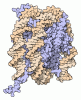
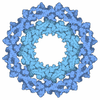
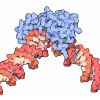
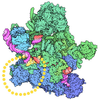
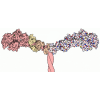
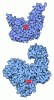
登録情報 データベース : EMDB / ID : EMD-21114タイトル RSC-NCP locked RSC bound to acetylated nucleosome 複合体 : RSC-NCP complexタンパク質・ペプチド : x 25種DNA : x 1種リガンド : x 1種 / / / 機能・相同性 分子機能 ドメイン・相同性 構成要素
/ / / / / / / / / / / / / / / / / / / / / / / / / / / / / / / / / / / / / / / / / / / / / / / / / / / / / / / / / / / / / / / / / / / / / / / / / / / / / / / / / / / / / / / / / / / / / / / / / / / / / / / / / / / / / / / / / / / / / / / / / / / / / / / / / / / / / / / / / / / / / / / / / / / / / / / / / / / / / / / / / / / / / / / / / / / / / / / / / / / / / / / / / / / / / / / / / / / / / / / / / / / / / / / / / / / / / / / / / / / / / / / / / / / / / / / / / / / / / / / / / / / / 生物種 Saccharomyces cerevisiae (strain ATCC 204508 / S288c) (パン酵母) / Homo sapiens (ヒト) / synthetic construct (人工物) 手法 / / 解像度 : 20.0 Å Patel AB / Moore CM / Greber BJ / Nogales E 資金援助 Organization Grant number 国 National Institutes of Health/National Institute of General Medical Sciences (NIH/NIGMS) R01-GM63072 National Institutes of Health/National Institute of General Medical Sciences (NIH/NIGMS) R35-GM127018
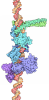
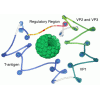
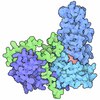
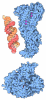
ジャーナル : Elife / 年 : 2019タイトル : Architecture of the chromatin remodeler RSC and insights into its nucleosome engagement.著者 : Avinash B Patel / Camille M Moore / Basil J Greber / Jie Luo / Stefan A Zukin / Jeff Ranish / Eva Nogales / 要旨 : Eukaryotic DNA is packaged into nucleosome arrays, which are repositioned by chromatin remodeling complexes to control DNA accessibility. The RSC (emodeling the tructure of hromatin) complex, a ... Eukaryotic DNA is packaged into nucleosome arrays, which are repositioned by chromatin remodeling complexes to control DNA accessibility. The RSC (emodeling the tructure of hromatin) complex, a member of the SWI/SNF chromatin remodeler family, plays critical roles in genome maintenance, transcription, and DNA repair. Here, we report cryo-electron microscopy (cryo-EM) and crosslinking mass spectrometry (CLMS) studies of yeast RSC complex and show that RSC is composed of a rigid tripartite core and two flexible lobes. The core structure is scaffolded by an asymmetric Rsc8 dimer and built with the evolutionarily conserved subunits Sfh1, Rsc6, Rsc9 and Sth1. The flexible ATPase lobe, composed of helicase subunit Sth1, Arp7, Arp9 and Rtt102, is anchored to this core by the N-terminus of Sth1. Our cryo-EM analysis of RSC bound to a nucleosome core particle shows that in addition to the expected nucleosome-Sth1 interactions, RSC engages histones and nucleosomal DNA through one arm of the core structure, composed of the Rsc8 SWIRM domains, Sfh1 and Npl6. Our findings provide structural insights into the conserved assembly process for all members of the SWI/SNF family of remodelers, and illustrate how RSC selects, engages, and remodels nucleosomes. 履歴 登録 2019年12月13日 - ヘッダ(付随情報) 公開 2020年1月15日 - マップ公開 2020年1月15日 - 更新 2024年3月6日 - 現状 2024年3月6日 処理サイト : RCSB / 状態 : 公開
すべて表示 表示を減らす
 ムービー
ムービー コントローラー


 データを開く
 基本情報
基本情報 マップデータ
 試料
試料 キーワード
キーワード 機能・相同性情報
 Saccharomyces cerevisiae (strain ATCC 204508 / S288c) (パン酵母) /
  Homo sapiens (ヒト) / synthetic construct (人工物)
 データ登録者
 米国, 2件
  引用
引用 構造の表示
構造の表示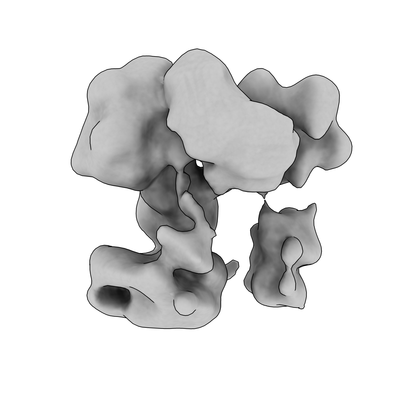
 ダウンロードとリンク
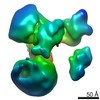
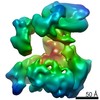
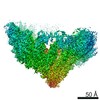
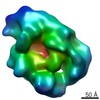
 emd_21114.png
 http://ftp.pdbj.org/pub/emdb/structures/EMD-21114




 Z (Sec.)
 Y (Row.)
 X (Col.)


 試料の構成要素
 Escherichia coli (大腸菌)
 解析
解析 電子顕微鏡法
 FIELD EMISSION GUN