[English] 日本語
Yorodumi Papers
- Database of articles cited by EMDB/PDB/SASBDB data -

+
Search query

Keywords
Structure methods
Author
Journal
IF

-
Structure paper

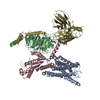
TitleStructures of G-protein coupled receptor HCAR1 in complex with Gi1 protein reveal the mechanistic basis for ligand recognition and agonist selectivity.
Journal, issue, pagesPLoS Biol, Vol. 23, Issue 4, Page e3003126, Year 2025
Publish dateApr 15, 2025
AuthorsXin Pan / Fang Ye / Peiruo Ning / Yiping Yu / Zhiyi Zhang / Jingxuan Wang / Geng Chen / Zhangsong Wu / Chen Qiu / Jiancheng Li / Bangning Chen / Lizhe Zhu / Chungen Qian / Kaizheng Gong / Yang Du /
PubMed AbstractHydroxycarboxylic acid receptor 1 (HCAR1), also known as lactate receptor or GPR81, is a class A G-protein-coupled receptor with key roles in regulating lipid metabolism, neuroprotection, ...Hydroxycarboxylic acid receptor 1 (HCAR1), also known as lactate receptor or GPR81, is a class A G-protein-coupled receptor with key roles in regulating lipid metabolism, neuroprotection, angiogenesis, cardiovascular function, and inflammatory response in humans. HCAR1 is highly expressed in numerous types of cancer cells, where it participates in controlling cancer cell metabolism and defense mechanisms, rendering it an appealing target for cancer therapy. However, the molecular basis of HCAR1-mediated signaling remains poorly understood. Here, we report four cryo-EM structures of human HCAR1 and HCAR2 in complex with the Gi1 protein, in which HCAR1 binds to the subtype-specific agonist CHBA (3.16 Å) and apo form (3.36 Å), and HCAR2 binds to the subtype-specific agonists MK-1903 (2.68 Å) and SCH900271 (3.06 Å). Combined with mutagenesis and cellular functional assays, we elucidate the mechanisms underlying ligand recognition, receptor activation, and G protein coupling of HCAR1. More importantly, the key residues that determine ligand selectivity between HCAR1 and HCAR2 are clarified. On this basis, we further summarize the structural features of agonists that match the orthosteric pockets of HCAR1 and HCAR2. These structural insights are anticipated to greatly accelerate the development of novel HCAR1-targeted drugs, offering a promising avenue for the treatment of various diseases.
External linksPLoS Biol / PubMed:40233099 / PubMed Central
MethodsEM (single particle)
Resolution2.68 - 3.36 Å
Structure data

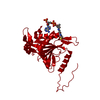
EMDB-61027, PDB-9iza:
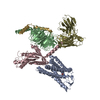
Cryo-EM structure of human HCAR2-Gi complex with SCH900271
Method: EM (single particle) / Resolution: 3.06 Å

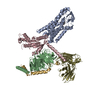
EMDB-61028, PDB-9izc:
Cryo-EM structure of human HCAR2-Gi complex with MK1903
Method: EM (single particle) / Resolution: 2.68 Å

EMDB-61029, PDB-9izd:
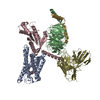
Cryo-EM structure of human HCAR1-Gi complex with CHBA
Method: EM (single particle) / Resolution: 3.16 Å

EMDB-61249, PDB-9j8z:
Cryo-EM structure of human HCAR1-Gi complex without ligand (apo state)
Method: EM (single particle) / Resolution: 3.36 Å

Chemicals

PDB-1ead:
ATOMIC STRUCTURE OF THE CUBIC CORE OF THE PYRUVATE DEHYDROGENASE MULTIENZYME COMPLEX


ChemComp, No image

ChemComp-XOT:
Unknown entry

PDB-1d71:
Unknown entry

Source
  • homo sapiens (human)
KeywordsMEMBRANE PROTEIN / complex

+
About Yorodumi Papers

-
News

-
Feb 9, 2022. New format data for meta-information of EMDB entries

New format data for meta-information of EMDB entries

  • Version 3 of the EMDB header file is now the official format.
  • The previous official version 1.9 will be removed from the archive.

Related info.:EMDB header

External links:wwPDB to switch to version 3 of the EMDB data model

-
Aug 12, 2020. Covid-19 info

Covid-19 info

URL: https://pdbj.org/emnavi/covid19.php

New page: Covid-19 featured information page in EM Navigator.

Related info.:Covid-19 info / Mar 5, 2020. Novel coronavirus structure data

+
Mar 5, 2020. Novel coronavirus structure data

Novel coronavirus structure data

Related info.:Yorodumi Speices / Aug 12, 2020. Covid-19 info

External links:COVID-19 featured content - PDBj / Molecule of the Month (242):Coronavirus Proteases

+
Jan 31, 2019. EMDB accession codes are about to change! (news from PDBe EMDB page)

EMDB accession codes are about to change! (news from PDBe EMDB page)

  • The allocation of 4 digits for EMDB accession codes will soon come to an end. Whilst these codes will remain in use, new EMDB accession codes will include an additional digit and will expand incrementally as the available range of codes is exhausted. The current 4-digit format prefixed with “EMD-” (i.e. EMD-XXXX) will advance to a 5-digit format (i.e. EMD-XXXXX), and so on. It is currently estimated that the 4-digit codes will be depleted around Spring 2019, at which point the 5-digit format will come into force.
  • The EM Navigator/Yorodumi systems omit the EMD- prefix.

Related info.:Q: What is EMD? / ID/Accession-code notation in Yorodumi/EM Navigator

External links:EMDB Accession Codes are Changing Soon! / Contact to PDBj

+
Jul 12, 2017. Major update of PDB

Major update of PDB

  • wwPDB released updated PDB data conforming to the new PDBx/mmCIF dictionary.
  • This is a major update changing the version number from 4 to 5, and with Remediation, in which all the entries are updated.
  • In this update, many items about electron microscopy experimental information are reorganized (e.g. em_software).
  • Now, EM Navigator and Yorodumi are based on the updated data.

External links:wwPDB Remediation / Enriched Model Files Conforming to OneDep Data Standards Now Available in the PDB FTP Archive

-
Yorodumi Papers

Database of articles cited by EMDB/PDB/SASBDB data

  • Database of articles cited by EMDB, PDB, and SASBDB entries
  • Using PubMed data

Related info.:EMDB / PDB / SASBDB / Yorodumi / EMN Papers / Changes in new EM Navigator and Yorodumi

Read more