 Movie
Movie Controller
 Structure viewers
 About Yorodumi Papers


+Search query
-Structure paper
| Title | CAR T cells based on fully human T cell receptor-mimetic antibodies exhibit potent antitumor activity in vivo. |
|---|---|
| Journal, issue, pages | Sci Transl Med, Vol. 17, Issue 791, Page eado9371, Year 2025 |
| Publish date | Mar 26, 2025 |
 Authors Authors | Robert Salzler / David J DiLillo / Kei Saotome / Kevin Bray / Katja Mohrs / Haun Hwang / Kamil J Cygan / Darshit Shah / Anna Rye-Weller / Kunal Kundu / Ashok Badithe / Xiaoqin Zhang / Elena Garnova / Marcela Torres / Ankur Dhanik / Robert Babb / Frank J Delfino / Courtney Thwaites / Drew Dudgeon / Michael J Moore / Thomas Craig Meagher / Corinne E Decker / Tomasz Owczarek / John A Gleason / Xiaoran Yang / David Suh / Wen-Yi Lee / Richard Welsh / Douglas MacDonald / Johanna Hansen / Chunguang Guo / Jessica R Kirshner / Gavin Thurston / Tammy Huang / Matthew C Franklin / George D Yancopoulos / John C Lin / Lynn E Macdonald / Andrew J Murphy / Gang Chen / Olav Olsen / William C Olson /  |
| PubMed Abstract | Monoclonal antibody therapies have transformed the lives of patients across a diverse range of diseases. However, antibodies can usually only access extracellular proteins, including the ...Monoclonal antibody therapies have transformed the lives of patients across a diverse range of diseases. However, antibodies can usually only access extracellular proteins, including the extracellular portions of membrane proteins that are expressed on the cell surface. In contrast, T cell receptors (TCRs) survey the entire cellular proteome when processed and presented as peptides in association with human leukocyte antigen (pHLA complexes). Antibodies that mimic TCRs by recognizing pHLA complexes have the potential to extend the reach of antibodies to this larger pool of targets and provide increased binding affinity and specificity. A major challenge in developing TCR mimetic (TCRm) antibodies is the limited sequence differences between the target pHLA complex relative to the large global repertoire of pHLA complexes. Here, we provide a comprehensive strategy for generating fully human TCRm antibodies across multiple HLA alleles, beginning with pHLA target discovery and validation and culminating in the engineering of TCRm-based chimeric antigen receptor T cells with potent antitumor activity. By incorporating mass spectrometry, bioinformatic predictions, HLA-humanized mice, antibody screening, and cryo-electron microscopy, we have established a pipeline to identify additional pHLA complex-specific antibodies with therapeutic potential. |
 External links External links | Sci Transl Med / PubMed:40138458 |
| Methods | EM (single particle) |
| Resolution | 3.0 - 3.06 Å |
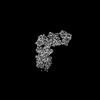
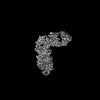
| Structure data | EMDB-29220: CryoEM structure of HLA-A2 MAGEA4 (230-239) in complex with REGN6972 Fab and 2M2 Fab EMDB-29221: CryoEM structure of HLA-A2 MAGEA4 (286-294) in complex with H2aM31345N Fab and 2M2 Fab |
| Source |
|
 Keywords Keywords | IMMUNE SYSTEM / HLA / MHC / antibody |


 homo sapiens (human)