 Movie
Movie Controller
 Structure viewers
 About Yorodumi Papers


+Search query
-Structure paper
| Title | Structural basis of secreted acid phosphatase polymerization in the Leishmania parasite. |
|---|---|
| Journal, issue, pages | Protein Sci, Vol. 35, Issue 5, Page e70591, Year 2026 |
| Publish date | Apr 21, 2026 |
 Authors Authors | Priyanka Bose / Irit Dahan / Alexander Upcher / Ran Zalk / Iris Grossman-Haham /  |
| PubMed Abstract | Enzymes that assemble into filaments typically transition between protomeric and polymeric states in response to cellular conditions. In contrast, the secreted acid phosphatase (SAP) of Leishmania, ...Enzymes that assemble into filaments typically transition between protomeric and polymeric states in response to cellular conditions. In contrast, the secreted acid phosphatase (SAP) of Leishmania, one of the most abundant extracellular glycoproteins produced by the parasite and regarded as a major virulence factor in the neglected tropical disease leishmaniasis, exhibits fundamentally different behavior. Depending on the species, SAP forms either highly stable extracellular filaments or remains exclusively as globular particles, with no evidence of reversible interconversion. This binary assembly pattern is particularly intriguing given that SAP orthologs that differ in their ability to polymerize share a high degree of sequence conservation, leaving the molecular determinants of filament formation unknown. Here, we report the cryo-EM structure of filamentous Leishmania mexicana SAP to a global resolution of 3.0 Å. The structure resolves the multilevel organization of the enzyme, from individual catalytic phosphatase domains and their unique substrate-binding pockets to the formation of homodimeric protomers, the decoration with N-linked glycans, and the supramolecular organization into filaments. At the core of the polymerization interface, we identified a unique β-hairpin motif that has not been observed in any other phosphatase or enzyme filament, which provides exceptional filament stability. By integrating structural data with comparative sequence analysis and machine-learning-based structure predictions, we define the molecular basis for the species-specific assembly behaviors observed across Leishmania SAPs. This work establishes the principles governing SAP filament formation and provides a framework for understanding its evolution, enzymatic function, and potential applications. |
 External links External links | Protein Sci / PubMed:42010818 / PubMed Central |
| Methods | EM (single particle) |
| Resolution | 3.0 - 3.7 Å |
| Structure data | EMDB-55773, PDB-9tbj: EMDB-56536, PDB-28ik: |
| Chemicals |  ChemComp-NAG:  ChemComp-PO4:  ChemComp-HOH: |
| Source |
|
 Keywords Keywords | HYDROLASE / histidine acid phosphatase / enzyme / filaments / Leishmania / acid phosphatase / enzyme filaments |


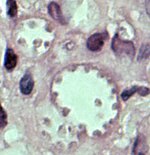 leishmania mexicana (eukaryote)