 Movie
Movie Controller
 Structure viewers
 About Yorodumi Papers


+Search query
-Structure paper
| Title | Structural basis of a distinct α-synuclein strain that promotes tau inclusion in neurons. |
|---|---|
| Journal, issue, pages | J Biol Chem, Vol. 301, Issue 4, Page 108351, Year 2025 |
| Publish date | Feb 25, 2025 |
 Authors Authors | Chuanqi Sun / Kang Zhou / Peter DePaola / Cally Li / Virginia M Y Lee / Z Hong Zhou / Chao Peng / Lin Jiang /  |
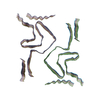
| PubMed Abstract | Amyloidoses are predominantly associated with the accumulation of persistent aggregates of a particular protein. For example, the protein α-synuclein characteristically aggregates in Parkinson's ...Amyloidoses are predominantly associated with the accumulation of persistent aggregates of a particular protein. For example, the protein α-synuclein characteristically aggregates in Parkinson's disease (PD), while amyloid beta and tau deposits are associated with Alzheimer's disease (AD). However, α-synuclein-positive inclusions have been reportedly found in some tauopathies, and vice versa; tau-positive inclusions can be found in synucleinopathies. This suggests that there may be coexistence or crosstalk between these proteinopathies. This coexistence suggests that the simultaneous presence of these misfolded proteins may amplify pathogenic mechanisms. However, the crosstalk between these two types of proteopathies remains poorly understood. We now determine the structure of α-synuclein fibrils that directly promote tau aggregation by cryogenic electron microscopy. Helical reconstruction at 2.6 Å resolution reveals a new α-synuclein fibril polymorph we term "strain B"; its core is unique, incorporating both the N- and C-termini of α-synuclein. The design of peptides meant to inhibit the formation of this structure demonstrates that the C-terminal domain fragment (D105-E115) of α-synuclein is critical for the formation of "strain B" fibrils and may play a key role in its interaction with tau. We hypothesize that the unique structure of pathological α-synuclein significantly contributes to tau co-aggregation and plays a role in the intricate interactions among Alzheimer's, Parkinson's, and other neurodegenerative diseases. These findings open new avenues for drug targeting, discovery, and improve our understanding of neurodegenerative pathology. |
 External links External links | J Biol Chem / PubMed:40015644 / PubMed Central |
| Methods | EM (helical sym.) |
| Resolution | 2.61 Å |
| Structure data | EMDB-45221, PDB-9c5r: |
| Source |
|
 Keywords Keywords | PROTEIN FIBRIL / alpha-synuclein fibrils / structural protein |
 homo sapiens (human)